
How Fat Loss Works: A Realistic Guide to Food, Movement and Progress
Fat loss comes from a steady energy gap kept up over weeks. Learn why daily weight swings mislead and which small habits actually last.

Key Takeaways
- Fat loss needs a modest energy gap kept up over weeks, not a crash diet.
- Day-to-day scale swings are mostly water, salt and gut contents, not fat.
- Core exercises strengthen your abs but cannot burn belly fat on their own.
- Strength training on 2 or more days a week helps protect muscle.
- Judge progress by weekly trends, strength and clothes fit, not one reading.
Fat loss is often sold as a race, but the plan that works is one you can follow while working, exercising and eating with your family. Body fat tends to fall when you take in a little less energy than your body uses, and keep that up over weeks. You can create that gap with ordinary food and movement, without banning rice or living on salads. For a sample day of meals, see our fat loss diet plan; this guide explains the principles behind it and how to judge your progress.
How fat loss actually happens
Your body uses energy all day to breathe, digest food and move. When your intake stays somewhat below that use for a sustained period, stored fat is drawn on for fuel. The pace differs between people, and no single scale reading can tell you how much fat has changed.
Why the scale jumps around
Water, salt, a late or large meal, constipation, the menstrual cycle and a new workout can all shift your weight temporarily. A sudden rise after a salty dinner is not fat gained overnight. If you weigh yourself, compare the trend across several weeks rather than reacting to each reading.
You cannot choose where fat leaves first
Core exercises strengthen your stomach muscles, but they do not burn belly fat specifically. Genetics, age and hormones influence where your body stores and loses fat, so a whole-body plan is the reliable approach.
Building meals that make the gap easier
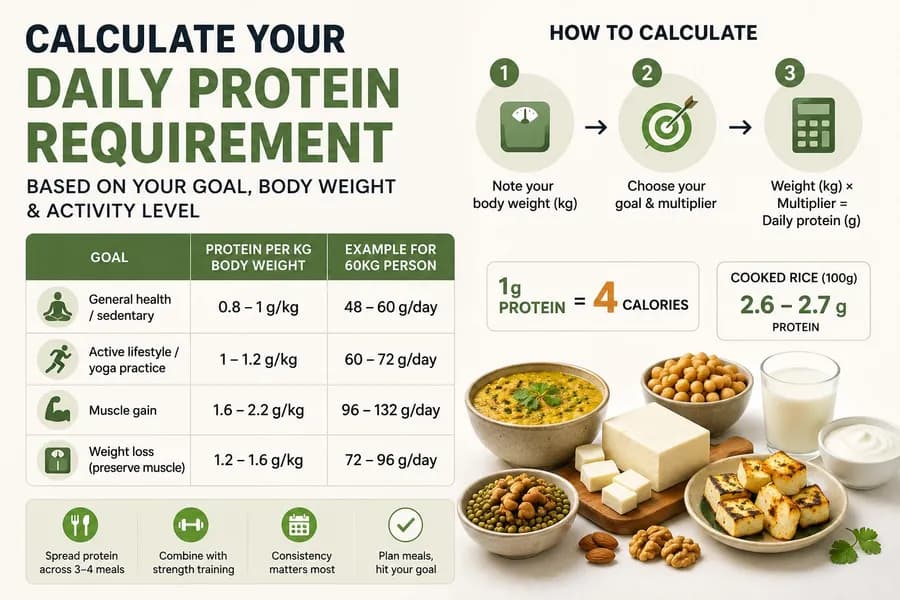
Start with the meals you already eat. If lunch is rice and sabzi, add a proper serving of dal, chana, curd, tofu or paneer. If breakfast is poha, add peanuts, sprouts or a bowl of curd. Protein foods and fibre-rich vegetables make meals more filling, which makes portions easier to manage. Our guide to your daily protein requirement explains how much to aim for.
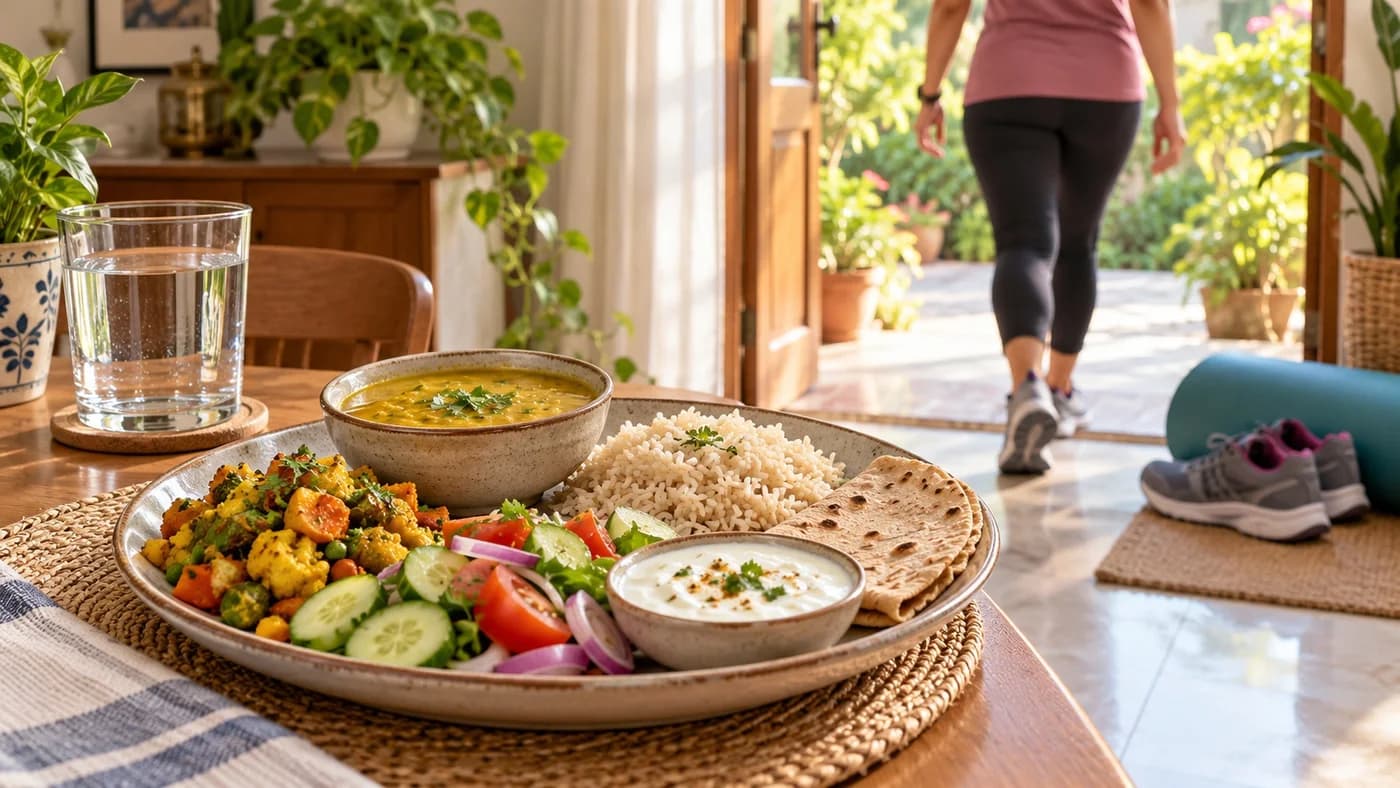
A practical plate has vegetables, one protein food and a portion of roti, rice or another grain that suits your appetite and activity. Treat this as a guide, not a rule: dal, rice and sabzi work as well as a carefully arranged bowl.
Cooking oil, nuts, cheese and sweets can all fit, but they pack a lot of energy into small amounts. Measure the oil for one family dish once and divide it by the number of servings to learn your usual pattern; you do not need to count every teaspoon forever.
Do not skip your next meal to make up for a dessert. Arriving at a meal very hungry usually makes portions harder to manage.
Small changes to start with
- Swap one daily sweetened drink for water, buttermilk or unsweetened tea.
- Walk for 10 to 15 minutes after dinner.
- Plan an afternoon snack, such as fruit with roasted chana, if you reach dinner ravenous.
- Add two short strength sessions a week.
Pick one food change and one movement change, and keep them going for a few weeks before adding more. When you eat out, choose the dish you most want and skip the automatic extras such as a fried starter and a sweet drink. There is no special hour after which food turns into fat.
The role of exercise and sleep
Walking, cycling, dancing, yoga and household chores all add movement. WHO advises adults to get 150 to 300 minutes of moderate activity a week, plus muscle-strengthening work on at least two days. Strength exercise with your body weight, bands or weights helps you keep muscle while losing fat; read is strength training good for weight loss for how to begin.
Exercise does not have to "earn" your food. If a plan leaves you too tired to train or recover, the food restriction is probably too aggressive.
Short or irregular sleep can make hunger and meal planning harder. Sleep is not a fat-burning treatment, but it makes every other habit easier to keep.
How to tell whether it is working
Look beyond the scale. Are walks feeling easier? Is your strength improving? Do clothes fit differently? An occasional waist measurement adds useful information without daily checking.
If progress stalls, review several weeks before cutting food further. Check drink portions, snacks, movement and sleep first. Sometimes a temporary water shift is simply hiding real progress.
When to get support
Constant hunger, faintness, guilt, secret eating or repeated binges are signs to step back and seek help. Very low calorie diets should only be used under medical supervision. If you are pregnant, have a history of an eating disorder, or take medicines affected by food (for example for diabetes), get individual advice before trying to lose weight.
Editorial sources
Frequently Asked Questions
Related Articles
Fat Loss Diet Plan: A Simple, Sustainable Guide to Eating Well
A good fat loss diet plan isn’t about eating less of everything — it’s about eating the right things consistently. See a simple, no-gimmicks breakdown of.


Is Strength Training Good for Weight Loss?
Strength training raises your resting metabolic rate over time, not just calories burned during the session — building lean muscle and triggering an afterburn effect. See why the evidence says yes.
Daily Protein Requirement: How to Calculate What You Need
Your daily protein requirement isn’t a fixed number — it depends on your body weight, activity level, and goal. See exactly how to calculate it for.
Vegetarian Weight Loss Diet Plan: Eating Well on a Plant-Based Plate
A vegetarian weight loss plan works on the same energy-balance principle as any other, but needs extra attention to protein and variety. See how to get.