
Kefir Benefits, Nutrition, Uses and Safety
Explore kefir benefits, milk versus water kefir, serving ideas, lactose tolerance and safe storage.
Key Takeaways
- Milk kefir can provide protein, calcium and vitamin B12.
- Water kefir is not nutritionally equivalent to dairy kefir.
- Probiotic effects depend on the organisms, dose and outcome studied.
- Flavoured products may contain considerable added sugar.
Kefir is a fermented drink made with communities of bacteria and yeasts. Milk kefir and water kefir differ in protein, calcium, sugar and microbial content. It can add variety to meals, but it is not a guaranteed fix for the gut microbiome or a treatment for digestive disease.
What is kefir?
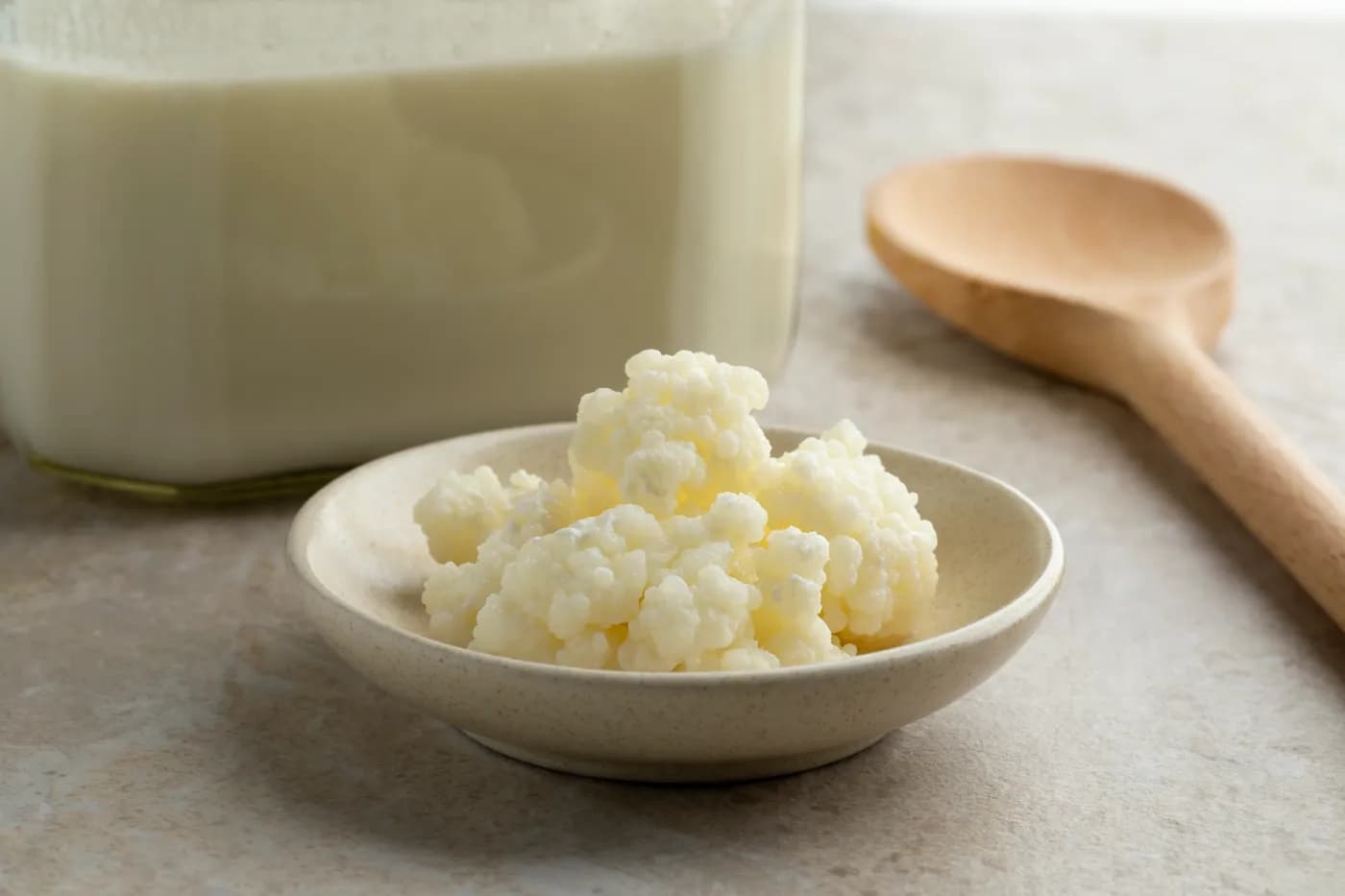
Kefir grains are clusters of microorganisms, not cereal grains. They ferment lactose in milk or sugar in water to produce a tangy drink that may be lightly fizzy. Milk kefir is generally thicker than water kefir.
Fermentation can reduce lactose, but the amount left varies. A fermented milk product is not automatically lactose-free. Check the label if lactose causes symptoms.
Milk kefir and water kefir nutrition
Milk kefir can provide protein, calcium and vitamin B12. The amounts depend on the milk and the product, so compare nutrition labels using the same serving size.
Water kefir is not nutritionally equivalent to milk kefir. It does not naturally provide the same protein and calcium unless these are added. Its residual sugar also varies with the recipe and fermentation process.
Flavoured products may contain added sugar. Read the ingredient list as well as the nutrition panel when choosing between plain and sweetened versions.
What can kefir do for gut health?
Kefir is a fermented food, but that alone does not establish a specific probiotic benefit. Effects depend on the microorganisms present, the amount consumed and the outcome studied. Findings about one strain or product should not be treated as proof for every kefir drink.
Human research has explored possible digestive and metabolic effects, but the evidence does not support using kefir to cure gut problems. Persistent abdominal pain, blood in stools, fever, unexplained weight loss or prolonged bowel changes need medical assessment.
How to include kefir in meals
- Start with about half a cup of plain kefir and assess tolerance.
- Pour it over oats with fruit, nuts and seeds.
- Use it in a cucumber-and-herb dressing.
- Add it to a cold soup if you enjoy its tangy flavour.
Half a cup is a starting portion, not a treatment dose or daily requirement. If it causes discomfort, reduce the amount or stop. Curd may be a more familiar or affordable alternative; neither is universally better.
Buying and storing kefir
Choose products made from pasteurised milk when buying dairy kefir. This is different from heat treatment after fermentation, which can reduce or remove live microorganisms. Check the label if live cultures are your reason for choosing it.
Keep kefir refrigerated and follow the manufacturer's use-by date and instructions after opening. Use clean utensils and avoid leaving it at room temperature unnecessarily.
Home fermentation requires careful hygiene and a reliable method. Discard a ferment with mould, unusual discolouration or a rotten smell. Appearance and smell cannot guarantee safety, so do not taste a batch you suspect is unsafe.
Who should be cautious?
Gas, bloating or loose stools can occur, especially when first trying it. Milk kefir is unsuitable for someone with a milk allergy, even when fermentation reduces its lactose.
People who are critically ill or severely immunocompromised, receiving chemotherapy, or living with a central venous catheter should seek medical advice before using live-culture products. These situations need individual guidance rather than a general recommendation to add probiotics.
Choosing a kefir that suits you
Choose according to nutrition, ingredients, tolerance, cost and storage needs. Plain milk kefir may suit someone looking for a fermented dairy food; water kefir is a different drink with a different nutritional role. Neither needs to become part of your routine if you do not enjoy or tolerate it.
Sources
Frequently Asked Questions
Related Articles
Gut Health Diet: What to Eat for a Healthier Digestive System
A good gut health diet isn’t about one superfood — it’s consistent daily habits: enough fibre, a variety of plants, some fermented food, and enough.


High-Fibre Foods: Simple Indian Meal Ideas
Find high-fibre Indian foods, easy meal ideas, gradual intake tips and practical advice for constipation and daily health.

Vegetarian protein: needs, myths and meal planning
Vegetarian meals can provide enough protein. Learn practical needs, simple Indian food sources, common myths and an easy meal-planning method.
