
Magnesium Oxide: Uses, Absorption and Safe Dosing Basics
Magnesium oxide can serve different purposes. Learn why the reason for use, elemental amount and kidney health matter.
Key Takeaways
- Magnesium oxide can be a supplement, antacid or laxative.
- It is not the best-absorbed form of magnesium.
- Check the elemental magnesium on the label, not just the compound.
- Leave space around certain medicines; take care with kidney disease.
Magnesium oxide can be a supplement, an antacid or a laxative, depending on the product and how it is used. Those are different jobs, so there is no single dose that suits everyone. It is also not the best-absorbed magnesium form. The useful starting point is to know why you are taking it and how much actual magnesium the product provides.
Magnesium and magnesium oxide are different terms
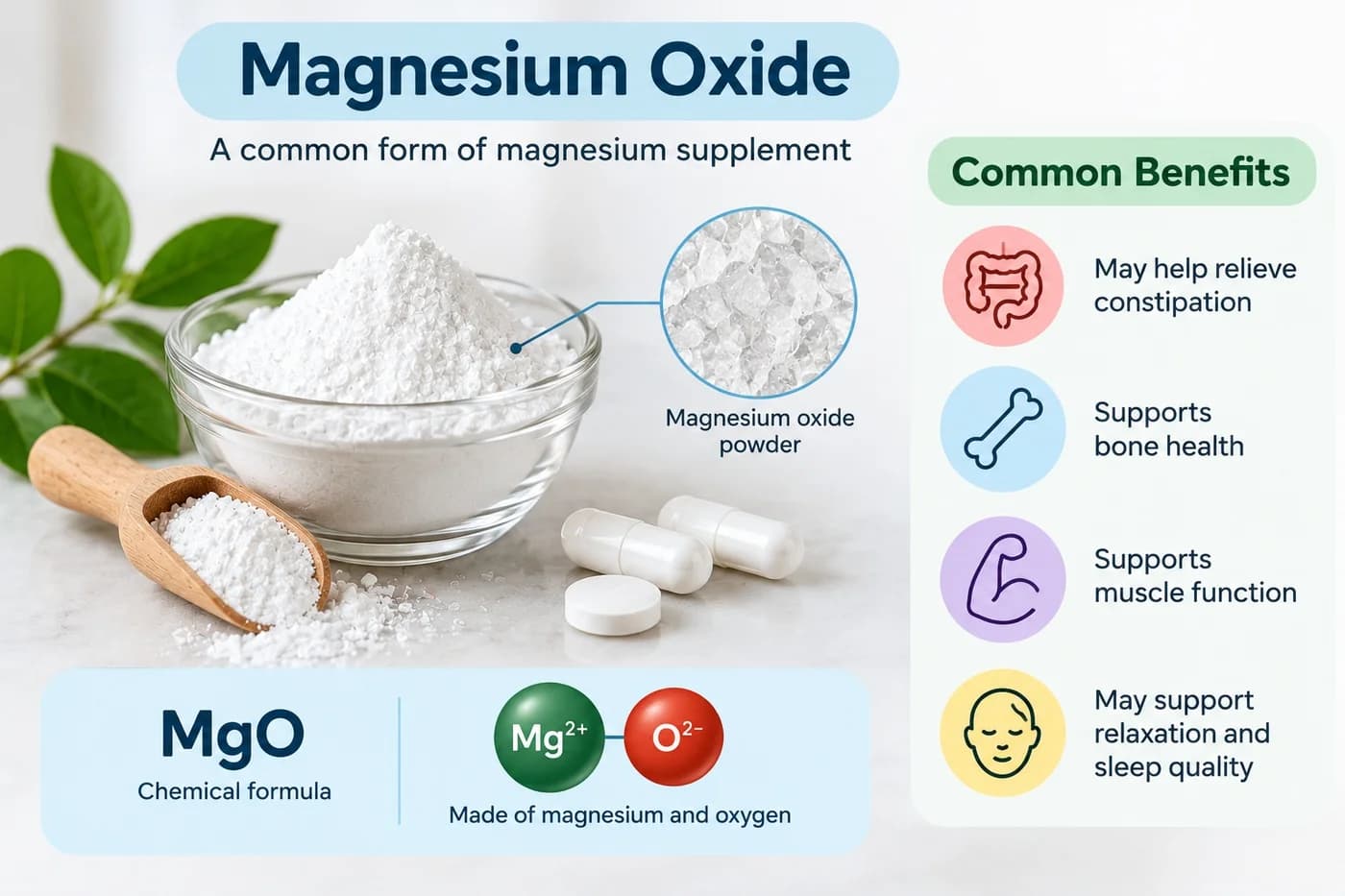
Magnesium is a mineral needed for normal nerve and muscle function, bone health and many chemical reactions. Magnesium oxide is a compound that supplies magnesium. It is commonly found in tablets and capsules because it contains a relatively high proportion of magnesium by weight and is inexpensive.
High magnesium content does not mean that all of it reaches the bloodstream. Magnesium oxide is generally absorbed less well than some other forms, including citrate, chloride and lactate. That makes form relevant when the goal is replacing a deficiency. It does not mean the product has no use.
Magnesium remaining in the intestine can draw water into the bowel, explaining the laxative effect. Its ability to neutralise stomach acid explains antacid use. A feature that is useful for constipation may be an unwanted side effect when someone only wanted a nutritional supplement.
Why might it be recommended?
A clinician may use a magnesium preparation when intake is inadequate or magnesium is being lost because of illness or medicines. Severe deficiency needs medical management and is not simply a reason to pick a large tablet from a shelf. Symptoms such as fatigue or cramps have many causes and do not confirm low magnesium.
Some people use magnesium oxide for short-term constipation or occasional acid indigestion. Repeated symptoms deserve a look at the cause. A laxative is not a weight-loss method: a change on the scale after bowel emptying does not represent body-fat loss.
Magnesium is also sometimes used in migraine prevention under supervision. That is a separate treatment decision, often involving doses beyond ordinary supplement limits. It should not be copied as a general nightly routine for sleep, stress or muscle soreness. Those broad promises go further than evidence supports for everyone.
The number on the front can be confusing
Elemental magnesium means the amount of magnesium itself, excluding the rest of the compound. A product may describe the weight of magnesium oxide on the front and list elemental magnesium elsewhere. These numbers are not interchangeable. Use the elemental amount when comparing magnesium intake across supplements.
For adults, the US nutritional upper limit is 350 mg a day from supplements and magnesium-containing medicines, unless a clinician directs otherwise. That limit excludes magnesium naturally present in food. It is a safety reference, not a recommended daily supplement dose, and it does not mean every adult needs a 350 mg capsule.
Treatment doses may differ because the purpose, medical condition and monitoring differ. Follow the prescription or product instructions for that use. Do not increase a dose simply because another formulation has a larger number. Combining a supplement with an antacid or laxative can also add more magnesium than expected.
Food still contributes

Dal, beans, nuts, seeds, whole grains and leafy vegetables supply magnesium along with other nutrients. A meal of chana, roti and sabzi, or oats with milk and nuts, contributes without needing a separate mineral routine. Food sources are not magnesium oxide in tablet form; they are part of the overall diet.
Our diet and nutrition guide offers familiar ways to improve variety. If a medicine or medical condition is causing magnesium loss, however, a better menu may not be enough by itself. That is why the reason for a low result matters.
The side effects to notice
Diarrhoea and abdominal cramps are common problems with supplemental magnesium, including oxide. Taking more in pursuit of better absorption can simply worsen bowel symptoms. Ongoing diarrhoea can also lead to dehydration, so it is not a sign that the body is detoxifying.
People with reduced kidney function need particular care because the kidneys remove excess magnesium. Accumulation can become dangerous. Do not self-treat with high doses or magnesium laxatives when you have kidney disease. Marked weakness, unusual drowsiness, faintness or a slow or irregular heartbeat after use needs prompt medical attention.
New severe abdominal pain, vomiting or inability to pass stool or gas should not be managed by repeatedly adding laxatives. Similarly, frequent heartburn is not a reason to keep an antacid going indefinitely without assessing the problem. The medicine should fit the symptom and the expected duration of use.
Leave space around certain medicines
Magnesium can reduce absorption of some antibiotics, osteoporosis medicines and other tablets when taken too close together. The gap depends on the medicine, so there is no one timetable for every combination. Ask for a specific schedule when magnesium is added to an existing prescription.
This is a useful question for a pharmacist because the answer changes how you take the tablets. It is more valuable than a general instruction to read every warning. Include antacids and occasional laxatives in that discussion, not only daily supplements. Do not double a missed dose unless your instructions explicitly say to do so.
Is another form always better?
The best choice depends on the goal. A better-absorbed form may suit supplementation, whereas the bowel effect of oxide can be relevant for constipation. Price, tolerance, amount and the reason for treatment all play a part. Online rankings that call one form perfect for everyone simplify the decision too far.
Before continuing a magnesium routine, be able to finish this sentence: I take this product for this reason, at this elemental amount, for this duration. If the reason is only a vague promise of wellness, consider whether it is adding anything worthwhile. Magnesium oxide can be useful medicine; it does not need to become an automatic daily habit.
Editorial sources
Frequently Asked Questions
Related Articles

Zinc and Magnesium Tablets: Do You Actually Need Them?
Zinc and magnesium matter, but a tablet helps mainly when you are actually short of them. Here is how to judge your diet, read the label and avoid taking too much.


Vitamin B6 Benefits: Food Sources, Daily Needs and Supplement Safety
Vitamin B6 supports protein use, blood and nerves. Most people get enough from food, and long-term high-dose supplements can harm nerves.

Potassium Supplements: When You Need Them and How to Stay Safe
Potassium supplements correct a measured deficiency. Learn why a blood test comes first and how kidneys, medicines and salt substitutes affect safety.

Lysine: Vegetarian Food Sources, Uses and Supplement Safety
Lysine is an essential amino acid you must get from food. Pulses, soy and dairy cover most vegetarians' needs without a supplement.
