
Mango Glycemic Index: Portions and Blood Sugar Tips
What mango's glycaemic index means, why portion and ripeness matter more than one number, and how to fit mango into a diabetes meal plan.

Key Takeaways
- GI of 55 or less is low, 56 to 69 medium and 70 or more high.
- Mango GI values vary with variety, ripeness and study; many fall in the low-to-medium range.
- Glycaemic load also counts portion size, so how much you eat matters most.
- A small bowl of whole mango with a meal beats mango juice, shakes or aamras with sugar.
- Mango is neither banned nor a treatment for diabetes; check your own glucose response.
The glycaemic index (GI) estimates how quickly a carbohydrate food raises blood glucose compared with a reference food in a standard test. Published GI values for mango vary between varieties and studies, and many fall in the low-to-medium range. Ripeness, portion size and the rest of the meal change the real-life response, so GI should guide your choices rather than create fear around fruit. For mango's wider nutrition, see mango benefits and sensible portions.
What does GI tell you?
The scale
On the glucose scale, foods with a GI of 55 or less are usually classed as low, 56 to 69 as medium and 70 or above as high. These groups describe a test result, not a complete health score. Our guide to low glycaemic index foods explains the concept in more detail.
Why one number cannot describe every mango
GI tests use a fixed amount of available carbohydrate and report an average across a small group of people. Alphonso, Kesar, Dasheri and Langra differ in sweetness and texture, and riper fruit tends to have more readily available sugar. The international GI tables list several mango results rather than a single fixed value.
Glycaemic load and portion
At home you eat a portion, not a laboratory dose. Glycaemic load (GL) combines GI with the carbohydrate in the serving, which is why a small bowl and a whole large mango have very different effects. You do not need to calculate GL for every snack; the main point is that how much you eat matters.
GI also ignores nutrients. Mango provides vitamin C, carotenoids and some fibre, but those do not cancel its sugars. Equally, its sweetness is no reason to put it on a forbidden list.
How to fit mango into your meals
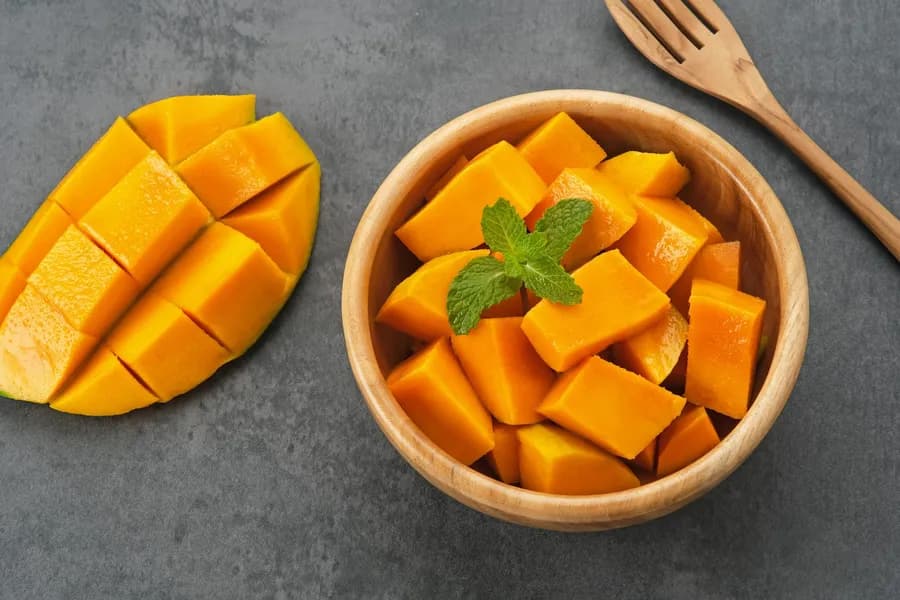
- Use a small bowl. Cut the fruit and portion it, because mangoes vary greatly in size and edible flesh.
- Eat it with a meal or protein. Plain curd or a few nuts with mango pieces may improve fullness.
- Swap, don't add. Let mango replace another carbohydrate or dessert rather than coming on top of a large meal.
- Choose whole fruit. Juice, milkshakes, ice cream and aamras with added sugar deliver much more carbohydrate quickly.
- Watch other forms. Dried mango is concentrated, canned pulp may be packed in syrup, and frozen unsweetened pieces are a practical off-season option.
If you count carbohydrates for insulin, weigh a portion and use a reliable food reference. Ask your care team before adjusting any medicine. Our Indian diabetic meal plan shows how fruit fits into a full day.
Look at patterns, not one reading
Blood glucose responds to the whole meal, sleep, stress, illness and medicines. If you monitor at home, follow your clinician's schedule, note the portion and what else you ate, and compare similar situations. Repeated testing without a plan can increase anxiety without adding much information. If readings are often outside your target, review the overall plan; removing mango alone may not fix the cause.
Claims to ignore
- Eating mango at a "special" time of day does not remove its carbohydrate.
- Raw mango, mango leaves and kernel extracts are not proven to lower blood sugar, and extracts lack reliable safety data.
- Mango pickles are a different food and can add a lot of salt.
Safety notes
Stop eating mango and seek advice if it causes mouth itching or swelling. The skin and sap can cause a rash in some people. Breathing difficulty or tongue swelling needs emergency help. People with kidney disease may need individual potassium advice. Wash the fruit before cutting and refrigerate cut pieces promptly.
Editorial sources
Frequently Asked Questions
Related Articles
Mango Benefits: Nutrition and Sensible Portions
Mango provides vitamin C, fibre and carotenoids. Learn its real benefits, sensible portions, diabetes tips and safe ways to enjoy it.


Low Glycemic Index Foods: What They Are and Why They Matter for Blood Sugar
Low glycemic index foods raise blood sugar slowly and steadily instead of causing a sharp spike. See what glycemic index actually measures, and everyday.

Diabetic Meal Plan Indian Style: A Full-Day Guide to Balanced Eating
A diabetic meal plan doesn’t mean giving up dal, roti, or rice — it means getting portions, timing, and combinations right. See a full day of eating.
Can People with Diabetes Eat Dates? Portions and Blood-Sugar Tips
Dates concentrate natural sugars into a small volume. Diabetes does not make them forbidden, but portions need deliberate attention.
