
Microgreens Benefits: Nutrition and Food Safety
Microgreens are young edible seedlings harvested after cotyledons develop. Nutrient levels vary by species and growing conditions.
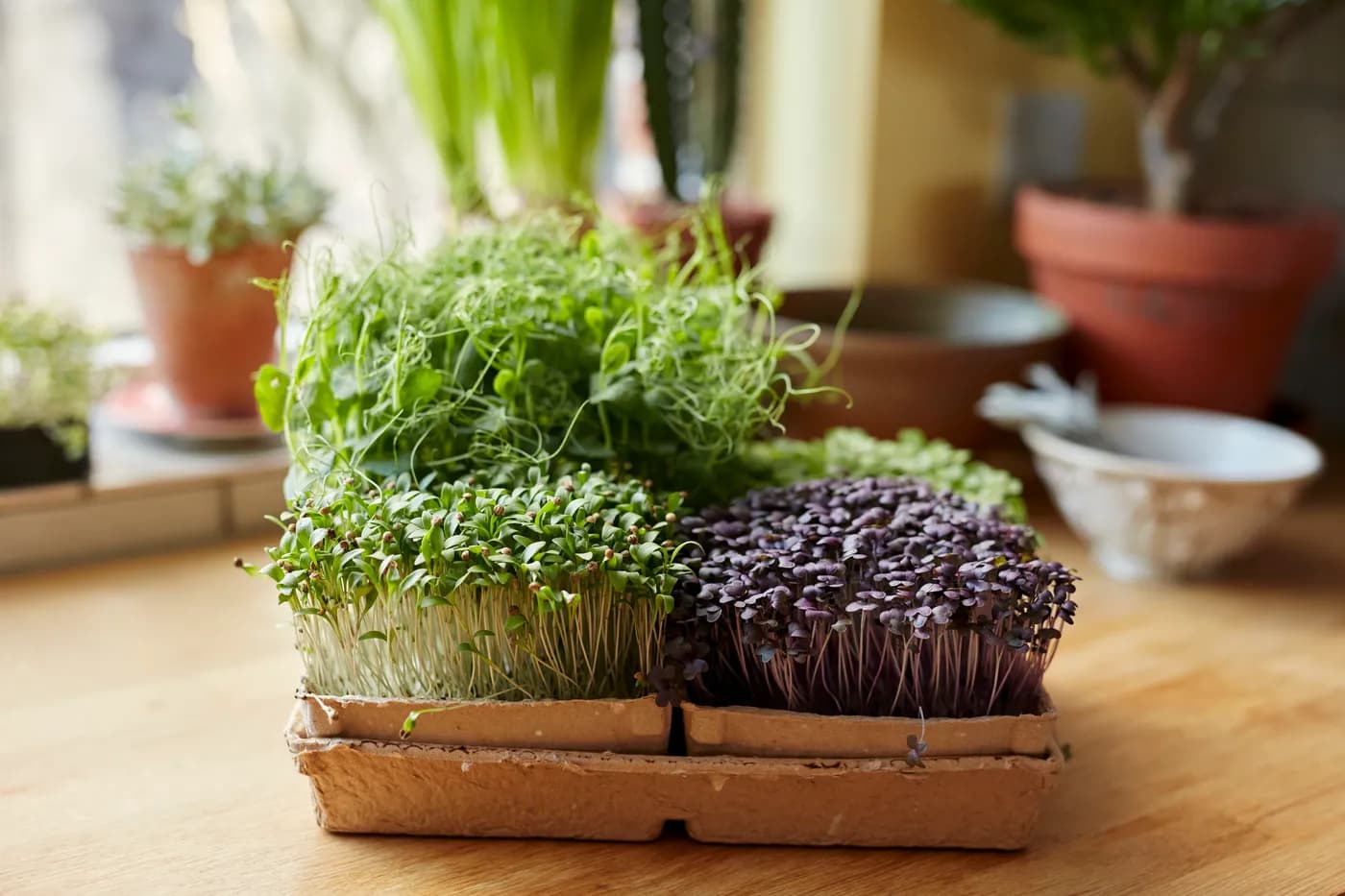
Key Takeaways
- Microgreens are young edible seedlings harvested after sprouting but before becoming mature plants.
- They add colour, flavour and micronutrients, but nutrient levels vary by plant and growing method.
- Microgreens do not replace full portions of vegetables and have no proven disease-curing effect.
- Because they are often eaten raw, clean production, refrigeration and careful handling matter.
Microgreens are young edible seedlings harvested after cotyledons develop. Nutrient concentrations vary by species and growing conditions, and a small garnish is not equivalent to a full vegetable serving. This guide examines microgreens benefits with practical context and without exaggerated promises.
What makes microgreens different from sprouts
Microgreens are usually harvested above the growing medium after the seed leaves and early true leaves appear. Sprouts are eaten earlier and often include the seed and root. Different species can contain concentrated amounts of certain vitamins and plant compounds by weight, but a typical serving is small. Microgreens benefits therefore depend on the variety and the amount actually eaten.
Because microgreens are grown in soil or a mat in light, rather than in warm water in the dark like many sprouts, the growing conditions and food-safety risks are not identical, although both are usually eaten raw.
Small leaves can be nutrient-dense, but context matters
They can add flavour, colour and micronutrients, but claims that they detox, prevent cancer or replace mature vegetables are unsupported. Most research has measured nutrient content in the leaves themselves rather than health outcomes in people who eat them.
Laboratory measurements of antioxidants do not prove that a garnish prevents cancer, reverses diabetes or treats inflammation. Their realistic value is as another form of fresh produce that can make meals colourful and interesting. Mature spinach, coriander, cabbage and other vegetables remain important because they are affordable, available in larger portions and provide useful fibre.
Easy additions to familiar foods
- Add washed microgreens to sandwiches or dal after cooking.
- Use them with a range of mature vegetables.
- Buy from suppliers with good hygiene practices.
- Refrigerate promptly and use while fresh.
Add a small handful to sandwiches, poha, salads, soup after cooking, curd bowls or a finished dal. Radish and mustard microgreens can taste peppery, while pea shoots may be milder. Use flavour to choose the variety instead of chasing one nutrient claim. Microgreens fit best alongside - not instead of - regular vegetables, fruit, pulses and grains.
Buying, washing and refrigeration
Choose fresh-looking greens without slime, mould or a sour smell. Keep them refrigerated and follow the grower's instructions. Wash hands, utensils and preparation surfaces; rinse ready-to-wash produce under clean running water and dry gently. Do not use soap or household disinfectant on food. Eat cut or opened packs promptly.
Who needs extra caution with raw microgreens
Like sprouts and leafy greens, microgreens can carry harmful microbes. High-risk groups should be cautious with raw products. Discard slimy, mouldy or foul-smelling greens.
Microgreens can be contaminated through seed, water, growing medium or handling. Older adults, pregnant people, very young children and those with weakened immunity may need extra caution with raw produce and should follow their clinician's food-safety advice. Home growers should use food-grade seed, clean trays and safe water.
Home growing without avoidable risk
Growing a tray at home can be enjoyable, but warmth and moisture also support microbes. Start with clean equipment, follow seed guidance, avoid untreated manure and prevent pets or dirty tools from contacting the tray. Discard the crop if mould or an off smell develops.
Label trays, because some ornamental seedlings are not edible, and seeds treated with agricultural chemicals are unsuitable for food production. Keep harvest scissors clean and cut above the growing medium.
Are microgreens worth the price?
They may be worthwhile when their flavour helps a household enjoy meals or when home growing is practical. They are not nutritionally compulsory. Coriander, mint, cabbage, spinach and seasonal vegetables may offer better value and larger usable portions.
A high price does not guarantee cleaner production or higher nutrient content. Buy from a supplier with good hygiene and cold handling, and avoid packs that have been sitting warm.
Allergy and unfamiliar plants
A microgreen is still the young form of a plant, so known allergies to that plant remain relevant. Introduce an unfamiliar variety in a small amount and avoid mixes whose contents are not clearly named. Seek urgent care for breathing difficulty or facial swelling.
Choosing varieties and using them before they wilt
Microgreens are sold in many forms, including radish, mustard, pea, broccoli, sunflower and herb varieties. They do not all contain the same nutrients or taste the same. Peppery greens can lift a mild sandwich or dal, while tender pea shoots suit salads and quick stir-fries.
Buy a small pack first because their short shelf life can create waste. Keep them dry and cold, remove damaged leaves, and avoid sealing wet greens in a warm container. If a pack says ready to eat, follow the manufacturer's handling advice; if it says to wash, rinse it just before use.
Microgreens benefits should be assessed from the amount eaten, not a photograph of a densely planted tray. A few leaves are a garnish, while a small handful contributes more - but still does not replace a full vegetable serving. When a pack wilts before you can finish it, buying coriander, mint or a mature leafy vegetable next time may be the more nutritious and economical decision.
A fresh conclusion for these young greens
Microgreens benefits are appealing but easy to exaggerate. They provide variety and concentrated flavours in a small serving; they are not a shortcut around eating vegetables or following medical care.
Use them fresh, handle them like other raw leafy produce and rotate varieties. If raw greens are unsuitable for you, briefly cooking them or choosing cooked mature vegetables is reasonable, though texture will change. Their best role is to make nutritious meals more enjoyable - not to carry the entire meal.
Editorial sources
Frequently Asked Questions
Related Articles
Asparagus Benefits: Nutrition, Portions and Safety
Asparagus is a green or white spear vegetable that provides fibre, folate, vitamin K and other micronutrients with relatively little energy.


Vegetarian protein: needs, myths and meal planning
Vegetarian meals can provide enough protein. Learn practical needs, simple Indian food sources, common myths and an easy meal-planning method.

High-Fibre Foods: Simple Indian Meal Ideas
Find high-fibre Indian foods, easy meal ideas, gradual intake tips and practical advice for constipation and daily health.