
Omega 3 6 9 Benefits: How These Fats Differ and Where to Find Them
Omega-3, 6 and 9 are different fats with different jobs. Learn the vegetarian food sources and whether a 3-6-9 capsule is worth buying.
Key Takeaways
- Omega-3 and omega-6 are essential; the body can make omega-9 itself.
- Plant ALA converts to EPA and DHA only in small amounts, under 15%.
- Most diets already supply omega-6 and omega-9; omega-3 deserves the closer look.
- Swapping saturated fat for unsaturated oil helps the heart; adding extra oil does not.
- High-dose omega-3 needs medical review with blood thinners or heart-rhythm problems.
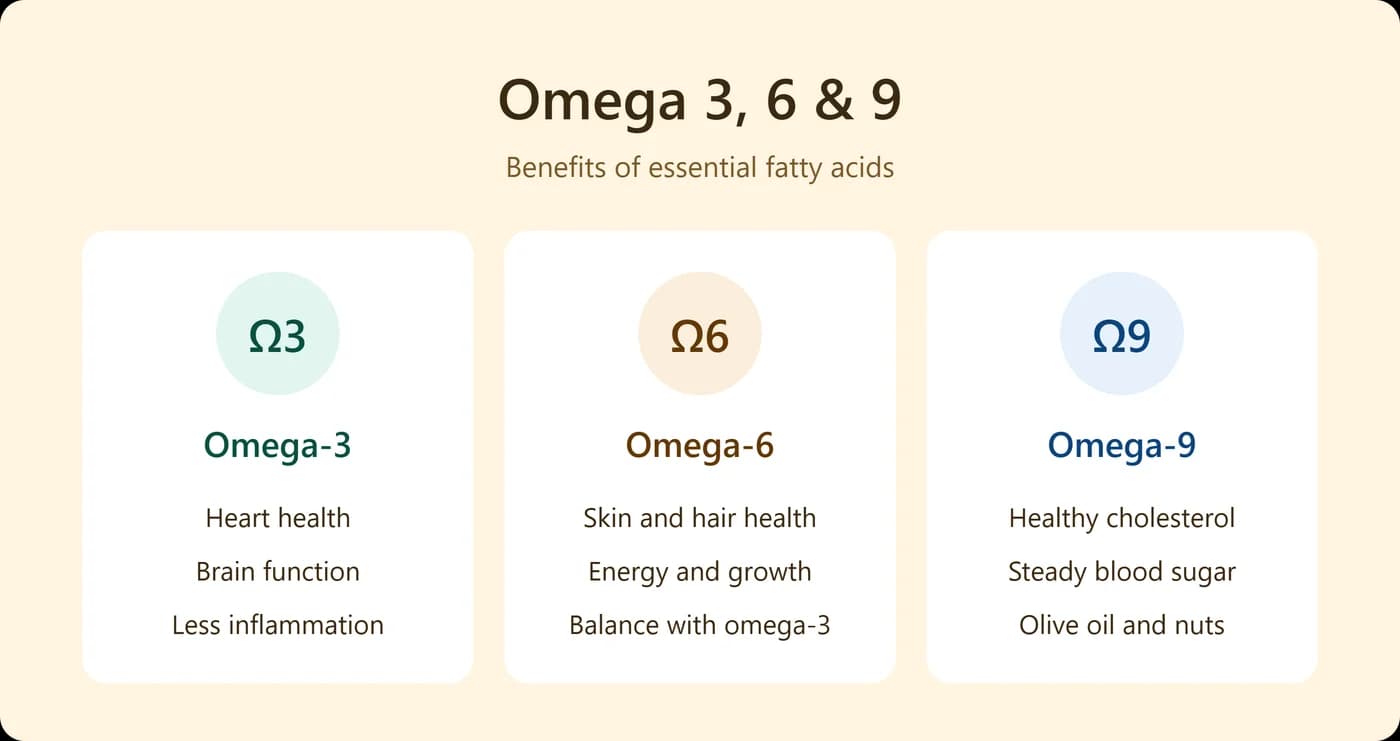
Omega-3, omega-6 and omega-9 are all unsaturated fats, but they do different jobs. Omega-3 and omega-6 are essential, which means food must supply them. Omega-9 can be made by the body. For most vegetarian adults, the useful goal is not a perfect ratio or an expensive "3-6-9" capsule. It is a varied diet with sensible amounts of nuts, seeds and cooking oils.
How omega-3, 6 and 9 differ
Omega-3: ALA, EPA and DHA
Plant omega-3 is mainly alpha-linolenic acid (ALA), found in flaxseed, chia seeds, walnuts and soybeans. The body converts only a small share of ALA into EPA and DHA, the forms found mainly in fish and algae; the NIH reports conversion rates of less than 15%. That does not make plant foods useless. It simply explains why an algae-based supplement is sometimes discussed for people who eat no fish.
Omega-6: essential, not the enemy
Omega-6, mainly linoleic acid, is present in many seeds, nuts and vegetable oils such as sunflower and soybean oil. It supports normal growth, skin and cell function. It is often blamed for inflammation, but in most diets the practical problem is a large share of fried and packaged food, not omega-6 itself.
Omega-9: made by the body
Omega-9 fats, chiefly oleic acid, are abundant in olive oil, groundnut oil, almonds and avocados. Because the body can make them, there is no daily requirement to chase.
Vegetarian food sources
- Omega-3 (ALA): ground flaxseed, chia seeds, walnuts, soybeans.
- Omega-6: sunflower seeds, sesame, sunflower and soybean oils.
- Omega-9: groundnuts, almonds, olive and groundnut oils.
Grind flaxseed so the body can access its fat, and soak chia or mix it into a moist food rather than swallowing it dry. For portion ideas, see Habuild's guides to omega-3 foods and vegan omega-3 sources.
Benefits depend on what the fat replaces
Unsaturated fats support heart health when they replace saturated fat. Using a suitable vegetable oil instead of some butter or vanaspati changes the balance of fats in a meal. Adding extra oil to an already adequate meal is a different change: it adds calories without that benefit. Our guide to good fats vs bad fats explains these swaps.
Do you need an omega 3-6-9 capsule?
Usually not. Most diets already supply plenty of omega-6 and omega-9, so a combined capsule mainly adds fats you already eat. If anything is low, it is usually EPA and DHA in people who eat no fish. If you are considering a supplement, read the EPA and DHA content per serving rather than a large "total oil" number on the front of the pack.
General omega 3-6-9 capsules are not substitutes for the high-dose prescription omega-3 products some doctors use for high triglycerides. Show your clinician the exact product before relying on it for a specific need.
Simple habits that work
- Stir a tablespoon of freshly ground flaxseed into oats, curd or a smoothie.
- Have a few walnuts as a snack.
- Cook dal and vegetables with a modest amount of an oil that suits the dish.
- Do not reheat oil repeatedly until it smokes.
- Store nuts, seeds and ground flax airtight, away from heat, and refrigerate ground flax.
Whole nuts and seeds also bring fibre, minerals and texture that an oil or capsule cannot. Discard any fat that smells stale, bitter or paint-like, a sign of rancidity.
When to be careful
Doses of several grams a day of EPA and DHA may prolong bleeding time, and some trials of high-dose omega-3 products found a higher rate of atrial fibrillation. Speak to your doctor before taking a high-dose product if you use blood-thinning medicines, have a heart-rhythm problem or have surgery planned, and do not stop prescribed medicine on your own.
Choose supplements that state the omega-3 form and amount and carry independent quality testing. Avoid damaged capsules or expired bottles. If you have a nut or seed allergy, use suitable alternatives instead of foods from an omega-3 list.
Editorial sources
Frequently Asked Questions
Related Articles
Omega-3 Foods: Vegetarian Sources and Smart Choices
Find vegetarian omega-3 foods, understand ALA, EPA and DHA, and learn simple portions, storage tips and supplement safety basics.

Vegan Omega 3 Sources: Best Plant-Based Options
Flaxseed, chia seeds, and walnuts make vegan omega-3 intake entirely achievable, with algae-based supplements rounding out the options. See how each one.


Omega-3 for Women: Sources, Evidence and Safety
How omega-3 needs shift through pregnancy, breastfeeding and menopause, which vegetarian sources help, and what supplement claims overstate.
Good fats vs bad fats: choose fats wisely
Understand good fats vs bad fats in simple words. Learn which vegetarian fats to choose, what to reduce and how to read food labels better.