
Persimmon Benefits: Nutrition, Portions and Safety
Persimmons provide carbohydrate, fibre, vitamin C, carotenoids and potassium.
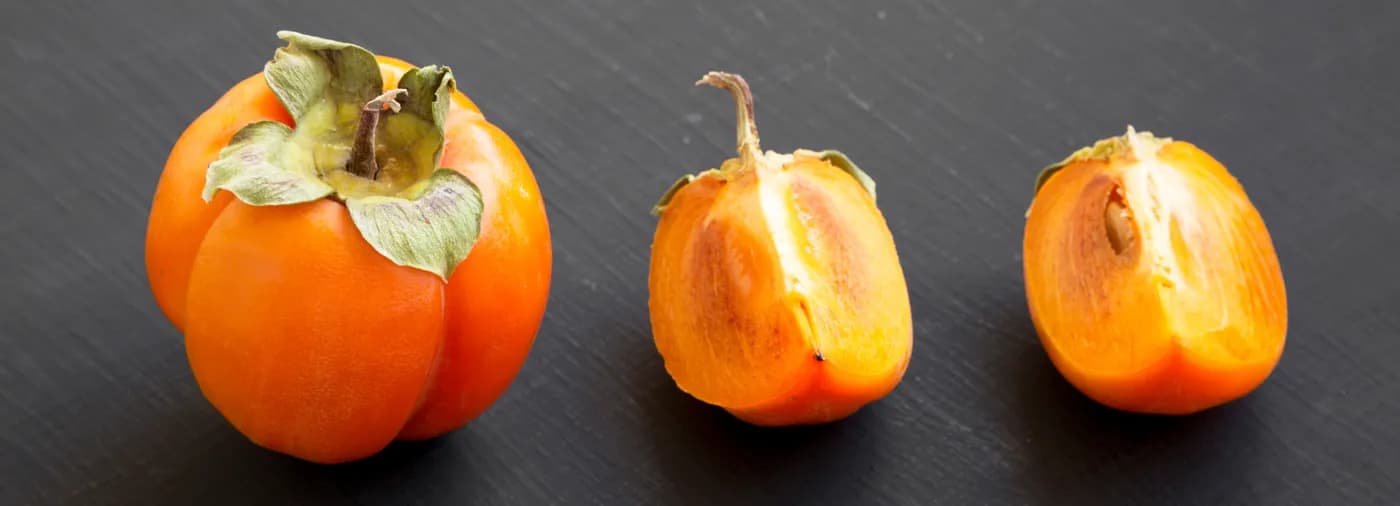
Key Takeaways
- Persimmons provide carbohydrate, fibre, vitamin C, carotenoids and potassium.
- Whole fruit can contribute to fibre and variety.
- Fuyu-type fruit can be eaten firm, but Hachiya-type fruit is astringent until very soft.
- Dried persimmon concentrates sugar and energy, so it needs a smaller portion than fresh fruit.
Persimmons provide carbohydrate, fibre, vitamin C, carotenoids and potassium. Astringent varieties need to ripen fully, while non-astringent varieties can be eaten firm. This guide examines persimmon with practical context and without exaggerated promises.
What persimmon provides
Whole fruit can contribute to fibre and variety. It does not treat constipation, cholesterol or high blood pressure by itself. A fresh persimmon supplies carbohydrate, mostly as natural sugars, along with fibre, vitamin C and carotenoids such as beta-carotene, which give the flesh its orange colour. It also provides potassium and small amounts of other minerals. In India, persimmons are grown in hill regions such as Himachal Pradesh, Uttarakhand and Jammu and Kashmir, where the fruit is sometimes called amarphal, and they reach markets mainly in late autumn and early winter.
Fresh fruit, dried fruit and portions
Fresh persimmon supplies carbohydrate, fibre and plant pigments along with its sweetness. Dried persimmon has less water, so sugar and energy are concentrated into a smaller portion. A fresh fruit or a modest amount of sliced fruit can fit a snack; dried pieces need a smaller serving. Pairing fruit with unsweetened curd or nuts may make the snack more satisfying.
What research can and cannot say about persimmon
Much of the scientific interest in persimmon centres on its tannins and other polyphenols, the same compounds that make unripe fruit taste dry and puckering. Laboratory and animal studies, and a small number of human studies using persimmon extracts or concentrated tannin preparations, have looked at markers such as cholesterol. Those results cannot be translated into the effect of eating one fruit as a snack. For now, persimmon benefits are best described in terms of what whole fruit offers in general: fibre, vitamins, plant pigments and variety within a balanced diet.
How to tell when a persimmon is ready
Persimmon varieties differ. Fuyu-type fruit can usually be eaten while firm, whereas Hachiya-type fruit is very astringent until it becomes soft and jelly-like. Eating an unripe astringent persimmon can leave the mouth feeling dry and unpleasant. Choose fruit without mould or leaking areas, wash it before cutting and refrigerate ripe or cut pieces. The skin is edible when washed and tolerated.
Easy ways to include persimmon
- Eat ripe fruit in a modest portion.
- Slice into oats or plain curd.
- Use in salad with nuts and greens.
- Choose unsweetened fresh or frozen forms.
Using persimmon in familiar meals
Slice firm non-astringent persimmon into a fruit bowl, add it to unsweetened curd, or combine it with nuts for a snack. Very soft astringent fruit can be eaten with a spoon or used in oats and baking. Recipes containing sugar, cream or pastry should be judged as complete dishes rather than credited with the nutrition of the fruit alone. Remove hard leaves and seeds where present, and offer soft, age-appropriate pieces to children. Persimmon benefits do not depend on eating the peel if texture or digestive tolerance is a problem. People managing blood glucose should count it as fruit and use the portion recommended for them; "natural sugar" still contributes carbohydrate. Dried products are convenient for travel but can be easy to overeat, so portion them before snacking. If the fruit is unfamiliar, begin with a small amount and learn the variety's correct ripeness instead of assuming mouth-puckering astringency is a sign of extra nutrition. Avoid fruit with fermented odour, leaking flesh or visible mould.
Possible drawbacks and warning signs
Large amounts, particularly of unripe astringent fruit, may cause digestive discomfort. People with diabetes or kidney disease may need tailored portions.
A sudden large portion can cause bloating or loose stools because of fibre and natural sugars. Very large amounts of unripe, astringent persimmon have rarely been linked with hard masses in the digestive tract, especially in susceptible people. Anyone with previous gastric surgery, poor stomach emptying or significant digestive disease should ask for individual advice. Persimmon is not a treatment for constipation, cholesterol or blood pressure.
Allergy to persimmon is uncommon but has been reported, sometimes in people who react to other fruits or pollen. Stop eating it if you notice itching in the mouth, hives or lip swelling, and seek urgent help for breathing difficulty or severe swelling.
A seasonal-fruit perspective
Persimmon benefits are similar in principle to those of other whole fruits: it adds fibre, colour, flavour and dietary variety. It does not need to be eaten daily or imported when local seasonal fruit is easier to find. Choose the correct ripeness for the variety, enjoy a practical portion and rotate it with guava, citrus, papaya or other fruit. That approach is more useful than treating persimmon as a rare superfood.
Editorial sources
Frequently Asked Questions
Related Articles
Grapefruit: Nutrition, Benefits and Easy Ways to Use It
Grapefruit can add variety, flavour and useful nutrients to a vegetarian eating pattern. Its exact nutrition depends on the form, serving and preparation.


Vegetarian protein: needs, myths and meal planning
Vegetarian meals can provide enough protein. Learn practical needs, simple Indian food sources, common myths and an easy meal-planning method.

High-Fibre Foods: Simple Indian Meal Ideas
Find high-fibre Indian foods, easy meal ideas, gradual intake tips and practical advice for constipation and daily health.