
Proteolytic Enzymes: Digestion, Supplements and What Is Proven
Protein-breaking enzymes have real digestive roles, but supplement claims need context. Learn when replacement therapy matters and why fruit is not a substitute.

Key Takeaways
- The body normally makes its own protein-digesting enzymes.
- Prescribed pancreatic enzymes differ from supplements.
- Bloating does not prove an enzyme deficiency.
- Enzyme supplements can cause side effects and allergies.
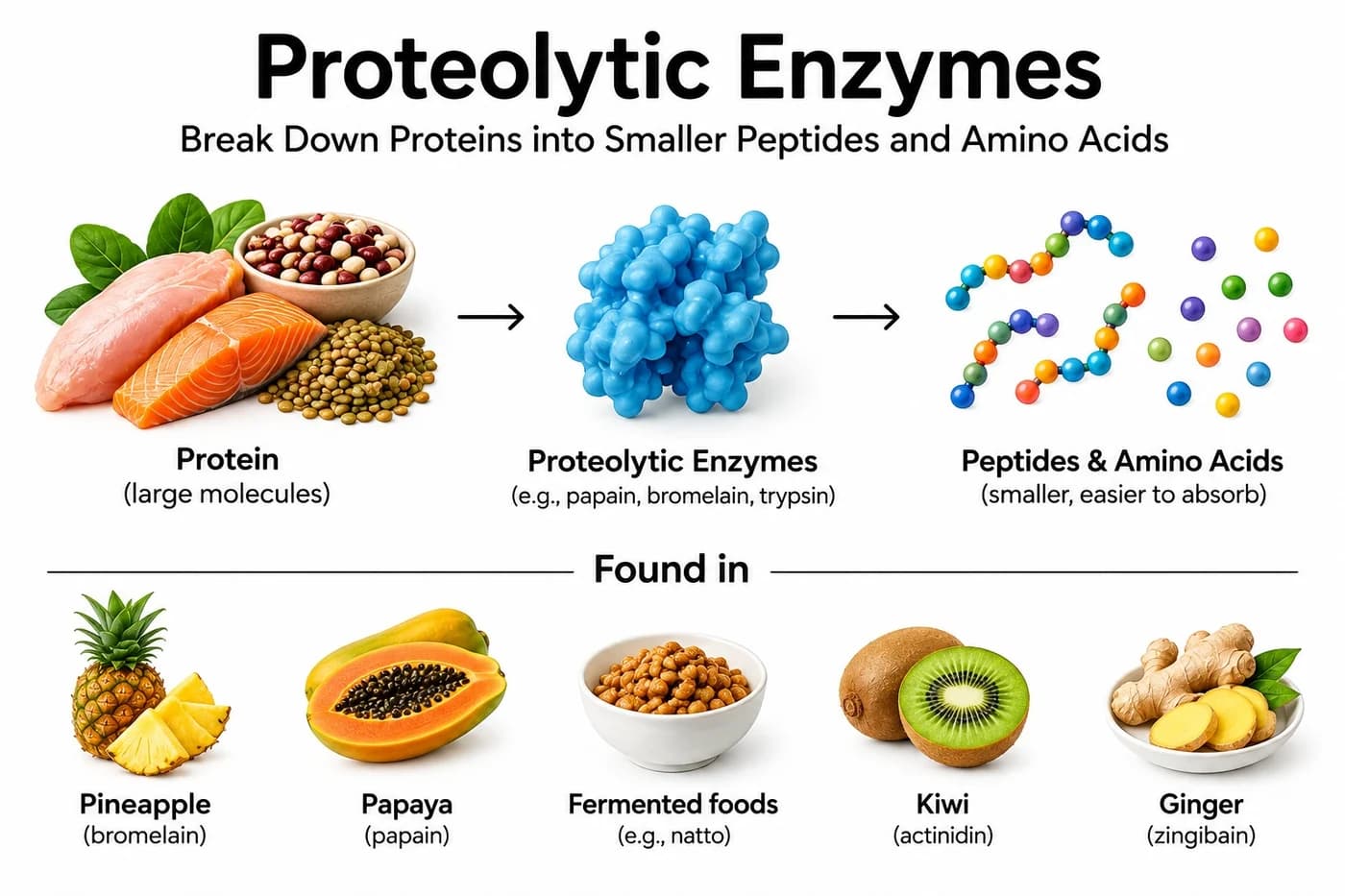
Proteolytic enzymes break proteins into smaller pieces. Your body already makes them as part of digestion, while some plants and supplement products contain other protein-breaking enzymes. The shared function does not make all these enzymes interchangeable.
The clearest medical use involves replacing digestive enzymes when the pancreas cannot provide enough. That is different from taking a general supplement for bloating, inflammation or recovery. Understanding the purpose helps separate useful treatment from a broad wellness promise.
What the body normally does
Protein digestion begins in the stomach and continues in the small intestine. Enzymes help break larger proteins into peptides and amino acids, which the body can absorb and use.
The pancreas supplies several digestive enzymes, including proteases that work on protein. Other enzymes handle fat and carbohydrate. A normal digestive system does not generally need extra enzymes after every meal.
Feeling full after a large dinner does not prove an enzyme deficiency. Meal size, speed of eating, lactose intolerance, constipation and other factors can cause discomfort without a shortage of proteases.
Where enzyme replacement matters
Exocrine pancreatic insufficiency is a condition in which the intestine cannot digest food normally because pancreatic enzyme supply or function is inadequate. It can occur with conditions such as chronic pancreatitis or after certain pancreatic operations.
Treatment often includes pancreatic enzyme replacement therapy, called PERT. These medicines contain a mixture of enzymes and are taken with food according to a specific plan.
A papaya tablet or an over-the-counter digestive blend is not an equivalent substitute. If you have been prescribed PERT, keep using the prescribed formulation and timing rather than replacing it with a product that sounds more natural.
Food sources are a different conversation
Pineapple contains bromelain, a group of protein-breaking enzymes. Papaya is associated with papain, particularly concentrated in latex from the unripe fruit. A serving of ripe fruit is not the same exposure as an extract used in a supplement.
These fruits can be enjoyed for flavour, water, fibre and other nutrients. You do not need to eat them after every protein-containing meal to make digestion work.
Heat can reduce enzyme activity, but that does not make cooked fruit nutritionally useless. The role of food is broader than preserving every active enzyme. A cooked preparation can still be enjoyable and useful within a varied diet.
What do inflammation claims mean?
Bromelain has been studied for several conditions, including pain and swelling after wisdom tooth removal. Some findings are promising, but studies are limited and often use specific preparations or combinations.
That does not establish that any proteolytic enzyme blend treats arthritis, improves every sports recovery or clears inflammation throughout the body. The outcome and the actual product matter.
A medically supervised topical bromelain preparation is also used for removing damaged tissue in serious burns. This is a specialised treatment applied by professionals, not evidence that an oral supplement has the same effect or that pineapple should be put on a wound.
Bloating does not identify the right enzyme

Different digestive problems call for different approaches. Lactase helps break down lactose; it is not a protease. Someone who reacts to milk sugar will not necessarily benefit from an enzyme chosen to break protein.
Likewise, persistent greasy stools, unexplained weight loss or ongoing diarrhoea deserve assessment. Taking a general blend can delay identifying a condition that needs specific treatment.
For ordinary discomfort, first consider the pattern: does it follow a very large meal, a particular food or a rapid increase in fibre? A simpler food or portion adjustment may be more useful than treating every symptom as enzyme failure.
The supplement name may hide a mixture
Products may combine bromelain, papain, pancreatin or other enzymes with herbs and additional ingredients. A study of one enzyme does not establish the effect or safety of the entire blend.
The amount by weight also does not fully describe an enzyme’s activity. Different enzymes use different activity measures, so a bigger milligram number is not a reliable way to rank products.
You do not need to become an enzyme-unit expert to decide whether you need a supplement. The more useful question is whether there is convincing evidence for your specific goal. A complex label cannot substitute for that evidence.
Side effects and allergies are possible
Oral bromelain can cause stomach upset or diarrhoea. Other products have their own safety profiles, and allergic reactions can occur. A plant-derived ingredient is not automatically suitable for someone with a relevant allergy.
People taking medicines that affect bleeding or preparing for surgery should not add enzyme supplements casually. Interaction information is incomplete, and the specific ingredients need consideration.
Pregnancy and breastfeeding are also settings with limited safety evidence for many concentrated enzyme products. Ordinary fruit portions and medicinal extracts are different decisions; reassurance about eating pineapple does not establish a supplement dose.
Vegetarian diets may affect product choice
Some medical pancreatic enzymes are derived from animal pancreas, commonly porcine sources. Other enzymes are plant- or microbe-derived. The source can matter to personal dietary preferences or religious practice.
If a prescribed treatment conflicts with a concern, discuss the options with the treating team. Do not stop an effective enzyme replacement or substitute fruit on your own.
For people without a medical need, this is another reason to avoid assuming every digestive supplement is simply a concentrated food. Formulation and purpose matter as much as the name on the front.
Support digestion with an ordinary routine
Eat at a comfortable pace, choose portions that suit you and notice food-specific patterns without removing everything at once. Keep fibre increases gradual and address recurring constipation or other symptoms appropriately.
Adequate protein still belongs in the diet. There is no reason to restrict dal, tofu, paneer or other protein foods because an advertisement says the body cannot digest modern meals without help.
Proteolytic enzymes have real biological functions and selected medical uses. That is enough to take them seriously without expanding the claim into a daily requirement for everyone who feels bloated after lunch.
Editorial sources
Frequently Asked Questions
Related Articles
Papaya Benefits: Nutrition and Simple Serving Ideas
Learn papaya nutrition, realistic benefits, serving ideas, digestion facts and safety tips in clear and simple language.

Pineapple Benefits: Nutrition and Safe Portions
Explore pineapple nutrition, realistic benefits, bromelain evidence, easy serving ideas and safety tips in simple language.
Papain: What It Is and Whether You Need It
Papain comes from papaya, but a concentrated enzyme supplement is not the same as a slice of fruit. Here is what it does and whether you need it.
How to Improve Digestion: Natural Methods through Yoga and Lifestyle
Bloating, constipation, slow transit, acid reflux, and IBS symptoms are ultimately driven by the autonomic nervous system, the gut-brain axis, and.
