
Saturated Fat: Indian Food Sources, Daily Limits and Simple Swaps
Saturated fat raises LDL cholesterol. See where it hides in Indian meals, what the WHO 10% limit means in grams and easy swaps.
Key Takeaways
- Ghee, butter, cream, cheese, coconut oil, palm oil and bakery snacks are rich in saturated fat.
- WHO advises keeping saturated fat to 10% of energy or less, about 22 g on 2,000 kcal.
- Replace it with unsaturated fats from nuts, seeds and oils, not with biscuits or sugar.
- On labels, more than 5 g saturated fat per 100 g counts as high; 1.5 g or less is low.
- Change one daily habit first, such as creamy tea or an unmeasured pour of ghee.
Saturated fat is found in ghee, butter, cream, cheese, full-fat milk, coconut oil, palm oil, fatty meat and many bakery and fried snacks. The goal is not to remove fat from your diet. It is to keep saturated fat limited and replace some of it with unsaturated fats, rather than with refined flour or sugar.
Why saturated fat matters
Eating a lot of saturated fat raises LDL cholesterol, often called "bad" cholesterol, in many people. LDL is one contributor to heart disease and stroke, alongside blood pressure, diabetes, smoking, inactivity, age and family history. People respond differently, but major health bodies, including the WHO, agree on the same direction: replace saturated fats with polyunsaturated and monounsaturated fats.
Where saturated fat adds up in Indian meals
Many people think only of the spoon of ghee on a roti. In practice, saturated fat often comes from:
- creamy tea or coffee made with full-cream milk several times a day
- butter, malai, cream and cheese in restaurant gravies
- biscuits, cakes, puffs, khari and namkeen made with palm oil or vanaspati
- coconut-based curries and chutneys used in large amounts
- paneer and full-fat dairy eaten in big portions every day
You do not need to ban these foods. Notice which ones appear daily. Changing a daily habit matters more than an occasional festival meal.
How much is too much
The WHO advises keeping saturated fat to 10% or less of total energy for everyone aged two and above. Each gram of fat supplies about 9 kcal, so on a 2,000 kcal diet that works out to about 22 g a day or less. The NHS gives a simpler guide of no more than 30 g a day for men and 20 g for women. Treat these as upper limits, not targets. If you have high LDL cholesterol, heart disease or a strong family history, your doctor may advise less.
The swap is what counts
Replacing ghee with extra biscuits will not help your heart. Useful swaps replace saturated fat with unsaturated fat:
- Cook with a measured amount of groundnut, mustard, sunflower, rice bran or olive oil instead of an unmeasured pour of ghee or vanaspati.
- Snack on a handful of peanuts, roasted chana or seeds instead of cream biscuits or puffs.
- Use a curd or tomato base for some gravies instead of cream.
- Choose toned or double-toned milk for tea if you drink several cups a day.
Oil still supplies energy, so the aim is a better type of fat, not more of it. Our guide to good fats vs bad fats lists everyday sources of each.
Ghee and coconut oil
Ghee and coconut oil add flavour, but both are rich in saturated fat, and being "natural" or "traditional" does not change that. A teaspoon of ghee on dal can fit a balanced diet; ghee used as the main cooking fat for every dish is a different matter. Our article on ghee covers practical portions.
How to read a food label
Labels list total fat, saturated fat and trans fat separately. Saturated fat is one part of the total, so a food can be high in fat but mostly unsaturated, as with nuts and seeds. When comparing two similar packets:
- Compare saturated fat per 100 g, not per serving, because serving sizes differ.
- As a rough guide, more than 5 g of saturated fat per 100 g is high and 1.5 g or less is low.
- Work out what you actually eat. If a snack has 5 g per 100 g and you eat 30 g, you get 1.5 g.
- Check energy, salt and sugar too. A "trans-fat free" or "low fat" claim does not make a product low in saturated fat or sugar.
Dairy can stay
Milk, curd and paneer provide protein and calcium. If they are daily staples, a lower-fat milk or curd is one easy change for adults trying to cut saturated fat. This is not a rule for young children, people with a poor appetite or anyone recovering from illness, whose energy needs may be higher.
Keep cholesterol in context
You cannot feel high LDL cholesterol. Get it tested as advised and discuss the result with your blood pressure, blood sugar, family history and medicines. Diet helps, but it may not replace prescribed cholesterol treatment. Pick one repeated source of saturated fat to change this week and build from there.
Editorial sources
Frequently Asked Questions
Related Articles
Good fats vs bad fats: choose fats wisely
Understand good fats vs bad fats in simple words. Learn which vegetarian fats to choose, what to reduce and how to read food labels better.

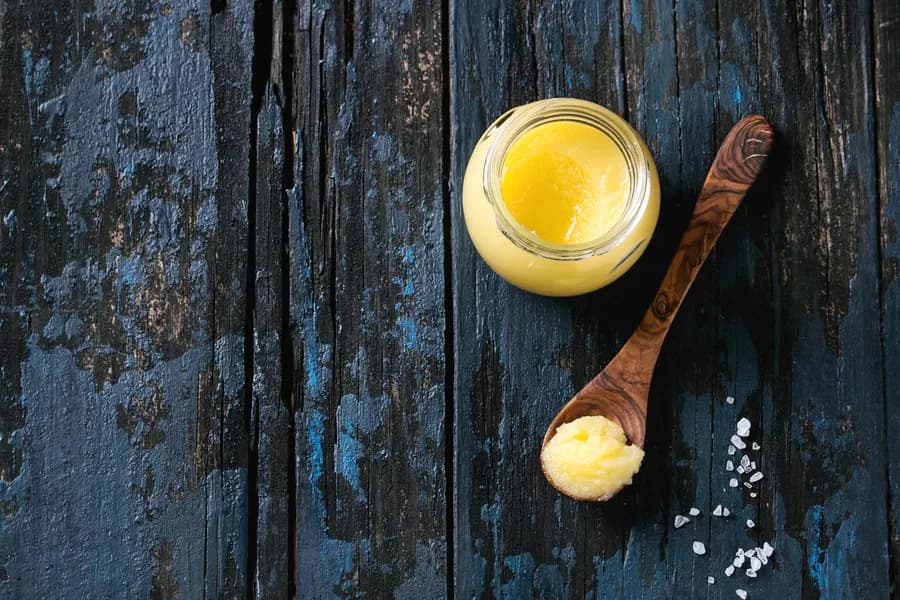
Ghee: Nutrition, Portions and How It Fits a Balanced Diet
Ghee is clarified butter made by removing water and milk solids. It is concentrated fat and adds rich flavour in small amounts.


Cholesterol Diet Chart: A Simple Daily Plan to Manage Your Levels
A cholesterol diet chart shows what to eat more of and what to cut back on to manage LDL and HDL levels. See a clear daily structure you can follow at.
Ghee vs Refined Oil: Choose Healthy Fats Wisely
Understand ghee vs refined oil in simple words. Learn how to use fats in moderation, avoid reheated oils and choose better Indian cooking habits.