
Meditation for Beginners: A Simple Way to Actually Start
Meditation for beginners doesn't mean emptying your mind completely — that's the misunderstanding that makes most people quit. Start the right way with Habuild's guided sessions.
Key Takeaways
- Most beginners quit because they wrongly believe meditation means an empty mind.
- A wandering mind isn’t failure – noticing and returning is the actual exercise.
- Catching your mind wander 15 times in 3 minutes counts as 15 successful reps.
- No cushions, apps, or 30-minute blocks needed to start – just a few honest minutes.
- Lower the bar to ‘notice and return’ and most of the frustration disappears.
If you have tried meditation for beginners advice before and quit after two days, you are not alone, and you did nothing wrong. Most advice written for meditation for beginners skips straight to techniques without fixing the one misunderstanding that actually causes people to quit. Most people who give up on meditation quit because somewhere along the way, they picked up the idea that they are supposed to sit down and empty their mind completely. That is not what meditation is, and it was never going to work that way. This guide is written for the person who wants to start simply, without special cushions, apps, or thirty minutes of free time they don’t have. We will walk through exactly how to sit, how long to try, what to do when your thoughts refuse to cooperate, and how to build a small home practice that actually sticks. If you would like to understand what meditation really is before you dive into the how, it helps to start here, but you don’t need to — you can begin right now with what’s below.
Why Meditation for Beginners Often Doesn’t Stick (and Why It Isn’t Your Fault)
Here is the single biggest misunderstanding that trips up almost everyone new to this: the belief that meditation means having no thoughts at all. You sit down, close your eyes, and within ten seconds your brain is making a grocery list, replaying an awkward conversation from 2019, or planning tomorrow’s meeting. New meditators assume this means they are “bad at it,” get frustrated, and stop. This single misunderstanding derails more attempts at meditation for beginners than anything else.
Here is the truth nobody tells beginners clearly enough: the mind wandering is not a sign that you are failing. It is not even a sign that something is wrong. A wandering mind is simply what minds do — that is their job. Meditation isn’t about stopping thoughts. It is about noticing when you have drifted off and gently coming back, again and again. That coming-back moment, not the emptiness, is the actual exercise. It is closer to a bicep curl for your attention than it is to achieving a blank, silent state.
So if you sit for three minutes and catch yourself wandering fifteen times, that is not a bad session. That is fifteen repetitions of the one skill you’re actually training. Once this shifts in your head, meditation stops feeling like a test you keep failing and starts feeling like something you can simply do, imperfectly, every day.
This is really the whole secret behind meditation for beginners: almost every early struggle is really just a mismatch between what you expected and what the practice actually asks of you. Lower the expectation to “notice and return,” and the frustration mostly disappears on its own.
Meditation for Beginners: Your First Session, Step by Step
Once the mindset above clicks, the mechanics of meditation for beginners are refreshingly simple.
This is the part most guides overcomplicate. You do not need incense, a meditation app subscription, or a special room. You need about five minutes and a place to sit.
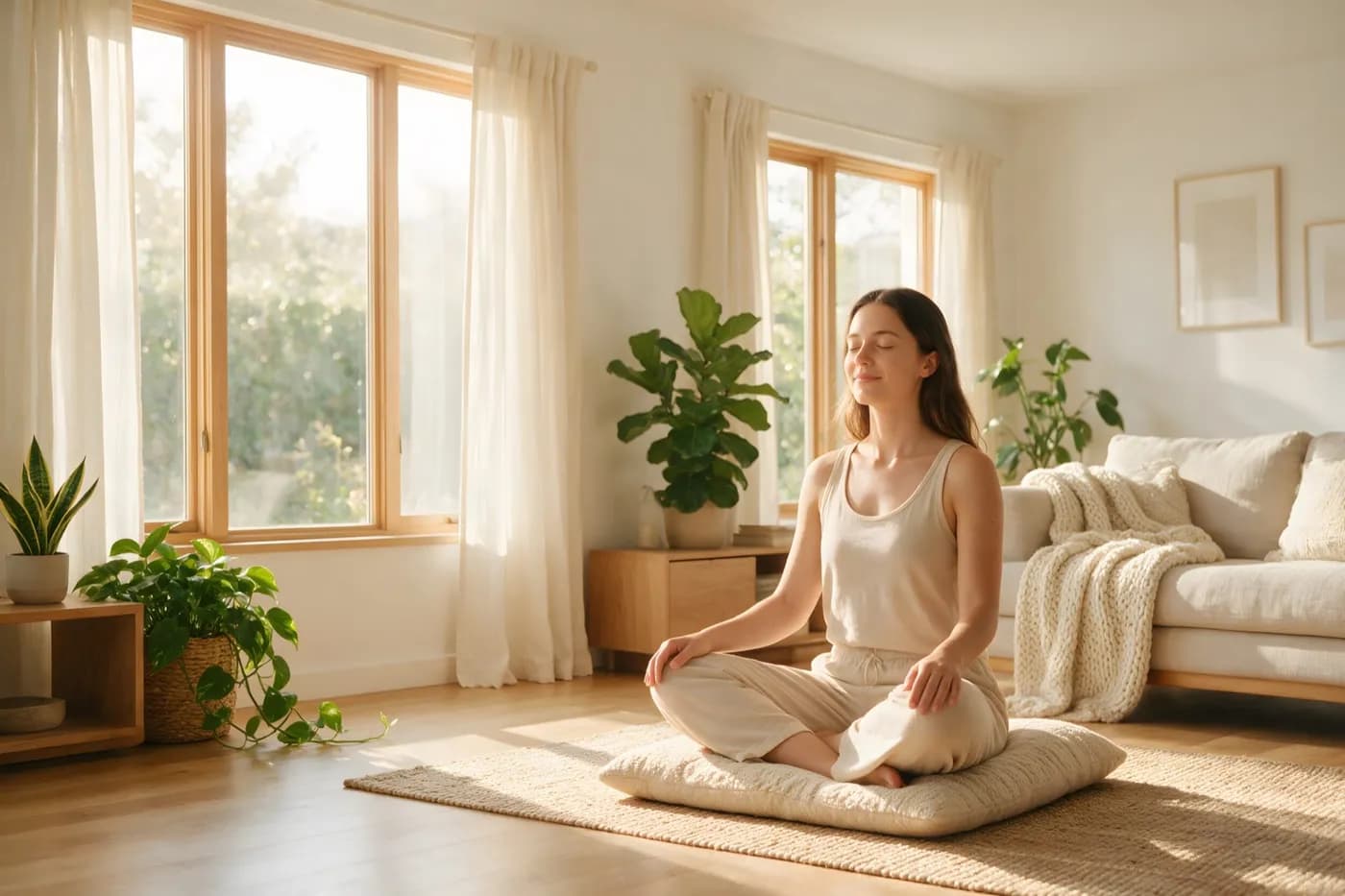
How to sit. A chair is completely fine — feet flat on the floor, back reasonably straight but not stiff, hands resting on your knees or in your lap. If you prefer the floor, sit cross-legged on a cushion or folded blanket so your hips are slightly higher than your knees; this takes pressure off your lower back. There is no “correct” posture you must force yourself into. If you’re curious about postures that make sitting more comfortable over time, this piece on yoga poses for meditation is a useful next stop, but for your very first session, any stable, comfortable seat works. Posture worry is one of the most common small hesitations in meditation for beginners, and it’s rarely as important as people fear.
How long. Start with two to five minutes. Not twenty, not thirty. Most beginners quit because they set the bar too high on day one and then feel defeated when they can’t sit still for half an hour. Five honest minutes done consistently will teach you more than one heroic thirty-minute session you never repeat.
What to do with your attention. Close your eyes, or lower your gaze softly if you’d rather keep them open. Bring your attention to your breath — not changing it, not breathing deeply on purpose, just noticing the natural rise and fall of your chest or belly. That’s the entire instruction. You are simply watching the breath the way you’d watch a small, steady flame.
When your mind wanders. It will — usually within seconds. When you notice you’ve drifted into thinking about lunch or a work email, that noticing is the win. Gently, without any self-criticism, bring your attention back to the breath. Do this as many times as you need to. There is no punishment for wandering and no bonus points for not wandering. You just keep returning.
That’s it. That is a complete first session. Everything else you read about meditation is a variation or refinement of this basic loop: sit, breathe, notice, return.
Meditation for Beginners: Practicing at Home
One reason meditation for beginners advice often fails in real life is that people wait for perfect conditions — a silent house, an empty schedule, the “right” mood. None of that is necessary, and waiting for it is usually just procrastination in disguise.
Pick a small, quiet-ish corner. It does not need to be a dedicated meditation room. A corner of your bedroom, a spot on the balcony, or even a chair in the living room before everyone else wakes up works fine. Consistency of location helps your brain associate that spot with settling down, but don’t let the lack of a “perfect” space stop you from starting today.
Choose a time that you’ll actually keep. Early morning works well for many people because the house is quieter and the mind hasn’t picked up the day’s noise yet. But if mornings are chaotic in your home, a few minutes after work or right before bed is just as valid. The best time is simply the time you will realistically show up for.
Use a timer, not a clock-watching mindset. Set a timer on your phone for your chosen duration and place the phone face-down or on airplane mode. This does two things: it stops you from wondering “has it been long enough yet?” every thirty seconds, and it removes the temptation to check notifications mid-session. When the timer goes off, you’re done — no need to judge whether the session felt “good enough.” A session where your mind wandered constantly counts exactly as much as one that felt calm and easy. Removing that “am I doing this right” checking habit is one of the fastest ways to make meditation for beginners feel less stressful.
If you’re more comfortable following instructions in Hindi, Habuild also has a full guide on meditesana kaise karem that walks through these same basics in Hindi, which some readers find easier to settle into.
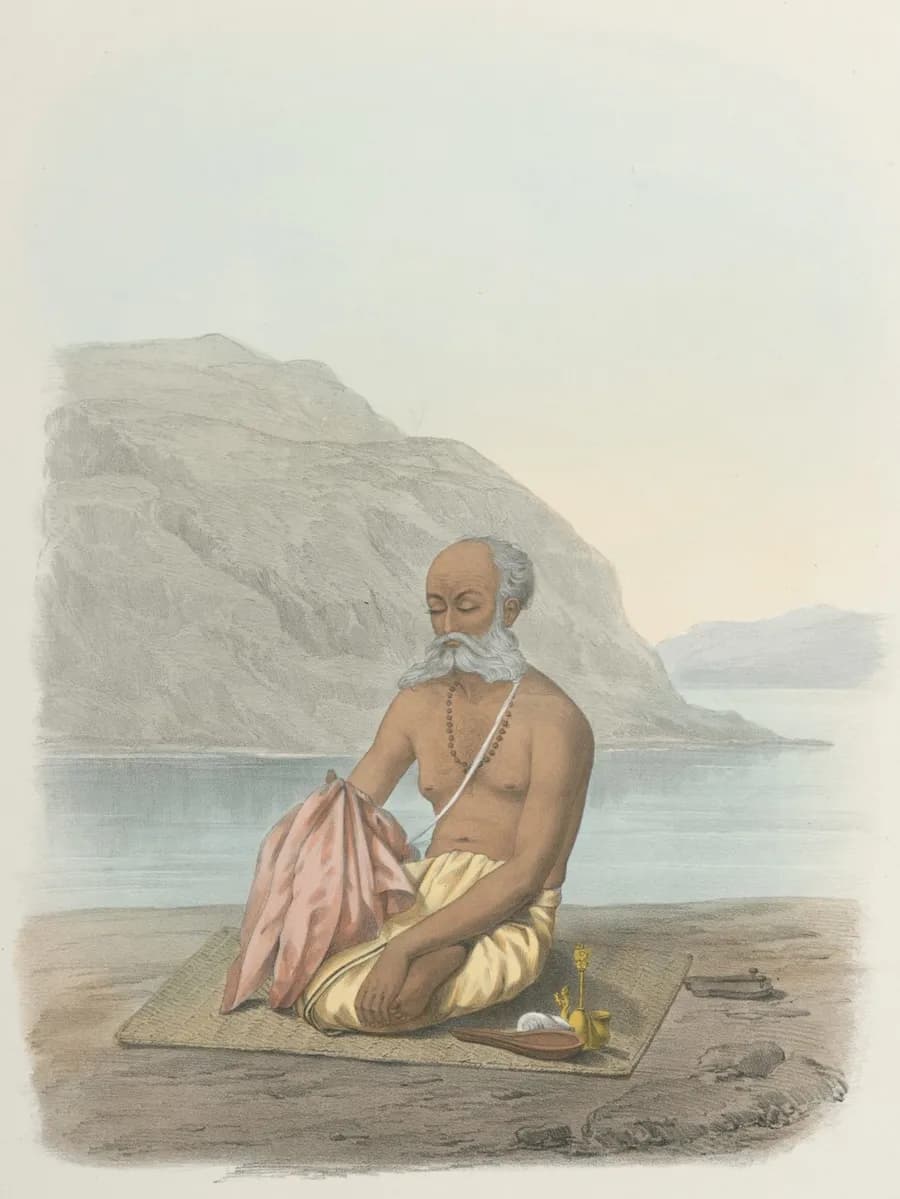
Photo: Haripriya 12, CC BY-SA 4.0, via Wikimedia Commons
A Simple 7-Day Plan for Meditation for Beginners
You don’t need a rigid program to begin — in fact, treating this too seriously is part of what makes beginners quit. Think of the week below as loose scaffolding for meditation for beginners, not a strict schedule. Skip a day if life gets in the way and just pick back up; nothing is lost. The point of a starter week isn’t to hit every day perfectly — it’s to give your first few sits some gentle shape so you’re not starting from zero each time.
- Day 1–2: Just breath awareness, 3 minutes. Sit, notice the breath, return your attention whenever it wanders. Nothing else.
- Day 3–4: Add a short body scan before the breath work — spend about a minute noticing sensations from your feet up to your head, then shift attention to the breath for another 2–3 minutes.
- Day 5–7: Try a short guided session, 5–10 minutes, using any beginner-friendly audio you like. Having a voice guide you can be a relief in the first week, since it takes the “am I doing this right” question off your plate.
By the end of the week, you’ll likely notice that sitting down feels a little less foreign than it did on day one. That’s the entire goal — not stillness, not enlightenment, just familiarity with the process of sitting and returning.
Meditation for Beginners: Styles Worth Exploring Next
Once the basic sit-breathe-return loop feels comfortable, you may want to explore which style suits you best. None of the common meditation techniques for beginners require you to abandon what you’ve already learned above — they simply give your attention a different anchor to rest on. You don’t need to master any of these right away — just knowing they exist helps you choose where to go deeper later.
Breath awareness is what we practiced above: simply observing natural breathing without controlling it. It’s the most beginner-friendly entry point because there’s nothing extra to learn.
Guided audio meditations involve a teacher’s voice walking you through the session — where to place attention, when to notice sensations, when to return to the breath. These are especially helpful in the first few weeks of meditation for beginners because they reduce the guesswork.
Mantra-based meditation involves silently repeating a word or short phrase as your anchor instead of the breath. Some people find a mantra easier to hold onto than the breath, especially on days when the mind is unusually busy.
There’s no single “correct” style for everyone. Many people naturally settle into a preference after trying each for a few sessions, and that’s a perfectly good way to decide — there’s no wrong door into meditation for beginners.
Meditation for Beginners: Building a Daily Habit
The techniques above are simple on purpose, because simple is what actually gets repeated. Most of what makes meditation for beginners hard to sustain isn’t the sitting itself — it’s trying to do too much, too soon, without any support around it. If you’d like some structure and company while you build this into a daily habit, Habuild’s free yoga challenge is a gentle way to pair a few minutes of meditation with movement and breathing practice each day, without any pressure to get it perfect. Showing up on most days, in an ordinary and unremarkable way, will always beat a handful of perfect sessions followed by weeks of nothing.
Frequently Asked Questions
Related Articles

Binaural Beats Meditation: Does It Work?
Binaural beats meditation plays two slightly different tones, one in each ear, so the brain perceives a third pulsing beat used as a calming anchor. Learn how to try it, and what the evidence actually supports.

10 Minute Meditation: A Quick Daily Reset
A 10 minute meditation is long enough to settle into real calm and short enough to actually do daily. Find your own quick daily reset with Habuild's guided sessions.
Mantra Meditation: How It Works and How to Start
Mantra meditation uses a repeated word or sound instead of the breath as your anchor — often easier to hold onto on busy, distracted days. Learn how to start with Habuild's guided sessions.