
Ujjayi Pranayama: Steps, Benefits and Precautions
Ujjayi Pranayama is the steady, ocean-wave breath heard in most yoga classes — yet few people learn exactly how to do it. Learn the steps, benefits, and precautions with Habuild.
Key Takeaways
- Called the ‘ocean breath’ for the soft, whooshing sound made at the back of the throat.
- Often practiced throughout Vinyasa and Ashtanga flows, not just while sitting still.
- Find the throat constriction first by exhaling through your mouth like fogging a mirror.
- Sits in the calming, steadying category, which is why it pairs well with movement.
- Needs no special equipment – just a willingness to experiment with sound.
If you’ve ever taken a yoga class and heard a soft, steady sound like ocean waves rolling in and out, you’ve probably heard Ujjayi Pranayama. It is one of the most commonly practiced breathing techniques in yoga, and yet a lot of people never learn exactly what it is or how to do it correctly. In this guide, we’ll walk through everything you need to know about Ujjayi Pranayama — what it means, how to practice it step by step, its real benefits, and a few precautions worth knowing before you begin.
What is Ujjayi Pranayama?
Ujjayi is a Sanskrit word that roughly translates to “victorious” or “one who is victorious.” Because of the ocean-like sound it creates, it’s also lovingly called the “ocean breath.” In practice, this technique is a slow, deep breathing method done through the nose, with a slight, gentle constriction at the back of the throat. This constriction is what creates the soft, whooshing sound — almost like the sound of waves, or of wind moving through a narrow space.
Unlike some other pranayama techniques that are practiced only while sitting still, Ujjayi Pranayama is unique because it’s often used throughout an entire yoga practice — especially in Vinyasa and Ashtanga yoga — as a steady companion to movement. You breathe this way while you flow from one pose to the next, letting the breath set the pace and rhythm of your practice. It can also be practiced on its own, seated quietly, as a form of pranayama and meditation.
At its heart, this practice is simply about breathing with a little more awareness, a little more sound, and a little more intention than we normally do. In Sanskrit texts, this quality of breath is sometimes described alongside other pranayama methods, each associated with a different effect on the mind and body — some designed to energise, others to cool or calm. Ujjayi sits comfortably in the calming, steadying category, which is part of why it pairs so naturally with physical movement rather than working against it.
It’s worth noting that many people first encounter this sound without knowing its name — teachers sometimes simply say “breathe audibly” or “let your breath sound like the sea,” and that instruction alone is often enough for a room full of students to slip into it instinctively. The technique doesn’t require any special equipment, prior experience, or particular body type. All it asks for is a quiet moment, a willingness to experiment with sound, and a bit of patience while the sensation becomes familiar.
How to Do Ujjayi Pranayama: Step-by-Step
Learning how to do Ujjayi Pranayama is easier than it sounds, and most people pick up the basic technique within a few tries. Here’s a simple way to learn it.
Step 1: Find the throat constriction with your mouth open
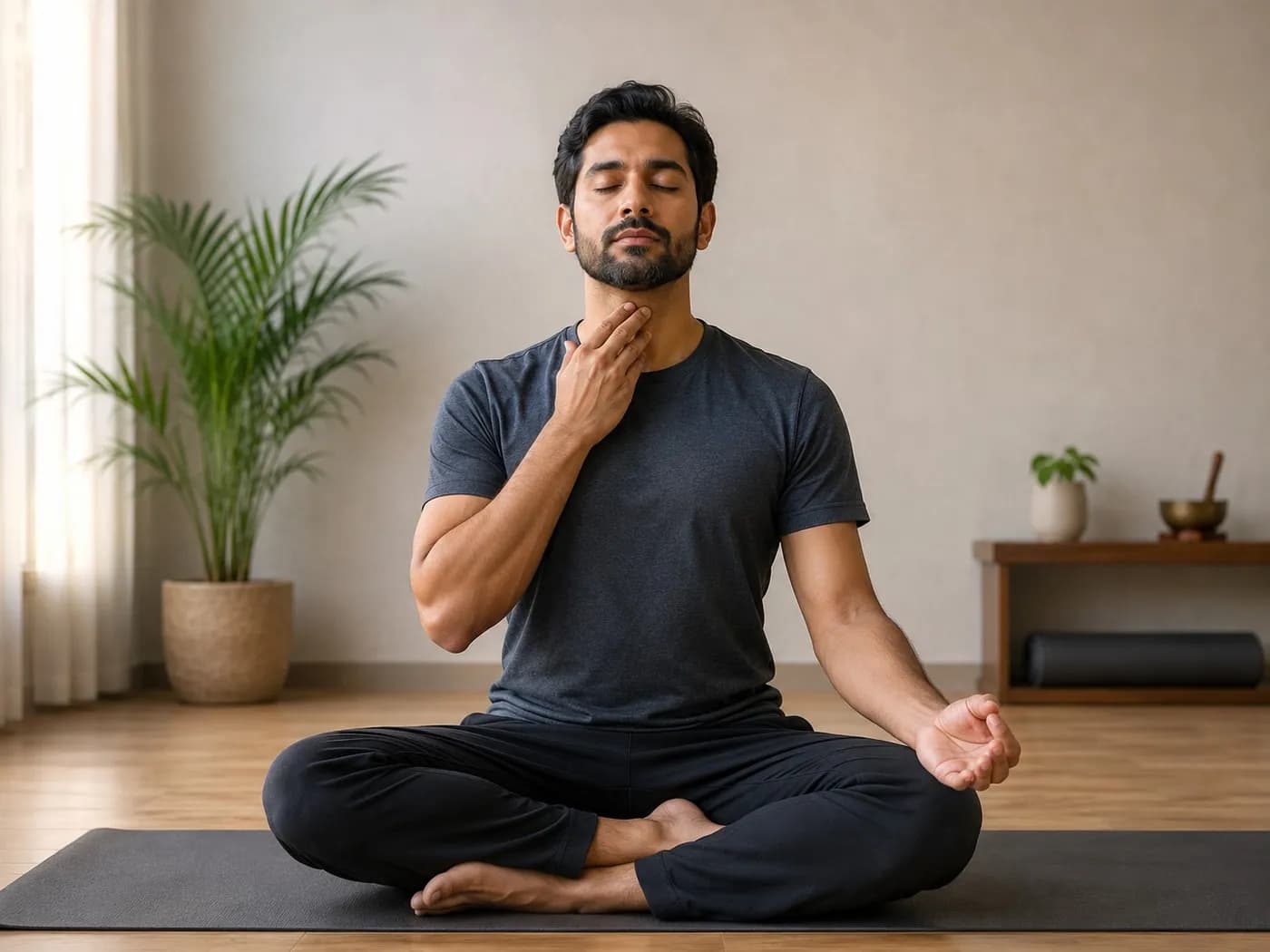
Sit comfortably, take a breath in, and then exhale through your mouth as if you’re trying to fog up a mirror on a cold morning. You’ll notice a slight tightening at the back of your throat as the air passes through — that gentle “haaa” sound is exactly the sensation you’re aiming for.
Step 2: Recreate the same sensation with your mouth closed
Once you’ve felt that fogging-the-mirror sensation, close your mouth and try to make the same sound and the same throat sensation, but breathing through your nose instead. It may take a few attempts. Don’t force it — the constriction should stay soft and relaxed, never tight or strained.
Step 3: Slow down the breath
Once you can create the sound through your nose, begin to slow the breath down. Inhale slowly through your nose, keeping the gentle throat constriction, and exhale slowly the same way. Both the inhale and the exhale should be long, smooth, and roughly equal in length, with that soft ocean sound present throughout.
Step 4: Practice it seated, then bring it into movement
Start by practicing this breath seated for a few minutes with your eyes closed, simply getting comfortable with the sound and rhythm. Once it feels natural, try carrying the same breath into gentle movement — for example, while doing a few rounds of Surya Namaskar or any simple asana sequence. Let your breath guide how slowly or quickly you move, rather than the other way around.
There’s no need to rush this. Many people take a few weeks of regular practice before Ujjayi Pranayama starts to feel effortless, and that’s completely normal.
Common mistakes beginners make
A few small missteps are common when you’re first learning how to do Ujjayi Pranayama, and knowing them in advance can save you some frustration. The most frequent one is squeezing the throat too hard, which turns the soft ocean sound into a harsh, strained rasp — if it hurts or tires your throat quickly, you’re pushing too much effort into it. Another common mistake is holding tension in the shoulders, jaw, or forehead while concentrating on the breath; the rest of the body should stay loose even as the throat does its gentle work. Some beginners also rush the pace, turning what should be a long, unhurried breath into short, choppy ones just to keep the sound going. If this happens, simply pause, take a few normal breaths, and start again slower. And finally, don’t worry if the sound isn’t loud or dramatic in the beginning — a quiet, barely-there whisper of sound is completely fine, and it usually becomes more audible naturally as you relax into the practice over several sessions.
Ujjayi Breathing Technique During Asana Practice
One thing that makes the Ujjayi breathing technique special is how it’s used differently depending on the context. During seated pranayama or meditation practice, Ujjayi is usually slow, deep, and the main focus of your attention. During asana practice, especially in Vinyasa or Ashtanga styles, it becomes more of a steady background rhythm — something you maintain quietly in the background while your attention moves between the breath and the pose.
If you’re new to using this breath during movement, start small. Try holding the Ujjayi breathing technique for just a couple of poses at a time, rather than an entire practice. As your comfort grows, so will your ability to sustain it. Over time, many practitioners find that this breath naturally becomes a steady anchor that ties the whole practice together, whether they’re standing in a strong pose or moving through a gentle flow.
If you’d like to explore how Ujjayi fits alongside other styles of pranayama, it helps to look at this overview of different yoga breathing techniques, many of which serve very different purposes — some calming, some energizing, some balancing. Seeing where Ujjayi sits among these other methods can make it easier to understand why teachers reach for it so often, whether the goal is a quiet meditation sit or a sweaty, dynamic flow class.
Photo: Thamizhpparithi Maari, CC BY-SA 3.0, via Wikimedia Commons
Ujjayi Pranayama Benefits
The Ujjayi Pranayama benefits are fairly well recognised among long-time practitioners, though it’s worth being honest about what this breath can and can’t do. Here are the benefits most commonly experienced with regular practice:
A calmer nervous system. The slow, steady rhythm of Ujjayi Pranayama naturally encourages longer exhales, which can help gently soothe the nervous system. Many people find it easier to feel settled and grounded after even a few minutes of practice.
Better breath regulation during physical practice. Because Ujjayi has an audible sound, it works almost like a built-in guide. If your breath starts sounding rushed or shaky during a pose, that’s often a sign to slow down or ease off a little. This makes it a genuinely useful tool for pacing yourself through a yoga session.
A mild sense of internal warmth. Some practitioners describe a gentle, warming sensation building up during sustained practice, particularly when combined with movement. This is often linked to the increased effort of the slow, controlled breath rather than anything dramatic.
Improved focus and concentration. Because Ujjayi requires a bit of attention to maintain — you have to keep noticing the throat constriction and the rhythm of the breath — it naturally draws your mind away from wandering thoughts and into the present moment.
It’s worth saying clearly: Ujjayi Pranayama is not a cure for any medical condition, and its effects vary from person to person. Think of it as a supportive tool for calm, focused breathing, not a quick fix or a dramatic transformation technique.
Precautions for Ujjayi Pranayama
Ujjayi Pranayama is considered one of the gentler and safer pranayama techniques, and most people can practice it without any issues. That said, a few sensible precautions are worth keeping in mind.
- If you have low blood pressure, go slowly and avoid overdoing the throat constriction or holding the breath for long periods, as mild constriction techniques can occasionally cause lightheadedness in sensitive individuals. If you ever feel dizzy, simply return to normal breathing and rest.
- Never force or strain the throat. The constriction in this breathing technique should always stay soft and comfortable. If your throat feels sore, tight, or tired after practice, you’re likely constricting too hard — ease off and let the sound become quieter.
- Avoid practicing on a very full stomach, as with most pranayama and yoga practices. Give yourself a couple of hours after a heavy meal.
- If you have any respiratory condition, high blood pressure, or you’re pregnant, it’s a good idea to learn this technique under the guidance of an experienced teacher first, and to check with your doctor if you have specific health concerns.
- Stop if anything feels wrong. As with any breathing practice, discomfort is a signal to pause, not push through.
With these simple precautions in mind, this practice remains accessible to most healthy adults, whether you’re brand new to yoga or have been practicing for years.
Bringing Ujjayi Pranayama Into Your Daily Practice
The best way to get comfortable with Ujjayi Pranayama is simply to practice it regularly, even if it’s just for a few minutes a day. You might start with five slow, seated rounds each morning, and slowly build from there as it becomes second nature. Some days the sound will come easily; other days your throat might feel a little stiff or your mind a little too busy to settle into the rhythm — both are completely normal, and neither means you’re doing it wrong.
Understanding a little more about what prana actually means in yoga can also deepen your appreciation for why breath-based practices like this one hold such an important place in yogic tradition. Prana, often translated as life force or vital energy, is considered to move through the body via the breath, which is exactly why techniques like Ujjayi are treated with so much respect in yogic philosophy — they’re seen as a direct way of working with this energy, not just a physical exercise.
If you’re looking for a simple, structured way to build a consistent yoga habit — with breathing practices like Ujjayi woven naturally into guided sessions — Habuild’s free yoga challenge is a gentle place to start, especially if you’re someone who does better with a little daily structure and community support.
Frequently Asked Questions
Related Articles
Bhramari Pranayama: Steps, Benefits and Precautions
Bhramari pranayama, the humming bee breath, brings the head still and quiet within seconds. Learn the correct hand position, steps, and precautions with Habuild's guided practice.
Anulom Vilom Pranayama: Steps, Benefits and Precautions
Learn anulom vilom pranayama — alternate-nostril breathing steps, benefits, and precautions to know before you start. Practise it daily alongside Habuild's guided yoga and breathing sessions.
Buddha Meditation: An Introduction to the Traditions
Buddha meditation isn't one technique but a family of traditions, all rooted in training the mind to see clearly rather than react on autopilot. Explore the main schools, and try guided sessions with Habuild.