
Vipassana Meditation: A Complete Beginner’s Guide
Vipassana meditation explained — what the practice involves, how it differs from other styles, and how a complete beginner can start at home. Build a steady meditation habit with Habuild's daily guided sessions.
Key Takeaways
- Vipassana means to see things as they are; observe sensations without reacting.
- Traces back 2,500 years to the Buddha; revived globally by S.N. Goenka.
- Uses a body scan to notice sensations from head to toe in silence.
- Unlike guided apps, it uses no music, mantras, or visualizations.
- Traditional courses run 10 days in silence at donation-based centers.
- Builds awareness of impermanence, not just relaxation or focus.
If you’ve heard someone talk about sitting silently for ten days, watching their breath and body sensations without reacting to them, chances are they were talking about vipassana meditation. It’s one of the oldest meditation techniques in the world, and also one of the most searched, because people want to know what all the fuss is about. Is it just another breathing exercise? Is it a religious practice? Do you really have to stay silent for ten whole days? In this guide, we’ll walk through all of it — what it actually is, how it’s different from other styles you may have tried, how a complete beginner can start practicing at home, the real benefits worth knowing about, and the honest challenges nobody tells you about upfront.
What Is Vipassana Meditation?
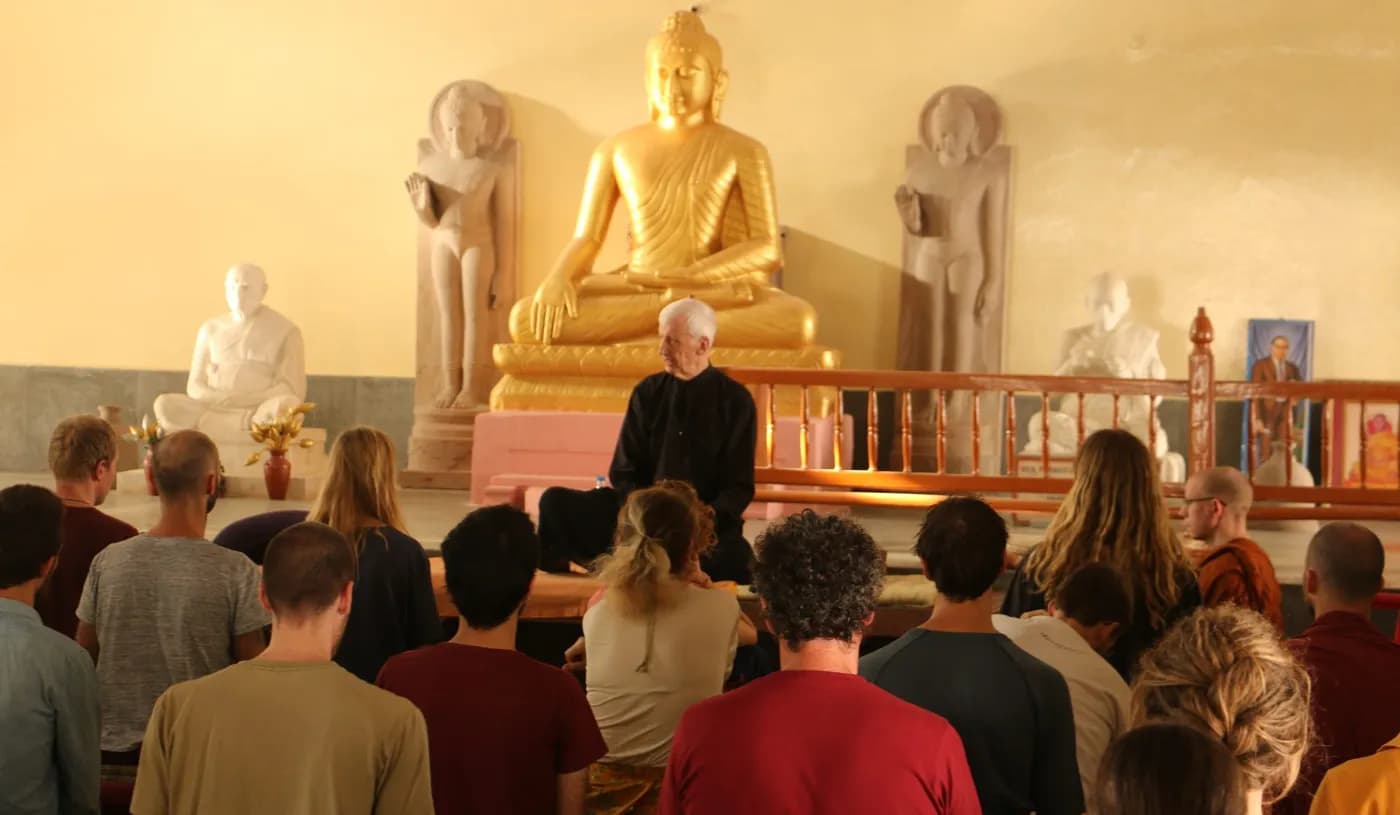
Vipassana is a Pali word that roughly means “to see things as they really are.” At its heart, vipassana meditation is the practice of observing your own body and mind closely, without judging or reacting to what you notice. You simply watch — a sensation of warmth in your palms, an itch on your nose, a wave of restlessness — and let it pass, without chasing it or pushing it away.
This isn’t a new-age invention. Vipassana meditation traces back over 2,500 years to the Buddha’s own teachings in India, where it was taught as a way to understand the true nature of the mind and reduce suffering. For centuries, the technique was preserved quietly, mostly in Myanmar (formerly Burma), until the Indian teacher S.N. Goenka reintroduced it to India and the rest of the world in the 1970s. Goenka wasn’t a monk — he was a businessman who first tried the technique to manage his own chronic migraines, found it transformative, and went on to build a global network of centers that still teach the practice in its traditional form today, usually free of cost, run on donations.
The technique itself is often called a “body scan.” You sit with your eyes closed and slowly move your attention through different parts of the body, from the top of the head down to the toes, simply noticing whatever sensation is present in each area. That’s really it. No mantras, no visualizations, no chanting. Just steady, patient observation.
How Vipassana Meditation Differs From Other Meditation Styles
If you’ve tried guided meditations, mindfulness apps, or breath-focused practices before, you might wonder how vipassana meditation is different. A few things set it apart.
First, most popular meditation apps use guided visualizations or calming music to help you relax. This traditional practice uses none of that. It’s just you, your breath, and your bodily sensations, in silence.
Second, many meditation styles focus on concentration alone — training the mind to stay fixed on one object, like the breath or a candle flame. This practice starts with that kind of focus (usually on the breath, called Anapana) but then moves into something deeper: observing sensations throughout the body as a way of understanding impermanence. Every sensation, pleasant or unpleasant, eventually changes or fades. Sitting with that reality, again and again, is the whole point.
Third, vipassana meditation isn’t tied to any particular religion, even though it comes from a Buddhist lineage. Teachers are careful to present it as a universal technique of mental training, not a religious ritual, which is part of why it has been adopted by people of every faith and background. If you want a broader map of where this practice fits among other approaches, our guide on different types of meditation is a good place to see how these styles compare side by side.
How to Do Vipassana Meditation as a Beginner
You don’t need to sign up for a ten-day retreat to get a feel for how to do vipassana meditation. You can start with a simple daily practice at home, and build from there.
Step 1: Find a quiet spot and sit comfortably. You don’t need a special cushion or a lotus pose. A chair is fine. What matters is that your back is reasonably upright and you can sit still without too much fidgeting.
Step 2: Start with Anapana — just watch the breath. Close your eyes and bring your attention to the area around your nostrils. Notice the breath coming in, going out, without controlling it or making it deeper. Just observe. Do this for five to ten minutes when you’re starting out.
Step 3: Move into a body scan. Once your mind feels a little settled, slowly shift your attention through your body — scalp, forehead, eyes, cheeks, jaw, neck, shoulders, arms, chest, stomach, back, hips, legs, feet. Spend a few seconds on each area, just noticing whatever sensation is there, even if it’s “nothing much.” That’s fine too.
Step 4: Observe without reacting. This is the real skill behind the practice. When you notice something unpleasant — an ache, an itch, restlessness — try not to immediately scratch, shift, or get frustrated. Just notice it, and notice how it changes on its own if you give it a moment. Same with pleasant sensations; notice them without grasping or wanting more.
Step 5: Start small and stay consistent. Fifteen to twenty minutes a day is a realistic starting point. Consistency matters far more than duration here — a short daily sit will teach you more than one long, effortful session followed by weeks of nothing.
If sitting still with your eyes closed feels unfamiliar at first, it can help to settle your hands into a simple, steady position — something like the dhyana mudra, a classic hand gesture used in meditation, can give your hands a quiet anchor point while your attention does the real work.
Photo: Zcognito, CC BY-SA 4.0, via Wikimedia Commons
The Real Benefits of Vipassana Meditation
There’s a lot of research interest in vipassana meditation, and while it’s not a medical cure for anything, the genuine, well-supported benefits are still worth knowing.
Stress reduction. Multiple studies on vipassana-style body-scan meditation show measurable drops in perceived stress and cortisol markers after consistent practice. The act of observing sensations without reacting seems to train the nervous system to settle down faster after stress.
Improved self-awareness. Regular practice builds a habit of noticing your own inner state — tension in your shoulders before a hard conversation, a spike of irritation before you snap at someone. That noticing, on its own, gives you a small but real window to respond differently.
Better emotional regulation. Because the whole method is built around observing an unpleasant sensation without immediately reacting to it, people who practice regularly over time often report feeling less swept up by anger, anxiety, or craving. You start to see emotions as things that arise and pass, rather than commands you have to obey instantly.
Sharper attention. Like most sustained meditation practices, this training strengthens the mind’s ability to stay with one thing at a time, which can carry over into work, study, and everyday focus.
It’s worth being honest here — vipassana meditation isn’t a substitute for therapy, medication, or medical treatment for any diagnosed condition. It’s a mental training tool, and a good one, but it works best alongside good sleep, movement, and professional care when you need it, not instead of them.
The Honest Challenges of Vipassana Meditation
Most articles gloss over this part, but we’d rather be upfront with you. Vipassana meditation is genuinely hard, especially at the start.
Sitting still for even fifteen minutes can feel surprisingly difficult if you’re used to constant stimulation from your phone. Your mind will wander — a lot. You’ll notice how restless and undisciplined your attention actually is, which can be humbling.
The traditional format — a ten-day silent course, with hours of sitting each day, no phones, no talking, no eye contact with other students — is intense by design. It works for many people precisely because it removes every distraction. But it isn’t for everyone, and that’s completely okay. Some people find the silence and structure freeing; others find it overwhelming. There’s no shame in starting with short daily sits at home instead of jumping straight into a ten-day course.
Discipline is the other real challenge. It doesn’t give you instant, dramatic results in a week. The benefits build slowly, through repetition, much like building strength at the gym. If you’re looking for a quick fix, this practice will test your patience before it rewards it.
Who Should Be Careful: A Few Precautions
This practice is generally safe for most healthy adults, but a few precautions are worth knowing before you dive into an intensive retreat.
Long, silent, intensive meditation courses involve many hours of inward attention with very little outside distraction or support. For most people, this is simply challenging. But for a small number of people — particularly those with untreated or unstable mental health conditions such as severe depression, psychosis, bipolar disorder, or a history of significant trauma — this kind of intensive, unsupervised inward focus can sometimes bring up difficult emotions or memories faster than they can be processed comfortably. This isn’t meant to be alarming; it’s simply why most vipassana centers ask about your mental health history before you register, and why it’s worth talking to a mental health professional first if any of this applies to you, rather than diving straight into a ten-day silent course.
If you’re currently on medication for a mental health condition, or working with a therapist, it’s a good idea to mention your interest in an intensive retreat to them first. A short daily home practice is generally much gentler and can still be approached thoughtfully alongside professional guidance.
Pregnant women, people recovering from major surgery, or anyone with a condition that makes long periods of sitting physically difficult should also check with their doctor before committing to hours of daily sitting.
Vipassana Meditation Retreats: The Traditional Path
You’ll often see people searching for a vipassana meditation retreat or a vipassana meditation center near them, and it’s worth understanding why. Traditionally, it is taught through a structured ten-day residential course — not a single class, but an immersive experience where you follow a fixed daily schedule, observe silence, and receive step-by-step instruction each evening.
These courses are usually run at dedicated meditation centers, many of them following the Goenka tradition, and are typically offered on a donation basis so that cost isn’t a barrier to learning. If a residential course interests you, it’s worth researching centers in your region directly and reading through their code of discipline before applying, since the ten-day format asks for a real commitment of time, silence, and focus. It’s not something we’d recommend jumping into without understanding what it involves first — starting with a short daily practice at home, as described above, is a gentler and equally valid way to begin.
Whether or not you ever attend a formal retreat, the daily habit is what actually builds the skill. If you’re someone who does better with a bit of structure and community around a new habit, pairing your sits with something like Habuild’s free yoga challenge can help — showing up daily for movement often makes it easier to also show up daily for stillness.
Meditation and yoga aren’t the same thing, but they support each other well, and if you’re curious about how they overlap and differ, it’s worth reading about the difference between yoga and meditation to understand where each one fits in a wellness routine.
Frequently Asked Questions
Related Articles
Buddha Meditation: An Introduction to the Traditions
Buddha meditation isn't one technique but a family of traditions, all rooted in training the mind to see clearly rather than react on autopilot. Explore the main schools, and try guided sessions with Habuild.
Anapana Meditation: Technique and Benefits
Anapana meditation, one of the oldest breath-awareness practices, simply asks you to observe the natural breath without controlling it. Learn the technique with Habuild's guided sessions.

Chakra Meditation: A 7-Chakra Guide for Beginners
Chakra meditation moves through all seven energy centres in a single sitting, giving beginners a felt sense of the whole system. Try a guided 7-chakra practice with Habuild.