
10 Best Beginner Mobility Exercises to Build Flexibility and Move Better
Low-intensity, controlled movements improve your joints' active range of motion, reducing daily stiffness with results noticeable within two to four weeks. See all 10 exercises.
Key Takeaways
- Cartilage has no direct blood supply — it gets nutrients through joint movement
- Poor ankle or hip mobility can limit squat depth or overhead pressing
- Light mobility work on rest days flushes metabolic waste without added stress
- Results typically become noticeable within two to four weeks of practice
- Low-intensity sessions feel good, making the habit easier to sustain
Beginner mobility exercises are low-intensity, controlled movements that improve your joints’ active range of motion. They reduce daily stiffness, support injury prevention, and lay the groundwork for stronger, safer training — with no equipment required and results noticeable within two to four weeks of consistent practice.
If you’ve been feeling stiff after long hours at a desk or waking up with tight hips and a sore lower back, mobility training is exactly where you should start. It isn’t just for athletes — it’s the foundation that makes every other physical activity safer, easier, and more effective. This guide walks you through everything you need to know to get moving, feel better, and build a practice that actually sticks.
10 Key Benefits of Mobility Workouts for Beginners
- Reduces Daily Stiffness Consistent mobility work gently encourages your joints and surrounding tissues to move through their full range. Over time, that morning stiffness in the hips, neck, and lower back tends to ease noticeably with regular practice.
- Improves Posture Tight hip flexors and a rounded upper back are common results of prolonged sitting. Mobility exercises that target the thoracic spine and hip flexors gradually support better alignment throughout the day.
- Supports Injury Prevention When your joints move well and your muscles aren’t chronically restricted, the risk of common strains and sprains decreases. Regular practice makes your body more resilient over time — you’re not eliminating risk, but you’re meaningfully reducing it.
- Enhances Strength Training Performance Poor ankle or hip mobility can limit how deeply you squat, and restricted shoulder mobility can compromise pressing form. Better mobility means better mechanics — which means you get more from every strength training session.
- Boosts Body Awareness Mobility drills require you to slow down and pay attention to how each part of your body moves. This builds proprioception — your body’s sense of position — which carries over into nearly every physical task.
- Supports Joint Health Long-Term Cartilage in your joints doesn’t have a direct blood supply — it gets nutrients through movement. Regular, full-range mobility work helps nourish joint tissue and may gradually support comfort and function as you age.
- Complements Recovery Light mobility work on rest days helps flush metabolic waste from muscles without adding training stress. It’s a practical active recovery tool that keeps you progressing without overloading the body.
- Accessible to Virtually Everyone Unlike heavy lifting, beginner mobility exercises require no equipment, minimal space, and can be scaled to any fitness level. They’re a natural entry point for anyone returning to movement after a long break.
- Builds Consistency Gradually Because sessions are low-intensity and feel good rather than punishing, it’s much easier to build the daily habit. Consistency — not intensity — is what drives lasting change in mobility.
- Lays the Groundwork for Strength and Flexibility Together Mobility sits at the intersection of flexibility and strength — it’s about controlling your range, not just reaching it. Starting here gives you a stable foundation before progressing to more demanding training.
How to Get Started with Beginner Mobility Exercises
What You Need to Begin
Almost nothing. A yoga mat or soft surface is helpful, but even a carpeted floor works fine. You don’t need resistance bands, weights, or any special gear to begin mobility work effectively. If you want to explore resistance-based movement alongside mobility, resistance training at home for beginners is a natural complement to add later.
Setting Realistic Goals
Mobility improves slowly and non-linearly. Aim for 10–20 minutes of dedicated mobility work daily — or at least four times per week — rather than occasional long sessions. Progress is measured in weeks and months, not days. Avoid pushing hard into pain; work at the edge of comfortable discomfort and hold there for a few breaths.
Start with the Basics
Begin with movements that address the areas most commonly restricted in modern lifestyles: hips, thoracic spine, ankles, and shoulders. Keep the pace slow, breathe deliberately through each position, and focus on quality over range. Even 15 minutes done consistently will produce more change than an hour done once a week.
10 Best Mobility Exercises for Beginners
These exercises target the joints and movement patterns that matter most for daily function and overall physical health. Work through them in sequence or pick the areas most relevant to your needs.
1. Cat-Cow
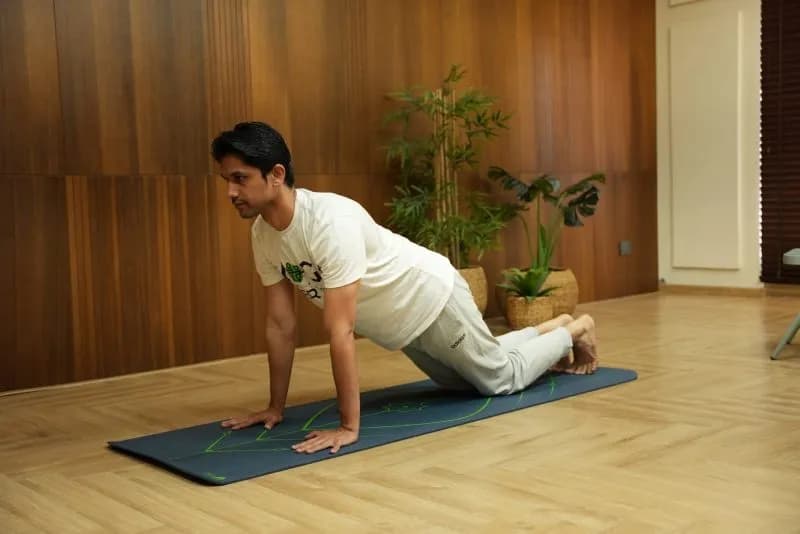
Start on all fours with wrists under shoulders and knees under hips. Inhale as you arch your spine downward and lift your head (cow), then exhale as you round your back toward the ceiling (cat). This gentle spinal wave mobilises each segment of the spine and warms up the entire back. Do 8–10 slow cycles. The benefits of Cat-Cow extend beyond the spine — it also gently activates the deep core muscles that support posture.
2. World’s Greatest Stretch
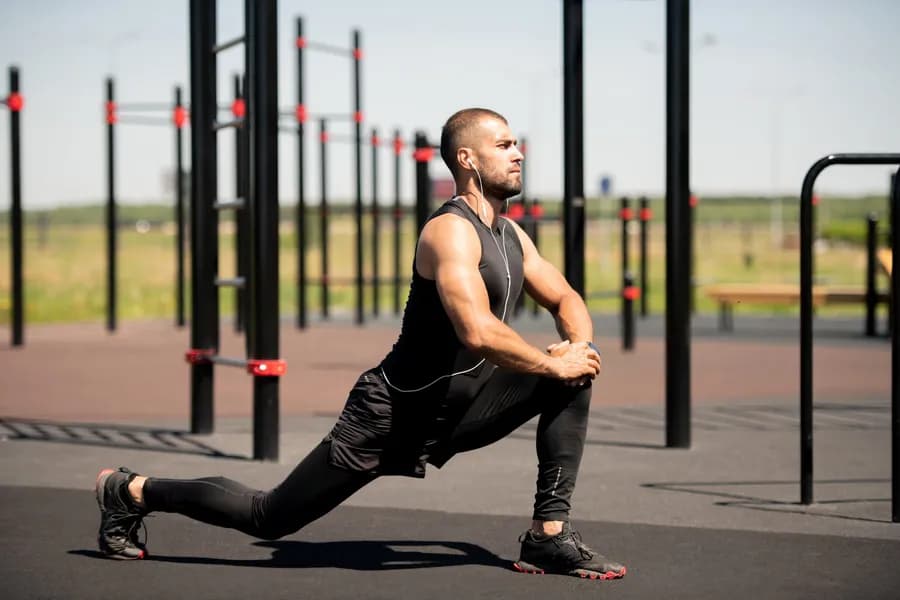
Step into a deep lunge with your right foot forward. Place your right hand on the floor inside your right foot, then rotate your right arm toward the ceiling, following it with your gaze. Hold 2–3 seconds, return, and repeat. This single movement addresses hip flexors, thoracic rotation, and ankle dorsiflexion simultaneously. 5 reps per side.
3. Hip 90/90 Stretch
Sit on the floor with both legs bent at 90 degrees — one in front, one to the side. Sit tall and gently press your front shin toward the floor while keeping your back upright. This position directly targets hip internal and external rotation, two of the most commonly restricted movement patterns. Hold 60 seconds per side, 2 sets.
4. Deep Squat Hold
Stand with feet slightly wider than hip-width and toes turned out slightly. Lower into a full squat, bringing your hips below parallel, and hold onto a door frame or post for support if needed. This position mobilises hips, ankles, and lower back simultaneously. Hold for 30–60 seconds and aim to gradually need less support over time.
5. Thoracic Rotation
Sit cross-legged or in a chair. Place one hand behind your head and rotate your upper body to that side as far as comfortable, leading with your elbow. Pause, return, and repeat. This combats thoracic rigidity from prolonged screen time and supports better breathing and shoulder mechanics. 10 reps per side.
6. Ankle Circles and Dorsiflexion Drill
Stand near a wall. Place one foot forward and slowly drive your knee toward the wall over your toes without the heel lifting. This builds ankle dorsiflexion range — critical for squatting, climbing stairs, and basic walking mechanics. 15 slow reps per ankle.
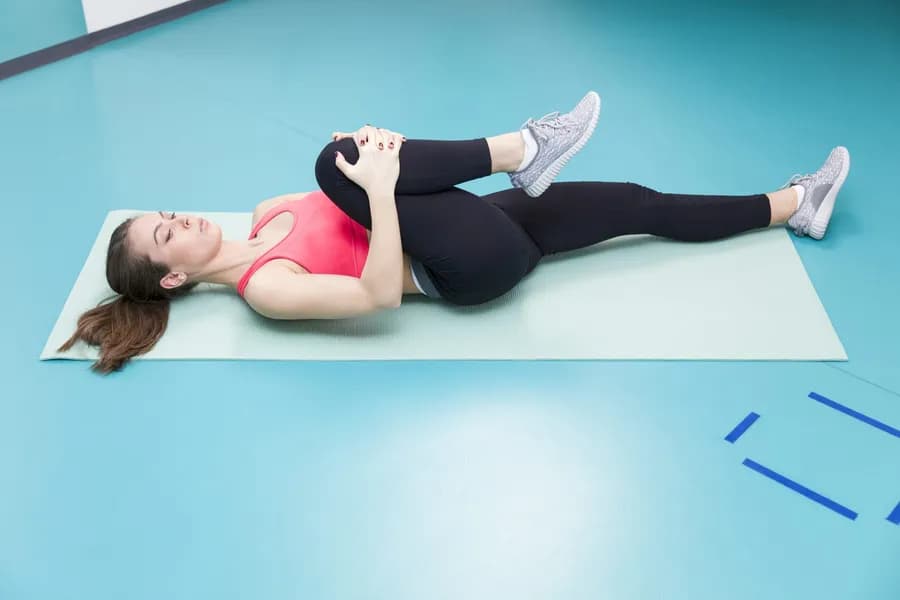
7. Lying Hip Flexor Stretch (Supine)
Lie on your back and pull one knee to your chest while keeping the other leg flat on the floor. Press the back of the extended leg into the floor gently. This releases chronic hip flexor tension without strain. Hold 45 seconds per side. A natural next step is exploring functional strength exercises once your hip mobility improves.
8. Doorway Chest Opener
Stand in a doorway and place both forearms on the frame at 90 degrees. Gently lean forward until you feel a stretch across your chest and the front of your shoulders. Hold 30–45 seconds. This counteracts the rounded-shoulder posture most people develop from desk work and driving.
9. Child’s Pose with Side Reach
From a kneeling position, sit back toward your heels and extend your arms forward on the floor. Walk your hands to one side to open the lateral torso and the opposite hip. Hold 45 seconds per side. This movement decompresses the lower back and stretches the lats and obliques simultaneously.
10. Neck CARs (Controlled Articular Rotations)
Sit tall and slowly take your neck through its fullest comfortable range of motion — forward, to one side, back, to the other — in a smooth, deliberate circle. Move slowly enough that you notice where movement becomes restricted or uncomfortable. 3 circles in each direction. This is one of the most underutilised mobility drills for desk workers.
Common Mistakes to Avoid
- Poor Form Rushing through mobility drills defeats the purpose. Speed reduces the nervous system signal that tells your body it’s safe to open up a range of motion. Slow, controlled movement with full attention is what creates genuine change — sloppy, fast repetitions do not.
- Skipping the Warm-Up Even mobility work benefits from 3–5 minutes of light movement beforehand. A short walk, gentle marching in place, or a few jumping jacks raises tissue temperature and makes your joints more responsive. Jumping cold into deep end-range holds increases the chance of irritation.
- Overtraining or Overstretching More is not better here. Forcing range of motion, holding positions until sharp pain, or training mobility twice daily will not accelerate progress — it will cause soreness that sets you back. Stay within a 6–7 out of 10 on the discomfort scale and respect the process.
- Inconsistency The single biggest mistake beginners make is doing one thorough session and then skipping the next four days. Mobility adapts through repeated gentle stress, not occasional intense effort. Even 10 minutes every day outperforms 60 minutes once a week. Build it into your morning routine or post-workout cooldown.
Who Should Try Beginner Mobility Exercises?
- Beginners If you’re new to any structured physical activity, mobility training is the ideal starting point. It’s forgiving, low-risk, and builds body awareness that makes every other form of exercise more approachable. There’s no minimum fitness level required — you start exactly where you are.
- Women Women often have naturally greater flexibility but less joint stability — mobility training helps bridge that gap by building active control through a wide range of motion. It supports everything from hip health to improved form in strength training. Female strength training combined with regular mobility work produces a particularly strong foundation for long-term fitness.
- Older Adults Mobility training is especially valuable for adults over 40, where joint range and muscle extensibility tend to decline if not actively maintained. It supports balance, reduces fall risk, and may gradually ease common movement-related discomforts. Consult your doctor if you have specific joint conditions before beginning any new exercise programme.
- Working Professionals Prolonged sitting compresses the hip flexors, rounds the upper back, and shortens the chest muscles — all of which beginner mobility exercises directly address. Even a 15-minute morning routine can meaningfully change how your body feels by mid-afternoon. The time investment is minimal; the payoff in daily comfort is significant.
Build Strength with a Routine That Actually Works
Building better mobility isn’t about doing random stretches — it’s about consistency, guided progression, and a structure that fits your life. With the right support, you can move better, feel stronger, and make lasting progress from home.
What You Get with Habuild’s Strong Everyday Program:
- Daily live guided strength and mobility sessions
- Beginner to advanced progression built in
- No-equipment and home-friendly workouts
- Expert guidance to ensure correct form and safe range of motion
- Community support to help you stay consistent day after day
Start your journey with structured strength and mobility training today — guided, progressive, and built for real people with real schedules.
Related reads: Mobility Exercises for Beginners: Full Body Routine to Move Better Every Day · What Are Mobility Exercises? Complete Guide for Beginners
Mobility work pays off gradually, and the two-to-four-week timeline mentioned here depends entirely on actually doing the exercises on a regular schedule rather than in occasional bursts. A guided program keeps that schedule intact by building mobility into your broader training instead of leaving it as a separate task to remember. Habuild’s Strong Everyday program weaves this kind of joint-friendly, consistent movement into a complete strength routine.
Frequently Asked Questions
Related Articles
Mobility Exercises for Beginners: Full Body Routine to Move Better Every Day
Unlike stretching, mobility training actively trains your joints and muscles to move through their full range — and it pays off quickly. See the full body routine to move better every day.
What Are Mobility Exercises? Complete Guide for Beginners
Controlled movements that take your joints through their full range of motion build flexibility, strength, and stability together, unlike static stretching. See the complete guide for beginners.

Beginner Flexibility Workout: Exercises, Routine & Tips
A structured routine of gentle stretching and mobility exercises, using 20-45 second holds with controlled breathing, shows meaningful improvement within four to six weeks. See the full routine.
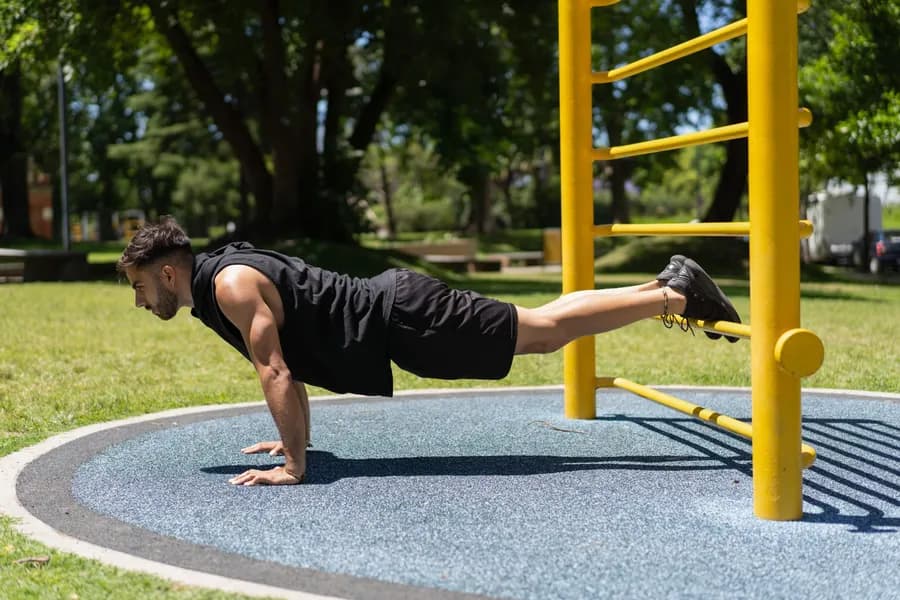
Beginner Bodyweight Workout: The Complete No-Equipment Guide
Squats, push-ups, lunges, planks, and bridges, performed in a structured sequence, build strength and movement quality from the ground up — no gym required. See the complete no-equipment guide.
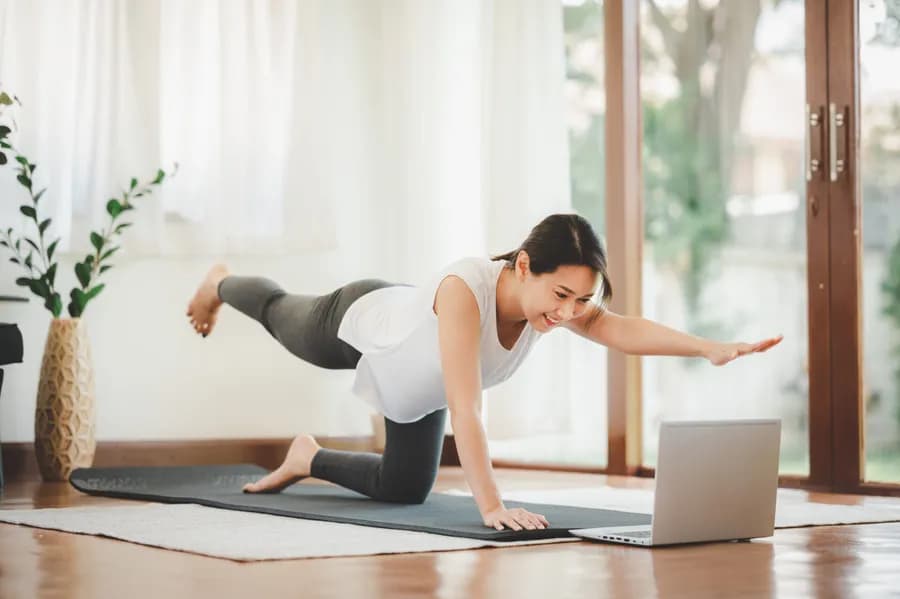
Beginner Home Workout Without Equipment: Everything You Need to Start
No gym membership, no gear, and no experience required — just your body, a little space, and the consistency to show up. See the benefits, best exercises, and common mistakes.
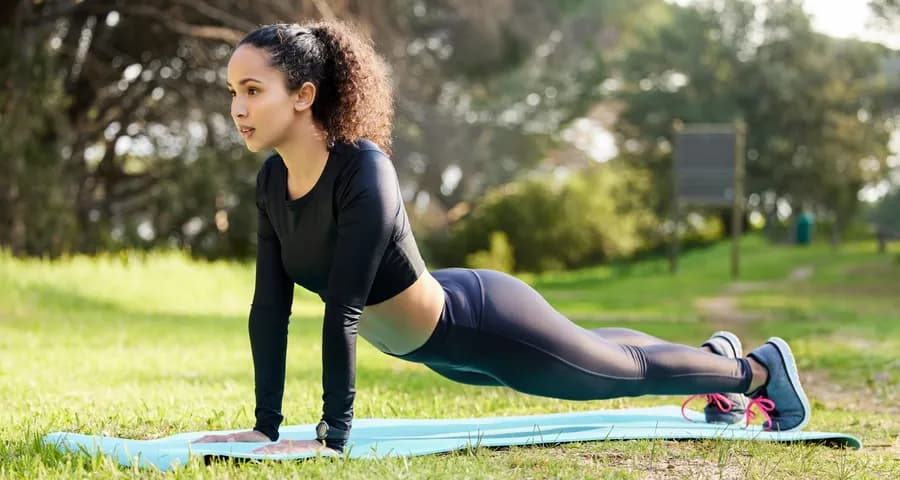
Inchworm Exercise Benefits: Why This Move Belongs in Every Routine
This bodyweight movement works your core, hamstrings, shoulders, and chest simultaneously, with zero equipment needed. See why it earns a place at the start of almost any session.