
How to Do Tricep Extensions: Technique, Benefits & Home Variations
Tricep extensions isolate the triceps by moving the elbow from bent to fully extended — overhead, lying down, or with a resistance band. See the correct technique and home variations.
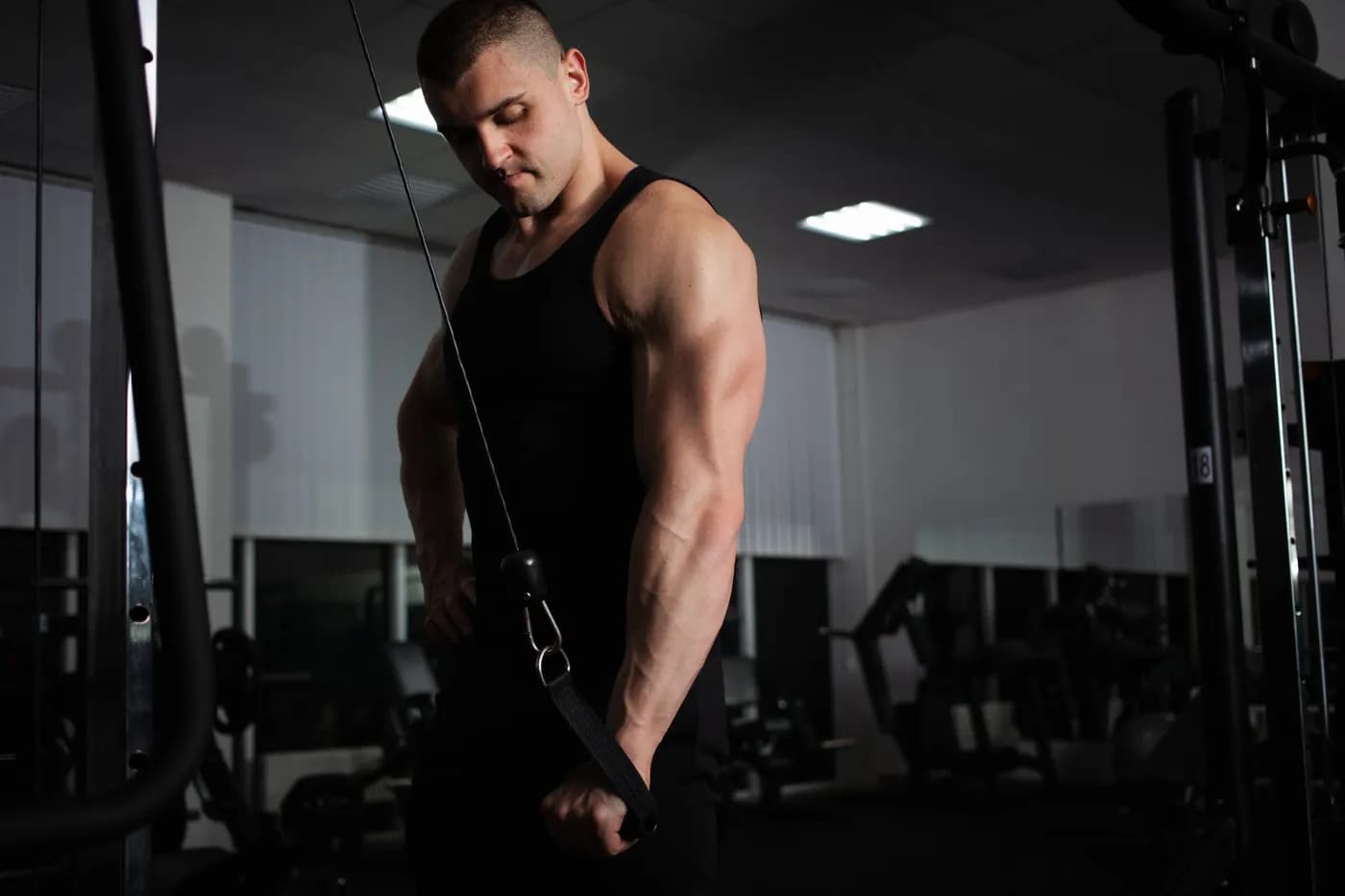
Key Takeaways
- Triceps make up roughly two-thirds of the upper arm, yet get far less training than biceps.
- Isolates all three tricep heads more directly than compound pushing movements alone.
- A light dumbbell, resistance band, or even a water bottle is enough to start.
- Stronger triceps improve elbow joint support for people doing repetitive desk work.
- Helps correct the common imbalance where pulling muscles outpace pressing muscles.
Tricep extensions are a targeted strength exercise that isolates the triceps brachii by moving the elbow from a bent to a fully extended position. They can be performed overhead, lying down, or with a resistance band, making them one of the most accessible arm-strengthening movements for home training.
If you want stronger, more defined arms, learning how to do tricep extensions is one of the most effective places to start. The triceps make up roughly two-thirds of your upper arm — yet most people spend far more time training their biceps. Tricep extensions isolate this muscle group directly, helping you build arm strength, improve pushing power, and support better posture over time.
This guide covers the benefits, beginner setup, best exercise variations, common form mistakes, and who this movement is right for.
6 Benefits of Tricep Extensions
- Builds Targeted Arm Muscle Tricep extensions isolate all three heads of the triceps — the long, medial, and lateral — far more directly than compound pushing movements alone. Consistent practice may gradually contribute to fuller, more defined arms over weeks of training.
- Improves Pushing Strength Stronger triceps support every push-based movement in your daily life — from getting up off the floor to pushing open a heavy door. They also improve performance in push-ups, bench presses, and overhead presses. If you want to explore how strength training for triceps connects to full upper-body performance, that's a great companion read.
- Supports Elbow and Joint Stability When the triceps are strong, the elbow joint has better muscular support around it. This can help reduce strain on tendons and ligaments during everyday movements, especially for people who do repetitive desk work or carry heavy bags.
- Helps Correct Muscle Imbalances Many people have significantly weaker triceps than biceps — often because pulling movements get more attention than pressing movements. Tricep extensions help restore balance in the upper arm, which supports better joint health over time.
- Accessible at Home Without Heavy Equipment Most tricep extension variations require nothing more than a resistance band, a light dumbbell, or even a water bottle. You can perform them seated, standing, or lying down — making them one of the most practical arm exercises for home training.
- Complements Full-Body Strength Routines Adding tricep extensions to a broader full-body strength workout ensures your arms keep pace with legs, back, and core as you progress. Neglecting them often creates a visible strength gap in compound lifts over time.
How to Get Started with Tricep Extension
What You Need to Begin
You don't need a gym to start. For beginners, one of these options is enough:
- A single light dumbbell (1–3 kg to start)
- A resistance band looped over a door frame
- A filled water bottle as a substitute weight
- A mat for lying or seated variations
If you're training at home, a resistance band attached to a door frame or overhead anchor point gives you the most versatile setup for overhead and cable-style tricep extensions.
Setting Realistic Goals
If you're new to this movement, focus on mastering the range of motion before adding load. Begin with 2–3 sets of 10–12 reps, two to three times a week. Consistent, controlled reps over weeks will do more for arm strength than heavy, sloppy sets done occasionally.
Avoid training the same muscle group on back-to-back days — the triceps need 48 hours of recovery between sessions to adapt and grow. Overloading too soon is the most common beginner mistake.
Start with the Basics
Before attempting any variation, practise the raw movement pattern with no weight: stand tall, raise both arms overhead, bend at the elbows until your hands touch the back of your head, then press up to full extension. Repeat 10 times. This grooves the elbow-hinge mechanics before you add any resistance.
Once the movement feels smooth, introduce a light weight and progress from there. The strength training for beginners guide outlines a safe weekly progression for those just starting out.
Best Tricep Extension Exercises to Try

Overhead Tricep Extension (Dumbbell)
Hold one dumbbell with both hands overhead, elbows close to your head. Lower the weight behind your head by bending the elbows, then press back up to full extension. This version targets the long head of the triceps most effectively. Perform 3 sets of 10–12 reps.
Tricep Kickback
Hinge forward at the hips, keep your upper arm parallel to the floor, and extend your forearm straight back until your arm is fully extended. Pause briefly, then return with control. This is excellent for the lateral and medial tricep heads. Perform 3 sets of 12–15 reps per arm.
Skull Crushers (Lying Tricep Extension)
Lie flat on a mat or bench, hold a dumbbell in each hand directly above your chest with arms extended. Slowly bend at the elbows, lowering the weights toward your forehead, then press back up. Keep the upper arms completely stationary throughout. Perform 3 sets of 8–10 reps.
Resistance Band Tricep Pushdown
Anchor a resistance band overhead — a door frame or hook works well. Grip the band with both hands, elbows bent at 90°, and press downward until your arms are fully extended. This closely mimics a cable machine and keeps constant tension on the triceps. Perform 3 sets of 12–15 reps.
Overhead Tricep Extension (Resistance Band)
Stand on the centre of a resistance band, hold both ends overhead, and press up from a bent-elbow position to full extension. This is the best how-to-do tricep extension at home option when no dumbbells are available. Perform 3 sets of 12 reps.
Close-Grip Push-Up
Place your hands closer than shoulder-width apart and perform a standard push-up. The narrowed grip shifts the load away from the chest and onto the triceps. It's an effective no-equipment option that also builds chest and shoulder stability. Perform 3 sets of 8–12 reps.
Tricep Dip (Chair or Bench)
Sit on the edge of a sturdy chair, place your hands beside your hips, slide your hips off the edge, and lower your body by bending the elbows to about 90°. Press back up. Adjust difficulty by extending your legs further forward. Perform 3 sets of 10 reps.
Common Mistakes to Avoid
- Poor Form — Flaring Elbows The most common error in overhead tricep extensions is letting the elbows flare outward during the movement. When elbows drift wide, the load shifts away from the triceps and places unnecessary stress on the shoulder joint. Keep elbows pointing straight up and close to your head throughout every rep.
- Skipping the Warm-Up The elbow is a hinge joint with limited range — jumping straight into loaded extensions without warming it up is a common cause of discomfort and setbacks. Before your set, do 10–15 bodyweight tricep extensions, a few arm circles, and some band pull-aparts to activate the shoulder and elbow complex.
- Using Momentum Instead of Muscle Swinging the weight up or using the lower back to generate momentum on overhead variations means the triceps aren't doing the work. Slow each rep down — 2 seconds down, 1 second pause, 2 seconds up. If you can't control the weight, it's too heavy.
- Inconsistency Between Sessions Tricep extensions deliver visible results only when practiced consistently over weeks. Doing two sessions one week and skipping the next two weeks resets your progress. The gap is almost never in the exercise selection — it's in the follow-through.
Who Should Try Tricep Extensions?
- Beginners Tricep extensions are an excellent starting point for anyone new to strength training. The movement pattern is simple to learn, requires minimal equipment, and allows you to progress gradually by increasing resistance over time. Starting with a light resistance band or a 1 kg dumbbell removes the intimidation factor entirely.
- Women There's a persistent myth that tricep training will make women's arms bulky. In reality, isolating the triceps with extensions builds tone and supports arm definition without producing bulk — especially in the absence of very high training volumes and caloric surpluses. For women looking to explore broader arm and fitness work, strength training for women offers a well-structured overview.
- Older Adults Maintaining upper body strength becomes increasingly important with age for functional independence — pushing up from a chair, carrying groceries, and managing body weight through the arms. Tricep extensions support these everyday movements and may contribute to better joint stability over time. Beginners over 50 should start with light resistance bands and avoid locking the elbow joint fully. Always consult a physician before starting a new exercise programme if you have existing joint conditions.
- Working Professionals If you spend long hours at a desk, your triceps and upper arms are chronically underused. Adding two short tricep extension sessions per week — 15 minutes each — can counteract the postural effects of prolonged sitting and help maintain arm and shoulder function. The exercises can be done at home with minimal equipment, making them easy to fit around a busy schedule.
Build Strength with a Routine That Actually Works
Building stronger triceps — and stronger arms overall — isn't about doing the most exercises. It's about showing up consistently, following a structured progression, and having guidance when your form drifts. That's the gap most home workouts leave unfilled.
What you get with Habuild's Strong Everyday programme:
- Daily live guided strength sessions — including tricep, upper body, and full-body workouts
- Beginner-to-advanced progression so you never plateau
- No-equipment and home-friendly exercise options
- Expert guidance to keep your form correct and safe
- Community support to help you stay consistent week after week
Related reads: How to Do Lat Pulldown: Form, Variations & Home Tips · Triceps Workout at Home: 7 Best Exercises with and Without Dumbbells
Isolating the triceps works best as part of a bigger picture, one that also trains the muscles working alongside them so your arms develop evenly and your elbows stay protected. Instead of guessing at how to sequence pushing, pulling, and isolation work, a guided program can pace that for you. Habuild's Strong Everyday program offers exactly that kind of structured arm and upper-body training, built to progress week over week rather than session by session.
Frequently Asked Questions
Related Articles

How to Build Shoulder Muscles: Exercises, Tips & a Routine That Works
Targeting all three deltoid heads — front, side, and rear — through pressing, raising, and pulling shows strength gains within four to six weeks. See the full routine.

How to Build Chest Muscles at Home
A push-up progression — standard, wide-grip, incline, decline, and diamond variations — develops measurable pectoral strength within eight to twelve weeks. See the full plan.

How to Build Trapezius Muscles: Exercises, Tips, and a Routine That Works
Shrugs, face pulls, bent-over rows, and farmer’s carries target all three regions of the trap — noticeable strength and posture gains appear within six to eight weeks. See the full routine.

Best Home Exercises for Muscle Gain
Push-ups, squats, planks, and rows can stimulate real muscle growth with controlled form and progressive tension over 8-12 weeks — no gym needed. See the full plan.

How Many Reps to Build Muscle? The Complete Guide to Sets, Reps, and Progression
6 to 12 reps per set is the classic hypertrophy range, but sets, rest periods, and consistency matter just as much. See the full breakdown of reps, sets, and progression.

How Long Does It Take to Build Muscle?
Strength improvements show up in roughly four to eight weeks, with visible changes in muscle definition taking three to six months. See what actually determines your timeline.