
Bakasana (Crow Pose): Steps Strength Tips and How to Master It
Practice Bakasana with Habuild. Follow the crow pose steps to build core strength, improve wrist stability, and master your first arm balance. Start today!
Key Takeaways
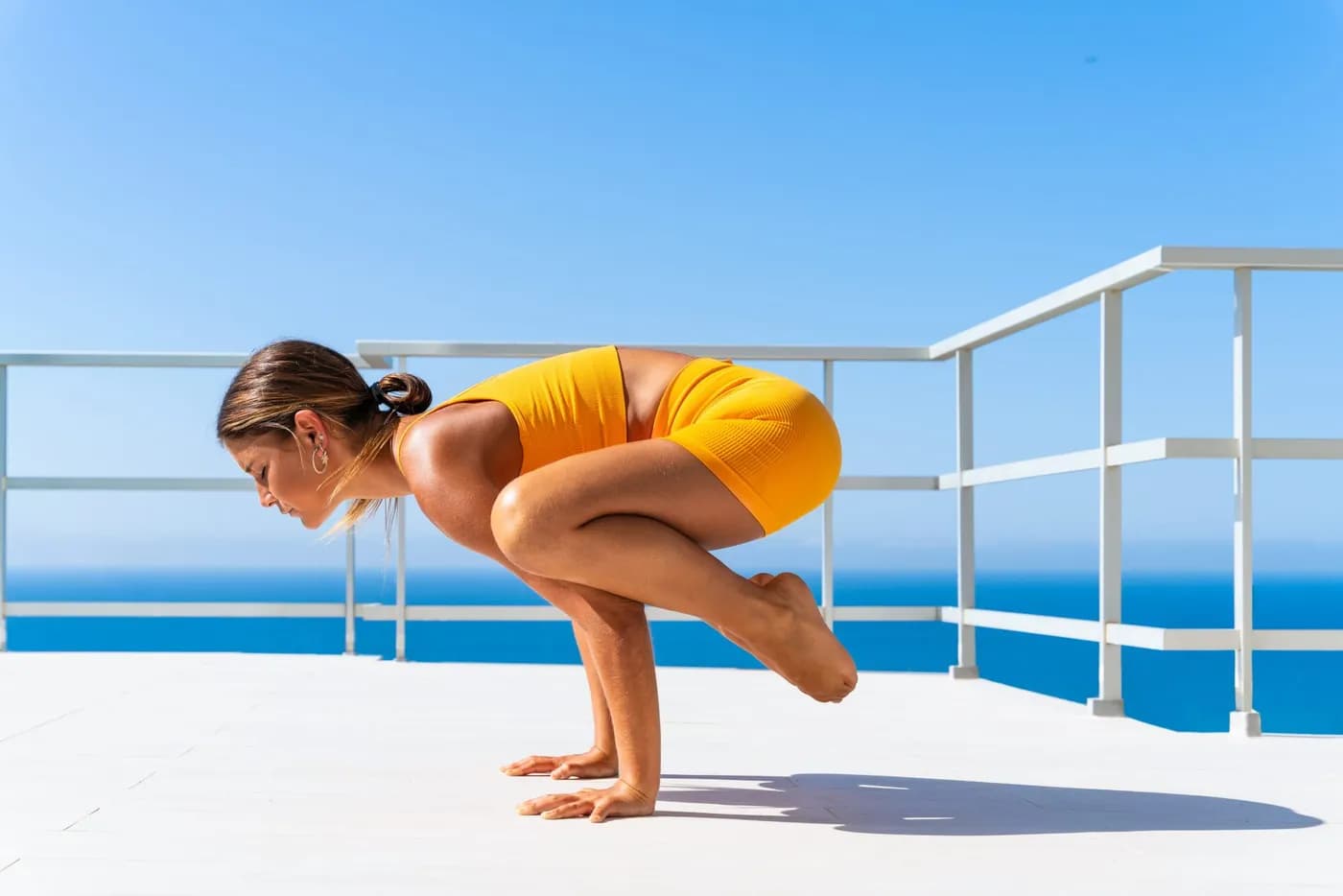
- Knees rest on the backs of the upper arms while the whole body balances on both hands.
- Considered the gateway pose that opens the door to the entire arm balance vocabulary.
- Progresses through wrist conditioning, Malasana opening, weight shifts, then block-assisted lift.
- The forward weight shift onto the hands fires proprioceptive pathways through the whole arm.
- Learning it means systematically confronting and moving through the fear of falling forward.
- Core draws the knees toward the armpits, organising the entire body around one central axis.
Bakasana, or Crow Pose, is a foundational arm balance where the body balances entirely on both hands with knees resting on the backs of the upper arms. It builds upper body and core strength, develops proprioceptive balance, cultivates focused mental presence, and serves as the gateway to all advanced arm balances in yoga. Accessible through progressive preparation.
What is Bakasana?
Bakasana — known in English as Crow Pose or Crane Pose — derives from Sanskrit: Baka (crane or crow) and Asana (posture). The practitioner balances the entire body weight on both hands, with knees resting on the backs of the upper arms — the body compact, gaze forward, feet lifted.
Bakasana is one of the most recognised arm balance postures in yoga — simultaneously a test and developer of wrist strength, arm strength, core stability, shoulder stability, and the focused mental presence that arm balances uniquely demand. It is considered a gateway pose to all advanced arm balances and inversions: mastering Bakasana’s forward weight shift, wrist loading, and elbow-shelf mechanics opens the physical and psychological door to the complete vocabulary of arm-supported postures.
At Habuild, Bakasana is taught through a structured progressive approach — wrist conditioning, Malasana hip opening, the weight-shift practice without liftoff, block-assisted half-bakasana, and the full liftoff — ensuring the strength, mechanics, and confidence are established before the complete hold is attempted.
Bakasana Benefits
Physical Benefits
- Builds Comprehensive Upper Body Strength Bakasana requires sustained engagement of the wrists, forearms, triceps, anterior deltoids, serratus anterior, and core to maintain the body weight in the balanced position. Consistent practice produces measurable gains in functional upper body strength that transfers to all athletic and daily weight-bearing activities.
- Develops Core Stability Through Compact Body Organisation Maintaining the compact lifted position in Bakasana demands intense transverse abdominis and oblique engagement — the core drawing the knees toward the armpits, the hips lifting, the entire body organising around the central axis. This core demand produces the integrated trunk stability that isolated abdominal exercises cannot replicate.
- Improves Balance and Proprioceptive Awareness The forward weight shift onto the hands fires proprioceptive pathways in the wrists, arms, and shoulders, significantly improving spatial body awareness and the neuromuscular coordination that balance postures uniquely develop.
- Strengthens Wrist and Shoulder Joints Progressively The controlled progressive loading of Bakasana preparation — from partial weight-bearing forward shifts to the full hold — develops the wrist and shoulder joint strength that supports all arm balances, inversions, and Vinyasa practice.
Mental and Emotional Benefits
- Builds Confidence Through Confronting the Fear of Falling Learning Bakasana involves systematically confronting and moving through the fear of falling forward. As practitioners progress from the first hover to the sustained hold, this builds a quiet, embodied confidence that extends from the yoga mat into decision-making, resilience, and daily challenges.
- Develops Absolute Present-Moment Concentration Balancing on the hands demands absolute concentration on the present moment. The meditative quality of Bakasana makes it one of yoga’s most effective tools for reducing mental chatter and developing the piercing single-pointed focus that all advanced practice cultivates.
How to Do Bakasana — Step-by-Step Instructions
Key Principles
Key Principles Four principles govern correct Bakasana: gaze forward and slightly down — never directly beneath the hands, which tips the body too far; weight distributed evenly across all four corners of both palms — preventing wrist concentration; engage the core actively upward — the lift comes from core drawing knees toward armpits, not just from pushing the floor away; and begin with the block — the block under the feet reduces the forward weight-shift demand for safe initial practice.
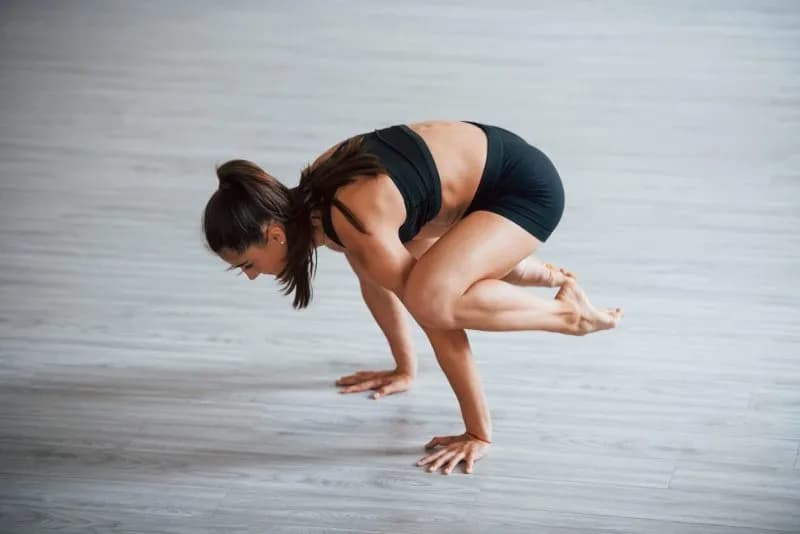
Bakasana — Step by Step Step 1: Malasana Starting Position Begin in Malasana (deep squat) — feet hip-width apart, toes slightly turned out. Place the palms flat on the floor shoulder-width apart, fingers spread wide for maximum base stability.
Step 2: Create the Elbow Shelf Bend the elbows slightly — creating a shelf with the backs of the upper arms on which the inner knees will rest. The knees will rest as high up the upper arms toward the armpits as possible.
Step 3: Place the Knees on the Upper Arms Bring the inner knees to rest on the backs of the upper arms — as high toward the armpits as comfortable. Press the knees into the arms and the arms back into the knees — mutual engagement.
Step 4: Fix the Gaze and Begin the Forward Weight Shift Fix the gaze on a point approximately thirty centimetres in front of the fingertips. Begin shifting the body weight forward onto the hands — maintaining the gaze on the forward point throughout.
Step 5: Lift One Foot, Then the Other As the weight shifts forward sufficiently, one foot will naturally lift — then the other. Draw both feet toward the glutes, engaging the core upward. Hold for five to ten breath cycles.
Step 6: Release Slowly Back to Malasana To exit, slowly shift the weight back — lowering the feet to the floor with control and returning to Malasana. Rest for three breaths before repeating.
Breathing in Bakasana
Steady, slow, continuous breathing throughout. Inhale to prepare; exhale as you shift weight forward and lift. Holding the breath creates muscular tension that disrupts the delicate balance — the breath must remain flowing continuously. Ujjayi breath (gentle ocean breath) is ideal for the sustained hold.
Preparatory Poses Before Bakasana
These poses develop the wrist strength, hip opening, and core readiness that Bakasana requires.
- Wrist warm-up (circles, prayer stretch, reverse prayer, push-up on fists) — Essential before sustained wrist weight-bearing; three to five minutes minimum.
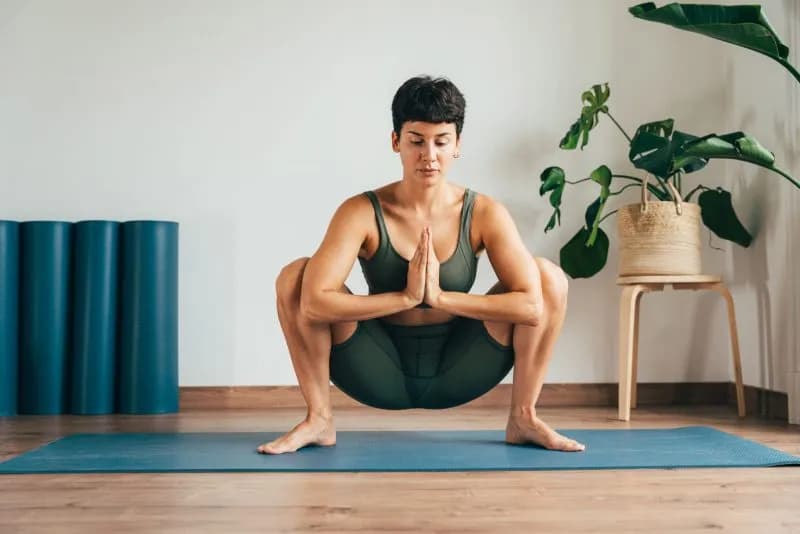
- Malasana (Garland Pose, 60 seconds) — Opens the hips and establishes the base position before the knee-to-arm placement.
- Plank and Chaturanga holds — Builds the wrist and arm strength before the complete body-weight arm balance demand.
- Block-under-feet Bakasana attempt — Place a block under the feet in Malasana — reduces the forward weight shift needed for initial liftoff.
Variations of Bakasana
- Variation 1: Block-Supported Bakasana — Beginner A yoga block under the feet in the Malasana starting position reduces the forward weight shift required to achieve liftoff — dramatically reducing the initial challenge while developing the identical mechanics as the full expression.
- Variation 2: Full Bakasana — Standard The complete expression as described — no props, both feet lifted, sustained hold for five to ten breaths. The standard form requiring established wrist strength and the forward-shift confidence developed through block-supported practice.
- Variation 3: Eka Pada Bakasana (One-Legged Crow) — Advanced From full Bakasana, one leg extends straight back while the other knee remains on the arm — dramatically increasing core stability and balance demand. A natural next progression for practitioners who have established comfortable, sustained Bakasana.
Common Mistakes to Avoid in Bakasana
- Fear of Falling Forward Causing Insufficient Weight Shift The most universal barrier for beginners — the fear of falling prevents the necessary forward weight shift, keeping the feet grounded. The block-under-feet modification and placing a folded blanket in front of the hands as a landing cushion systematically address this fear through a safe progression. Fall practice (controlled gentle forward tumbles onto a cushion) also directly builds the confidence that the fear of falling prevents.
- Gazing Directly Down at the Floor Looking directly downward at the floor beneath the hands tips the body’s centre of gravity too far forward — causing tipping and loss of balance. The gaze must be fixed forward and slightly down — approximately thirty centimetres in front of the fingertips. This is the gaze position that balances the forward body angle correctly.
- Knees Slipping Down the Arms Due to Insufficient Placement Knees slipping down from the upper arm toward the elbow reduces the mechanical advantage and the core compression that makes Bakasana sustainable. Place the knees as high up the upper arm toward the armpits as possible — the higher the knee placement, the more stable and sustainable the hold.
Who Should Practise Bakasana?
- Practitioners Ready to Begin Arm Balance Development Bakasana is the universally recommended starting posture for all arm balance development in yoga — its forward weight-shift mechanics, wrist loading patterns, and core organisation being foundational to the complete arm balance vocabulary.
- Those Seeking Upper Body Strength and Core Challenge Bakasana is one of the most efficient bodyweight exercises for developing functional wrist, arm, shoulder, and core strength without any equipment — its progressive modification pathway making it accessible from relatively early in yoga practice.
- Is Bakasana Good for Beginners? Yes — with the block-under-feet modification and adequate wrist preparation. Four to eight weeks of consistent wrist conditioning (plank holds, Chaturanga, downward dog) before attempting Bakasana is the recommended preparation pathway for practitioners new to arm balances.
Make Bakasana a Part of Your Practice
Bakasana is yoga’s gateway arm balance — the first flight of the complete arm balance vocabulary, opening the physical and psychological door to all supported inversions and the profound qualities of strength, focus, and embodied confidence that arm balance practice uniquely develops.
Whether you are practising the forward weight shift without liftoff, working with the block support, or sustaining your first complete hover, every stage of correct Bakasana preparation builds the wrist strength, core organisation, and mental courage that the full posture requires.
The most effective way to learn Bakasana correctly — with live wrist-conditioning guidance, progressive preparation structure, and the real-time confidence support of expert instruction — is under live expert guidance with Habuild.
Start your 14 day free yoga journey with Habuild, today!
Related reads: Parsva Bakasana (Side Crow Pose): Steps, Benefits & Precautions · Kukkutasana (Cockerel Pose): Steps Arm Balance and Strength Benefits
Crow Pose is often the first arm balance people attempt, and Bakasana’s core strength and wrist stability build with every attempt — including the ones where you tip over. That trial-and-error process works best as a regular part of your practice rather than an occasional experiment. Habuild’s Yoga Everyday program includes core and balance work in its daily flow to help build toward poses like this steadily.
Frequently Asked Questions
Related Articles
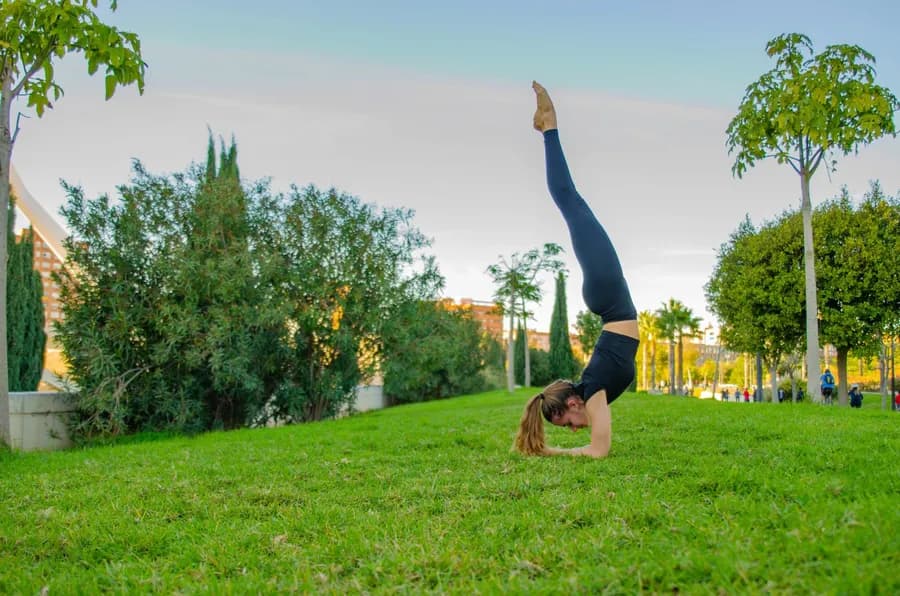
Pincha Mayurasana (Forearm Stand): Steps and Strength Benefits
Practice Pincha Mayurasana with Habuild. Follow forearm stand steps to build shoulder strength, improve balance, and advance your yoga practice. Start today!
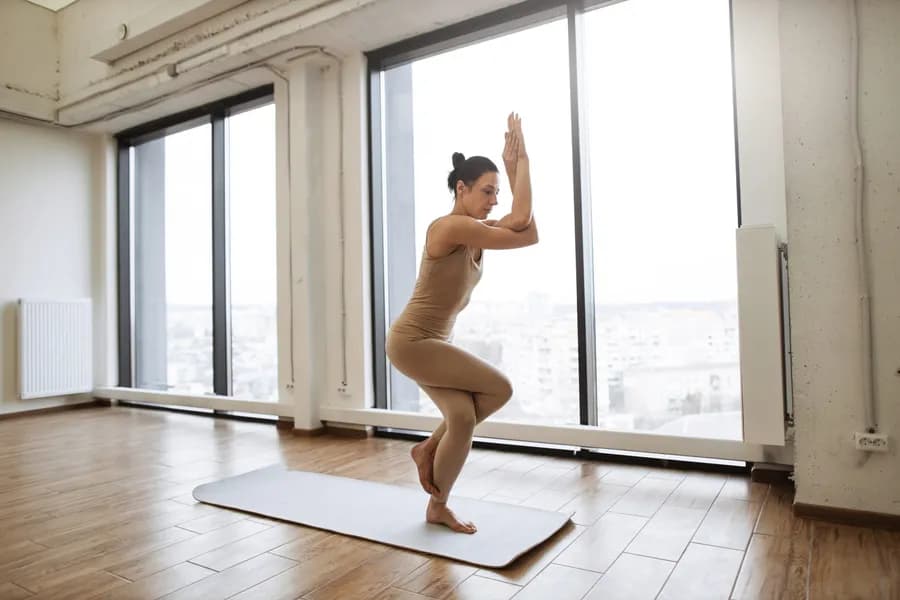
Garudasana (Eagle Pose): Steps Balance Benefits and Beginner Tips
Practice garudasana with Habuild. Try garudasana yoga to improve balance, strengthen your legs, open your shoulders, and develop sharp focus. Start today now!
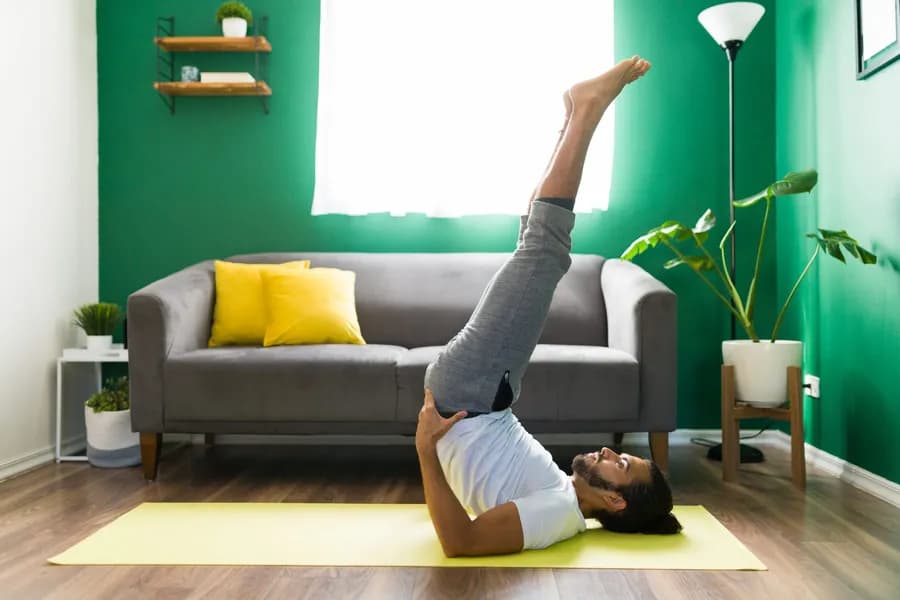
Sarvangasana: Steps Benefits and How to Practice Safely
Practice sarvangasana with Habuild. Explore the sarvangasana pose to boost thyroid health, improve circulation, and calm your mind. Start your session today!
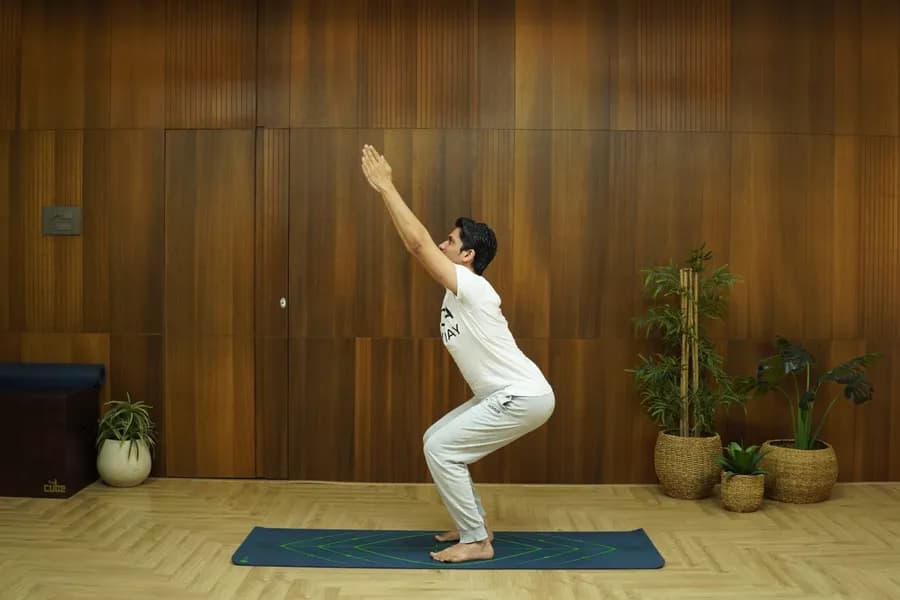
Utkatasana (Chair Pose): Steps Strength and Stamina Benefits
Practice utkatasana with Habuild. Try the utkatasana pose to strengthen your legs, build core power, and boost overall body endurance. Start your yoga session!