Kapittha Mudra: Benefits, Steps, Hasta Mudra Meaning & Precautions
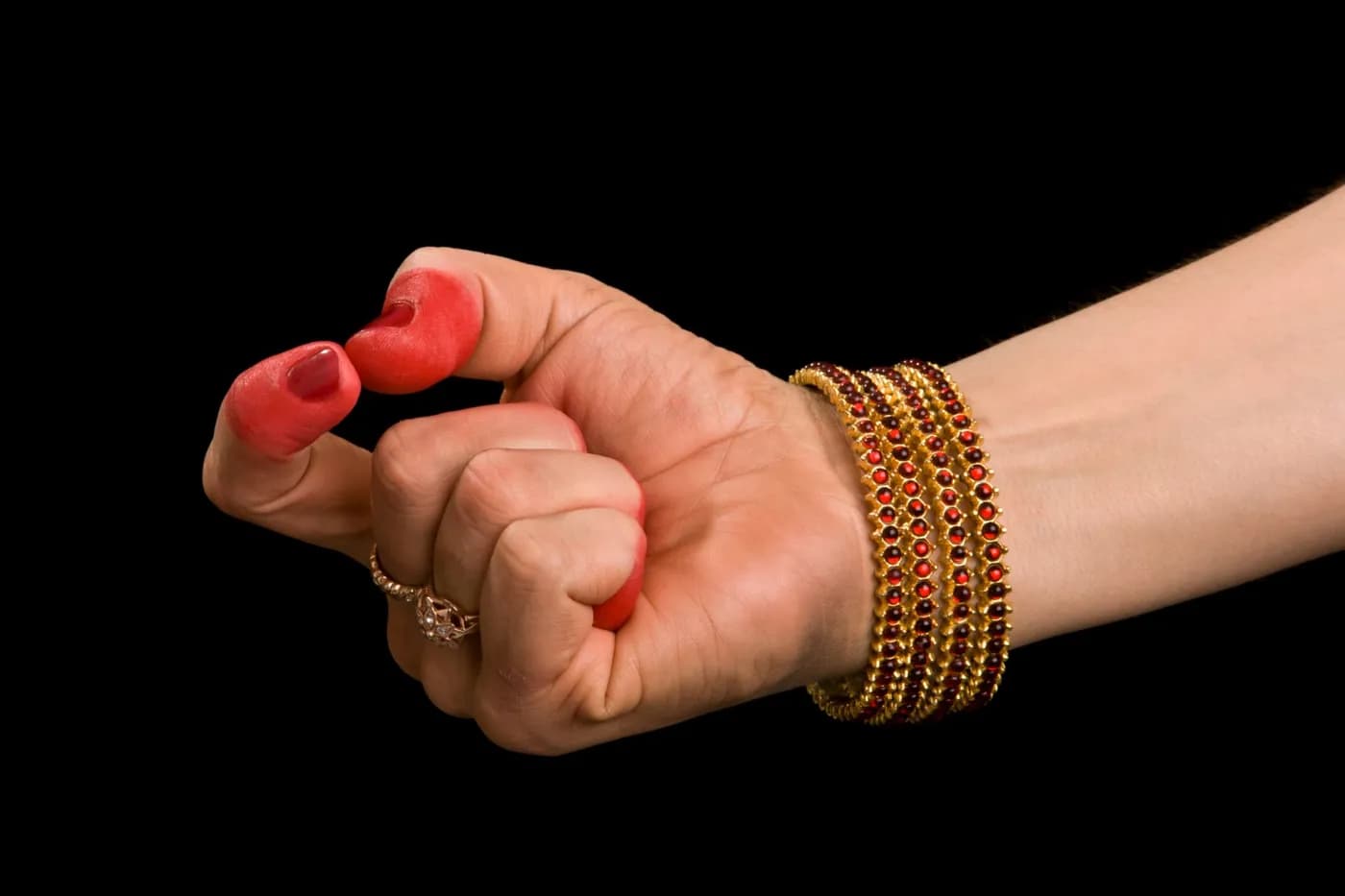
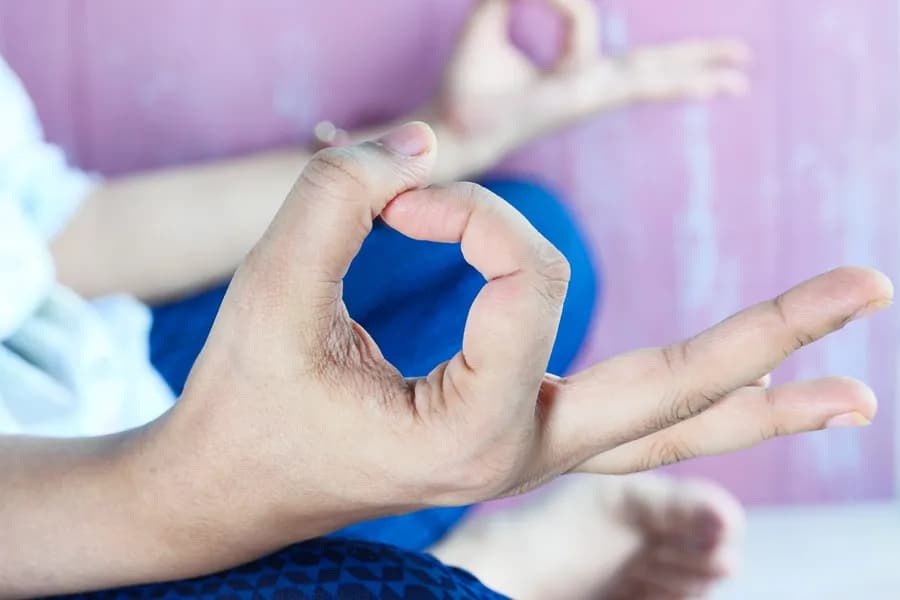
The four fingers curl into a fist while the thumb lays across the bent index finger, as if holding a small round fruit — named after the wood apple. See
Key Takeaways
- Named after kapittha, the wood apple fruit, which the closed-fist shape resembles cradling.
- One of 28 asamyukta hastas from the Abhinaya Darpana, the medieval dance treatise.
- Used in Bharatanatyam to depict goddess Lakshmi holding a flower or milkmaids churning curd.
- Adopted separately as a hand-strengthening practice for typists, instrumentalists, and surgeons.
- The thumb presses actively across the bent index finger, training small intrinsic hand muscles.
- Also used as a focus-holding gesture during meditation, unrelated to its dance origins.
What is Kapittha Mudra?
The Sanskrit word kapittha literally means wood apple — the round, hard-shelled fruit (Limonia acidissima) that grows across India and is sacred in many temple traditions. The mudra mirrors the shape of a hand cradling that fruit: four fingers folded into the palm, with the thumb gently held across the bent index finger.
Kapittha mudra belongs to the family of asamyukta hastas — the 28 single-hand gestures listed in the Abhinaya Darpana, the medieval treatise on Indian classical dance attributed to Nandikeshvara. These hand gestures form the visual vocabulary of Bharatanatyam, Mohiniyattam, Kuchipudi and Odissi, allowing dancers to silently communicate stories, emotions and characters.
In dance, kapittha mudra is used to depict goddess Lakshmi holding a flower, milkmaids churning curd, the pulling of a string, the holding of cymbals, the offering of flowers, and many other actions where the hand grips a small object. Because the gesture demands fine finger control, it is also used in some hatha yoga and Mudra Vigyan traditions as a hand-strengthening practice, and as a focus-holding gesture during meditation. Many practitioners pair it with the broader study ofmudras and benefits when learning hasta mudras for the first time.
Kapittha Mudra Benefits
The benefits of kapittha mudra fall across three areas — physical, expressive and meditative.
Physical Benefits
1. Strengthens the Hand and Finger Muscles The closed fist with the thumb actively pressing across the index finger trains the small intrinsic muscles of the hand. Practised for a few minutes daily, it strengthens grip and finger control — useful for typists, instrumentalists, surgeons and elderly practitioners experiencing grip weakness.
2. Improves Finger Dexterity and Joint Mobility The articulated, controlled folding of each finger into the palm — and the precise placement of the thumb — keeps the small joints of the hand mobile and flexible. Over weeks, practitioners notice less morning stiffness in the hands.
3. Supports Hand-Eye Coordination Repeatedly forming the gesture with attention develops fine motor coordination, especially when paired with movement (raising the arm, drawing a circle). This is why the mudra is foundational for dancers and musicians.
4. Soothes Repetitive Strain in the Hands For people with mild repetitive strain from screen work or writing, slow, mindful kapittha mudra practice provides a counter-pose to the open-finger keyboard position.
Expressive and Meditative Benefits
5. Sharpens Concentration Holding a precise gesture demands continuous attention. Kapittha mudra, held silently for 5–10 minutes, becomes a portable concentration practice — similar in effect to jnana mudra, the classic meditation hand gesture.
6. Cultivates Gracefulness in Movement Dancers know that the hands tell the story long before the body moves. Daily practice of asamyukta hastas, including kapittha, develops a quiet grace that carries into ordinary gestures.
7. Connects the Practitioner to a Living Tradition There is a quiet satisfaction in performing a gesture that has been preserved unbroken for over a thousand years across temple sculpture, dance and yoga.
How to Do Kapittha Mudra — Step-by-Step Instructions
Key Principles
- The thumb is active, not loose.
- Wrist stays neutral — never bent.
- Forearm relaxed; tension lives only in the hand itself.
Step 1: Begin with an Open Hand
Sit in sukhasana or stand upright. Hold one hand in front of you, palm facing your chest, fingers extended.
Step 2: Fold the Four Fingers
Curl the index, middle, ring and little fingers into the palm, forming a soft fist. The fingertips should rest near the base of the fingers, not pressed hard into the palm.
Step 3: Place the Thumb Across the Index Finger
Lay the thumb horizontally across the bent index finger, so that the pad of the thumb covers the upper joint of the index finger. Imagine you are holding a small round fruit between thumb and curled fingers.
Step 4: Settle the Hand
Hold the hand at chest level, shoulder height, or wherever the choreography or meditation requires. The wrist stays straight.
Step 5: Breathe and Hold
Take slow, even breaths through the nose. For meditative use, hold the gesture 5–10 minutes on each side. For dance practice, hold only as long as the abhinaya (expressive movement) requires.
Step 6: Release Mindfully
Open the fingers slowly, one at a time, starting with the little finger. Shake the hand gently to release any tension.
Breathing in Kapittha Mudra
Pair with slow nasal breath for meditation use. For dance, breath follows the rhythm of the movement; the gesture itself does not dictate breath.
Preparatory Practices Before Kapittha Mudra
A few seconds of warm-up keep the small finger muscles supple:
- Finger spreads and squeezes (5 rounds) — open fingers wide, then make a soft fist.
- Wrist circles (5 each direction) — releases the wrist before holding the gesture.
- Thumb-to-each-finger touches — touch the thumb tip to each finger tip in sequence, then reverse.
- Shake-out (10 seconds) — gently shake both hands to release residual tension.
Variations of Kapittha Mudra
Variation 1: Single-Hand Kapittha
The classical dance use — practised on one hand at a time, with the other hand held in a complementary gesture.
Variation 2: Both-Hand Kapittha (Samyukta Adaptation)
Both hands form the gesture simultaneously. Used in some yoga and mudra healing protocols for focus and bilateral coordination.
Variation 3: Kapittha with Arm Movement
Combine the held gesture with slow arm raises, lateral stretches or temple-bell-style swings — a beautiful warm-up for dancers and a grace-building practice for everyone else.
Common Mistakes to Avoid in Kapittha Mudra
- Clenching the fist tightly — kapittha is a holding gesture, not a punch. Soft fingers, active thumb.
- Letting the thumb lie passively — the thumb actively presses across the index finger; without that, the gesture loses its character.
- Bending the wrist — keep the wrist neutral, in line with the forearm.
- Hunching the shoulders — common when holding the gesture for long periods. Drop the shoulders away from the ears.
- Forgetting the breath — even in dance, breath should flow; held breath kills both expression and concentration.
- Practising only one hand — alternate, especially if you are using the gesture for hand strengthening.
Who Should Practise Kapittha Mudra?
- Classical Dance Students Foundational gesture for Bharatanatyam, Kathakali, Odissi, Kuchipudi and Mohiniyattam. Daily practice is non-negotiable.
- People with Early Hand Stiffness or Mild Arthritis The slow, controlled finger work keeps the small joints mobile. Practise gently and stop if pain appears.
- Musicians, Writers, Surgeons and Anyone Who Relies on Fine Motor Control A 5-minute daily session builds and maintains hand precision. Many practitioners benefit from layering hasta mudra practice with a structuredyoga for stress management routine, since fine-motor work is so often disrupted by stress.
- Meditators Seeking a Concentration Anchor Kapittha mudra works as a held-attention practice, similar to gazing at a candle (tratak) but using the body instead of the eyes.
- Is Kapittha Mudra Good for Beginners? Yes. No prior dance, yoga or meditation experience needed. The gesture is intuitive within a few attempts.
Kapittha mudra is prized in classical dance for its precision, and that same precision — along with whatever grounding, focused quality it lends to practice — really only comes through with repetition, not a single attempt at the shape. Treat it as a small, recurring part of your practice rather than a one-off gesture to master immediately. Habuild’s Yoga Everyday program weaves mudra work like this into guided daily sessions.
Frequently Asked Questions
Related Articles
Vajrasana: How to Do It Benefits and Precautions
Practice vajrasana pose with Habuild. Try vajrasana to ease digestion, reduce back pain, and calm your mind. Ideal for all levels. Start your session today!
Chakravakasana (Ruddy Goose Pose): Steps, Benefits and Precautions
This four-point kneeling anti-rotation exercise builds lumbar stability and shoulder alignment, named after the ruddy shelduck of Hindu mythology. See the steps, benefits, and precautions.
Gyan Mudra: How to Do It and Its Benefits for Focus and Memory
Practice Gyan Mudra with Habuild. Follow the wisdom hand gesture steps to improve focus, reduce anxiety, and enhance your meditation practice. Start today!