
Makara Adho Mukha Svanasana (Dolphin Plank Pose): Steps, Benefits & Precautions
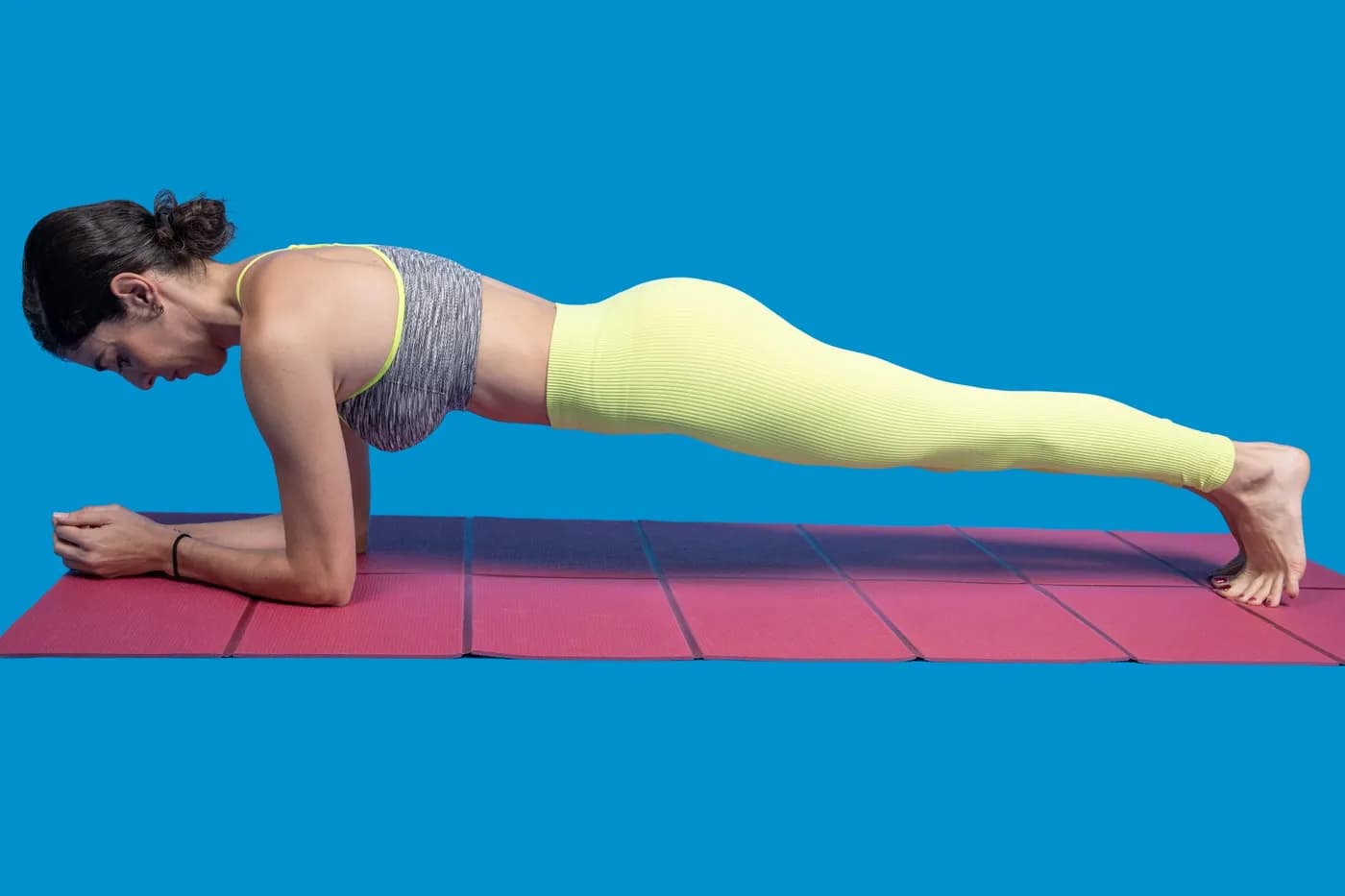
The body forms a straight plank line supported on the forearms rather than the hands, elbows directly under the shoulders. See the steps, benefits, and
Key Takeaways
- Combines standard plank with the forearm support of Dolphin Pose into one hybrid posture.
- Featured prominently in Iyengar tradition as preparation for advanced inversions.
- The forearm support shifts load distribution, increasing core demand versus standard plank.
- Builds deltoid, rotator cuff, and trapezius strength alongside its core-conditioning effect.
- Most teachers introduce it only after standard plank is already well established.
- Makara, its namesake, is variously translated as dolphin or crocodile in different lineages.
What is Makara Adho Mukha Svanasana?
Makara Adho Mukha Svanasana derives from five Sanskrit words: ‘makara’ meaning dolphin (or in some translations, crocodile), ‘adho’ meaning downward, ‘mukha’ meaning face, ‘svana’ meaning dog, and ‘asana’ meaning pose. Pronounced muh-KAH-rah AH-doh MOO-kah shvah-NAH-suh-nuh, the pose is most commonly known in English as Dolphin Plank Pose. Visually, the practitioner positions the body in a straight plank line — like a standard plank — but supports the upper body on the forearms rather than the hands, with the elbows directly under the shoulders. The body forms a single straight line from heels through hips through shoulders to crown of the head.
The pose combines elements of two foundational yoga poses — the plank position and Dolphin Pose (the forearm-supported version of Downward Dog) — creating a powerful core and shoulder strengthening pose. The “makara” name connects to the marine animal — variously interpreted as dolphin or sea creature — symbolising stable strength supported through the forearms. Documented across modern yoga lineages and prominently featured in Iyengar tradition as a preparatory pose for advanced inversions, Makara Adho Mukha Svanasana represents the integration of plank stability with the deep shoulder engagement of forearm-supported postures.
In the broader yoga system, Dolphin Plank belongs to the family of arm and core strengthening poses alongside Phalakasana (Standard Plank), Adho Mukha Svanasana (Downward Dog), and Pincha Mayurasana (Forearm Stand). It is most commonly practised as a core conditioning pose in vinyasa flow sequences, as a preparatory pose for forearm balance work, and as a daily strength-building posture. Most teachers introduce Dolphin Plank after standard plank is established as a progressive next step in core development.
Makara Adho Mukha Svanasana Benefits
Physical Benefits
Benefit 1: Builds Deep Core Strength and Stability
Dolphin Plank requires sustained engagement of the entire core — including the rectus abdominis, transverse abdominis, obliques, and the deep stabilisers along the spine. The forearm support shifts the load distribution slightly, increasing core demand compared to standard plank. Members focused on broader core development often pair Makara Adho Mukha Svanasana with ouryoga for core strength programme to develop comprehensive core capacity.
Benefit 2: Strengthens the Shoulders, Arms, and Upper Back
The forearm-supported position builds significant strength in the deltoid muscles, the rotator cuff, the trapezius, and the upper-back stabilisers — addressing the chronic upper back weakness that prolonged sitting produces.
Benefit 3: Improves Posture and Spinal Alignment
Maintaining the plank line activates the postural muscles that hold the spine in healthy alignment — over weeks of consistent practice, this translates directly to better daily posture. Members focused on broader posture work often pair their training with ouryoga for posture programme.
Mental and Emotional Benefits
Benefit 4: Builds Mental Discipline and Endurance
Holding Dolphin Plank for sustained durations requires significant mental endurance — particularly as the muscles fatigue. The pose builds the mental toughness that translates to other challenging poses and life situations. Members focused on broader flexibility often pair their work with ouryoga for flexibility programme.
Benefit 5: Develops Body Awareness and Mind-Muscle Connection
The simultaneous engagement of multiple muscle groups requires precise attention — building the mind-muscle connection that improves performance across all yoga and athletic activity.
Benefit 6: Builds Foundation Confidence for Inversions
For practitioners building toward advanced poses like Pincha Mayurasana (Forearm Stand) and Sirsasana (Headstand), Dolphin Plank provides essential preparatory training. Daily practice builds the shoulder stability and core engagement those advanced poses require. Members focused on broader hip mobility often pair their work with ourhip opening yoga poses programme.
How to Do Makara Adho Mukha Svanasana — Step-by-Step Instructions
Key Principles
Three foundational principles must be in place: maintain a straight plank line throughout (do not let the hips lift or sag), engage the core powerfully to support the spine, and breathe steadily throughout the hold.
Step 1: Starting Position (Tabletop)
Begin on hands and knees in tabletop position with wrists under shoulders and knees under hips. Take three steady breaths to establish the foundation.
Step 2: Lower Forearms to the Floor
Lower the forearms to the floor one at a time, placing them parallel to each other shoulder-width apart with palms flat. Elbows should align directly under the shoulders.
Step 3: Engage Core and Step Feet Back
Engage the core powerfully by drawing the navel toward the spine. Step both feet back one at a time, extending the legs straight. Hold the body in a straight plank line with the toes tucked under.
Step 4: Align the Body in a Straight Line
Check the alignment — heels stacked above the toes, hips level (not lifted, not sagging), shoulders directly over the elbows, head in line with the spine. The body forms a single straight line.
Step 5: Final Position and Hold
In the final position, the body holds steady in straight plank line with forearm support. Hold for 30–60 seconds in early practice, building to 90 seconds over weeks. Throughout the hold, maintain core engagement, steady breath, and unwavering plank line.
Step 6: How to Come Out of Makara Adho Mukha Svanasana
Slowly lower the knees to the floor, returning to tabletop position. Press back into Balasana (Child’s Pose) for several breaths to release the shoulders and core. Always exit with control rather than collapsing.
Breathing in Makara Adho Mukha Svanasana
The breath in Dolphin Plank follows a steady deep diaphragmatic pattern — slow inhales and exhales through the nose throughout the hold. The intensity makes breath-holding tempting, but smooth steady breath is essential for both performance and safety. If breath becomes ragged, exit and rest.
Preparatory Poses Before Makara Adho Mukha Svanasana
Preparation matters because the forearm position increases core and shoulder demand significantly.
Phalakasana (Standard Plank Pose)
Must be held comfortably for 60+ seconds before progressing to Dolphin Plank.
Adho Mukha Svanasana (Downward Dog)
Builds the foundational shoulder engagement that the forearm position requires.
Dolphin Pose (Ardha Pincha Mayurasana)
The forearm-supported version of Downward Dog — the closest preparatory pose for Dolphin Plank.
Sphinx Pose (Salamba Bhujangasana)
Builds awareness of the forearm-pressing pattern in a less demanding position.
Variations of Makara Adho Mukha Svanasana
Variation 1: Knee-Supported Dolphin Plank
Difficulty: Beginner Performed with the knees on the floor rather than feet — significantly reduces core and shoulder demand while teaching the forearm plank pattern. The destination starting variation for beginners.
Variation 2: Standard Dolphin Plank
Difficulty: Intermediate The classical version described in this guide — held with toes tucked under and full body in straight line. The destination practice for those building core strength.
Variation 3: Side Dolphin Plank
Difficulty: Intermediate-Advanced A side-plank version on one forearm — adds significant lateral core demand. Excellent progression for building oblique strength.
Variation 4: Dolphin Plank with Leg Lifts
Difficulty: Advanced From standard Dolphin Plank, alternately lift one leg off the floor — adds significant glute and core demand to the standing leg. Members focused on broader stretching often pair their work with ourstretching yoga poses programme.
Common Mistakes to Avoid in Makara Adho Mukha Svanasana
- Mistake 1: Letting the Hips Sag Toward the Floor The most common form error. As the core fatigues, the hips drop toward the floor — collapsing the lower back and risking lumbar strain. Correction: maintain core engagement throughout; if the hips begin to drop, exit the pose rather than continuing in collapsed form.
- Mistake 2: Lifting the Hips Too High The opposite error — practitioners pike the hips upward, transitioning toward Dolphin Pose and reducing the core demand. Correction: maintain a straight line from heels to head; the pose is plank, not inverted V.
- Mistake 3: Holding the Breath During the Hold The intensity of the pose makes breath-holding common. Correction: prioritise steady smooth breathing; if breath becomes ragged, exit and rest before attempting another set.
- Mistake 4: Misaligning the Elbows If elbows drift outward or inward away from directly under the shoulders, the load on the rotator cuff increases dangerously. Correction: keep elbows precisely under shoulders throughout the hold.
- Mistake 5: Practising with Cold Shoulders Skipping warm-up before Dolphin Plank risks rotator cuff strain. Correction: warm the shoulders with downward dog and dolphin pose before the plank position.
Who Should Practise Makara Adho Mukha Svanasana?
- Those Building Core Strength and Upper Body Stability The audience that benefits most. Practitioners with established standard plank practice who want to develop deeper core strength and shoulder stability find Dolphin Plank a rewarding daily practice. Members focused on broader core development often pair their work with ouryoga for core strength programme.
- Is Makara Adho Mukha Svanasana Good for Beginners? Beginners with established plank foundation can attempt the knee-supported variation. Standard Dolphin Plank typically becomes accessible after 4–6 weeks of consistent plank practice. Those with shoulder injuries should consult a doctor first.
- Working Professionals with Weak Core Office workers and sedentary adults benefit dramatically from daily Dolphin Plank practice — the pose directly addresses the core weakness and shoulder rounding that desk life produces.
- Practitioners Building Toward Forearm Balance For those building toward Pincha Mayurasana (Forearm Stand) and other forearm-supported inversions, Dolphin Plank is essential preparatory training — building the shoulder strength and stability those advanced poses require.
Dolphin Plank builds the kind of forearm, shoulder, and core stability that shows up gradually, hold by hold, rather than in one long attempt — strength trained this way asks for repeated practice more than intensity. Adding it to a regular sequence a few times a week, and letting the hold time grow slowly, is what actually builds that stability. the Yoga Everyday program is a good place to progress a pose like this safely within a daily practice.
Frequently Asked Questions
Related Articles
Vajrasana: How to Do It Benefits and Precautions
Practice vajrasana pose with Habuild. Try vajrasana to ease digestion, reduce back pain, and calm your mind. Ideal for all levels. Start your session today!
Chakravakasana (Ruddy Goose Pose): Steps, Benefits and Precautions
This four-point kneeling anti-rotation exercise builds lumbar stability and shoulder alignment, named after the ruddy shelduck of Hindu mythology. See the steps, benefits, and precautions.
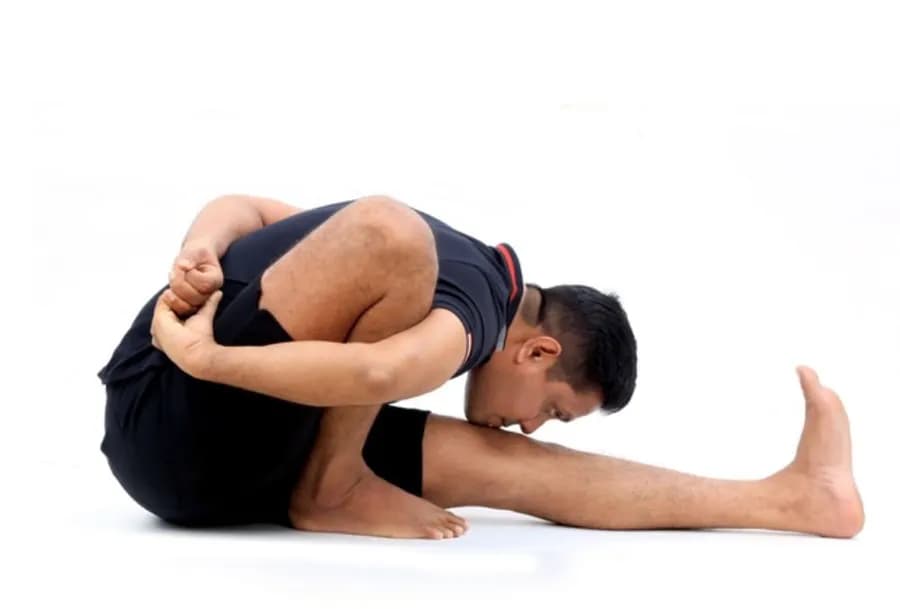
Marichyasana a (Sage Marichi’s Pose a): Steps, Benefits and Precautions
The first of four Marichi poses, this seated forward fold with one knee bent and an arm wrapped behind the back establishes the base that the more complex C and D variations build upon. See the steps, benefits, and precautions.