Manduki Mudra: Benefits, Steps, Frog Gesture Meaning & Precautions
Performed in Vajrasana with the mouth closed and the tongue moving slowly inside, the gaze fixed gently at the nose-tip — named after the frog’s

Key Takeaways
- Its name means ‘frog,’ referencing the animal’s complete stillness except for its tongue.
- Performed in Vajrasana with the tongue moving slowly inside a closed mouth, seeking ‘amrit.’
- Classical texts describe amrit as a sweet, cool secretion dripping from the soft palate.
- The Gheranda Samhita catalogues it among 25 mudras as one of the inner-body gestures.
- Serves as preparatory practice that builds tongue mobility before attempting khechari mudra.
- The eyes hold nasagra drishti, a soft gaze fixed at the tip of the nose, throughout.
What is Manduki Mudra?
In hatha yoga texts like the Gheranda Samhita (which lists 25 mudras), manduki mudra is classified as one of the inner-body mudras — gestures that work not with the hands but with the tongue, the gaze, the breath and subtle internal currents. The Sanskrit word manduka means frog, and the mudra takes its name from the frog’s defining quality: stillness so complete that the whole body becomes invisible, with only the tongue moving in slow, deliberate motion.
The traditional method involves sitting in vajrasana with the spine tall, mouth closed, and the tongue moving slowly along the upper palate or the inside of the mouth in search of a subtle “nectar” or amrit — described in classical texts as a sweet, cool secretion that drips from the soft palate during deep meditation. The eyes are softly fixed at the nose tip (nasagra drishti), and the breath becomes slow and almost imperceptible.
The mudra is closely associated with khechari mudra — the more advanced tongue gesture in which the tongue is rolled back to touch the soft palate and beyond. Manduki mudra is often taught as the preparatory practice that develops tongue mobility and inner taste-awareness before the practitioner approaches khechari. Many serious practitioners explore the relatedkhechari mudra benefits once they have become comfortable with manduki.
Manduki Mudra Benefits
The benefits of manduki mudra fall across physical, energetic and spiritual layers — making it a foundational practice for serious meditators.
Physical Benefits
1. Stimulates the Salivary Glands and Improves Oral Health The slow movement of the tongue along the palate and inner mouth gently stimulates the parotid, submandibular and sublingual salivary glands. Practitioners report fresher breath, less dry mouth on waking and gradually improved gum health.
2. Refines the Sense of Taste With repeated practice, the tongue’s sensitivity to subtle tastes increases. Many practitioners describe noticing flavours in plain water and rice that they had previously overlooked.
3. Tones the Facial Muscles and Throat The slow, sustained tongue work strengthens the small muscles around the mouth and throat. Some practitioners find that long-term practice helps reduce mild snoring.
4. Supports Glandular Balance Classical texts associate manduki mudra with stimulation of the pituitary, thyroid and pineal glands via the tongue’s connection to the upper palate region. Pairing the mudra with yoga for thyroid for the throat-region focus can compound the benefit for those with thyroid concerns.
Mental and Spiritual Benefits
5. Cultivates Profound Inner Stillness The frog metaphor is precise — the practice teaches the body to be still in a way that ordinary meditation does not access. Most practitioners notice a quieter, more “settled” quality in their sittings within 4–6 weeks.
6. Activates the Bindu and Sahasrara Regions In yogic anatomy, the upper palate connects to subtle channels leading to the bindu (a point at the back of the head) and onward to the sahasrara (crown chakra). Manduki mudra is one of the gentle ways to activate these centres.
7. Supports Anti-Ageing and Longevity Practices Traditional texts attribute longevity benefits to the amrit secretion stimulated by the practice. The science is anecdotal, but the calming nervous-system effects are real and measurable.
8. Deepens Pratyahara (Sensory Withdrawal) The fixed nose-tip gaze plus the inward-tongue focus draws the senses inward, supporting the pratyahara stage of Patanjali’s eightfold yoga path.
How to Do Manduki Mudra — Step-by-Step Instructions
Key Principles
- Sit in vajrasana for the traditional version.
- Mouth is closed throughout — only the tongue moves.
- Eyes softly fixed at the nose-tip (nasagra drishti).
Step 1: Find a Stable Vajrasana
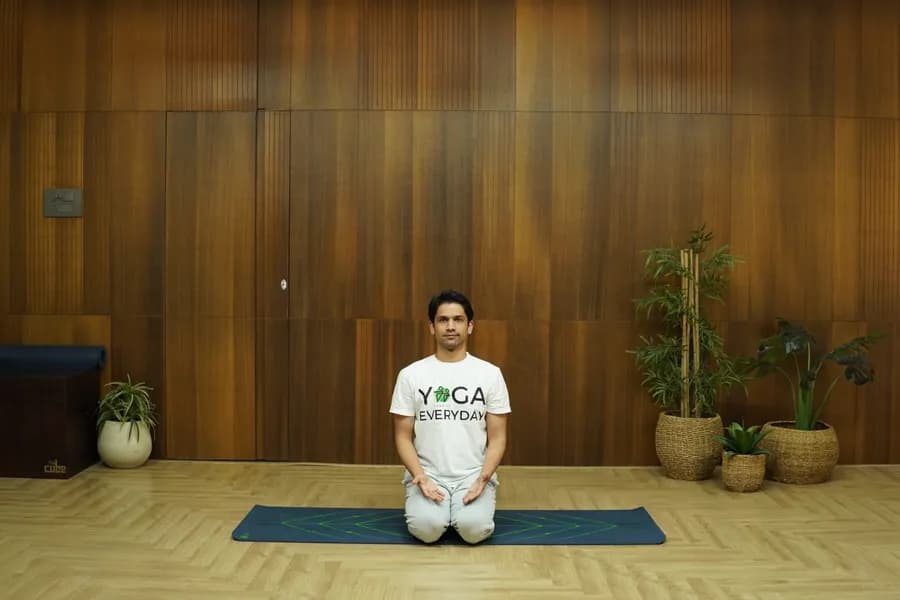
Kneel and sit back on your heels, with the tops of the feet flat against the floor. Hands rest on the knees, palms down. Spine tall.
Step 2: Close the Mouth and Soften the Jaw
Bring the lips together gently. The teeth do not clench; the jaw is soft and relaxed.
Step 3: Begin Tongue Movement
With the mouth closed, move the tongue tip slowly along the inside of the mouth — touching the upper palate, the inside of the cheeks, and the back of the upper teeth — in slow, exploratory motion. Imagine a frog quietly searching for a drop of dew.
Step 4: Fix the Gaze at the Nose-Tip
Open the eyes slightly and direct the gaze toward the tip of the nose. This is nasagra drishti. If this strains the eyes, soften the gaze or close the eyes lightly.
Step 5: Settle the Breath
Breath becomes slow, soft, almost unnoticed. Do not control — allow the body’s rhythm to slow naturally as the practice deepens.
Step 6: Hold and Observe
Stay for 10–15 minutes to start. Notice any subtle taste, salivation, warmth in the throat or sense of inward stillness.
Step 7: How to Come Out
Slowly stop the tongue movement. Soften the gaze. Swallow any saliva that has gathered. Sit for 1–2 minutes in stillness before moving.
Breathing in Manduki Mudra
The breath naturally becomes slow and quiet. Do not pair with active pranayamas like kapalbhati or bhastrika during the gesture itself; do those before or after.
Preparatory Practices Before Manduki Mudra
These prepare the body, jaw and tongue for the precise inner work:
- Mandukasana (frog pose, 1 minute hold) — physically grounds the practitioner in the frog metaphor. The dedicatedmandukasana page covers the asana variations.
- Simhasana (lion’s pose, 3 rounds) — opens the jaw, releases throat tension and stretches the tongue.
- Bhramari pranayama (5 rounds) — quiets the nervous system before the inward sitting.
- 5 minutes of slow nasal breathing — settles the heart rate before the practice.
Variations of Manduki Mudra
Variation 1: Manduki in Sukhasana
For practitioners with knee or ankle issues that make vajrasana difficult, sukhasana works as a substitute seat — the inner work is the same.
Variation 2: Manduki + Bhramari Combination
Practise manduki mudra for 10 minutes, followed by 5 rounds of bhramari pranayama (humming bee breath) without changing the seat. The vibration deepens the throat and palate stimulation.
Variation 3: Manduki as Preparation for Khechari Mudra
Advanced practitioners use 6–12 months of daily manduki practice as preparation for the rolled-back tongue position of khechari. Approach this only under a teacher’s guidance.
Common Mistakes to Avoid in Manduki Mudra
- Opening the mouth during the practice — defeats the purpose. The lips and teeth stay gently together throughout.
- Forcing the nose-tip gaze — if the eyes strain, soften or close them. Forced drishti causes headaches.
- Moving the tongue too fast — the motion is slow, deliberate, exploratory. Fast tongue movement turns the practice into a tongue exercise rather than a meditation.
- Practising for too long on day one — start with 5–10 minutes; build up over weeks. Long sessions before the body adapts can cause jaw fatigue and headache.
- Skipping vajrasana preparation — sitting in vajrasana requires ankle and knee mobility. Without warm-up, the seat itself becomes a distraction.
- Approaching manduki as just a tongue exercise — the inner stillness is the point. The tongue work is the doorway, not the destination.
Who Should Practise Manduki Mudra?
- Serious Meditators Looking for Deeper Stillness The practice is exquisitely suited to anyone who has already done 6+ months of basic meditation and is looking for a more refined inward technique.
- Practitioners of Hatha Yoga and Kriya Yoga Manduki mudra is a foundational practice in many kriya yoga lineages. Anyone studying serious hatha yoga in the Gheranda Samhita tradition should have this in their toolkit.
- People Preparing for Khechari Mudra The 6–12 months of daily manduki practice is the recognised preparation for advanced tongue practices. Combine with steadyyoga asanas work for full preparation.
- People with Mild Sleep-Breath Issues The tongue and throat strengthening can support reduction of mild snoring over months of practice.
- Is Manduki Mudra Good for Beginners? Yes — and uniquely friendly to beginners because it requires no flexibility or finger precision. The challenge is the patience and stillness it asks for, not the technique.
Manduki mudra is one of the more demanding inner mudras to sustain, and its calming effect on the mind tends to reveal itself only once the tongue movement stops requiring your full attention — which takes regular, patient repetition in vajrasana rather than a single sitting. Build it gradually into your practice, a minute or two longer each week. Habuild’s Yoga Everyday program can support that steady progression with guided daily sessions.
Frequently Asked Questions
Related Articles
Vajrasana: How to Do It Benefits and Precautions
Practice vajrasana pose with Habuild. Try vajrasana to ease digestion, reduce back pain, and calm your mind. Ideal for all levels. Start your session today!

Chakravakasana (Ruddy Goose Pose): Steps, Benefits and Precautions
This four-point kneeling anti-rotation exercise builds lumbar stability and shoulder alignment, named after the ruddy shelduck of Hindu mythology. See the steps, benefits, and precautions.

Gyan Mudra: How to Do It and Its Benefits for Focus and Memory
Practice Gyan Mudra with Habuild. Follow the wisdom hand gesture steps to improve focus, reduce anxiety, and enhance your meditation practice. Start today!