Mudra for Piles: Ashwini Mudra, Apana Mudra & Hand Gestures for Pelvic Relief
Ashwini Mudra, Apana Mudra, and Mula Bandha together form a complete pelvic-floor protocol used in hatha yoga for gentle strength and smoother
Key Takeaways
- Ashwini Mudra, the ‘horse gesture,’ rhythmically contracts and releases the anal sphincter.
- The full protocol combines Ashwini Mudra, Apana Mudra, and Mula Bandha together.
- Apana vayu, the downward-flowing pranic current, governs elimination in yogic physiology.
- The sphincter contractions act like a pump, aiding venous return from haemorrhoidal vessels.
- Especially helpful for desk workers and pregnant women managing venous pressure.
- Explicitly never replaces medical care, sitz baths, or surgery for severe or bleeding piles.
What is a Mudra for Piles?
A mudra is a yogic gesture that “seals” specific currents of vital energy (prana) inside the body. In the case of mudra for piles, the energy in question is apana vayu — the downward-flowing pranic current that governs elimination, the anal region, and the lower abdominal organs. When apana vayu is balanced and flowing freely, elimination is smooth, the pelvic floor is toned, and the venous return from the lower body is healthy. When apana vayu is sluggish or blocked — through poor diet, sedentary habits, chronic stress or weak pelvic muscles — the result can include constipation, haemorrhoids (piles), anal fissures and a heavy, congested feeling in the pelvis.
A hand mudra for piles like Apana Mudra works by gently directing pranic flow toward the eliminative organs. Ashwini Mudra, on the other hand, is a body mudra — a rhythmic contraction-and-release of the anal sphincter that physically tones the pelvic floor and supports venous return from the haemorrhoidal vessels. The full traditional protocol combines both. Many practitioners also benefit from a parallel daily practice ofyoga for piles which adds asana and pranayama to the mudra work.
Mudra for Piles Benefits
- Physical Benefits
- Tones the Anal Sphincter and Pelvic Floor Ashwini mudra’s repeated contractions strengthen the muscles around the anal opening and the wider pelvic floor. Over weeks, this reduces the bulging tendency of internal piles and supports continence.
- Mental and Emotional Benefits
- Reduces the Anxiety Around Toilet Visits Chronic piles or fissures often create a fear-of-pain loop around bowel movements. Daily mudra practice gradually rebuilds confidence in the body’s eliminative function.
- Improves Venous Return from the Pelvic Region The contractions act like a pump, encouraging blood to flow upward from the haemorrhoidal vessels back into the systemic circulation. This is especially helpful for desk workers and pregnant women, who are prone to pelvic blood pooling.
- Eases Constipation and Hard Stools Apana mudra paired with apana vayu activation supports peristalsis and downward intestinal movement. Many practitioners find that the morning bowel movement becomes easier within 2–3 weeks of daily practice.
- Reduces Pressure During Defecation Less straining means less pressure on the haemorrhoidal vessels, less risk of fissure recurrence, and faster healing of existing piles. Combining the mudra with structuredyoga for stress management addresses the gut-stress connection that often drives chronic constipation.
- Supports Long-Term Pelvic Awareness Many people are entirely unaware of their pelvic floor until something goes wrong. The practice cultivates awareness that supports lifelong pelvic health.
How to Do Mudras for Piles — Step-by-Step
Mudra 1: Ashwini Mudra (The Primary Body Mudra for Piles)
Step 1: Sit in sukhasana, vajrasana or lie in shavasana. Spine tall or fully relaxed. Step 2: Inhale slowly through the nose. Step 3: As you exhale, gently contract the anal sphincter — drawing it inward and upward, as if you were trying to stop a bowel movement. Step 4: Hold the contraction for 3–5 seconds. Step 5: Inhale and release the contraction completely. This is one round. Step 6: Practise 15–30 rounds, twice daily.
The contractions should be deliberate and controlled — never strained. Stop immediately if there is acute pain.
Mudra 2: Apana Mudra (The Hand Mudra for Piles)
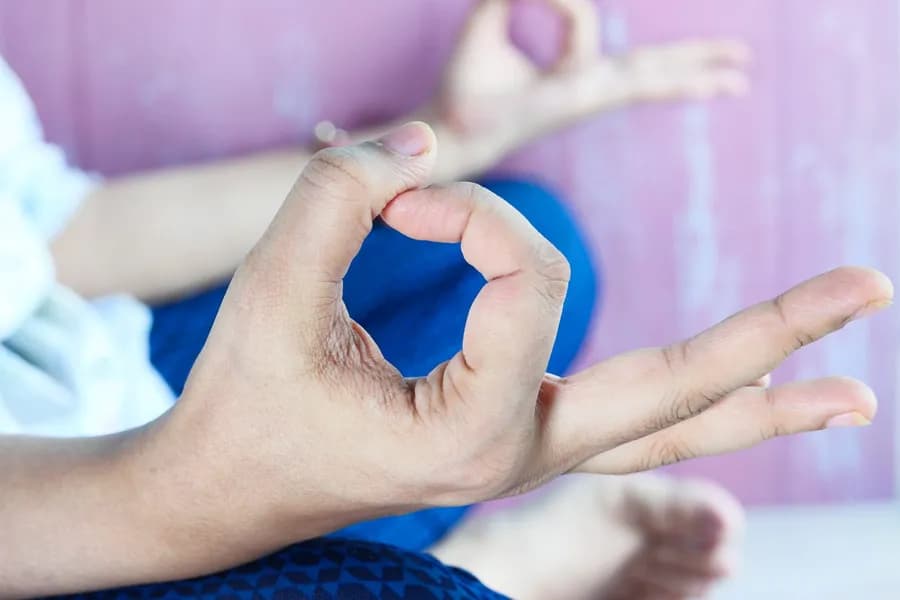
Step 1: Sit in sukhasana or vajrasana. Hands rest on the thighs, palms facing upward. Step 2: On each hand, bring the tips of the thumb, middle finger and ring finger together. Step 3: Keep the index finger and little finger extended. Step 4: Begin slow nasal breathing — inhale 4, exhale 6 counts. Step 5: Hold the gesture for 15 minutes daily, ideally early morning before the bowel movement. The dedicatedapana mudra benefits page covers the wider benefits of this gesture.
Mudra 3: Mula Bandha (The Root Lock)
Step 1: After Ashwini mudra has been mastered, the practitioner can progress to mula bandha — a sustained, gentle contraction of the perineal floor (between anus and genitals), held during pranayama or meditation. Step 2: This is more advanced and should be approached after several weeks of daily Ashwini practice.
Breathing in Mudras for Piles
Pair with slow diaphragmatic breath (Apana mudra) and rhythmic nasal breath synchronised with contractions (Ashwini). Avoid kapalbhati and bhastrika during active bleeding piles.
Preparatory Practices Before Piles Mudras
- Pawanmuktasana (wind-relieving pose) — releases gas and gently massages the lower abdomen.
- Malasana (squat pose) — improves toilet posture and pelvic floor mobility.
- 3 rounds of slow anulom vilom — calms the nervous system before mudra practice.
- Drink a glass of warm water — supports the morning bowel movement.
Variations and How to Sequence Them
Variation 1: Acute Phase Sequence (Active Piles or Fissure)
Apana mudra (15 min, gentle) → Slow nasal breath only → Avoid Ashwini mudra during acute bleeding; resume after symptoms ease.
Variation 2: Recovery Phase Sequence (Healing)
Apana mudra (15 min) → Ashwini mudra (15 rounds, gentle contractions) → Slow walk for 10 minutes.
Variation 3: Daily Prevention Sequence (Post-Recovery)
Apana mudra (15 min) → Ashwini mudra (30 rounds) → Mula bandha during seated meditation (advanced practitioners only).
Common Mistakes to Avoid in Mudra for Piles
- Practising Ashwini mudra during active bleeding — wait until bleeding stops. Strong contractions on inflamed haemorrhoidal vessels can worsen the condition.
- Contracting too hard or too fast — Ashwini mudra is rhythmic and controlled, not violent. Quick, hard contractions cause strain.
- Skipping the morning practice in favour of evening only — the morning session is essential because it precedes the natural bowel movement window.
- Replacing medical care for severe or bleeding piles — Grade III–IV piles, persistent bleeding, or signs of infection require a colorectal surgeon’s evaluation. Mudra is supportive, not a replacement.
- Doing the practice on a full stomach — Ashwini and Apana mudras work best on an empty stomach, ideally before breakfast.
- Ignoring diet and hydration — no mudra can compensate for a low-fibre diet and inadequate water intake. The mudra works alongside dietary care, not instead of it.
Who Should Practise Mudra for Piles?
- People with Grade I or II Piles (Mild to Moderate) Daily mudra practice supports symptom reduction and recurrence prevention alongside dietary care, sitz baths and any prescribed medication.
- People in Recovery after Piles Surgery Once the surgical site has healed (typically 4–6 weeks post-procedure), gentle Ashwini mudra supports pelvic floor reconditioning. Always check with your surgeon first.
- People with Anal Fissures The improved blood flow and reduced straining are particularly helpful for fissure healing.
- Pregnant Women with Mild Piles (with Doctor’s Clearance) Pregnancy is a major piles risk factor due to pelvic blood pooling. Apana mudra (gentle hand position) is generally safe; Ashwini mudra requires gynaecologist clearance and should be done very gently.
- People with Chronic Constipation Driving Piles Risk Mudra practice paired withyoga poses for constipation addresses the upstream cause.
- Is Mudra for Piles Good for Beginners? Yes. No prior yoga experience needed. Apana mudra is the easiest entry point; Ashwini mudra requires only awareness of the sphincter muscles.
Pelvic floor tone and smoother elimination both improve gradually with practice, which is why Ashwini and Apana mudra tend to help most when practised daily rather than only during a flare-up. Pair the gesture with adequate hydration and fibre, and give it consistent time rather than expecting quick relief. Habuild’s Yoga Everyday program can help you build a steady, guided daily practice around this and related pelvic-floor work.
Frequently Asked Questions
Related Articles
Vajrasana: How to Do It Benefits and Precautions
Practice vajrasana pose with Habuild. Try vajrasana to ease digestion, reduce back pain, and calm your mind. Ideal for all levels. Start your session today!
Chakravakasana (Ruddy Goose Pose): Steps, Benefits and Precautions
This four-point kneeling anti-rotation exercise builds lumbar stability and shoulder alignment, named after the ruddy shelduck of Hindu mythology. See the steps, benefits, and precautions.
Gyan Mudra: How to Do It and Its Benefits for Focus and Memory
Practice Gyan Mudra with Habuild. Follow the wisdom hand gesture steps to improve focus, reduce anxiety, and enhance your meditation practice. Start today!