
Mudra for Vertigo
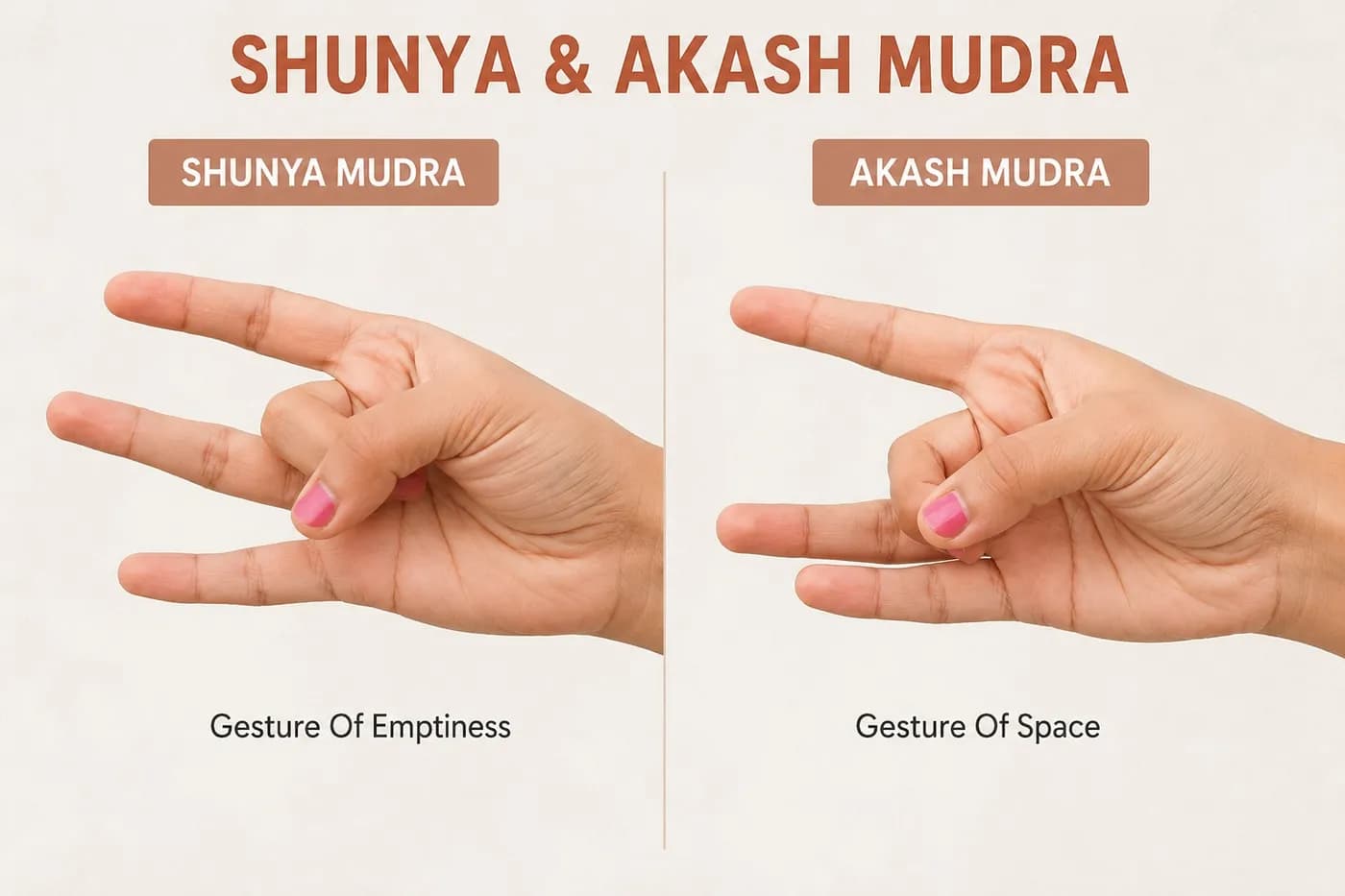
Shunya Mudra acts on the space element governing the inner ear, with daily practice associated with reduced frequency of mild dizziness episodes. See the
Key Takeaways
- Shunya Mudra, meaning ’empty’ or ‘zero,’ is the primary gesture recommended for dizziness.
- In Ayurveda, the inner ear and balance sense fall under the akash, space, element.
- Works by reducing excess space element, the traditional explanation for light-headedness.
- Akash Mudra should be used cautiously for vertigo since it actually increases space element.
- Pairing it with Bhramari pranayama’s humming vibration directly soothes the vestibular system.
- Works best combined with proper diagnosis, hydration, and vestibular exercises, not alone.
What is a Mudra for Vertigo?
A mudra is a yogic hand gesture that “seals” specific currents of vital energy (prana) inside the body. In Ayurveda, the inner ear and the sense of balance are governed by the akash (space) element — the most subtle of the five elements. When this element is in excess (too much “space” or hollowness in the head), the result can be light-headedness, dizziness or full vertigo.
A mudra for vertigo problem works by reducing excess space element. The most direct gesture for this is Shunya mudra — shunya literally means “empty” or “zero,” and the mudra reduces the emptiness or space sensation. The dedicatedbenefits of shunya mudra extend beyond vertigo to ear health and concentration. Akash mudra is sometimes mentioned in vertigo discussions, but its actual effect is to increase space element — so it should be used with care for vertigo, mostly when the cause is grounding or anxiety-related rather than positional.
Because vertigo has many causes — BPPV, vestibular migraine, Meniere’s disease, anxiety, dehydration — the mudra works best as part of a complete plan that includes proper diagnosis, hydration, vestibular exercises and stress reduction.
Mudra for Vertigo Benefits
Physical Benefits
1. Reduces Frequency of Mild Vertigo Episodes Daily Shunya mudra practice is associated with fewer episodes of position-triggered dizziness over weeks of practice. Best results come from morning practice on an empty stomach.
2. Eases Ear Pressure and Fullness Many vertigo sufferers experience ear pressure as a precursor. Shunya mudra targets the inner ear region and can reduce this fullness. Pairing the mudra with bhramari pranayama accelerates this effect because the humming vibration directly soothes the vestibular system.
3. Helps with Motion Sickness A 5–10 minute Shunya mudra practice before a car or boat journey can reduce motion sensitivity in many people.
4. Supports BPPV Recovery Used alongside the Epley manoeuvre and vestibular rehab prescribed by an ENT, the mudra can support a calmer recovery.
Mental and Emotional Benefits
5. Calms Vertigo-Related Anxiety Vertigo is frightening, and the fear of the next episode often makes the next one more likely. Shunya mudra paired with slow breath interrupts that anxiety loop. Many practitioners benefit from layering yoga for stress management alongside the mudra to address the underlying nervous-system overdrive.
6. Improves Concentration During Recovery Brain fog often follows vertigo episodes; daily mudra practice helps restore focus over time.
How to Do Mudras for Vertigo — Step-by-Step
Mudra 1: Shunya Mudra (Primary for Vertigo)
Step 1: Sit comfortably in sukhasana or on a chair. Eyes closed if safe to do so; otherwise keep them softly focused on a still point ahead.
Step 2: Fold the middle finger of each hand toward the palm so its tip touches the base of the thumb (the muscular mound at the bottom of the thumb).
Step 3: Press the thumb gently over the bent middle finger.
Step 4: The other three fingers — index, ring, little — stay straight but relaxed.
Step 5: Begin slow nasal breathing — inhale 4, exhale 6. The longer exhale activates the parasympathetic nervous system and steadies the inner ear.
Step 6: Hold for 10–15 minutes daily. During an active episode, hold for as long as comfortable — even 3–5 minutes can take the edge off.
Step 7: Release slowly. Sit still for another minute before standing.
Mudra 2: Akash Mudra (Secondary, for Anxiety-Driven Dizziness)
Step 1: Sit comfortably. Touch the tip of the index finger to the tip of the thumb on each hand.
Step 2: Other fingers extended.
Step 3: Hold 10 minutes with slow nasal breath. Use only when vertigo is anxiety- or stress-driven, not for position-triggered (BPPV) vertigo.
Breathing through Vertigo Mudra Practice
Pair with bhramari pranayama (humming bee breath) — directly soothes the inner ear via vibration. Avoid kapalbhati and bhastrika during active vertigo phases.
Preparatory Practices Before Vertigo Mudras
Movement is sensitive in vertigo. Keep prep gentle:
- Slow, seated neck movements — chin to chest, ear to shoulder. Never quick rotations.
- Bhramari pranayama (5 rounds) — calms the inner ear.
- Slow, eyes-closed deep breathing — 2 minutes of just sitting.
- No headstands, downward dogs or fast position changes during a vertigo phase.
Variations of Mudra for Vertigo
Variation 1: Shunya Mudra in Shavasana (Lying Down)
For acute episodes — lie on the back, form the mudra at the sides of the body. Stay until the spinning subsides, then sit up slowly.
Variation 2: Shunya Mudra + Bhramari
Form the mudra and add 5 rounds of humming bee breath. The vibration directly calms the vestibular system.
Variation 3: Mudra Walk
For mild residual unsteadiness — walk slowly with hands held in Shunya mudra at the sides. 5 minutes only, indoors, with a wall or person nearby.
Common Mistakes to Avoid in Mudra for Vertigo
- Skipping the medical workup — vertigo can have serious causes. See an ENT or neurologist before assuming it is “just” a balance issue.
- Using Akash mudra for BPPV — Akash increases space element; for position-triggered vertigo, use Shunya only.
- Standing up suddenly after mudra practice — wait 1–2 minutes seated.
- Practising during an active spin attack while standing — sit or lie down first; safety first.
- Skipping hydration — dehydration is a major dizziness trigger; drink water before and after practice.
- Doing fast pranayama (kapalbhati, bhastrika) — these can trigger episodes. Stick to slow nasal breathing.
Who Should Practise Mudra for Vertigo?
- People with Mild Position-Triggered Vertigo (BPPV) — Cleared by ENT Shunya mudra works well alongside Epley manoeuvre and vestibular rehab. Many also benefit from a structuredyoga for vertigo practice that adds gentle balance training.
- People with Motion Sickness A 5–10 minute Shunya mudra before travel can be transformative.
- People with Stress- or Anxiety-Driven Light-headedness Akash mudra is the better fit here, paired with breath work.
- People in Vestibular Rehabilitation Mudras complement formal physiotherapy beautifully — never replace it.
- Is Mudra for Vertigo Good for Beginners? Yes — and especially safe because the practice is seated and still. Always rule out serious causes first.
Balance and a settled inner ear rarely respond to a single session with Shunya mudra — the steadiness people report tends to build gradually, over consistent daily practice, more than it resolves in one sitting after a dizzy spell. Keep a regular short practice going even on days you feel fine, so the support is already in place if symptoms return. Habuild’s Yoga Everyday program can help you fold this into a steady daily routine alongside gentle movement.
Frequently Asked Questions
Related Articles
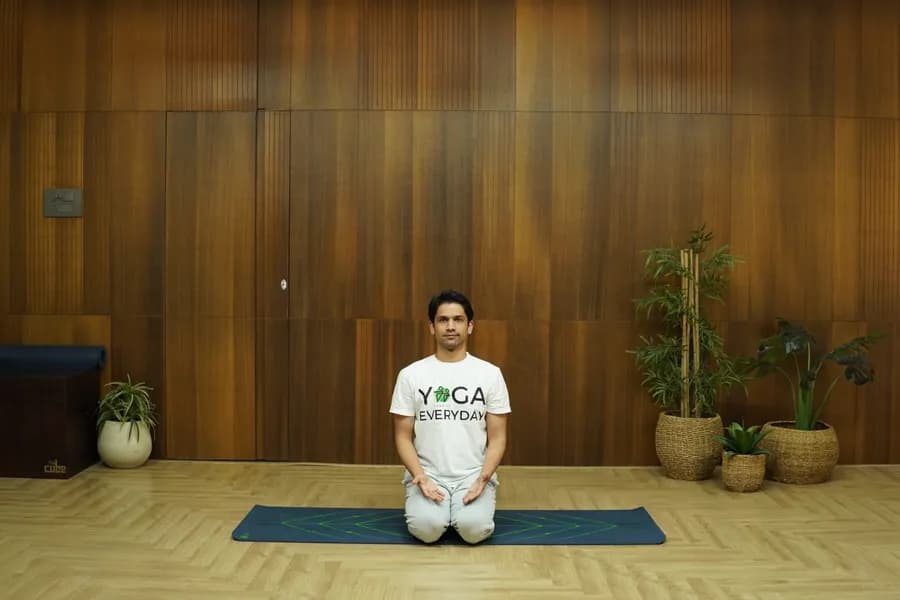
Vajrasana: How to Do It Benefits and Precautions
Practice vajrasana pose with Habuild. Try vajrasana to ease digestion, reduce back pain, and calm your mind. Ideal for all levels. Start your session today!

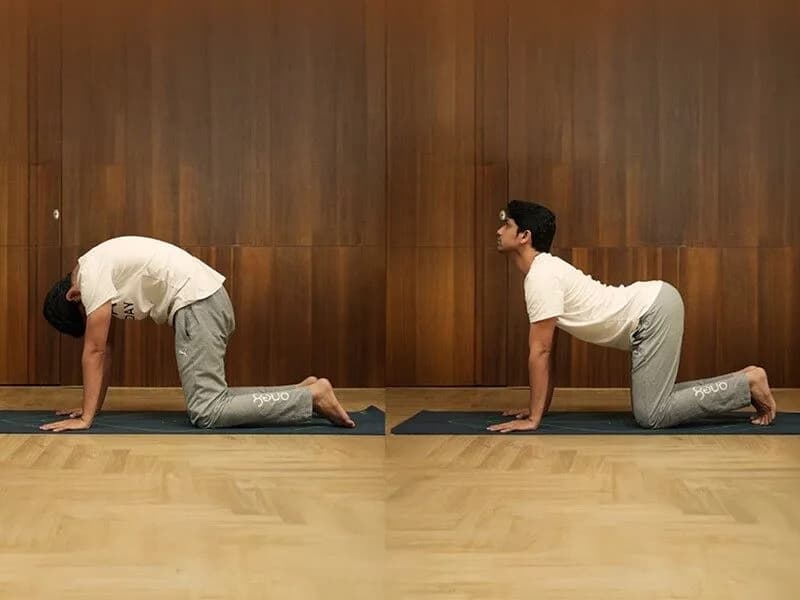
Chakravakasana (Ruddy Goose Pose): Steps, Benefits and Precautions
This four-point kneeling anti-rotation exercise builds lumbar stability and shoulder alignment, named after the ruddy shelduck of Hindu mythology. See the steps, benefits, and precautions.
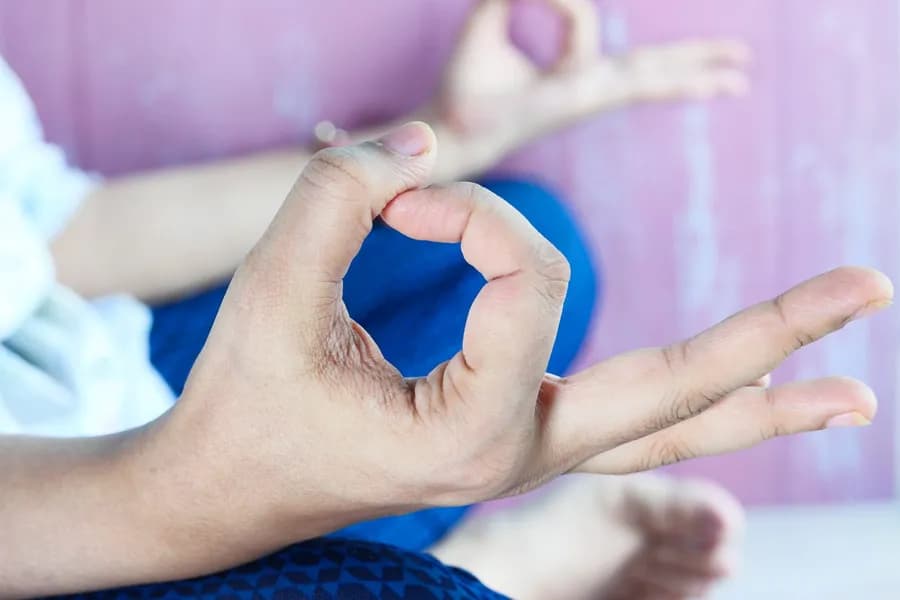
Gyan Mudra: How to Do It and Its Benefits for Focus and Memory
Practice Gyan Mudra with Habuild. Follow the wisdom hand gesture steps to improve focus, reduce anxiety, and enhance your meditation practice. Start today!
