
Nasagra Mudra: How to Practice and Its Benefits for Breathing
Learn Nasagra Mudra with Habuild. Explore nasagra mudra benefits and steps to calm the mind, enhance focus, and support meditation daily.
Key Takeaways
- A drishti, gazing, practice rather than a hand formation, unlike most mudras in the system.
- Eyes turn gently downward and inward until they converge softly on the nose tip.
- Paired with Shambhavi Mudra as the two primary gazing tools for Ajna chakra activation.
- Convergent eye movement activates the medial rectus muscles and the oculomotor nerve directly.
- Functions as a bridge between outward sensory engagement and full inward absorption.
- Contemporary neuroscience links the practice to settled saccadic eye movement patterns.
Nasagra Mudra is a yogic gazing practice (drishti mudra) in which the eyes are directed softly toward the tip of the nose — activating the Ajna chakra, developing one-pointed concentration, strengthening the optic nerves, and preparing the mind for pranayama and deep meditation. Unlike hand mudras, Nasagra Mudra works through directed visual attention rather than finger formation.
What is Nasagra Mudra?
Nasagra Mudra — the Nose Tip Gazing Practice — derives from Sanskrit: Nasa (nose), Agra (tip or point), and Mudra (seal or gesture). Unlike the Hasta Mudras (hand gestures) that form the majority of the mudra tradition, Nasagra Mudra is a drishti mudra — a practice of directed visual attention in which the eyes are turned gently downward and inward toward the tip of the nose. In the process, the eyes naturally become half-closed and the gaze convergent — a specific neural state with documented effects on attention, nervous system arousal, and the Ajna chakra’s cognitive functions.
Nasagra Mudra appears as a foundational concentration practice in classical Hatha yoga texts alongside Shambhavi Mudra (gaze directed to the third eye space), the two together representing the primary drishti tools for Ajna chakra activation and dharana (concentration) development. The nose-tip gaze provides an external physical anchor — the practitioner’s own nose tip — that trains the mind’s capacity for sustained, single-pointed attention without the complete internalisation that pure abstract meditation requires. This makes it a particularly effective bridge between the outward sensory engagement of beginning practice and the complete inward absorption of advanced meditation.
Contemporary neuroscience supports the classical understanding: the convergent eye movement of Nasagra Mudra activates the medial rectus muscles of both eyes simultaneously, engages the oculomotor nerve, and produces measurable changes in the autonomic nervous system’s arousal state — a settling of the saccadic eye movements that accompany scattered mental activity and a shift toward the sustained, focal attention that the practice is designed to cultivate.
Nasagra Mudra Benefits
Physical Benefits
- Strengthens the Optic Nerves and Ocular Muscles The sustained convergent gazing of Nasagra Mudra provides a specific exercise for the medial rectus muscles of both eyes — the muscles responsible for the inward turning (convergence) that the nose-tip gaze requires. Regular practice progressively strengthens these muscles and the optic nerve pathway, improving the eye’s capacity for comfortable sustained convergence and potentially benefiting practitioners with eye fatigue, convergence difficulty, or screen-related visual strain.
- Activates the Ajna Chakra Through Neural Convergence The convergent gaze of Nasagra Mudra activates the Ajna chakra — the third eye centre between the eyebrows — through the neural pathway that connects the optic convergence reflex to the pineal gland region. This activation supports the development of intuitive clarity, inner perception, and the enhanced cognitive awareness that the Ajna chakra’s full function produces. Consistent practice contributes meaningfully to the systematic chakra development programme.
Mental and Emotional Benefits
- Develops One-Pointed Concentration (Dharana) Nasagra Mudra is one of yoga’s most direct and technically simple practices for developing dharana — the sixth limb of Patanjali’s Ashtanga yoga, defined as the sustained binding of consciousness to a single focus point. The fixed visual gaze of the nose tip provides the concrete external anchor that trains the mind’s capacity for undivided, sustained attention — the foundation upon which deeper meditation states are built. Kapalbhati Pranayam provides useful energetic preparation before the concentration practice.
- Calms the Mind and Reduces Mental Agitation The physiological settling produced by fixed visual attention — the reduction of the restless saccadic eye movements that accompany a scattered, agitated mental state — produces a reliable calming of the mind’s surface activity. Practitioners who find sitting with closed eyes in meditation challenging often find that Nasagra Mudra’s gentle outward anchor provides the transitional stabilisation the mind needs to settle from activity into stillness.
- Improves Breath Awareness in Pranayama The nose-tip gaze of Nasagra Mudra naturally directs awareness toward the breath — the focal point of the eyes coinciding precisely with the primary organ of pranayama practice. This combination of drishti and breath awareness is one of the most effective pranayama concentration supports available, deepening the quality of attention in every breathing practice it accompanies. Suryabhedan and Surya Bhedi Pranayam pair particularly well with Nasagra Mudra for solar channel activation.
How to Do Nasagra Mudra — Step-by-Step Instructions
Key Principles
Key Principles One absolute principle governs Nasagra Mudra practice above all others: never strain the eyes. The gaze should be relaxed, steady, and completely effortless — not intensely fixed or forced. The practice builds gradually over weeks, beginning with one to two minutes and increasing by one minute per week until ten to fifteen minutes is comfortable. Any eye strain, headache, or dizziness requires immediate release and rest.
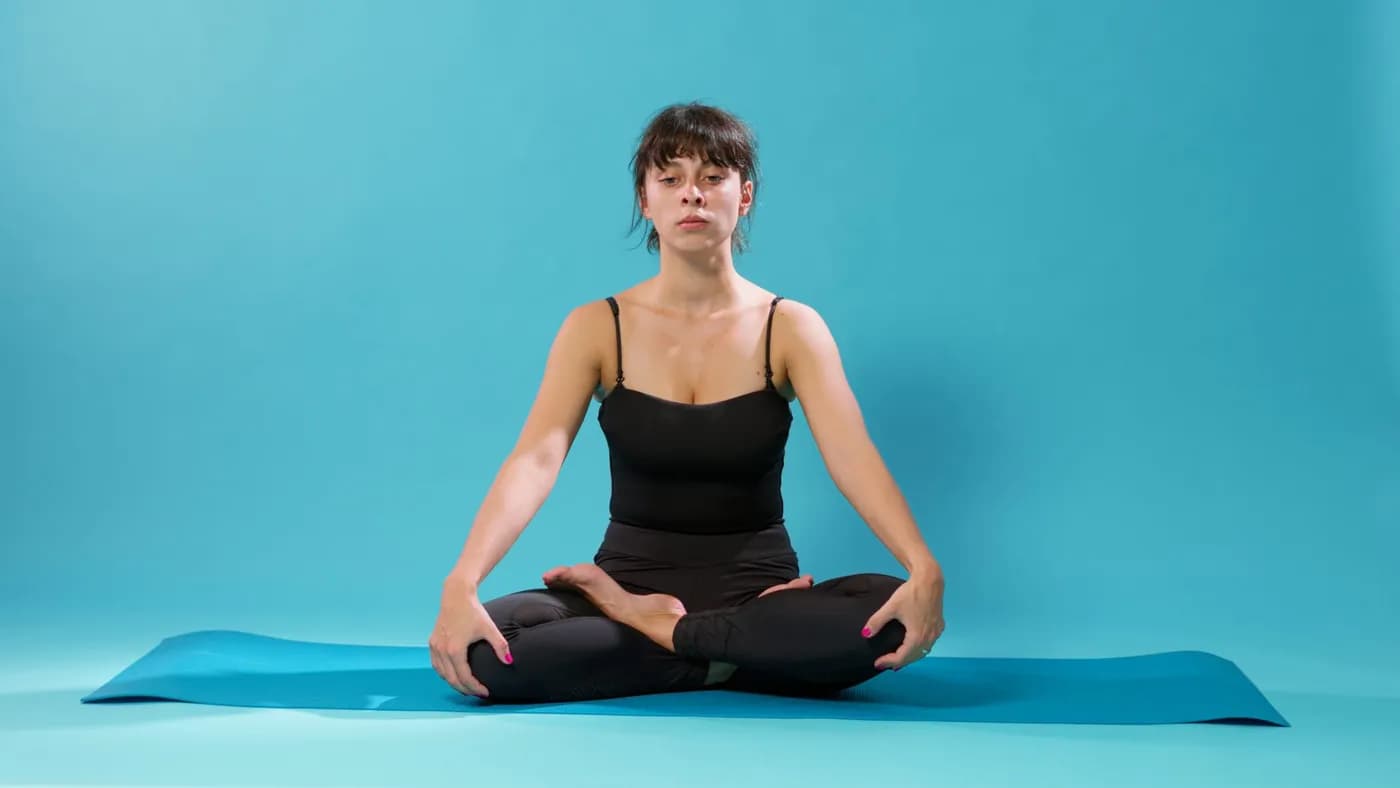
Nasagra Mudra — Step by Step Step 1: Starting Position Sit in Sukhasana, Padmasana, or Vajrasana with an erect spine and a level head. The face is relaxed — jaw loose, teeth slightly parted, tongue resting naturally. Take two to three slow breaths to arrive in the seated posture before beginning the gaze.
Step 2: Soften and Lower the Gaze Without moving the head, allow both eyes to turn gently downward — as if looking along the nose toward its tip. The movement is small and effortless. The eyes naturally begin to converge as they lower toward the nose-tip focal point.
Step 3: Focus Softly on the Nose Tip Allow the gaze to rest softly on or just beyond the tip of the nose. The eyes will naturally become half-closed as the gaze converges. The quality of the focus should be relaxed and steady — not intensely staring. If the nose tip cannot be seen clearly, focus on the general area just in front of it.
Step 4: Maintain the Gaze and Breathe Hold the soft, steady nose-tip gaze while breathing naturally. Allow the breath to become the secondary focus of awareness — the nose tip anchoring the eyes while the breath flows in and out through the same nasal passage, creating a unified gaze-breath awareness.
Step 5: Hold for the Appropriate Duration Hold for one to five minutes initially — building gradually by one minute per week to a maximum of ten to fifteen minutes. Release the gaze at any sign of eye strain or discomfort — immediately and without continuation.
Step 6: Release and Eye Palming Gently close both eyes and allow them to rest in natural darkness for thirty to sixty seconds. Then rub the palms together vigorously until warm and cup them gently over the closed eyes (eye palming) for one to two minutes. This post-practice eye recovery is an essential part of every Nasagra Mudra session.
Breathing in Nasagra Mudra
Natural, steady breathing accompanies Nasagra Mudra — the nose-tip gaze spontaneously directing awareness toward the breath’s sensation at the nostrils, creating a natural unified drishti-pranayama experience. The combination of Nasagra Mudra with Chandrabhedan Pranayam (left nostril, cooling, calming) provides a particularly effective pre-meditation combination for reducing mental agitation.
Preparatory Practices Before Nasagra Mudra
These practices settle the nervous system and relax the facial muscles before the gazing practice.
- Nadi Shodhana Pranayam (5 rounds) — Balances both energy channels and settles the nervous system into the calm state that sustained concentration requires.
- Gentle eye warm-up (soft circles, palming) — Relaxes the ocular muscles and prepares the eyes for the sustained convergent gaze.
- Sukhasana with Gyan Mudra (3 minutes) — Establishes the inward-facing awareness that Nasagra Mudra’s concentration practice deepens.
- Bhramari Pranayam (3 rounds) — The humming vibration calms the nervous system and draws awareness inward before the drishti practice.
Variations of Nasagra Mudra
- Variation 1: One-Minute Nasagra Mudra — Beginner Complete beginners begin with one minute of nose-tip gaze followed by one minute of eye palming rest. This short cycle builds ocular strength and concentration capacity gradually without the risk of eye strain that longer initial holds can produce. One minute per week is added to the hold duration as comfort develops.
- Variation 2: Nasagra Mudra with Pranayama — Intermediate Holding Nasagra Mudra’s nose-tip gaze throughout a complete Nadi Shodhana Pranayam session — maintaining the convergent gaze during both inhalations, retentions, and exhalations — combines the bilateral brain activation of the alternating nostril breath with the Ajna chakra activation of the drishti practice. This combination significantly deepens both the pranayama and the concentration work.
- Variation 3: Nasagra Mudra in Full Meditation — Advanced Maintaining Nasagra Mudra throughout a complete seated meditation session — using the nose-tip gaze as the primary concentration anchor throughout the entire sitting. This is the classical application of Nasagra Mudra in advanced Hatha yoga — the sustained drishti providing the physical concentration support that keeps the mind anchored through extended meditation periods.
Common Mistakes to Avoid in Nasagra Mudra
- Straining or Forcing the Gaze The most consequential and most common error in Nasagra Mudra. A tense, forced, or intensely concentrated gaze creates eye muscle fatigue, headache, and potentially lasting eye strain. The nose-tip gaze should feel as effortless as looking at any nearby object — relaxed, steady, and completely unforced. If it requires effort, it is too intense.
- Practising Too Long Too Soon Building duration too rapidly is the second most common cause of eye strain. One to two minutes is the appropriate starting duration for most practitioners. Resist the temptation to hold longer than is comfortable in the first week — the ocular muscles need gradual conditioning, just as physical muscles require progressive resistance training.
- Continuing When Symptoms Arise Any experience of eye strain, headache, dizziness, or visual disturbance during Nasagra Mudra requires immediate release of the gaze and eye palming rest. Never continue through these symptoms — they indicate that the practice has exceeded its safe boundary for the current session.
- Skipping the Post-Practice Eye Palming The eye palming recovery after Nasagra Mudra is not optional — it is an integral part of the practice. The warm darkness of cupped palms over closed eyes allows the optic nerves and ocular muscles to rest and recover after the sustained convergent effort. Ending the session without palming leaves the eyes unnecessarily fatigued.
Who Should Practise Nasagra Mudra?
- Pranayama Practitioners Developing Breath Awareness Nasagra Mudra’s natural direction of attention toward the breath makes it specifically valuable for pranayama practitioners who wish to deepen the quality of their breath observation. The drishti-breath unity of the nose-tip gaze and nasal breathing creates one of yoga’s most effective breath awareness anchors.
- Meditation Practitioners Developing Concentration Practitioners who find seated meditation with closed eyes difficult due to visual distraction, restlessness, or scattered attention will find Nasagra Mudra’s gentle external anchor the transitional support their concentration practice needs. The nose-tip gaze provides just enough outward engagement to anchor the wandering mind while gradually training it toward deeper inward absorption.
- Those Activating the Ajna Chakra Within the systematic chakra curriculum, Nasagra Mudra is one of the primary Ajna chakra activation tools — complementing Hakini Mudra, Shambhavi Mudra, and Trataka in the development of the third eye centre’s intuitive clarity and inner perception.
- Is Nasagra Mudra Good for Beginners? Yes, with appropriate pacing. The technique itself is immediately accessible — directing the eyes toward the nose tip requires no prior yoga experience. The primary requirement is patience with the gradual duration development and strict adherence to the no-strain principle. Beginners who respect the one-minute starting duration and build gradually will progress safely and meaningfully.
Make Nasagra Mudra a Part of Your Daily Practice
Nasagra Mudra is one of yoga’s most accessible and immediately effective concentration development tools — its simple nose-tip gaze activating the Ajna chakra, strengthening the optic nerves, settling the mind’s surface agitation, and building the one-pointed attention that pranayama and meditation both require. The practice costs nothing, requires no equipment, and can be performed in any comfortable seated position.
Whether you are beginning with one-minute holds before your morning pranayama session or developing a sustained meditation drishti practice, the gradual progression of Nasagra Mudra ensures that every practitioner builds the practice safely and effectively. The convergent gaze that feels effortful in week one typically becomes completely natural by week three of consistent daily practice.
The most effective way to learn Nasagra Mudra correctly — with the precise gazing technique, progressive duration guidance, and post-practice eye palming instruction that make the practice both safe and genuinely transformative — is under live expert guidance with Habuild’s daily sessions.
Start your 14 day free yoga journey with Habuild, today!
Calming the mind through Nasagra Mudra works best as a returning ritual, not a one-off exercise before an exam or a stressful meeting. The focus it sharpens and the stillness it invites tend to deepen with repetition, especially when practiced alongside breathwork and meditation each day. Habuild’s Yoga Everyday program weaves gestures like this into a full daily practice so the calm becomes easier to access over time.
Frequently Asked Questions
Related Articles

Adi Mudra: How to Practice and Its Benefits for Breathing and Calm
Practice Adi Mudra with Habuild. Follow the primal hand gesture steps to calm the nervous system, deepen breathing, and ground your yoga practice. Start today!


Dhyana Mudra: How to Practice and Its Benefits for Meditation
Practice Dhyana Mudra with Habuild. Follow the meditation hand gesture steps to calm the mind, deepen concentration, and support your daily practice. Start!
Anulom Vilom Pranayama: Steps, Benefits and Precautions
Learn anulom vilom pranayama — alternate-nostril breathing steps, benefits, and precautions to know before you start. Practise it daily alongside Habuild's guided yoga and breathing sessions.