
Adi Mudra: How to Practice and Its Benefits for Breathing and Calm
Practice Adi Mudra with Habuild. Follow the primal hand gesture steps to calm the nervous system, deepen breathing, and ground your yoga practice. Start today!

Key Takeaways
- Formed by tucking the thumb into the palm and wrapping the fingers, a newborn's natural fist.
- Is the first of four sequential mudras, followed by Chin, Chinmaya, then Brahma Mudra.
- Specifically activates abdominal breathing, the base layer of the four-stage sequence.
- Simply resting hands on the knees in this shape is said to immediately deepen the breath.
- Its enclosed, contained shape is used specifically to gather scattered Vata-driven anxiety.
- Described as the most natural gesture a human being makes, from infancy onward.
Adi Mudra is the Primal or First Gesture — formed by placing the thumb inside the palm and wrapping the four fingers over it, creating the first natural fist of a newborn infant. It calms the nervous system, deepens abdominal breathing, grounds scattered energy, and is the foundational first gesture of the classical four-mudra pranayama sequence.
What is Adi Mudra?
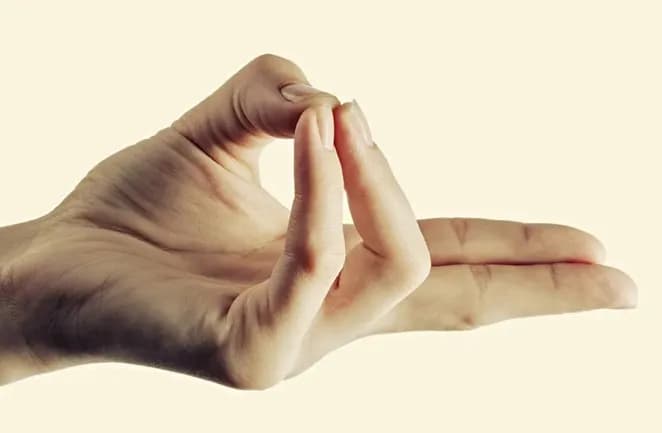
Adi Mudra — the Primal or First Gesture — is the most foundational mudra in the system, formed by placing the thumb in the centre of the palm and wrapping the four fingers over it to create a simple, contained fist. Adi means first or primordial in Sanskrit — this is the first gesture a human being makes, the natural fist of a newborn infant whose nervous system is in its most receptive and undefended state.
In the pranayama mudra sequence taught in the Kaivalyadhama and related traditions, Adi Mudra is the first of four positions — followed by Chin Mudra, Chinmaya Mudra, and Brahma Mudra — each activating progressively higher areas of the respiratory system. Adi Mudra activates abdominal breathing; the subsequent mudras progressively move the breath upward to the lower chest, mid-chest, and finally the complete four-direction breath.
At Habuild, Adi Mudra is taught as the foundational starting point for all pranayama mudra practice — its grounding, calming, abdominal-breathing-activating qualities making it the appropriate entry point for practitioners at every stage of development.
Adi Mudra Benefits
Physical Benefits
- Deepens Abdominal Breathing and Diaphragmatic Activation Adi Mudra's closed, contained formation draws awareness inward and specifically activates the lower abdominal breathing that the diaphragmatic breath requires. Many practitioners find that simply forming Adi Mudra and resting the hands on the knees immediately deepens and slows the breathing toward the abdomen — the primal body-state the gesture invokes naturally restoring the belly-breath of the infant's unguarded nervous system.
- Calms the Nervous System Through Primal Grounding The primal quality of Adi Mudra — the return to the natural fist of infancy — activates the parasympathetic nervous system through its association with the most fundamental pre-linguistic state of human physical experience, producing reliable nervous system calming that the simplicity of the gesture delivers immediately.
Mental Benefits
- Grounds Scattered Energy and Reduces Anxiety The enclosed, containing quality of Adi Mudra gathers and grounds the scattered mental energy that anxiety and Vata excess produce — collecting the diffuse awareness into a contained, present-moment focus. The gesture's completeness — nothing extended, nothing open, everything gathered — provides the physical expression of the mental settling it cultivates.
How to Do Adi Mudra — Step-by-Step Instructions
Key Principles
Key Principles Adi Mudra should feel like the most natural possible gesture — because it is the first gesture every human being makes. The fist should be gentle and contained, not tense and clenched. The thumb rests inside the palm with ease — the four fingers wrapping over it with the lightest possible contact that creates the closed formation.

Adi Mudra — Step by Step Step 1: Seated Starting Position Sit in Sukhasana or Padmasana — spine erect, hands resting on knees. Take three natural breaths to settle the nervous system before forming the gesture.
Step 2: Place the Thumb in the Centre of the Palm Place the thumb of each hand in the centre of the palm — the thumb pad resting naturally in the palm bowl, not forced to any particular position.
Step 3: Wrap the Four Fingers Gently Over the Thumb Wrap all four fingers — index, middle, ring, and little — gently over the thumb to create a contained fist. The grip is gentle — not a clenched fist but a soft, easy wrapping.
Step 4: Rest the Fists on the Knees Rest the fist formation on each knee — knuckles facing downward or upward depending on comfort. Allow the wrists and forearms to completely relax.
Step 5: Breathe into the Lower Abdomen Breathe naturally into the lower abdomen — each inhale expanding the belly outward, each exhale releasing inward. The contained, closed quality of the fists supports the abdominal awareness.
Step 6: Hold and Transition to the Four-Mudra Sequence Hold for fifteen to thirty minutes as a standalone practice, or for five minutes as the first stage of the four-mudra pranayama sequence before transitioning to Chin Mudra.
Breathing in Adi Mudra and the Four-Mudra Sequence
Abdominal breathing is the essential accompaniment — each inhale expanding the belly outward, each exhale releasing completely. The four-mudra pranayama sequence begins here: Adi Mudra (five minutes, abdominal breath) → Chin Mudra (five minutes, lower thoracic breath) → Chinmaya Mudra (five minutes, mid-chest breath) → Brahma Mudra (five minutes, complete four-direction breath). This twenty-minute sequence activates the complete respiratory system progressively.
Preparatory Practices Before Adi Mudra
Adi Mudra is the most preparatory practice in the mudra system — it is itself the preparation for everything else. When used as a standalone grounding practice:

- Makarasana (5 minutes) — Prone resting deepens the abdominal breathing awareness before the seated Adi Mudra practice.
- Pawanmuktasana (Wind-Relieving Pose) — Releases abdominal tension before the abdominal breathing deepening of Adi Mudra.
- Savasana (5 minutes) — Complete physical release establishes the nervous system calming before the primal grounding gesture.
Variations of Adi Mudra
- Variation 1: Adi Mudra as Standalone Grounding Practice — Anxiety Relief Fifteen to thirty minutes of Adi Mudra with abdominal breathing as a standalone anxiety-reduction and nervous system calming practice — particularly effective in the evening as a transition from day activity to evening rest.
- Variation 2: Adi Mudra as the First Stage of the Four-Mudra Sequence — Classical Application Five minutes of Adi Mudra to establish the abdominal breathing awareness before progressing through Chin Mudra, Chinmaya Mudra, and Brahma Mudra — the complete twenty-minute systematic respiratory activation sequence.
- Variation 3: Adi Mudra for Beginners — Foundation for All Mudra Practice For practitioners new to mudra, establishing Adi Mudra as a daily ten-to-fifteen-minute practice for the first two to four weeks before introducing more complex mudras builds the foundational abdominal breathing awareness and nervous system calming that makes all subsequent mudra practice more accessible and effective.
Common Mistakes to Avoid in Adi Mudra
- Clenching Rather Than Containing The most common error — forming a tense, clenched fist rather than the gentle, relaxed containment of the primal infant gesture. A clenched fist creates sympathetic tension that counteracts the parasympathetic calming Adi Mudra is designed to produce. The formation should feel like rest, not effort.
- Breathing in the Chest Rather Than the Abdomen Adi Mudra specifically activates abdominal breathing — if the breath continues in the chest after forming the gesture, place one hand on the lower abdomen to provide tactile feedback for the correct breathing region. The belly should expand outward on each inhale and release inward on each exhale.
- Treating Adi Mudra as Overly Simple — Undervaluing Its Foundation Role Adi Mudra's simplicity reflects its foundational importance, not its insignificance. The quality of abdominal breathing awareness it develops is the foundation of all pranayama practice, and the quality of nervous system calming it produces is as significant as many more complex mudras.
Who Should Practise Adi Mudra?
- All Beginners to Mudra and Pranayama Practice Adi Mudra is universally the recommended starting point for all practitioners beginning mudra practice — its accessible formation, immediate abdominal breathing deepening, and reliable nervous system calming making it the most practical and broadly beneficial introduction to the mudra system.
- Those with Anxiety, Scattered Energy, and Vata Excess The grounding, containing quality of Adi Mudra is specifically therapeutic for the scattered, diffuse mental energy of anxiety and Vata excess — gathering the dispersed attention into a present, grounded focus that the enclosed fist formation physically embodies.
- Is Adi Mudra Good for Beginners? Yes — Adi Mudra is specifically recommended as the first mudra for all beginners. Its physical simplicity, immediate effects on abdominal breathing, and gentle nervous system calming make it the most accessible and immediately rewarding introduction to the complete mudra system.
Make Adi Mudra a Part of Your Daily Practice
Adi Mudra is the yoga tradition's most foundational and primally accessible gesture — its simple enclosed fist returning the nervous system to the natural state of the newborn infant's unguarded, diaphragmatically-breathing, present-moment awareness. Its role as the first stage of the classical four-mudra pranayama sequence makes it both the entry point for the complete system and a complete practice in its own right.
Whether you are using Adi Mudra as your foundational daily pranayama practice, as the opening stage of the complete four-mudra sequence, or as a daily anxiety and scattered energy intervention, the primal gesture rewards consistent use with the deepest available simplicity.
The most effective way to learn Adi Mudra in its complete four-mudra sequence context — and to build progressively through the complete classical pranayama mudra system — is under live expert guidance with Habuild.
Start your 14 day free yoga journey with Habuild, today!
Related reads: Yoni Mudra: What It Is How to Practice and Its Benefits for Calm · Nasagra Mudra: How to Practice and Its Benefits for Breathing
Adi Mudra pairs naturally with slow, deep breathing, and it's that breath-mudra combination practiced daily — not occasionally — that gradually trains a calmer nervous system. One good session might leave you relaxed for an evening; a regular one changes your baseline. Habuild's Yoga Everyday program weaves grounding practices like this into guided daily sessions.
Frequently Asked Questions
Related Articles
Prana Mudra: How to Practice and Its Life Energy Benefits
Practice Prana Mudra with Habuild. Follow the life force hand gesture steps to boost energy, strengthen immunity, and improve your eye health. Start today!


Dhyana Mudra: How to Practice and Its Benefits for Meditation
Practice Dhyana Mudra with Habuild. Follow the meditation hand gesture steps to calm the mind, deepen concentration, and support your daily practice. Start!

Chin Mudra: How to Practice and Its Benefits for Calm and Clarity
Practice Chin Mudra with Habuild. Follow the consciousness hand gesture steps to calm the mind, improve focus, and deepen your pranayama practice. Start today!