
Pawanmuktasana (Wind Relieving Pose): Steps and Digestive Benefits
Try pawanmuktasana with Habuild. Discover pawanmuktasana benefits including gas relief, improved digestion, and reduced back tension. Start your session today!
Key Takeaways
- The knee-to-chest compression directly massages the ascending colon on the right side.
- Accessible even to older adults and those with limited mobility, unlike deeper twists.
- Practitioners report immediate relief from chronic bloating and post-meal discomfort.
- Combines rhythmic diaphragmatic breathing with abdominal compression for gas relief.
- Serves as a transitional posture bridging active practice toward relaxation and Savasana.
- Deep hip flexion simultaneously stretches the gluteal muscles and hip external rotators.
What is Pawanmuktasana?
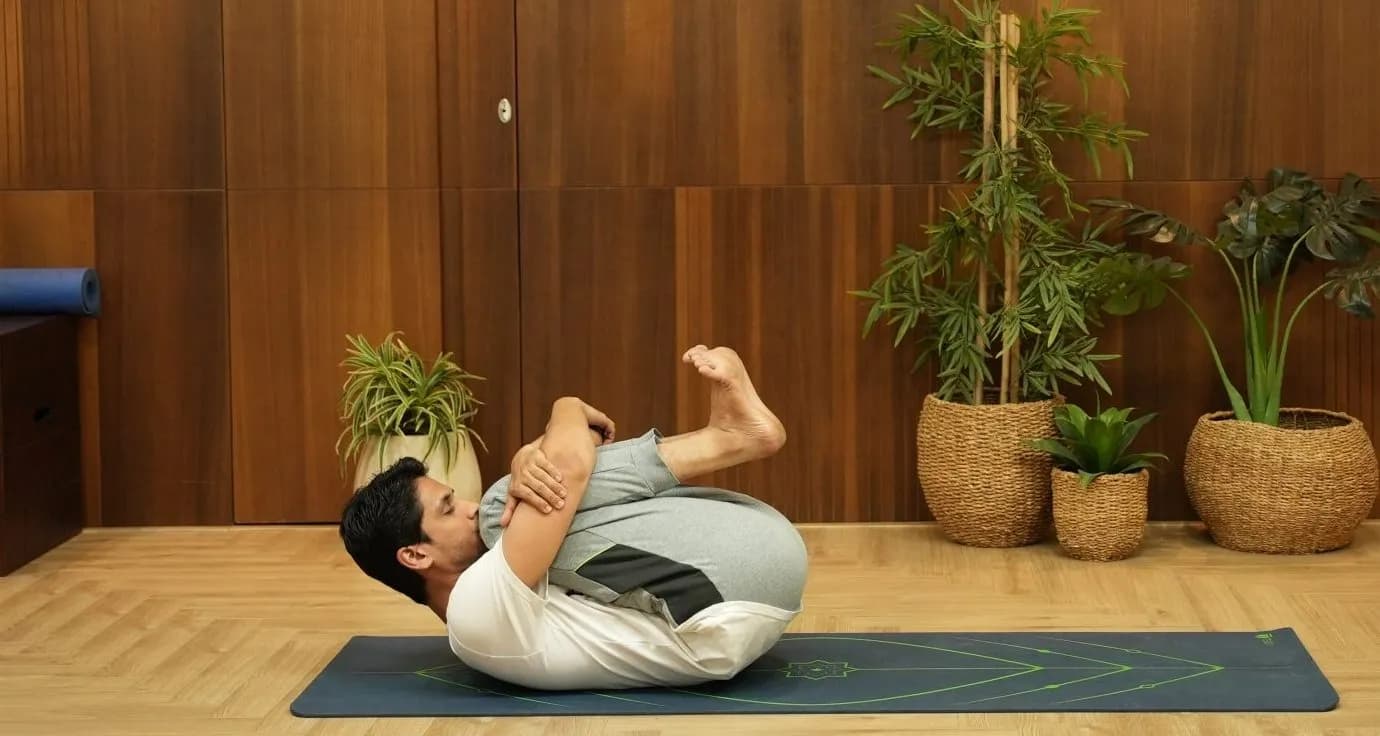
Pawanmuktasana — known in English as Wind-Relieving Pose — is one of the most therapeutically direct and practically effective postures in yoga for digestive health. The name derives from Sanskrit: Pawan meaning wind or air, Mukta meaning release or freedom, and Asana meaning posture. The pose does precisely what its name describes — it creates a systematic compression of the abdominal region that stimulates the release of trapped intestinal gas and supports the smooth movement of air through the digestive tract.
Pawanmuktasana is performed lying on the back, drawing one or both knees firmly into the chest while keeping the spine flat on the mat. The compression it creates on the ascending, transverse, and descending colon — combined with the rhythmic, diaphragmatic breathing the posture encourages — makes it one of the most effective non-pharmacological interventions for gas, bloating, constipation, and general digestive sluggishness available in any wellness practice.
At Habuild, Pawanmuktasana is practised regularly as part of our daily sequences — valued equally for its digestive benefits, its gentle lower back release, and its role as a calming, restorative posture that transitions practice toward relaxation and Savasana.
Pawanmuktasana Benefits
Physical Benefits
- Relieves Gas, Bloating, and Digestive Discomfort The deep knee-to-chest compression of the pose directly massages the ascending colon on the right side and the descending colon on the left — stimulating peristaltic movement, dislodging trapped intestinal gas, and supporting the efficient transit of digestive contents. Practitioners dealing with chronic bloating, flatulence, or post-meal abdominal discomfort consistently report immediate and significant relief from regular Pawanmuktasana practice.
- Releases Lower Back Tension and Relieves Mild Back Pain The bilateral knee-to-chest position creates a gentle traction and decompression of the lumbar spine — stretching the lumbar erectors, sacroiliac ligaments, and gluteal muscles that contribute to lower back tightness. Practitioners with chronic lower back stiffness, sacroiliac discomfort, or the tightness of prolonged sitting consistently find Pawanmuktasana one of the most effective immediate-relief postures in yoga.
- Strengthens the Abdominal Muscles and Improves Hip Flexibility Holding the knees firmly drawn toward the chest requires sustained engagement of the hip flexors and lower abdominal muscles — building meaningful abdominal tone over time. The deep hip flexion of the posture simultaneously progressively improves the range of motion of the hip joint, stretching the gluteal muscles, hip external rotators, and posterior hip capsule.
Mental and Emotional Benefits
- Calms the Nervous System and Reduces Anxiety The supine, curled position of Pawanmuktasana — combined with the rhythmic, deep abdominal breathing the compression encourages — activates the parasympathetic nervous system strongly. Practitioners consistently describe a rapid transition from mental agitation to calm, grounded stillness within just a few breaths. Pawanmuktasana is one of the most effective pre-sleep yoga postures for this reason.
How to Do Pawanmuktasana — Step-by-Step Instructions
Key Principles
Key Principles Pawanmuktasana’s therapeutic effectiveness depends on three principles: the knee compression is firm but comfortable — never forced; breathing continues naturally throughout the compression — never held; and both single-leg and bilateral variations deliver the full digestive and back-release benefits, so beginners may start with one leg and progress to both.
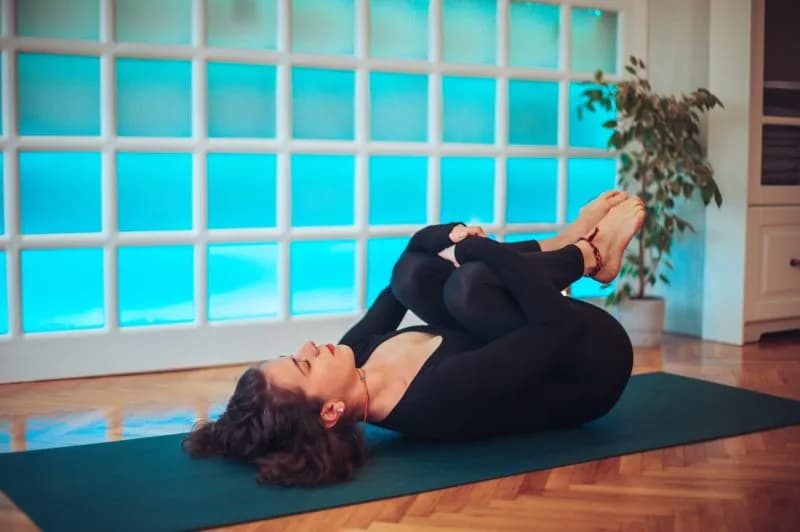
Pawanmuktasana — Step by Step Step 1: Starting Position Lie flat on your back with the legs extended and the arms resting alongside the body. Take two to three full, deep breaths to settle into the supine position and release any surface tension.
Step 2: Single-Leg Pawanmuktasana — Right Side On an exhalation, draw the right knee toward the chest. Interlace the fingers just below the right kneecap and gently draw the knee as close to the chest as comfortable. Keep the left leg extended and pressing gently into the mat. Hold for five breaths.
Step 3: Single-Leg Pawanmuktasana — Left Side Release the right leg and repeat on the left side — drawing the left knee toward the chest, holding for five breaths, then releasing.
Step 4: Bilateral Pawanmuktasana Draw both knees simultaneously toward the chest, wrapping both arms around the shins or interlacing the fingers below the knees. Allow the spine to remain flat on the mat. Rock gently from side to side if comfortable — the lateral rocking provides an additional massage to the lower back and sacral region.
Step 5: Final Hold and Release Hold the bilateral position for five to ten breaths, breathing deeply into the abdomen and allowing the compression to deepen with each exhalation. Release on an inhalation, extending both legs back to the mat.
Step 6: How to Come Out of Pawanmuktasana On an inhalation, slowly extend both legs back to the mat. Rest in Savasana for two to three breaths before transitioning to the next posture.
Breathing in Pawanmuktasana
Deep, steady abdominal breathing throughout the hold — the belly pushing against the thighs on each inhalation, creating an additional internal massage of the digestive organs. The exhalation deepens the knee-to-chest compression naturally. Never hold the breath during the abdominal compression.
Preparatory Poses Before Pawanmuktasana
These practices warm the lower back and hips before the knee-to-chest compression.
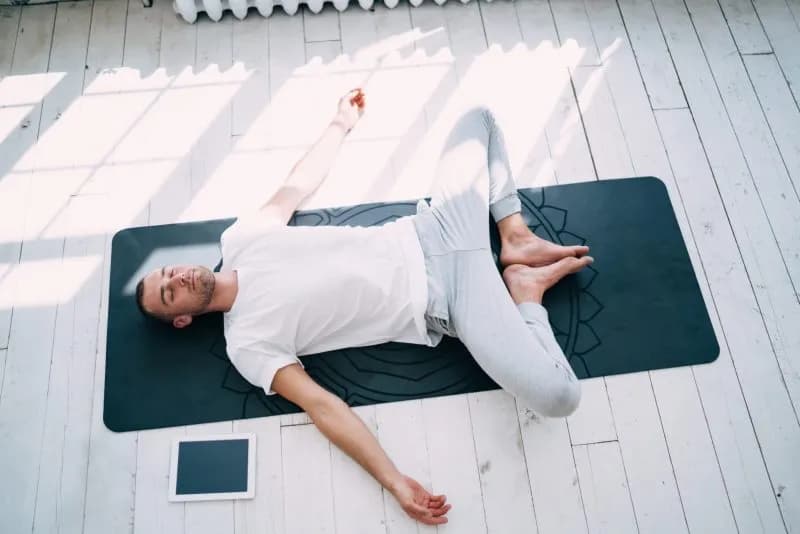
- Supta Baddha Konasana (Reclined Butterfly) — Opens the hips gently in a supine position before the more intensive compression.
- Jathara Parivartanasana (Supine Spinal Twist) — Warms the lower back and sacral region before the decompression posture.
- Gentle abdominal self-massage (clockwise) — Activates the digestive organs before the mechanical compression of the posture.
- Apana Mudra (5 minutes) — Activates the downward Apana Vayu before the postural digestive stimulation.
Variations of Pawanmuktasana
- Variation 1: Single-Leg Pawanmuktasana — Beginner Working one leg at a time before the bilateral version is the recommended approach for beginners and those with hip or knee tightness. The single-leg version delivers the full ascending or descending colon stimulation with significantly less compression demand. Begin with five breath holds on each side before progressing to the bilateral posture.
- Variation 2: Pawanmuktasana with Lateral Rocking — Intermediate From the bilateral knee-to-chest position, gently rock the knees from side to side in a slow, rhythmic movement — creating a lateral rolling massage of the lower back, sacrum, and outer hips. This variation is particularly effective for sacroiliac joint stiffness and the accumulated lateral tension of prolonged sitting.
- Variation 3: Pawanmuktasana with Chin to Knee — Advanced Lifting the head and bringing the forehead (or chin) toward the knees in the bilateral position adds a cervical forward fold to the compression — increasing the spinal flexion and deepening the abdominal compression. Only appropriate when the bilateral bilateral knee-to-chest position is fully established and the neck is comfortable.
Common Mistakes to Avoid in Pawanmuktasana
- Pulling on the Kneecap Directly The fingers should interlace below the kneecap — never directly on it. Direct kneecap pressure can strain the patellar ligament. For practitioners with knee sensitivity, support the knee from behind the thigh rather than below the kneecap.
- Holding the Breath During the Compression Breath must flow continuously throughout Pawanmuktasana — holding the breath eliminates the rhythmic internal massage that makes the posture therapeutically effective for digestion and nervous system calming. If breath feels restricted by the compression, ease the knee pressure slightly until breathing is completely natural.
- Forcing the Knee Beyond Comfortable Compression Pawanmuktasana’s benefit comes from sustained, comfortable compression — not from the maximum possible knee-to-chest distance. A forced, strained posture creates muscular tension that counteracts the digestive stimulation and nervous system calming the pose is designed to produce.
Who Should Practise Pawanmuktasana?
- Those with Digestive Complaints Pawanmuktasana is the single most targeted yoga posture for gas, bloating, and constipation. For practitioners dealing with IBS, post-meal bloating, or chronic digestive sluggishness, daily practice — particularly after meals or before sleep — provides consistent, reliable relief that few other practices match.
- Desk Workers with Lower Back Tightness Five minutes of Pawanmuktasana at the end of a desk-based workday releases the accumulated posterior chain tension that otherwise persists into the evening. The lumbar traction and sacroiliac release are immediate and meaningful — making it one of the highest-value five-minute additions to any office worker’s daily routine.
- Is Pawanmuktasana Good for Beginners? Yes — Pawanmuktasana is one of yoga’s most accessible postures. It requires no balance, no weight bearing through joints, and no flexibility beyond the ability to bend the knees. The single-leg variation is appropriate from the very first yoga session and delivers the full therapeutic benefit while the bilateral flexibility develops.
Make Pawanmuktasana a Part of Your Daily Practice
Pawanmuktasana is the yoga tradition’s most directly targeted digestive posture — its knee-to-chest compression delivering immediate gas relief, lower back decompression, and nervous system calming in a single accessible supine posture that anyone can practise anywhere, at any time. Its post-meal and pre-sleep applications make it one of the most practically useful daily yoga habits available.
Whether you are using Pawanmuktasana for acute gas relief, daily lower back maintenance, or as a calming transition toward sleep, the posture delivers meaningful therapeutic benefit from the very first session and deepens progressively with consistent daily use.
The most effective way to learn Pawanmuktasana correctly — with the precise compression technique, breath guidance, and lateral rocking variations that maximise its digestive and back-health benefits — is under live expert guidance with Habuild.
Start your 14 day free yoga journey with Habuild, today!
Related reads: Dhanurasana (Bow Pose): Steps Back Flexibility and Digestive Benefits · Pawanmuktasana Benefits: Steps, Precautions & More
Pawanmuktasana earns its name from what it does for trapped gas and sluggish digestion, but that relief tends to be more reliable when the pose is part of a regular routine rather than something reached for only when uncomfortable. Back tension responds the same way, easing gradually rather than all at once. Habuild’s Yoga Everyday program includes digestive poses like this as a consistent part of its daily sessions.
Frequently Asked Questions
Related Articles
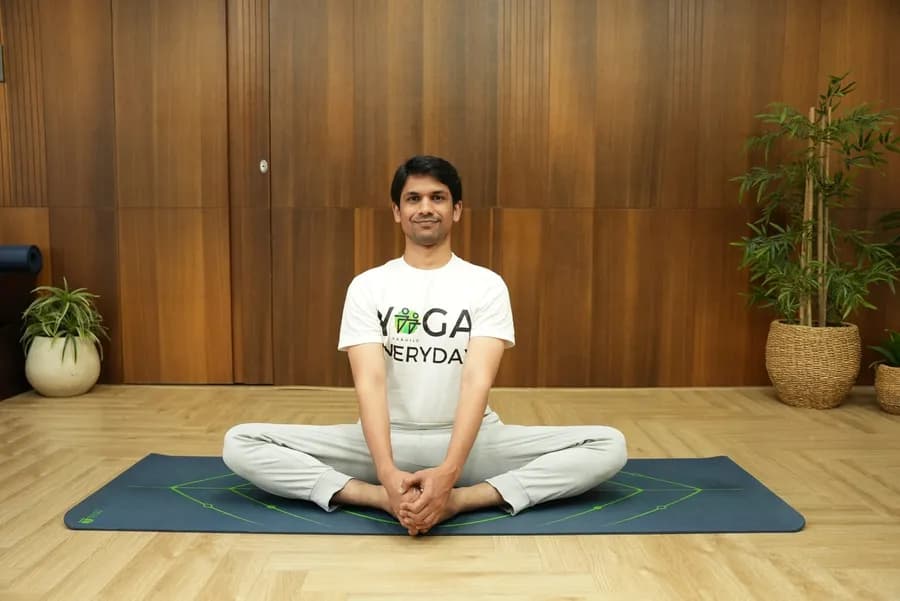
Baddha Konasana (Butterfly Pose): Steps and Hip Flexibility Benefits
Practice baddha konasana with Habuild. Try the baddha konasana pose to open your hips, improve flexibility, and calm your busy mind. Start your session today!
Supta Matsyendrasana (Supine Spinal Twist): Steps and Benefits
Practice Supta Matsyendrasana with Habuild. Follow supine spinal twist steps to relieve back pain, improve digestion, and calm your nervous system. Start today!
Setu Bandhasana (Bridge Pose): Steps Benefits and Modifications
Try setu bandhasana with Habuild. Master the setu bandhasana bridge pose to strengthen your spine, open the chest, and reduce stress. Start your session now!
Balasana (Child’s Pose): Steps and Benefits for Mind and Body
Try balasana with Habuild. Practice the balasana pose to relieve stress, ease back tension, and deeply relax your body and mind. Start your yoga session now!
Sukhasana (Easy Pose): Steps Benefits and Meditation Foundation
Try sukhasana with Habuild. Discover the sukhasana pose to improve posture, reduce stress, and cultivate a calm and focused mind. Start your session today!