
Uttanpadasana (Raised Leg Pose): Steps Core and Digestive Benefits
Practice Uttanpadasana with Habuild. Follow the raised leg pose steps to strengthen your core, relieve lower back pain, and improve digestion. Start today!
Key Takeaways
- Leg angle ranges from 90 degrees, the easiest, down to 30 degrees, the most demanding.
- The critical safety rule requires the lower back to stay flat on the floor throughout.
- Taught through three progressive stages calibrated to each member’s abdominal strength.
- Directly activates the lower rectus abdominis, the zone general core work often misses.
- Abdominal compression is said to stimulate the intestines and improve peristalsis.
- Simultaneously builds hip flexor and rectus femoris strength alongside core work.
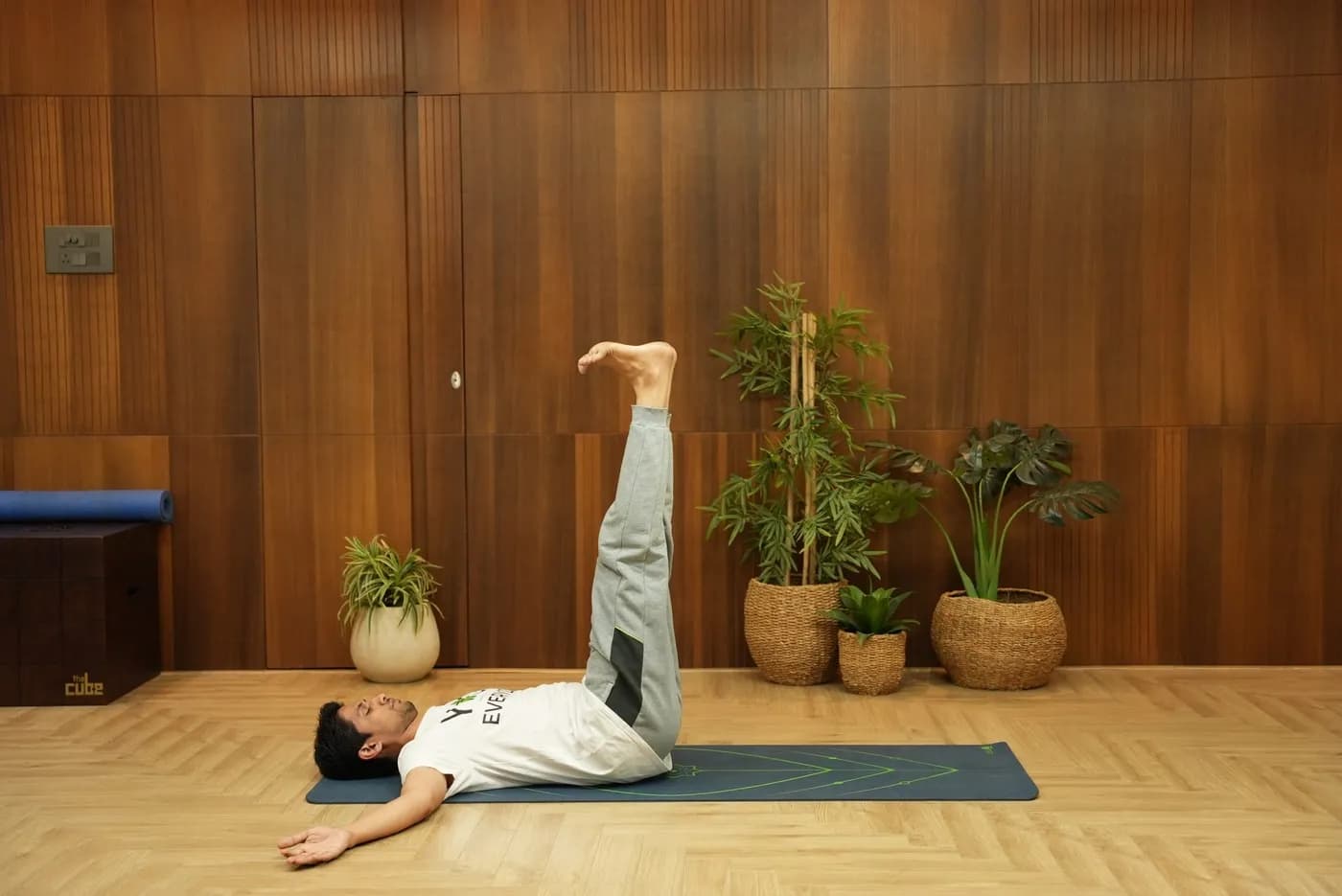
Uttanpadasana is a supine yoga pose where one or both legs are raised and held at angles between 30 and 90 degrees from the floor. It builds lower abdominal strength, supports lumbar stability, stimulates digestive organs, and builds hip flexor endurance — yoga’s most direct and systematically progressive lower core strengthening posture.
What is Uttanpadasana?
Uttanpadasana — known in English as Raised Leg Pose or Leg Raise Pose — derives from Sanskrit: Uttana (raised or stretched upward), Pada (foot or leg), and Asana (posture). From a supine position, one or both legs are raised and held at varying angles — typically 30, 45, 60, or 90 degrees — creating a sustained isometric demand on the lower abdominal muscles and hip flexors.
Uttanpadasana is yoga’s most direct lower abdominal strengthening posture. Its progressive angle variation — from 90 degrees (easiest) to 30 degrees (most demanding) — allows precise strength calibration to the practitioner’s current capacity, making it simultaneously accessible for beginners and challenging for advanced practitioners. The most important safety principle is that the lower back must remain in contact with the floor throughout — if it arches, the angle must be raised.
At Habuild, Uttanpadasana is taught through three progressive stages — single leg at 90 degrees, both legs at 60 degrees, and the slow-lowering progression — with angle always calibrated to each member’s current abdominal strength and lower back health.
Uttanpadasana Benefits
Physical Benefits
- Strengthens the Lower Abdominal Muscles Directly The sustained isometric hold of Uttanpadasana specifically activates the lower rectus abdominis and transverse abdominis — the core muscles responsible for pelvic stability, lumbar support, and the abdominal tone that consistent practice progressively develops. Daily practice produces rapid and measurable lower core improvements.
- Supports Lumbar Spine Stability and Back Health Strong lower abdominal muscles are the primary stabilisers of the lumbar spine. Uttanpadasana systematically builds this strength — reducing the lumbar instability that produces back pain through progressive, controlled isometric loading. The lower back contact-with-floor principle ensures the strengthening remains safe and protective rather than stress-producing.
- Stimulates Digestive Organs Through Abdominal Activation The lower abdominal activation and compression of Uttanpadasana stimulate the intestines and pelvic organs — improving peristalsis, gut motility, and overall digestive function. Regular practice provides meaningful relief from digestive sluggishness.
- Builds Hip Flexor Strength and Leg Endurance The sustained hip flexion develops iliopsoas and rectus femoris strength supporting all standing, running, and athletic activities — contributing to functional lower body fitness alongside the primary core strengthening benefit.
Mental and Emotional Benefits
- Builds Mental Determination Through Sustained Abdominal Challenge The burning lower abdominal sensation of a sustained Uttanpadasana hold is one of yoga’s most direct training grounds for composed persistence — breathing steadily through the final seconds of a challenging hold develops the mental resilience that transfers to all demanding life situations.
- Develops Nuanced Core Body Awareness Learning to distinguish between 30, 45, and 60 degree holds and their different abdominal demands develops a sophisticated proprioceptive awareness of core engagement and spinal position that makes all subsequent yoga postures more intelligent and safe.
How to Do Uttanpadasana — Step-by-Step Instructions
Key Principles
Key Principles Three principles govern safe Uttanpadasana: the lower back must remain in contact with the floor throughout — if the lumbar lifts, raise the leg angle immediately and never continue with an arched lower back; legs remain active throughout — pointed toes, engaged quadriceps, inner thighs drawn together; and never hold the breath — continuous breathing is the primary safety and strength-building mechanism.
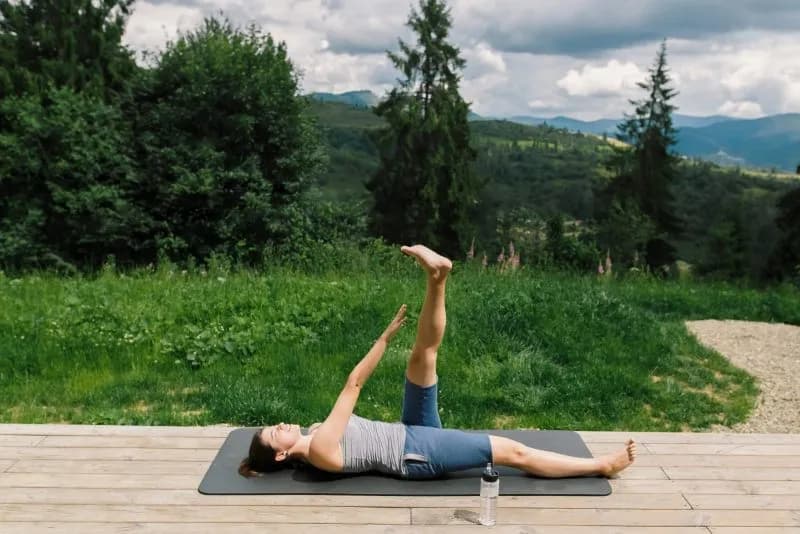
Uttanpadasana — Step by Step Step 1: Supine Starting Position Lie flat on the back, legs extended, arms alongside the body with palms pressing down. Take two to three settling breaths, pressing the complete lower back into the floor.
Step 2: Press the Lower Back to the Floor Press the entire lower back firmly into the floor — this is the non-negotiable safety position. If the lower back cannot stay grounded, bend the opposite knee and place the foot flat before lifting the working leg.
Step 3: Single Leg Variation — Raise to 45-90 Degrees Inhale and raise the right leg to 45-90 degrees (beginners start at 90). Hold for five to ten breaths with the lower back remaining grounded. Repeat on the left. Keep the raised leg active — pointed toes, engaged quadricep.
Step 4: Double Leg Variation — Both Legs at 60 Degrees If single-leg holds are stable, raise both legs simultaneously to 60 degrees. Check that the lower back remains in contact with the floor. If it arches at 60 degrees, raise to 75-90 degrees.
Step 5: Progressive Lowering — Advanced Challenge For maximum challenge: raise both legs to 90 degrees, then slowly lower — pausing at 60, 45, and 30 degrees, holding at each angle for three to five breaths. Never drop the legs — the controlled lowering is the most demanding element.
Step 6: Release with Full Abdominal Control Exhale and lower the legs slowly with full abdominal control — never allowing gravity to drop them. Return to the flat supine rest position for five breaths before repeating.
Breathing in Uttanpadasana
Continuous, steady breathing throughout Uttanpadasana is both the primary safety mechanism and the greatest challenge. Breath-holding reduces the intra-abdominal pressure that stabilises the lumbar spine and increases injury risk. Breathe naturally and continuously during every hold, regardless of the muscular demand — if the breath cannot flow, raise the angle.
Preparatory Poses Before Uttanpadasana
These poses warm the core and lower back before the isometric abdominal demand of Uttanpadasana.
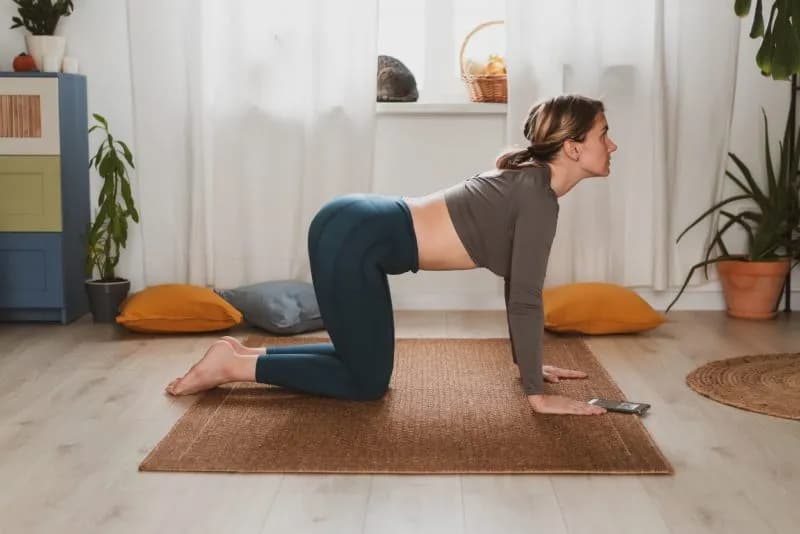
- Marjariasana-Bitilasana (Cat-Cow, 10 cycles) — Warms the spine and mobilises the lumbar before the isometric hold.
- Setu Bandhasana (Bridge Pose, 3 rounds) — Activates the glutes and lower back before the opposing core challenge.
- Pavanamuktasana (Wind-Relieving Pose, both sides) — Releases the lower back and hip flexors before the isometric hip flexor demand.
Variations of Uttanpadasana
- Variation 1: Single Leg at 90 Degrees — Beginner One leg raised to vertical — lowest abdominal demand, ideal for initial lower core awareness and back safety. The opposite knee may be bent with foot flat for additional lower back support.
- Variation 2: Double Leg at 60 Degrees — Intermediate Both legs raised to 60 degrees — significant lower abdominal strengthening while remaining accessible to most practitioners with established core awareness and grounded lower backs.
- Variation 3: Slow-Lowering Progression — Maximum Challenge Both legs raised to 90 degrees then lowered progressively — pausing at 60, 45, and 30 degrees with holds at each stage. The most demanding Uttanpadasana variation and the most effective for rapid abdominal strength development.
Common Mistakes to Avoid in Uttanpadasana
- Allowing the Lower Back to Arch From the Floor The most consequential error — lower back arching concentrates the compressive and shearing forces that lumbar disc and facet joint injury require on an already vulnerable lumbar region. Never continue if the lower back lifts. Raise the leg angle to 90 degrees and gradually progress downward only as the abdominal strength to maintain the grounded lower back develops.
- Holding the Breath Through the Difficult Seconds The most natural and most counterproductive response to abdominal fatigue is breath-holding. Breathe continuously and naturally throughout every hold. If breath-holding is occurring, raise the angle — the current challenge has exceeded the capacity that can be safely maintained with continuous breathing.
- Dropping the Legs Without Abdominal Control The controlled lowering of the legs is as therapeutically important as the hold. The abdominal strength required to lower both legs with control from 45 degrees is greater than that required to hold them at 45 degrees. Never drop the legs — lower with full abdominal engagement to the floor.
Who Should Practise Uttanpadasana?
- Those Seeking Core Strength and Abdominal Toning Uttanpadasana is yoga’s most directly effective lower abdominal strengthening posture — its progressive angle variation allowing precise calibration to the practitioner’s current strength and producing rapid, measurable core improvements over consistent daily practice.
- Those with Lower Back Pain from Core Weakness The most common cause of postural lower back pain is insufficient lower abdominal strength. Uttanpadasana — practised correctly with the lower back always grounded — systematically builds this foundational stability, making it one of the most therapeutically important postures in any back pain management programme.
- Is Uttanpadasana Good for Beginners? Yes — the single-leg version at 90 degrees is an ideal first core posture, immediately accessible and providing clear feedback through the lower back grounding principle.
Make Uttanpadasana a Part of Your Daily Practice
Uttanpadasana is yoga’s most precisely calibrated lower core strengthening posture — its angle progression providing a systematic, feedback-rich pathway from initial lower abdominal awareness to advanced bilateral holds that build the deep core foundation that protects the lumbar spine in all activities.
Whether you are building core strength for the first time with single-leg 90-degree holds or challenging your established core with progressive slow-lowering sequences, Uttanpadasana delivers measurable abdominal strength improvements within weeks of consistent daily practice.
The most effective way to learn Uttanpadasana correctly — with real-time lower back contact monitoring, angle calibration guidance, and breath continuity instruction — is under live expert guidance with Habuild.
Start your 14 day free yoga journey with Habuild, today!
Related reads: Navasana (Boat Pose): Steps Core Strength and Digestive Benefits · Uttana Padasana (Raised Leg Pose): Steps, Benefits and Precautions
Lifting the legs in Uttanpadasana strengthens the lower abdominals in a way that, over consistent practice, tends to ease the kind of lower-back discomfort that comes from a weak core — but that relief builds gradually, not from one set of reps. Pairing it with rest days and other core poses across the week is what keeps the back supported long-term. Habuild’s Yoga Everyday program sequences poses like this into a balanced daily core routine.
Frequently Asked Questions
Related Articles
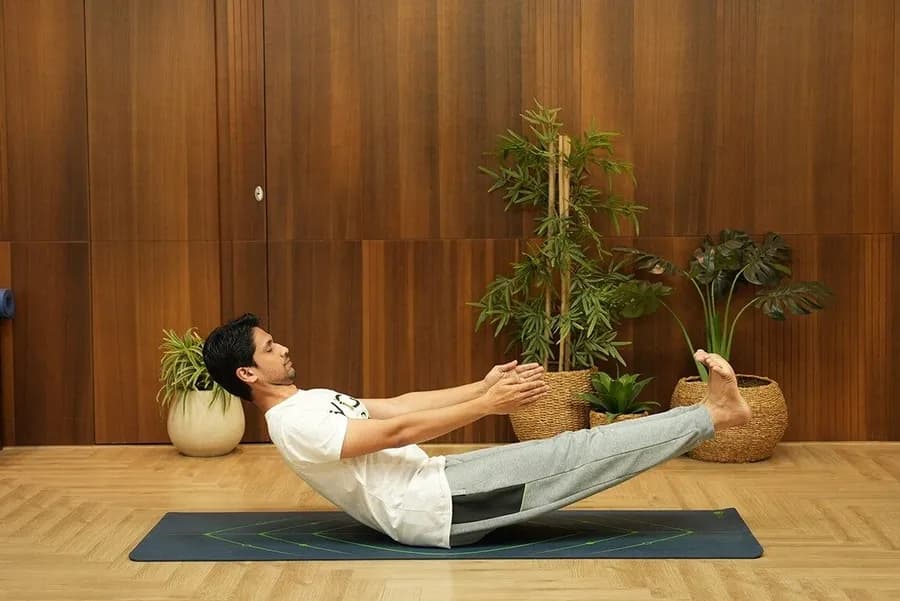
Navasana (Boat Pose): Steps Core Strength and Digestive Benefits
Practice Navasana with Habuild. Follow the boat pose steps to strengthen your core, improve balance, and build the abdominal strength you need. Start today!
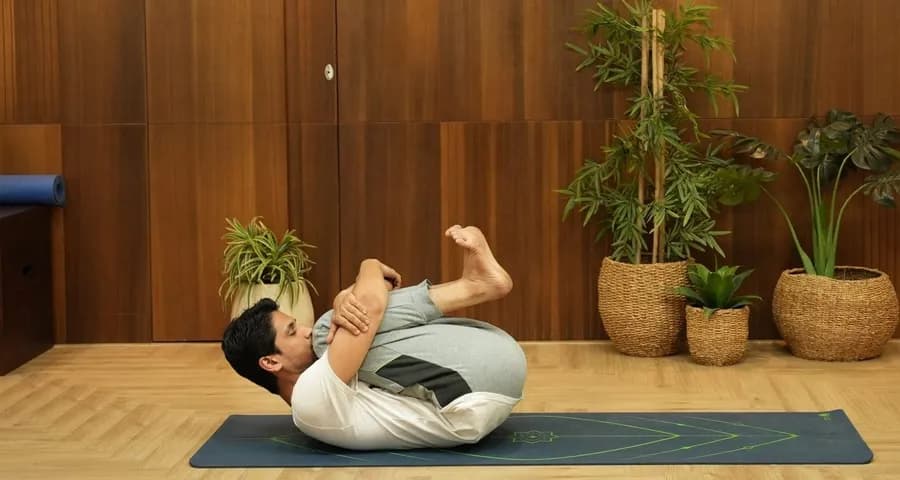
Pawanmuktasana (Wind Relieving Pose): Steps and Digestive Benefits
Try pawanmuktasana with Habuild. Discover pawanmuktasana benefits including gas relief, improved digestion, and reduced back tension. Start your session today!
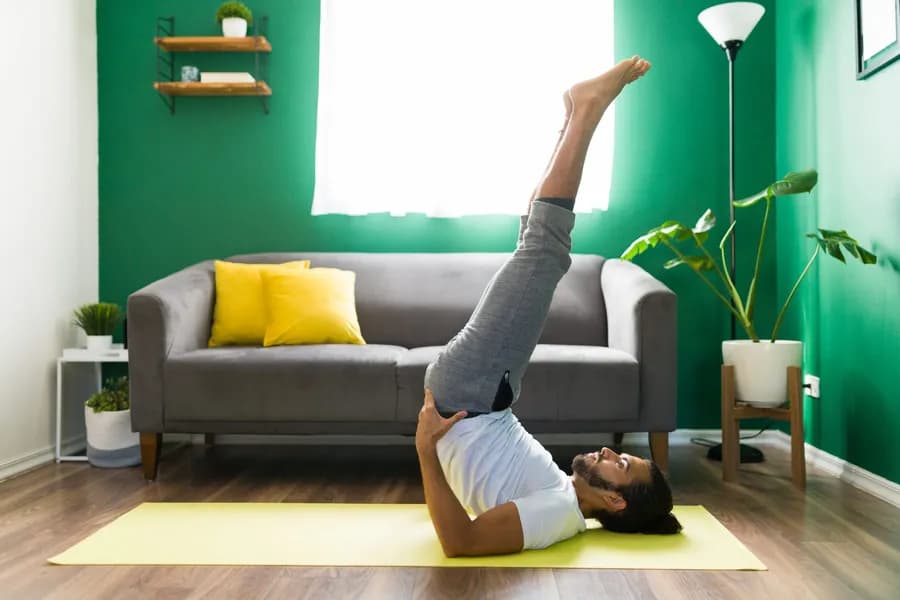
Sarvangasana: Steps Benefits and How to Practice Safely
Practice sarvangasana with Habuild. Explore the sarvangasana pose to boost thyroid health, improve circulation, and calm your mind. Start your session today!
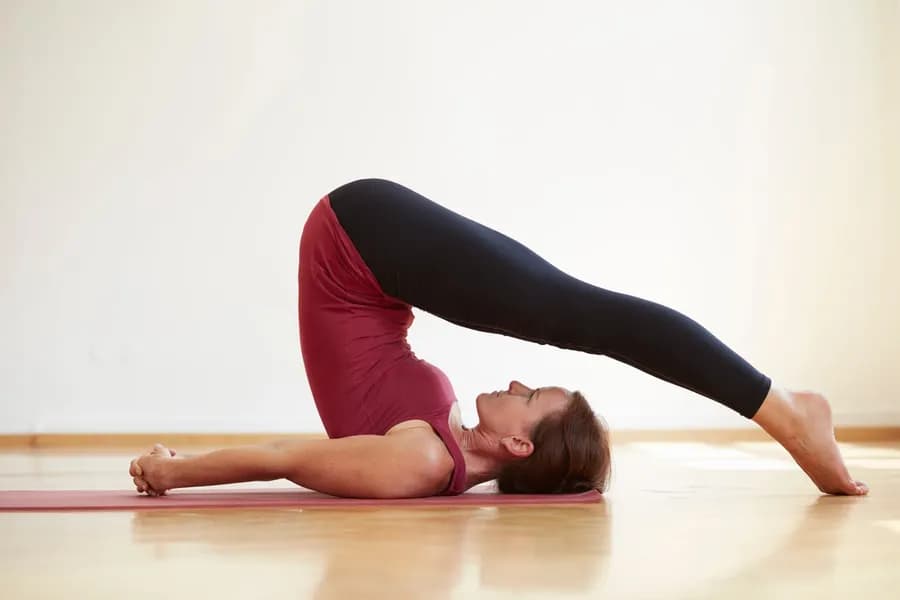
Halasana (Plow Pose): Steps Benefits and Precautions
Try halasana with Habuild. Learn halasana benefits like better flexibility, improved sleep, and relief from back pain. Master the yoga plow pose. Start today!