
Padma Mudra (Lotus Gesture): Steps, Benefits and Precautions
Its open, rising form evokes the lotus flower growing through murky water to bloom above the surface, used to open the heart chakra and cultivate
Key Takeaways
- The lotus grows rooted in mud through murky water to bloom unsullied in open sunlight.
- In Bharatanatyam it represents Vishnu’s held lotus, Lakshmi’s lotus seat, and the opening heart.
- Classified as a Samyuta, two-hand, mudra formed with both hands together, fingers spreading upward.
- In Buddhist tradition, the lotus is specifically the seat of the Buddha and enlightened beings.
- The chest-opening hand shape counters the closed posture that grief and stress produce.
- Associated in the yogic therapeutic system with supporting cardiovascular health directly.
What is Padma Mudra?
“Padma” means lotus in Sanskrit — the sacred flower that appears throughout Hindu, Buddhist, and Jain iconography as the symbol of spiritual awakening, purity, and the journey from darkness to light. The lotus grows with its roots in mud, its stem through murky water, and its flower blooming in open sunlight — unsullied by the environment through which it has passed. This is the fundamental metaphor of spiritual awakening in the Indian tradition: the human being rising through the accumulated mud of conditioning, fear, and ignorance to bloom in the open sunlight of liberated consciousness. Pronounced “pahd-mah,” this mudra embodies and invokes that process.
The lotus mudra benefits are primarily heart-centred: it opens the Anahata (heart) chakra, activates the qualities of unconditional love and compassion that the heart centre governs, and establishes the practitioner in the consciousness of the lotus — open, receptive, and fundamentally uncontaminated by whatever circumstances surround the practice. In Buddhist tradition, the lotus is the seat of the Buddha and all enlightened beings — and lotus mudra benefits include the cultivation of the open, pure awareness that enlightened consciousness represents.
In Indian classical dance, Padma Mudra is a Samyuta (two-hand) mudra — formed with both hands together — and represents the lotus flower in bloom, water, and divinity. In Bharatanatyam, it appears in numerous compositions evoking Lord Vishnu (who holds a lotus), Goddess Lakshmi (who sits on a lotus), and the opening of the spiritual heart.
Padma Mudra Benefits
Physical Benefits
- Opens the Chest and Activates the Heart Chakra Region The physical form of Padma Mudra — hands cupped in an upward-opening gesture at heart height, fingers spreading outward and upward — naturally opens the chest and activates the thoracic region. This physical opening counters the forward-flexed, closed-chest posture that stress, grief, and self-protective contraction produce, improving respiratory capacity and reducing the tension in the pectorals and anterior shoulder muscles that compresses the heart region.
- Supports Cardiovascular Health through Heart Chakra Activation The Anahata chakra activation of Padma Mudra is associated in the yogic therapeutic system with cardiovascular health — the free, open flow of love and prana through the heart region supports the literal heart’s function in yogic anatomy. Combined with deep nasal breathing, the heart-opening quality of lotus mudra benefits cardiovascular regulation and heart rate variability.
- Reduces Physical Contraction and Tension in the Upper Body The opening, upward-flowering form of Padma Mudra produces a direct counteraction to the physical patterns of stress, grief, and emotional closure — which manifest physically as contracted chest, rounded shoulders, and forward head posture. Regular practice, particularly in combination with Bhujangasana and chest-opening asanas, progressively reverses these postural patterns.
- Cultivates Unconditional Love and Compassion Padma Mudra’s primary psychological benefit is the cultivation of the heart’s natural capacity for unconditional love — the love that does not require specific conditions to be met before it can flow, the love of the lotus that opens regardless of the quality of water surrounding it. Regular practice opens access to this quality of consciousness that is typically contracted by fear, judgment, and the accumulated protective strategies of self-preservation.
- Establishes the Lotus Principle — Remaining Open through Adversity The lotus principle — arising through mud without being muddied — is the psychological quality this mudra most directly cultivates over sustained practice. Practitioners dealing with difficult circumstances, toxic environments, or sustained adversity find Padma Mudra practice builds the specific capacity to maintain inner openness and purity of consciousness despite the quality of circumstances — which is precisely the quality the lotus demonstrates through its entire life cycle.
- Connects to Divine Consciousness and the Presence of the Sacred Padma Mudra held as a devotional offering — the hands forming the open lotus, the gesture directed upward as an offering of the heart’s pure consciousness to the divine — is one of the most widely used bhakti yoga gestures. The lotus mudra prayer application activates the devotional quality of consciousness that connects the individual self to the awareness of the sacred, producing the state of open-hearted surrender that is the hallmark of genuine bhakti practice.
Mental and Emotional Benefits
Cultivates Unconditional Love and Compassion
Padma Mudra’s primary psychological benefit is the cultivation of the heart’s natural capacity for unconditional love — the love that does not require specific conditions to be met before it can flow, the love of the lotus that opens regardless of the quality of water surrounding it. Regular practice opens access to this quality of consciousness that is typically contracted by fear, judgment, and the accumulated protective strategies of self-preservation.
Establishes the Lotus Principle — Remaining Open Through Adversity
The lotus principle — arising through mud without being muddied — is the psychological quality this mudra most directly cultivates over sustained practice. Practitioners dealing with difficult circumstances, toxic environments, or sustained adversity find Padma Mudra practice builds the specific capacity to maintain inner openness and purity of consciousness despite the quality of circumstances — which is precisely the quality the lotus demonstrates through its entire life cycle.
How to Do Padma Mudra — Step-by-Step Instructions
Key Principles
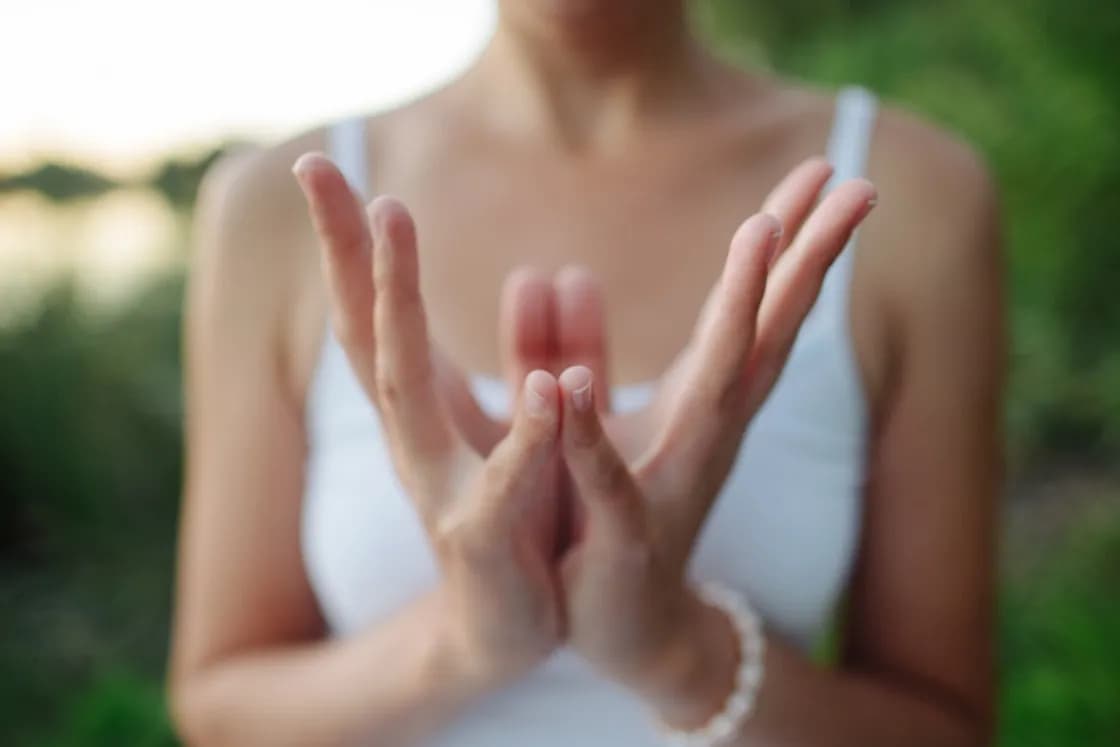
Padma Mudra is held at heart height with the opening, upward gesture directed toward the sky or toward whatever quality is being invoked. The wrist bases of both hands remain touching throughout — this contact is the stem of the lotus, stable and rooted. The fingers open outward and upward from this stable base. The gesture should feel genuinely open, not merely positioned correctly.
1 Step 1: Begin in Anjali Mudra
Bring both hands together in Anjali Mudra at the heart — palms pressed together, fingers pointing upward. Take three breaths with this prayer quality — the gathering of attention at the heart before it opens in the lotus gesture.
2 Step 2: Open the Fingers While Keeping Wrist Bases Together
From Anjali Mudra, slowly allow the fingers to open — spreading outward and slightly upward — while keeping the base of the wrists, the little-finger sides, touching. The hands form the shape of an opening lotus: base connected, petals spreading.
3 Step 3: Allow the Thumbs to Spread Naturally Outward
The thumbs separate naturally and spread slightly outward — they represent the outermost petals of the lotus and should feel genuinely open rather than forced. The middle fingers rise highest at the centre of the gesture.
4 Step 4: Direct the Open Gesture Upward
The opening of the lotus is always directed upward — toward the light, toward the divine, toward whatever quality of consciousness the practice is invoking. The wrist base remains at heart height; the flowering gesture rises above it.
5 Step 5: Hold with an Open Heart
Close the eyes. Feel the physical opening in the chest that the gesture encourages. Allow the quality of the lotus — open, pure, uncontracted — to be felt in the body and the field of awareness. Hold for 10 to 20 minutes. If using mantras, “Om Mani Padme Hum” — the lotus in the heart mantra of Tibetan Buddhism — is the natural complement to this gesture.
6 Step 6: Close Back to Anjali Mudra
Slowly bring the fingers back together, returning to Anjali Mudra. Hold the prayer position for 30 seconds. Touch the joined fingertips to the forehead, then to the heart. This closing represents the lotus drawing back at the end of day — the complete cycle of opening and gathering.
Breathing in Padma Mudra
Full, expansive nasal breathing — each inhale opens the chest toward the opening gesture, each exhale softens and releases. The quality is generous and unhurried — the breath of a being with nothing to fear and nothing to withhold. A 5:7 ratio supports the heart-opening, releasing quality of this mudra.
Preparatory Poses Before Padma Mudra
- Ustrasana (Camel Pose) — 5 breaths: The deep heart opener physically prepares the chest for the mudra’s energy activation of the same region.
- Anjali Mudra meditation — 3 minutes: Gathering attention at the heart before the lotus opens it amplifies the heart-chakra activation of the subsequent gesture.
Variations of Padma Mudra
Variation 1: Lotus Mudra Benefits — Extended Devotional Hold (Intermediate)
Hold Padma Mudra for 30 minutes in complete meditative stillness — either in silence or with the continuous silent repetition of “Om Mani Padme Hum.” This extended application produces the deepest available heart chakra opening through the mudra system and is used in advanced bhakti yoga and loving-kindness meditation practice.
Variation 2: Padma Mudra — Offering Gesture (Beginner)
Hold the open lotus at arm’s length in front of the body, directed outward — the gesture of offering the heart’s pure consciousness to the world, to another person, or to the divine. Used in devotional practice, in healing work directed toward another person, and as a loving-kindness meditation gesture.
Variation 3: Padma Mudra in Dance — Bilateral Samyuta Hasta (Intermediate)
In classical Bharatanatyam, Padma Mudra is used with specific arm movements and body positions to evoke the blooming lotus, the lotus pond, and the seated divine figures who appear on lotus thrones. Daily yoga-context practice deepens the energy understanding behind the gesture for dance practitioners.
Common Mistakes to Avoid in Padma Mudra
- Separating the Wrist Bases The wrist bases remain touching throughout Padma Mudra — they are the lotus stem. Allowing the wrists to separate transforms the gesture into an entirely different formation. Check periodically throughout the hold that the wrist-base connection is maintained.
- Forcing the Fingers Open Rather Than Allowing Natural Opening The fingers should open with a quality of natural unfolding — not forced spreading. Forcing the fingers apart creates tension that contradicts the receptive, open quality the gesture cultivates. Allow the opening to happen through relaxation rather than effort.
- Holding the Gesture Without the Heart-Open Quality Padma Mudra held with a closed, contracted chest and a fearful or defended inner state contradicts the gesture’s meaning completely. Before forming the lotus, consciously open the chest, drop the shoulder armour, and allow the inner stance to soften toward genuine openness — however small that opening might be at first.
- 14-Day Free Trial 650,000+ people building better habits every morning every morning
Live daily sessions · Real-time corrections · Cancel anytime
How Habuild Teaches You Padma Mudra
Those Dealing with Grief, Heartbreak, or Emotional Closure
Padma Mudra is the most directly indicated mudra for the contracted, closed quality of heart that grief, loss, and heartbreak produce. The lotus gesture embodies the principle of remaining open despite difficulty — and regular practice supports the gradual re-opening of the heart after it has closed in self-protection.
Those on a Bhakti (Devotional) Path
For practitioners whose yoga is oriented toward devotion and the relationship with the divine, Padma Mudra is the perfect physical embodiment of bhakti — the open heart offered upward toward the beloved. It is used in devotional worship, mantra practice, and contemplative prayer.
Is Padma Mudra Good for Beginners?
Yes — among the most accessible and immediately beautiful mudras in the entire system. Beginners typically experience the heart-opening quality from the first session. The wrist-base maintenance and the natural-opening (rather than forced) quality are the only learning elements required.
What Consistent Padma Mudra Practice Produces
Padma Mudra is the gesture of the heart fully open — blooming in the light despite the mud through which it grew. Its lotus principle is perhaps the most practically relevant spiritual teaching available: that openness, love, and pure consciousness are not conditional on circumstances, but are qualities that can be cultivated and maintained regardless of the environment one finds oneself in.
For practitioners dealing with grief, for devotees of the bhakti tradition, for anyone who has been closed by the accumulative weight of life and wants to find their way back to genuine openness — Padma Mudra offers a daily physical practice for the most difficult and most necessary inner movement: from contracted to open, from defended to trusting, from closed to blooming.
Habuild’s morning sessions include Padma Mudra within the heart-chakra and devotional mudra curriculum — providing the context, the mantra complement, and the guided practice that allows this ancient lotus gesture to produce its genuine heart-opening benefit in the lives of practitioners across all backgrounds and traditions.
Padma Mudra’s opening only really registers in the chest and breath once it’s repeated often enough to become familiar — a lotus grown in a single afternoon isn’t much of a lotus. Pairing it with a few calm breaths each day, inside a daily practice rather than a one-off session, is what turns the gesture into a felt sense of openness and compassion rather than just a nice idea. Yoga Everyday gives this kind of heart-centred work a consistent home in your day.
Frequently Asked Questions
Related Articles
Dhyana Mudra: How to Practice and Its Benefits for Meditation
Practice Dhyana Mudra with Habuild. Follow the meditation hand gesture steps to calm the mind, deepen concentration, and support your daily practice. Start!
Prana Mudra: How to Practice and Its Life Energy Benefits
Practice Prana Mudra with Habuild. Follow the life force hand gesture steps to boost energy, strengthen immunity, and improve your eye health. Start today!
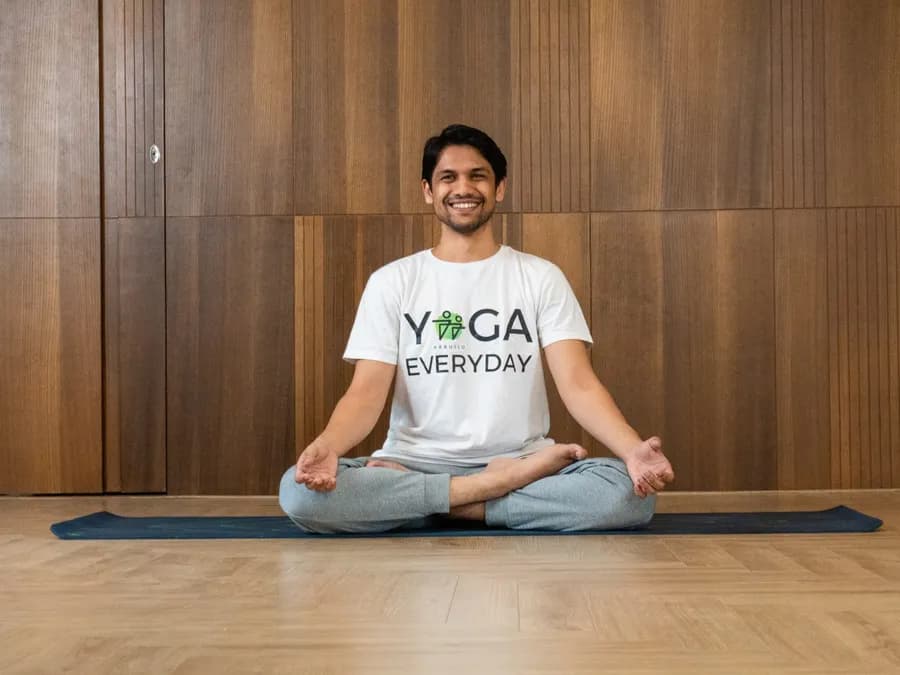
Pranayama Asana: A Guide to Breathing Poses Benefits and Practice
Practice Pranayama Asana with Habuild. Learn pranayama breathing types, steps, and benefits for lung health, stress relief, and daily vitality. Start today!

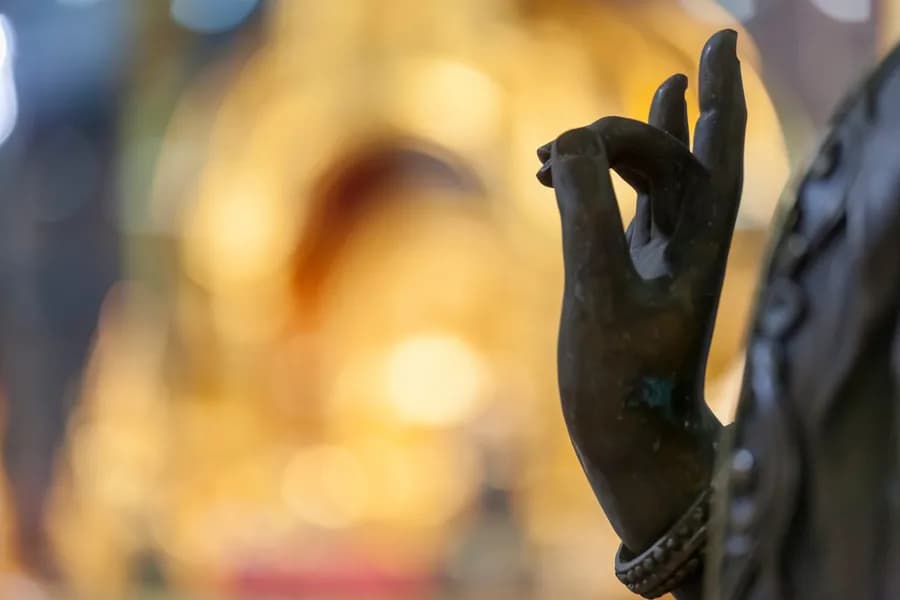
Vitarka Mudra (Teaching Gesture): Steps, Benefits and Precautions
One of the most recognisable mudras in Buddhist and Hindu iconography, depicted in countless statues making the gesture of explanation and transmission of