
Vitarka Mudra (Teaching Gesture): Steps, Benefits and Precautions
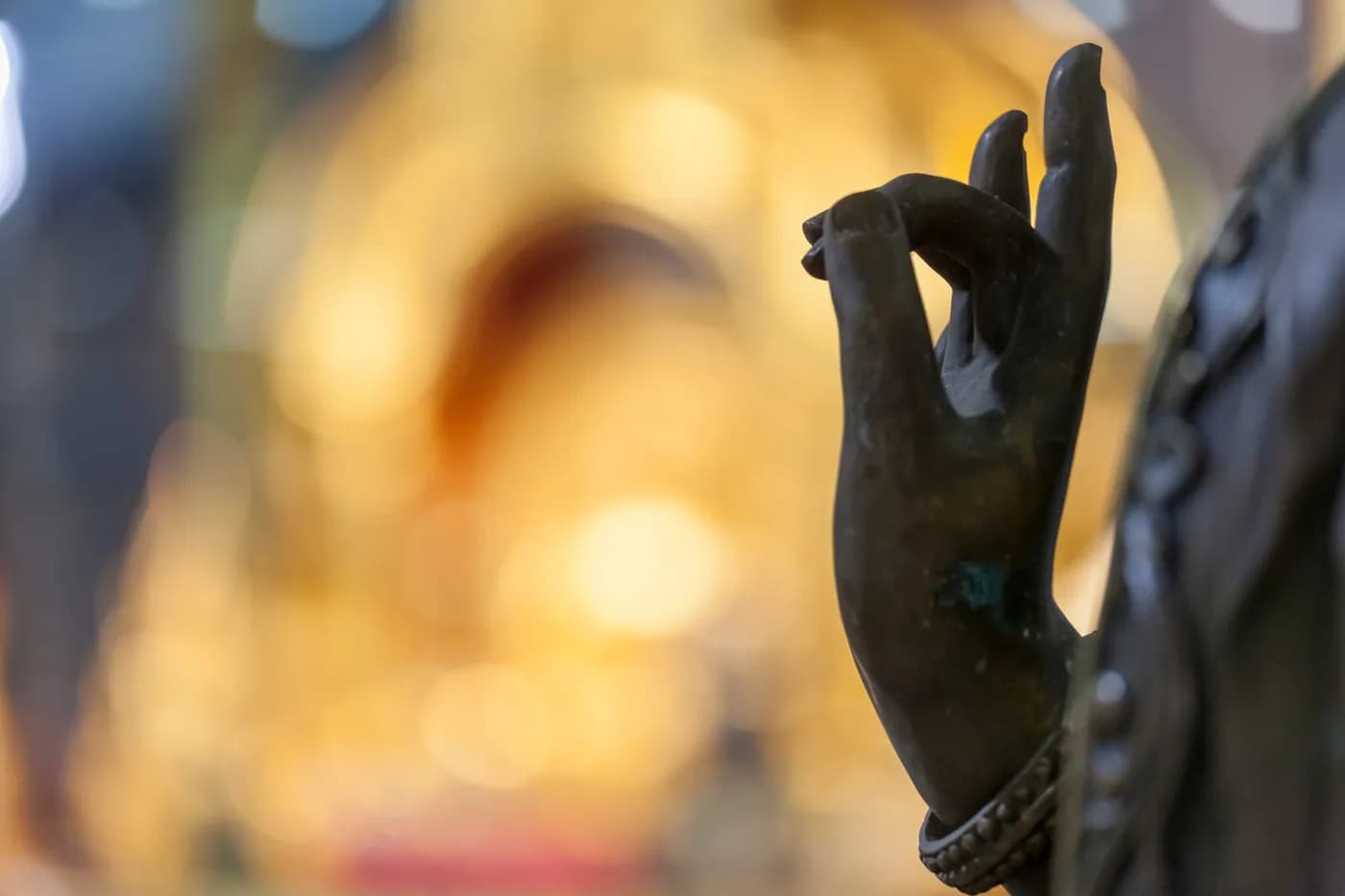
One of the most recognisable mudras in Buddhist and Hindu iconography, depicted in countless statues making the gesture of explanation and transmission of
Key Takeaways
- The index-thumb circle represents the unbroken wheel of dharma teaching in Buddhist iconography.
- The three extended fingers are sometimes read as the Three Jewels – Buddha, Dharma, Sangha.
- Distinguished from Gyan Mudra by its raised arm and outward orientation toward a listener.
- Activates the index finger’s association with Viveka, the capacity to discern truth from illusion.
- The raised-arm position specifically counters forward-flexed desk posture through chest opening.
- Depicted extensively in statues of both the teaching Buddha and various Hindu deities.
What is Vitarka Mudra?
“Vitarka” means argument, reasoning, or deliberation in Sanskrit — the active process of applying the mind to a question for the purpose of arriving at understanding. Pronounced “vih-tar-kah,” this mudra is formed by bringing the tip of the index finger and the tip of the thumb together to form a circle or oval, while the remaining three fingers — middle, ring, and little — extend upward in a natural curve. The hand is typically raised to chest height with the palm facing outward or slightly upward.
In Buddhist iconography, Vitarka Mudra is the gesture of the teaching Buddha — specifically associated with the act of discourse, the pointing out of the path, and the transmission of dharma teaching to students. The circle formed by the index finger and thumb represents the perfection and completeness of the teaching — the unbroken wheel of the dharma. The three extended fingers are sometimes interpreted as representing the Three Jewels: the Buddha, the Dharma, and the Sangha. This mudra is closely related to Gyan Mudra (Chin Mudra) but is distinguished by the raised arm position and the specific orientation of the gesture outward toward the listener rather than resting inward on the thigh.
In yoga practice, Vitarka Mudra activates the index finger marma point associated with clarity of thought and discrimination (Viveka) — the capacity to distinguish truth from illusion, the essential from the inessential. It is particularly suited to practices that emphasise intellectual discernment, communication, and the integration of understanding into expression.
Vitarka Mudra Benefits
Physical Benefits
- Activates the Index Finger and Clarity Meridian The index finger in yogic anatomy corresponds to the air element and to the Jupiter mount in palmistry — associated with confidence, authority, and expansion of awareness. The specific contact between the index finger tip and thumb tip in Vitarka Mudra creates a closed circuit activating these properties, with measurable effects on mental alertness and the clarity of sustained thinking.
- Opens the Chest and Supports Upright Posture Raising the hand to chest height in Vitarka Mudra naturally opens the chest and activates the upper back stabilisers. For practitioners who spend long hours in forward-flexed sitting posture, the raised-arm position of this mudra counters the postural pattern and supports the open, confident body language associated with teaching and clear communication.
- Enhances Clarity of Thought and Discernment The index finger activation in Vitarka Mudra stimulates the energy associated with Buddhi — the higher intellect that discriminates between what is real and what is appearance. Regular practice is associated with improved clarity of thinking, reduced mental confusion, and the capacity to identify what is most essential in complex situations.
- Builds Confident Expression and Communication The Teaching Gesture embodies the confident, outward direction of knowledge. Practitioners who hold Vitarka Mudra during meditation regularly report increased ease in verbal expression, greater confidence in articulating complex ideas, and reduced social anxiety around public speaking and teaching contexts.
- Cultivates Witness Awareness and Detached Understanding The raised-palm position and the completion of the thumb-index circle together produce a quality of awareness that is both engaged and detached — fully present to understanding without being reactive to it. This quality, associated with the Buddha’s teaching gesture, supports the development of the impartial, witnessing intelligence that both meditation and clear communication require.
Mental and Emotional Benefits
How to Do Vitarka Mudra — Step-by-Step Instructions
Key Principles
Vitarka Mudra is traditionally formed with the right hand raised — the active, expressive hand. It can be practised with the left hand simultaneously in a receiving position (Dhyana Mudra in the lap) for the complete bilateral gesture. The raised arm requires shoulder stability — do not tense the shoulder upward.
1 Step 1: Raise the Right Hand
Sit in a comfortable meditation position. Raise the right hand to chest height, forearm upright, elbow at a natural angle. The shoulder stays relaxed — not raised. The palm faces outward or slightly toward the practitioner.
2 Step 2: Form the Index-Thumb Circle
Bring the tip of the index finger down to meet the tip of the thumb. The tips touch lightly — forming a complete, even circle or slightly oval shape. The contact is the pad of the fingertip, not the nail or the side of the finger.
3 Step 3: Extend the Remaining Three Fingers
Allow the middle, ring, and little fingers to extend upward naturally. They should curve slightly — fully extended but not stiff or hyper-extended. They point gently upward and slightly outward.
4 Step 4: Position the Left Hand
Rest the left hand in Dhyana Mudra on the lap — palm facing upward, right hand resting on left if desired, in the traditional receiving position. This completes the bilateral active-receptive gesture.
5 Step 5: Hold for 10 to 15 Minutes
Close the eyes. Breathe naturally. Hold the gesture with clear intention — either of teaching and transmission, of clarifying a specific question or confusion, or of cultivating the quality of discerning awareness. Let the right arm rest lightly rather than actively held.
6 Step 6: Release
Lower the right hand slowly to rest in the lap alongside the left in Dhyana Mudra. Sit quietly for one minute before ending the session.
Breathing in Vitarka Mudra
Natural, unhurried nasal breathing. The exhalation can be slightly extended — a 4:6 ratio — to support the relaxed, open alertness that this gesture cultivates. No breath holds.
Preparatory Poses Before Vitarka Mudra
- Gomukhasana arms — 1 minute each side: Opens the shoulder joint and prepares the arm for the raised position without strain.
- Gyan Mudra — 5 minutes: The resting Gyan Mudra (index-thumb circle on thighs) warms up the index-thumb circuit before the more active, raised Vitarka application.
Variations of Vitarka Mudra
Variation 1: Bilateral Vitarka Mudra (Intermediate)
Both hands raised to chest height, both forming the index-thumb circle with three fingers extended. This intensified bilateral version is used in practices focused on maximising clarity activation and is depicted in some deity iconography as the gesture of universal teaching.
Variation 2: Vitarka Mudra Buddha — Seated Depiction Form (Beginner)
The right hand raised, elbow slightly bent, palm facing outward at chest height — matching the exact posture of the vitarka mudra buddha statue depiction. This specific positioning produces the most direct connection to the iconographic tradition and its associated intentional quality.
Variation 3: Vitarka Mudra at Eye Level — Advanced Contemplation (Advanced)
Raising the gesture to eye level and directing the soft gaze through the circle formed by the thumb and index finger — a combined Trataka and Vitarka practice that intensifies the clarity-of-mind and concentration-sharpening effects of both practices simultaneously.
Common Mistakes to Avoid in Vitarka Mudra
- Pressing the Index Finger and Thumb Together Rather Than Touching Lightly The contact is tip-to-tip with light, even pressure — not a pinch. Hard pressing creates tension in the thenar muscles and forearm that contradicts the open, expressive quality of the teaching gesture.
- Raising the Shoulder as the Arm Lifts The shoulder must remain relaxed and low as the hand raises. Shoulder elevation creates neck and upper trapezius tension that accumulates over a 15-minute hold. Consciously drop the shoulder away from the ear at the beginning and check it periodically throughout.
- Holding with Active Muscular Effort The raised arm should feel light and almost effortless — supported by the natural structure of the arm rather than held by muscular effort. If fatigue develops rapidly, the arm is being actively held rather than structurally supported. Adjust the elbow position to find the naturally supported angle.
14-Day Free Trial
650,000+ people building better habits every morning every morning
How Habuild Teaches You Vitarka Mudra
Teachers, Communicators, and Public Speakers
Vitarka Mudra is specifically aligned with the qualities of clear teaching and confident expression. Regular practice is particularly beneficial for those whose work involves explaining complex ideas, teaching, counselling, or any form of public communication.
Those Seeking Greater Mental Clarity and Discernment
For practitioners dealing with mental confusion, indecision, or difficulty distinguishing important from unimportant information, Vitarka Mudra’s index finger activation supports the discriminating intelligence needed for clearer thinking.
Is Vitarka Mudra Good for Beginners?
Yes. The gesture formation is straightforward. The main beginner adjustment is learning to hold the raised arm position with relaxed shoulder and light contact rather than muscular effort. Start with 7-minute holds and build to 15 minutes over two to three weeks.
What Consistent Vitarka Mudra Practice Produces
Vitarka Mudra is the gesture of the teaching Buddha — the posture of understanding made manifest through the hand, directed outward as an offering of clarity. In yoga practice, it activates the index finger circuit of discernment, builds confident expression, and cultivates the quality of engaged, non-reactive intelligence that both teaching and deep listening require.
The raised arm position and the circle of the index-thumb contact together create a gesture that is simultaneously active and complete — reaching outward while forming a closed loop of understanding within. This paradox — open yet complete, outward yet internally grounded — is the quality this mudra builds in the practitioner over time.
Habuild’s morning sessions include Vitarka Mudra instruction with the iconographic context, correct formation, and guided intention that allows this ancient gesture to produce its contemporary benefit for practitioners of all backgrounds.
The clarity of thought and confident expression Vitarka Mudra cultivates aren’t traits you borrow for the length of one sitting — they’re built the way any communication skill is, through repeated practice. Holding the gesture daily, especially before conversations or work that call for clear articulation, gives it a real chance to shape how you think on your feet. Habuild’s Yoga Everyday program can help keep that kind of practice part of your daily rhythm.
Frequently Asked Questions
Related Articles
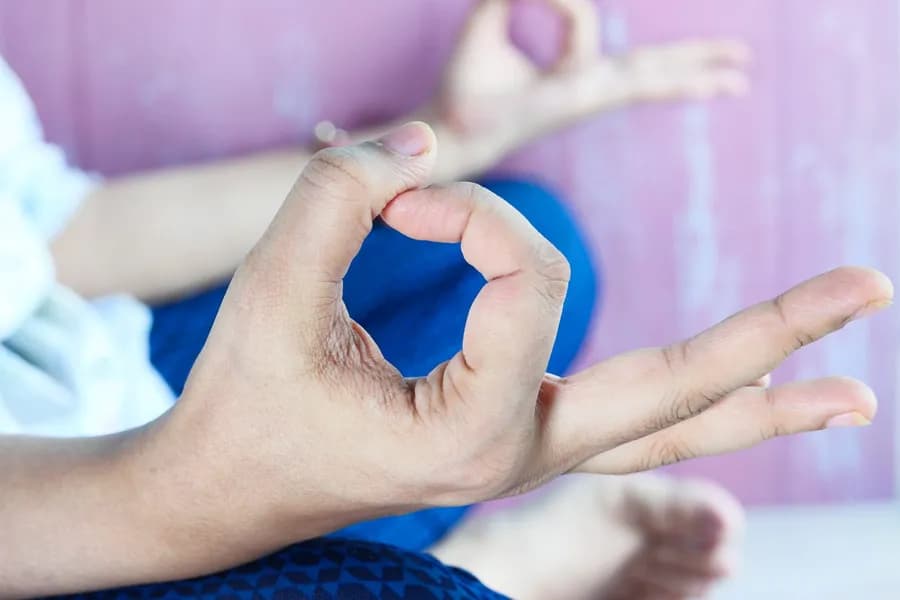
Gyan Mudra: How to Do It and Its Benefits for Focus and Memory
Practice Gyan Mudra with Habuild. Follow the wisdom hand gesture steps to improve focus, reduce anxiety, and enhance your meditation practice. Start today!

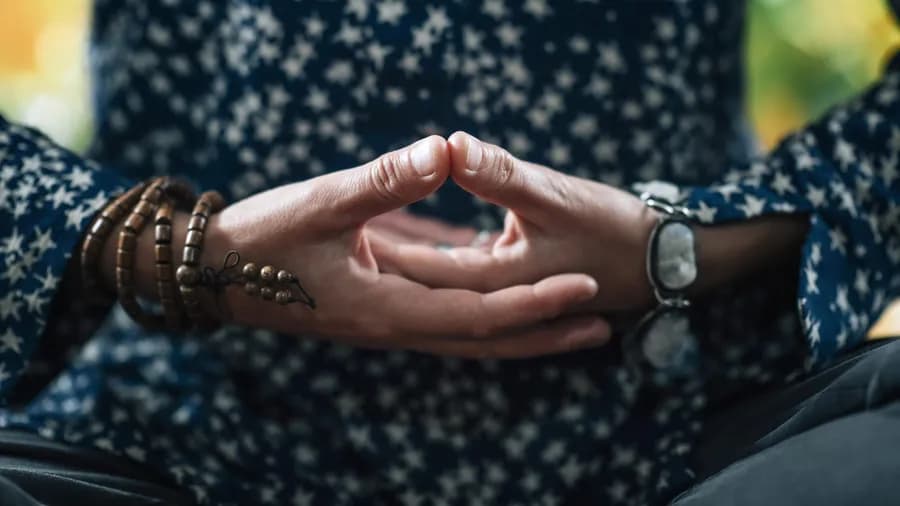
Dhyana Mudra: How to Practice and Its Benefits for Meditation
Practice Dhyana Mudra with Habuild. Follow the meditation hand gesture steps to calm the mind, deepen concentration, and support your daily practice. Start!
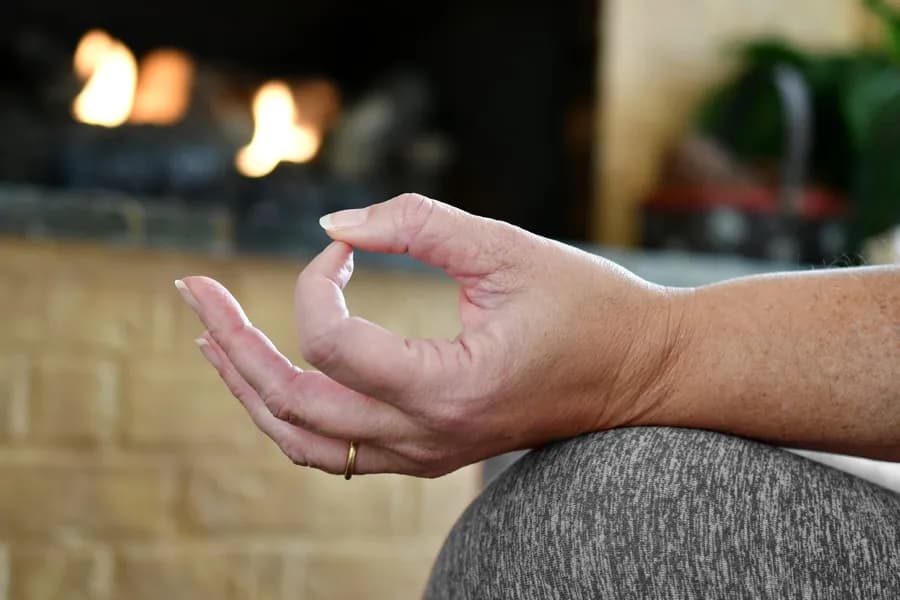
Chin Mudra: How to Practice and Its Benefits for Calm and Clarity
Practice Chin Mudra with Habuild. Follow the consciousness hand gesture steps to calm the mind, improve focus, and deepen your pranayama practice. Start today!