
Samakonasana (Straight Angle Pose): Steps and Flexibility Benefits
Practice Samakonasana with Habuild. Follow the right angle pose steps to improve hip flexibility, strengthen your legs, and achieve full splits. Start today!
Key Takeaways
- Opens the legs laterally toward a full side split, unlike forward-back Hanumanasana splits.
- Typically requires months to years of consistent practice to reach its full expression.
- Progresses from wide-legged standing poses and Upavistha Konasana toward the floor splits.
- Named yoga’s single most effective posture for developing hip abductor and adductor flexibility.
- Tight adductors are said to contribute to pelvic asymmetry and compensatory lumbar loading.
- Named one of yoga’s most direct teachings on patience and non-attachment to outcomes.
Samakonasana, or Right Angle Pose, progressively opens the legs laterally toward a full side splits — developing exceptional adductor and hip abductor flexibility, relieving pelvic tension, and supporting menstrual and reproductive health. It requires patient, consistent practice. Suitable for all levels through systematic progression.
What is Samakonasana?
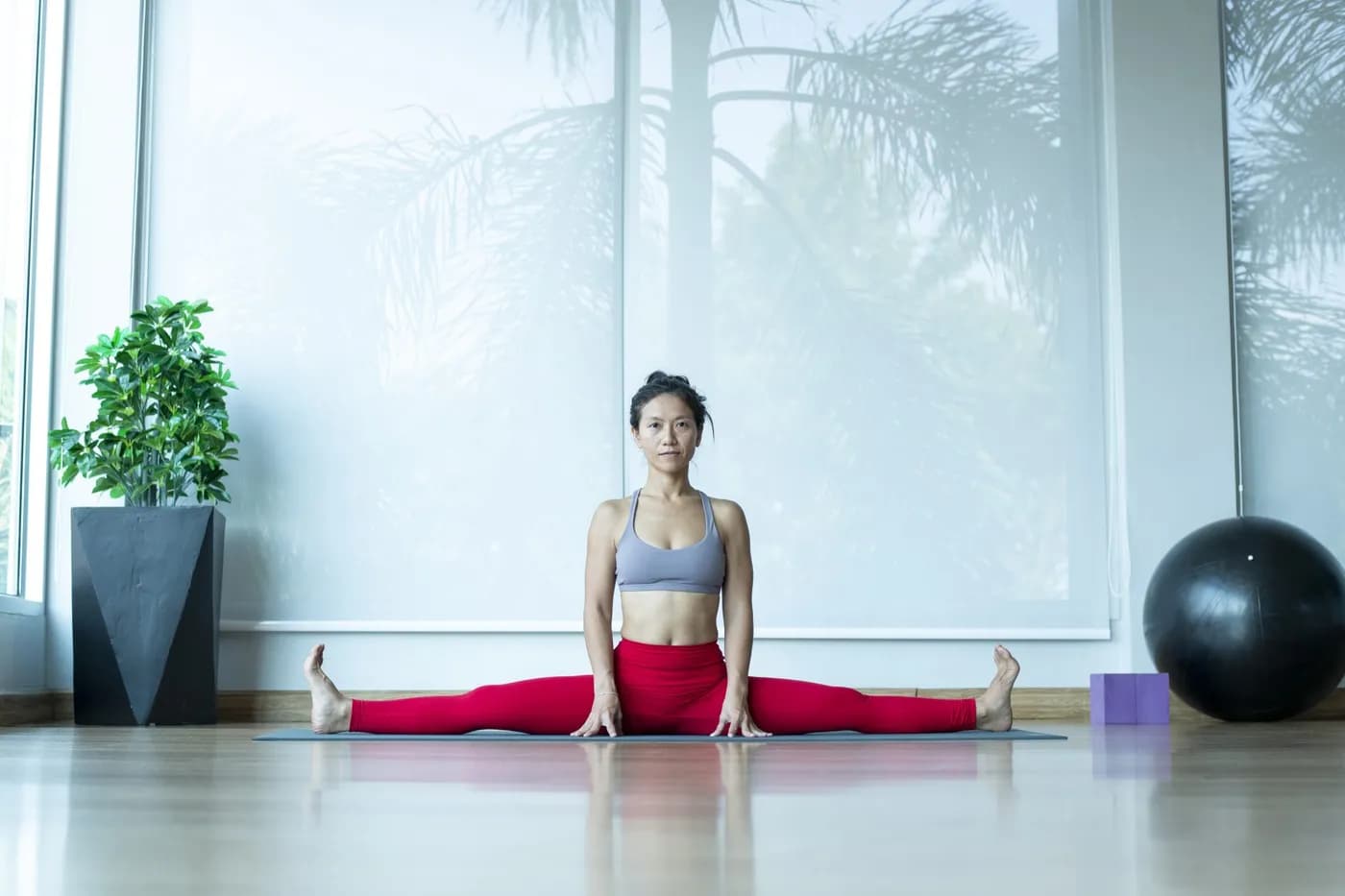
Samakonasana — known in English as Right Angle Pose or the lateral splits — derives from Sanskrit: Sama (equal, right angle), Kona (angle), and Asana (posture). The name describes the geometric ideal: the legs open equally on both sides to form a right angle (or ultimately 180 degrees) — the body’s full lateral splits position.
Samakonasana is yoga’s definitive adductor and hip abductor flexibility posture — one of the most demanding but most rewarding flexibility milestones in yoga practice. Unlike forward and backward splits (Hanumanasana), Samakonasana opens the legs laterally, simultaneously stretching the inner thighs, hip abductors, hamstrings, and groin on both sides.
At Habuild, Samakonasana is taught through a systematic progression — from wide-legged standing poses and Upavistha Konasana to the floor-based progression toward the full splits — with blocks, blankets, and progressive guidance ensuring the journey is safe at every stage.
Benefits
Physical Benefits
- Develops Exceptional Hip and Inner Thigh Flexibility Samakonasana is the single most effective yoga posture for developing hip abductor and adductor flexibility — the inner thigh stretching essential for athletes, functional hip mobility, and preparation for deeper seated postures.
- Relieves Pelvic Tension and Supports Menstrual Health The deep bilateral hip opening relieves pelvic tension and improves pelvic circulation — therapeutically relevant to menstrual health and pelvic wellbeing.
- Supports Reproductive Health and Pelvic Circulation The bilateral hip opening and improved pelvic blood flow make Samakonasana a valuable component of fertility and comprehensive pelvic health programmes.
- Reduces Lower Back Pain from Pelvic Imbalances Tight adductors and hip abductors contribute to pelvic asymmetry and compensatory lumbar loading. The bilateral symmetric stretch of Samakonasana corrects these imbalances.
Mental Benefits
- Develops the Most Valuable Quality of Advanced Practice — Patience Samakonasana is one of yoga’s most slowly developing postures — typically requiring months to years of consistent practice. The journey itself is among yoga’s most direct teachings on patience and non-attachment to outcomes.
- Releases Deeply Held Pelvic and Inner Thigh Tension Extended holds — particularly in the supported Yin form — frequently produce both physical release and a quality of emotional relief that practitioners find unexpectedly profound.
How to Do Samakonasana — Step-by-Step Instructions
Key Principles
Key Principles Three principles: practise at your edge, never your maximum — meaningful stretching occurs at 70–80% of range; maintain external rotation — toes pointing upward throughout, not forward; and progress slowly — the adductor connective tissue responds very poorly to aggressive stretching.
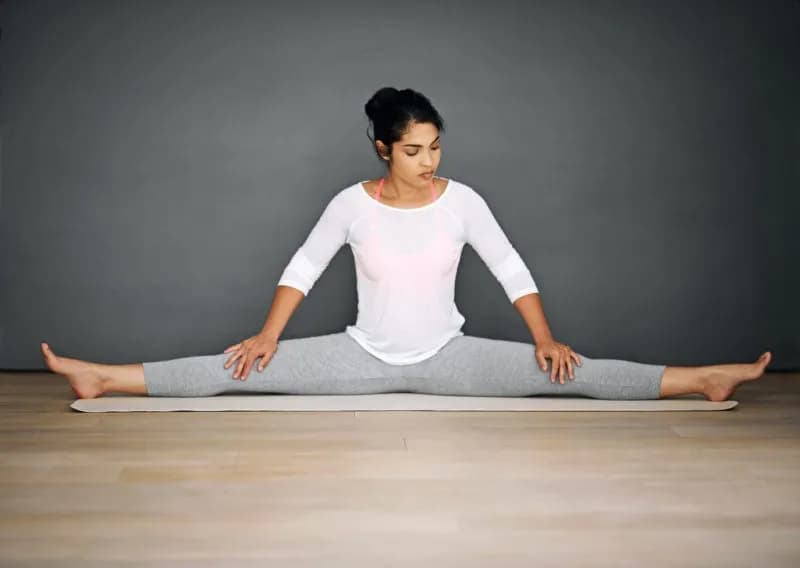
Samakonasana — Step by Step Step 1: Starting Wide-Leg Position Sit in Dandasana. Open both legs as wide as comfortable — begin at 90 degrees for most beginners. Flex both feet firmly, pressing through the heels with toes pointing directly upward.
Step 2: Establish Hands Between the Legs Place the hands on the floor between the legs for support. Inhale and lengthen the spine upward — growing tall from sitting bones to crown.
Step 3: Hinge Forward with a Flat Spine On the exhale, hinge forward from the hip joints — walking the hands forward while maintaining a flat spine. Prioritise length over depth.
Step 4: Hold and Breathe Into the Inner Thighs Hold at your edge for 5–10 breath cycles. Breathe deeply into the inner thighs on each inhale — allowing the adductors to soften progressively.
Step 5: Progressive Leg Widening (Advanced) For the splits progression: on a smooth floor surface in socks, gently allow the feet to slide wider with each session over multiple weeks — never forcing.
Step 6: Release Slowly To release: walk the hands back toward the hips, inhale to sit upright, and draw the legs together very slowly — adductors are sensitive when releasing from deep holds.
Breathing
Deep belly breathing into the inner thighs on the inhale is the primary technique. Each inhale softens the adductor muscles; each exhale allows the legs to open fractionally further. The adductor connective tissue responds to sustained, relaxed breath-directed loading far more effectively and safely than to active pushing.
Preparatory Poses
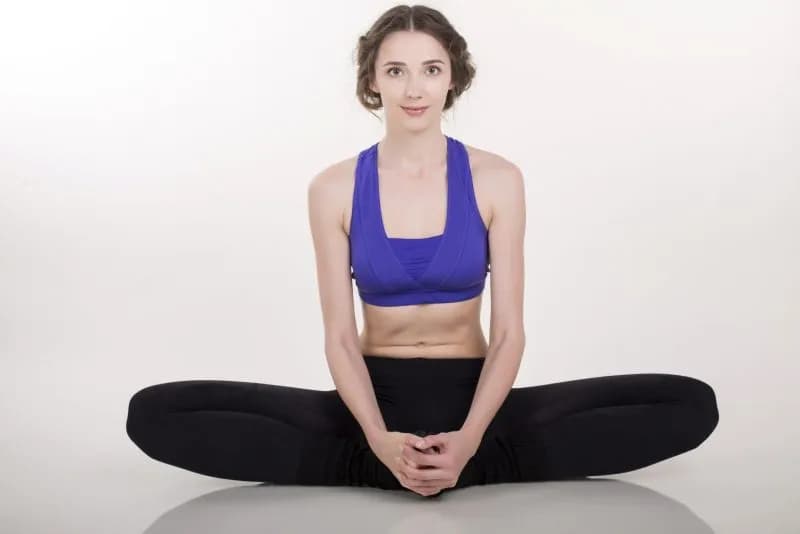
- Baddha Konasana (3 minutes) — Warms the hip external rotators before the wide bilateral spread.
- Upavistha Konasana (2 minutes) — The direct progressive preparation — develops adductor and hamstring flexibility toward Samakonasana.
- Wide-legged standing poses (Virabhadrasana II, Prasarita Padottanasana) — Warms the inner thighs from the standing position.
Variations
- Variation 1: Upavistha Konasana — Foundational Preparation Seated wide-angle forward fold — the direct preparatory posture, developing adductor and hamstring flexibility with a more achievable starting range.
- Variation 2: Seated Progressive Splitting The standard floor progression — legs widening gradually session by session toward the full lateral splits.
- Variation 3: Yin Samakonasana — Extended Passive Hold Held for 3–5 minutes at a comfortable wide-leg angle with full muscular release — the connective tissue-targeting form producing the most cumulative adductor opening.
Common Mistakes to Avoid
- Going to Maximum Range Aggressively The most consequential error — meaningful progress occurs at the edge, not beyond it. Forcing the adductors produces micro-tears that create scar tissue, reducing long-term flexibility.
- Toes Rotating Forward Rather Than Pointing Upward The feet must remain flexed with toes pointing upward throughout — toes rotating forward shifts the stretch from the adductors to the hip flexors, missing the intended target.
- Rounding the Lower Back to Reach Further Spinal rounding concentrates the stretch at the lumbar ligaments rather than the inner thighs. Sit on a blanket, use blocks under the hands, and prioritise spine length.
Who Should Practise?
- Dancers, Gymnasts, and Martial Artists The quintessential flexibility target for any practitioner requiring lateral hip opening as a functional movement requirement.
- Women Seeking Pelvic and Reproductive Health Benefits The deep bilateral hip opening and pelvic circulation improvement make Samakonasana valuable for pelvic health, menstrual comfort, and fertility support.
- Is Samakonasana Good for Beginners? The Upavistha Konasana stage is accessible from the first yoga session. The floor-based splits progression is intermediate — building from the seated wide-angle fold over weeks.
Make Samakonasana a Part of Your Practice
Samakonasana is yoga’s definitive lateral splits progression — its patient, consistent journey developing the adductor and hip abductor flexibility that unlocks the full lateral dimension of hip openness that most practitioners leave significantly underdeveloped.
Whether beginning with Upavistha Konasana at 90 degrees or working toward the full 180-degree floor expression, every consistent session of Samakonasana practice delivers progressive and meaningful flexibility gains.
The most effective way to learn Samakonasana correctly — with edge awareness, foot rotation guidance, and progressive session structure — is under live expert guidance with Habuild.
Start your 14 day free yoga journey with Habuild, today!
Related reads: Parsvakonasana (Side Angle Pose): Steps and Full Body Benefits · Konasana (Angle Pose): Steps Benefits and Spine Health
Full splits don’t arrive in a session or two — Samakonasana is the kind of pose where hip flexibility opens up gradually across weeks of consistent stretching, and rushing it tends to backfire. Leg strength builds alongside that flexibility at a similarly steady pace. Habuild’s Yoga Everyday program includes progressive hip-opening sequences that build toward poses like this safely over time.
Frequently Asked Questions
Related Articles
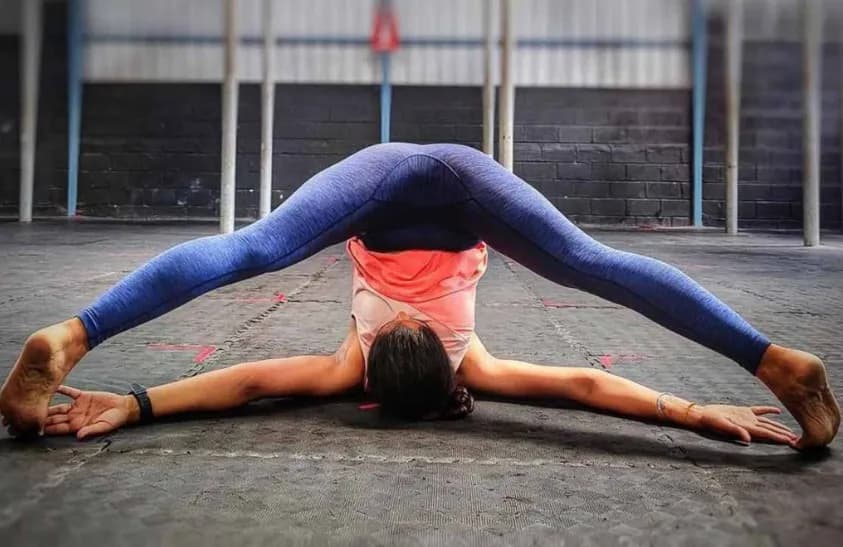
Supta Konasana (Reclined Angle Pose): Steps and Hip Benefits
Practice Supta Konasana with Habuild. Follow the reclining angle pose steps to open your hips, stretch your hamstrings, and boost flexibility. Start today!
Konasana (Angle Pose): Steps Benefits and Spine Health
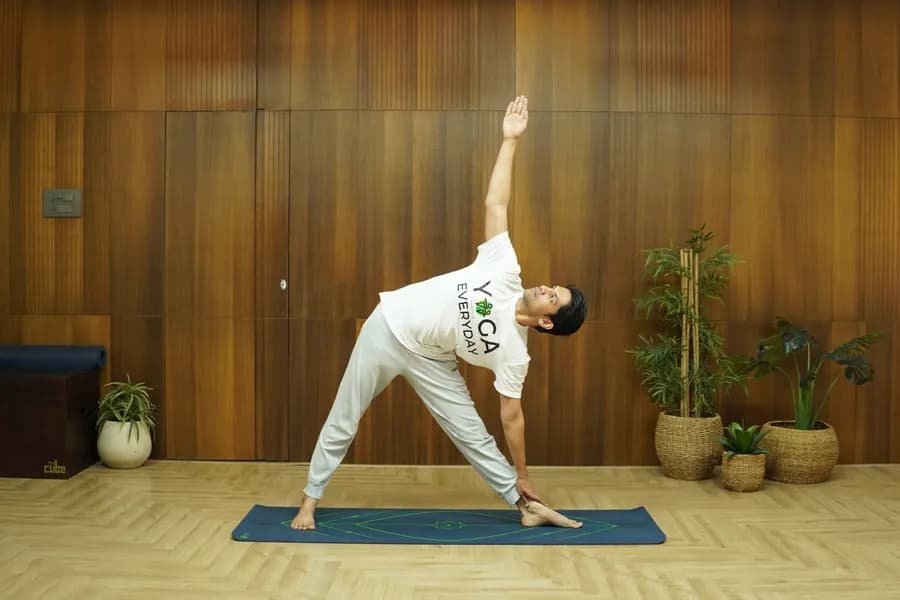
Practice konasana with Habuild. Follow the steps of trikonasana to strengthen your legs, improve flexibility, and boost your lateral body stretch. Start today!
Upavista Konasana: Steps Benefits and Flexibility Guide
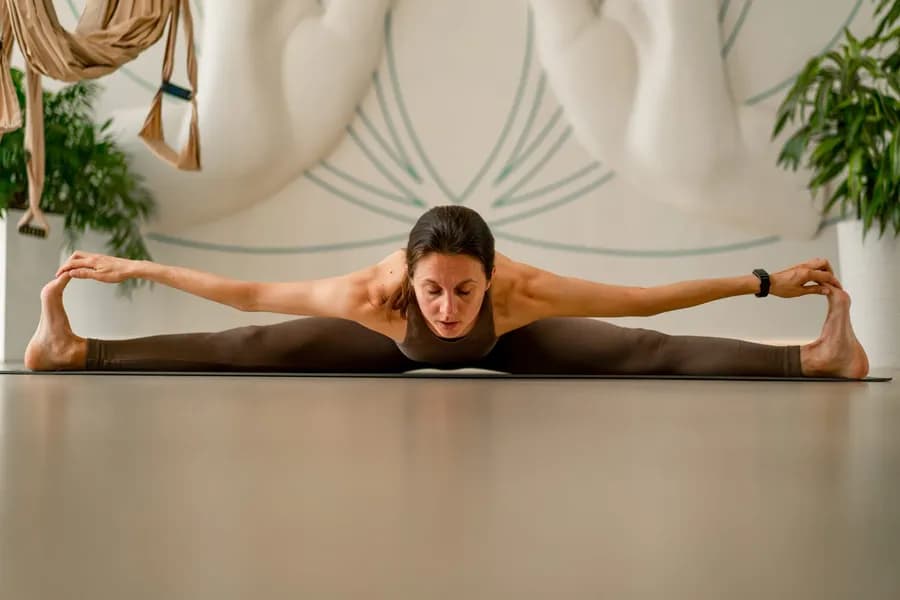
Practice Upavista Konasana with Habuild. Follow the seated wide-angle steps to open your hips, stretch your hamstrings, and build flexibility. Start today!
Janu Sirsasana (Head to Knee Pose): Steps and Key Benefits
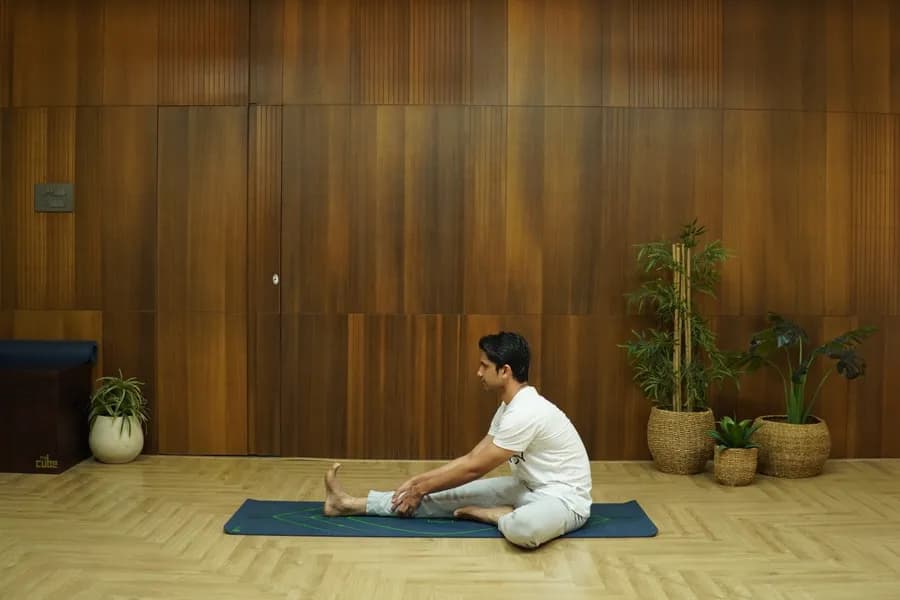
Practice janu sirsasana with Habuild. Try the janu sirsasana pose to stretch your hamstrings, calm your mind, and improve flexibility. Start your session now!