
Urdhva Mukha Paschimottanasana (Upward Facing Intense West Stretch): Steps, Benefits and Precautions
Combining the coccyx balance of Ubhaya Padangusthasana with a deep forward fold toward the extended legs, this pose appears in the Ashtanga primary series as its natural progression. See the steps, benefits, and precautions.
Key Takeaways
- Combines the coccyx balance of Ubhaya Padangusthasana with a full forward fold toward the legs.
- Directly follows Ubhaya Padangusthasana in the Ashtanga primary series as its natural progression.
- Uniquely trains hamstring flexibility while under active hip flexor load, not passively.
- Requires the anterior chain strength to sustain flexibility that passive stretches never develop.
- The face directs upward toward the raised feet as the torso folds forward simultaneously.
- One of the more unusual poses in the primary series for combining two contradictory demands.
What is Urdhva Mukha Paschimottanasana?
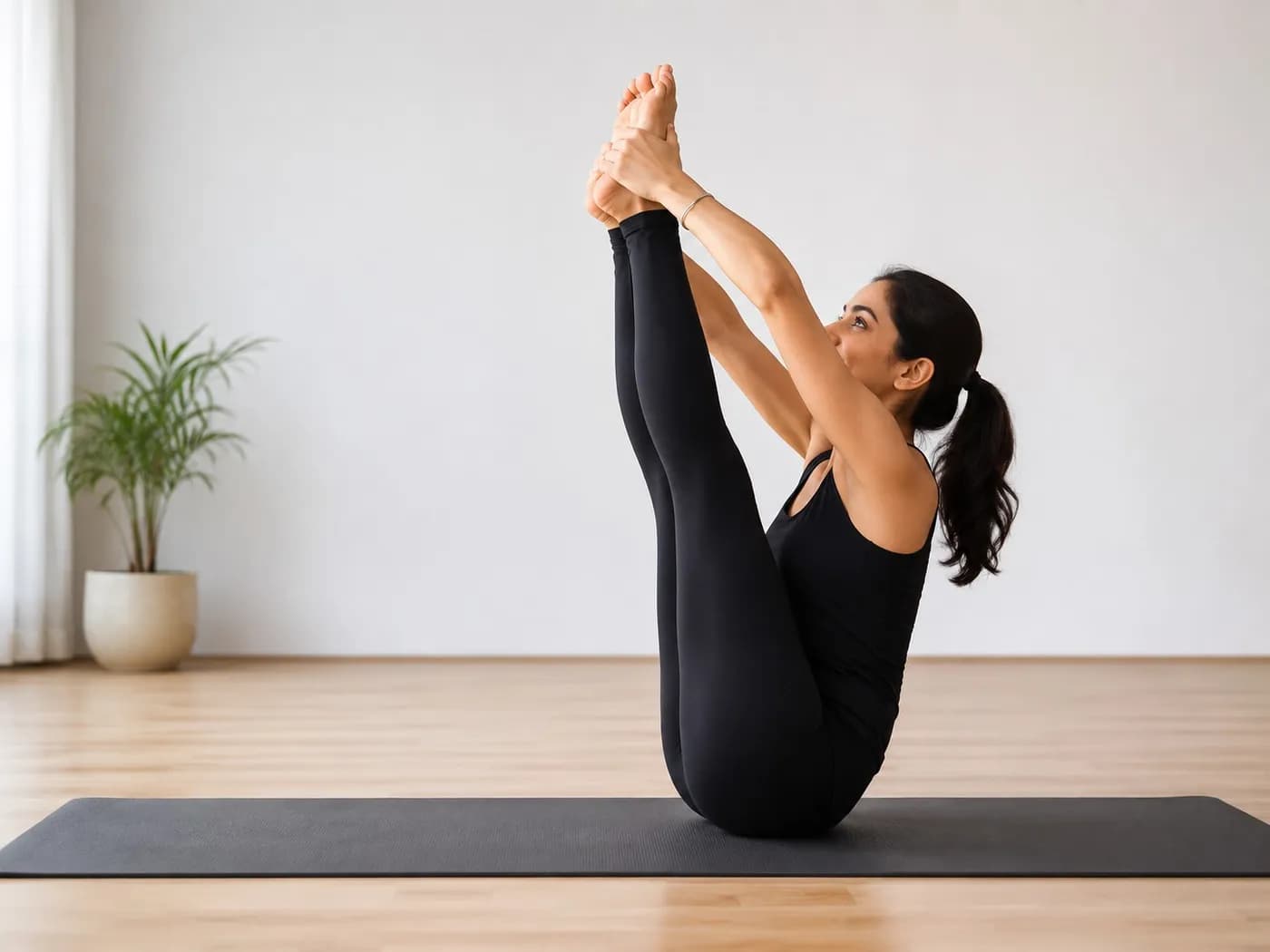
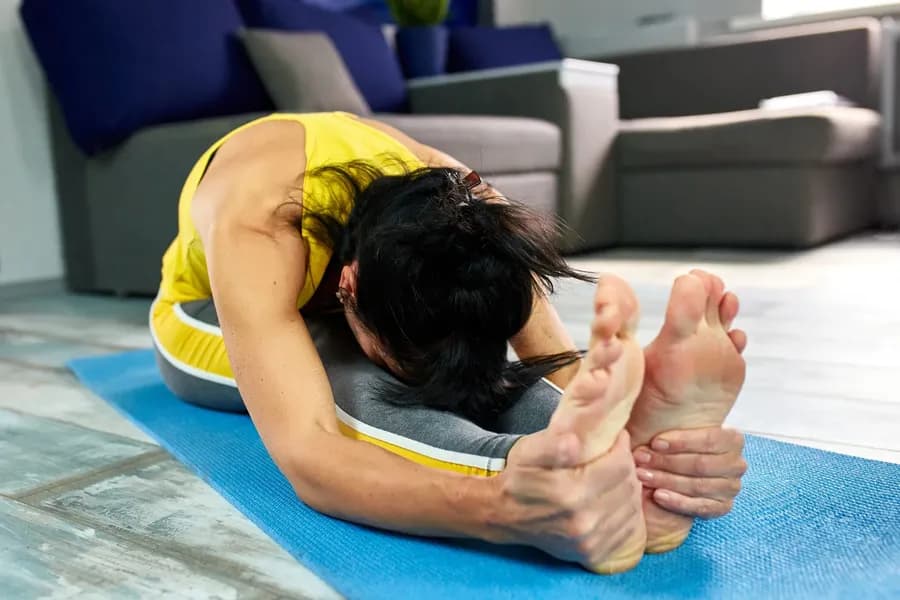
Urdhva Mukha Paschimottanasana — pronounced OORD-vah MOO-kah PASH-ee-moh-tah-NAH-sah-nah — combines urdhva (upward), mukha (face), paschima (west or back of the body), uttana (intense stretch) and asana (pose). The English name is Upward Facing Intense West Stretch — combining the coccyx balance of Ubhaya Padangusthasana with a deep forward fold of the torso toward the extended legs. It is closely related to Ubhaya Padangusthasana and appears in the Ashtanga yoga primary series as its natural progression.
Urdhva Mukha Paschimottanasana — the Upward Facing Intense Western Stretch — combines the seated coccyx balance of Navasana with the hamstring and posterior chain stretch of Paschimottanasana in a single inverted-V position that challenges core strength, hamstring flexibility and balance simultaneously. One of the more unusual poses in the primary Ashtanga sequence, it produces a unique dual stimulus that neither pose achieves alone. This complete guide covers the technique, systematic entry and every modification.
Urdhva Mukha Paschimottanasana uniquely combines two seemingly contradictory demands: the coccyx balance required to keep both legs elevated and the deep forward fold that brings the torso down toward the legs simultaneously. While Ubhaya Padangusthasana maintains an upright spine in the V-shape, Urdhva Mukha Paschimottanasana adds the Paschimottanasana (forward fold) dimension — the face (mukha) directed upward (urdhva) toward the raised feet as the torso folds forward. This combination requires greater hamstring flexibility and hip flexor endurance than either component practiced separately.
The urdhva mukha paschimottanasana benefits arise from this unique combination: the coccyx balance challenge of the elevated leg position, the complete posterior chain lengthening of the forward fold, the core endurance required to maintain both dimensions simultaneously, and the deep abdominal compression that the forward fold produces. In the Ashtanga context, it directly follows Ubhaya Padangusthasana and together they form the culminating coccyx-balance sequence of the primary series seated poses.
Urdhva Mukha Paschimottanasana Benefits
- Physical Benefit 1: Deep Posterior Chain Stretch in an Active Balance Urdhva Mukha Paschimottanasana combines the passive hamstring lengthening of Paschimottanasana with the active hip flexor holding of the coccyx balance — making it the only available yoga pose that develops both the posterior chain flexibility and the anterior chain strength needed to sustain that flexibility under active load. The urdhva mukha paschimottanasana benefits for functional hamstring flexibility (flexibility maintained under load) are uniquely specific to this pose.
- Physical Benefit 2: Hip Flexor and Core Endurance Under Combined Load Maintaining the elevated legs while folding the torso forward requires the hip flexors and core to work eccentrically against the gravitational pull of the torso’s weight — a more demanding muscle loading than either the upright Navasana or the supine Paschimottanasana achieves. The urdhva mukha paschimottanasana benefits for active core and hip flexor endurance are among the most comprehensive available in the seated yoga sequence.
- Physical Benefit 3: Deep Abdominal Compression and Digestive Stimulation The deep forward fold against the elevated legs produces maximum abdominal organ compression — the same digestive stimulation as floor Paschimottanasana but amplified by the active holding position that prevents the passive relaxation that floor support allows. Regular aerobic exercise reduces cardiovascular disease risk by up to 35%, and the comprehensive yoga practice that includes Urdhva Mukha Paschimottanasana contributes to this cardiovascular benefit.
- Mental and Emotional Benefit 4: Develops Patience with Multi-Dimensional Challenge The simultaneous management of balance, fold, stretch and endurance in Urdhva Mukha Paschimottanasana develops the capacity to hold multiple demands in awareness simultaneously — the multi-tasking of the body and mind that the most complex yoga poses specifically cultivate. This quality of simultaneous multi-dimensional attention directly transfers to the practical mental skills that complex work and relationships require.
- Mental and Emotional Benefit 5: Confidence through Progressive Achievement Urdhva Mukha Paschimottanasana is a milestone pose in the Ashtanga primary series — its achievement confirms the integration of balance, flexibility and endurance that the preceding primary series has developed. The satisfaction of achieving this integrated expression is among the most meaningful motivators for continuing long-term daily practice.
The inverted forward fold position of Urdhva Mukha Paschimottanasana produces a hamstring and posterior chain stretch at maximum hip flexion — with the added challenge of maintaining the stretch against gravity in the inverted coccyx-balance position.
Simultaneously stretching the posterior chain while engaging the hip flexors to maintain the inverted balance produces a unique combined stimulus — the hip flexors work isometrically while the hamstrings are stretched, building functional hip strength alongside flexibility.
Regular aerobic yoga practice reduces cardiovascular disease risk by up to 35% — and the comprehensive seated sequence including Urdhva Mukha Paschimottanasana contributes both to cardiovascular health and to the digestive organ stimulation that metabolic health requires.
The unusual and disorienting position of Urdhva Mukha Paschimottanasana requires a quality of spatial awareness and body confidence that upright poses do not develop — building the three-dimensional proprioceptive awareness that advanced practice cultivates.
Learning to approach a position that challenges orientation — inverted, balanced on the coccyx, legs overhead — develops the comfort with unusual body positions and the non-anxious curiosity that advanced yoga specifically cultivates.
How to Do Urdhva Mukha Paschimottanasana — Step-by-Step Instructions
Key Principles
The key distinction of Urdhva Mukha Paschimottanasana from Ubhaya Padangusthasana: in Ubhaya, the spine is upright and the face looks at the feet from a distance; in Urdhva Mukha Paschimottanasana, the torso folds forward to bring the face as close to the shins as hamstring flexibility allows — the face literally oriented “upward” toward the feet. The coccyx balance must be established before the forward fold deepens.
Step 1: Establish Ubhaya Padangusthasana Balance First
Begin in the full upright V-shape of Ubhaya Padangusthasana — coccyx balance established, legs extended, spine upright, big toes held. Take 3-5 breaths here to confirm the balance is stable. The forward fold of Urdhva Mukha Paschimottanasana must begin from a stable coccyx balance; if the balance is uncertain, do not proceed to the forward fold until it is solid.
Step 2: Inhale to Elongate the Spine
From the stable Ubhaya Padangusthasana, take a full inhalation — feeling the spine elongate from the coccyx to the crown. This spinal elongation creates the length that allows the forward fold to come from the hip hinge rather than from lumbar collapse. The breath creates space before the fold fills it.
Step 3: Begin the Forward Fold — Hinging from the Hips
On the exhalation, begin to hinge the torso forward from the hips — bringing the chest toward the shins while the legs remain elevated and the toe-grip maintained. The hips must remain balanced on the coccyx throughout the fold. The movement is the torso coming down toward the legs, not the legs coming toward the torso.
Step 4: Deepen Toward Full Urdhva Mukha Paschimottanasana
Continue the forward fold — bringing the face as close to the shins as hamstring flexibility allows. In the full expression, the chin or forehead rests on or near the shins. The gaze is directed toward the feet (face facing upward toward the elevated feet — the urdhva mukha quality). Maintain the coccyx balance throughout the deepening fold.
Step 5: Final Position and Hold
Hold the full expression for 5 slow breaths — the forehead approaching or touching the shins, the toe-grip maintained, the coccyx balance stable, the spine as elongated as the hamstring flexibility allows. The balance challenge increases as the fold deepens due to the changed weight distribution — adjust the coccyx balance point progressively as the fold develops.
Step 6: How to Come Out
On an inhalation, use the core to return the torso to upright V-shape (Ubhaya Padangusthasana). Then bend the knees and lower the feet to the floor. In the Ashtanga sequence, this pose transitions directly into the vinyasa jump-back. Rest in Dandasana for 5 breaths before proceeding.
Breathing in Urdhva Mukha Paschimottanasana
Inhale to elongate before the fold; exhale to deepen the forward fold; breathe slowly and continuously throughout the held position. The breath rhythm is the same as all forward folds — inhalation creates space, exhalation allows deepening. Never hold the breath in this combined balance-fold position.
Preparatory Poses Before Urdhva Mukha Paschimottanasana

- Ubhaya Padangusthasana — the direct prerequisite coccyx balance that must be established first.
- Paschimottanasana (Seated Forward Fold) — develops the hamstring flexibility toward the forward fold depth.
- Paripurna Navasana (Boat Pose) — develops the core and hip flexor endurance for the elevated leg position.
- Janu Sirsasana — warms the hamstrings and hip flexors before the combined demand.
Variations of Urdhva Mukha Paschimottanasana
Variation 1: Urdhva Mukha Paschimottanasana with Bent Knees (Beginner)
Performing the forward fold with the knees significantly bent — maintains the coccyx balance and forward fold mechanics without the full hamstring flexibility requirement. Difficulty: Beginner-Intermediate
Variation 2: Urdhva Mukha Paschimottanasana 2 (with Different Hand Position)
The Urdhva Mukha Paschimottanasana 2 variation uses a different hand position (holding the foot soles rather than the big toes) — changes the shoulder and elbow angle while maintaining the same combined balance-fold demand. Difficulty: Intermediate
Variation 3: Urdhva Mukha Paschimottanasana with Strap (Accessible Advanced)
Using a yoga strap looped around the feet — allows the full coccyx balance and forward fold mechanics when the hands cannot reach the feet directly, maintaining all the urdhva mukha paschimottanasana benefits at the available flexibility level. Difficulty: All levels
Common Mistakes to Avoid
- Mistake 1: Losing the Coccyx Balance While Folding The most common error — the coccyx balance becomes unstable as the torso’s forward lean changes the weight distribution. Develop the fold gradually, adjusting the balance point incrementally rather than attempting the full fold immediately.
- Mistake 2: Rounding the Back Instead of Hip Hinging As in all forward folds, lumbar rounding instead of hip hinging reduces the hamstring stretch and increases the lumbar disc loading. Prioritise the elongated spine from the hip hinge over apparent depth achieved through collapse.
- Mistake 3: Attempting Before Ubhaya Padangusthasana is Stable Urdhva Mukha Paschimottanasana requires a stable, confident Ubhaya Padangusthasana balance as its foundation. Approaching the forward fold from an uncertain balance produces compensation rather than the integrated expression.
- Mistake 4: Pulling Aggressively on the Feet Using the toe-grip to pull the torso forcefully toward the feet creates neck and upper back strain rather than the hip-hinge deepening that produces the pose’s genuine benefit. The arms maintain the connection while the core and hip hinge do the work of the fold.
Who Should Practise Urdhva Mukha Paschimottanasana?
- Ashtanga Practitioners Building through the Primary Series Urdhva Mukha Paschimottanasana is a central element of the Ashtanga primary series seated sequence — its development through Ubhaya Padangusthasana and deep hamstring work is the natural progression for practitioners working through this tradition.
- Those Seeking Active Hamstring Flexibility The active holding position of this pose develops functional hamstring flexibility — the flexibility that holds under load — rather than the passive flexibility of supported forward folds alone. This functional dimension is most relevant for athletes and active practitioners.
- Is it Good for Beginners? The bent-knee and strap variations make the pose accessible to intermediate practitioners. Establish Ubhaya Padangusthasana and comfortable Paschimottanasana before approaching the combination. Habuild’s live instruction sequences these progressively.
- Advanced Practitioners Integrating Balance and Flexibility Urdhva Mukha Paschimottanasana integrates the coccyx balance and forward fold skills that the preceding primary series has developed — a natural milestone for practitioners consolidating the seated sequence.
50,000+ members already practising with Habuild every morning. Live daily sessions. Real-time corrections. Cancel anytime.
Balancing on the coccyx while folding forward in Urdhva Mukha Paschimottanasana takes core strength and hamstring flexibility that build slowly, pose by pose, across weeks of regular practice rather than in one sitting. A single attempt rarely reveals what the pose is really capable of teaching the body. Habuild’s Yoga Everyday program offers a structured daily path toward that kind of strength and flexibility.
Frequently Asked Questions
Related Articles
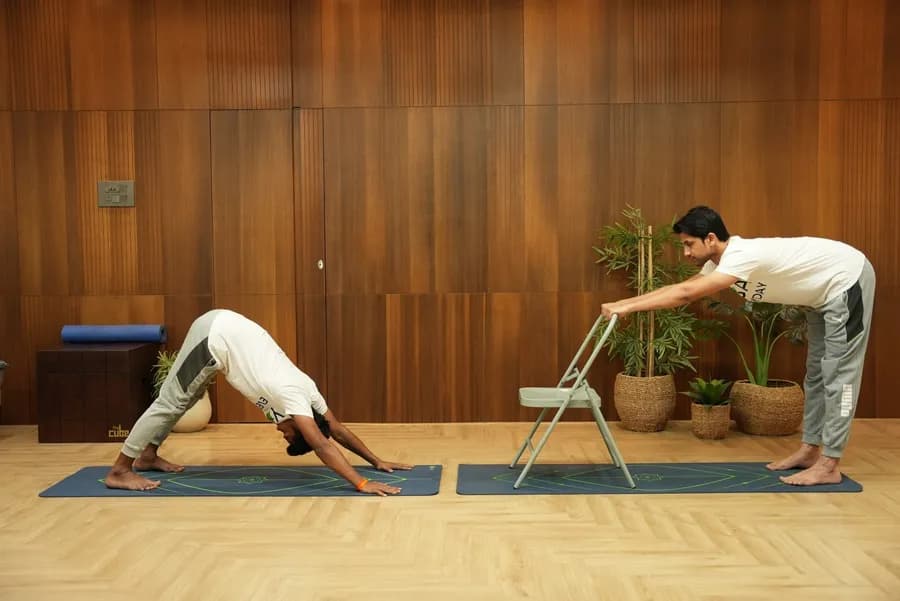
Urdhva Mukha Svanasana (Upward-Facing Dog): Steps, Benefits & Precautions
The chest lifts high, hips come off the floor, and arms straighten in a shape mimicking a dog stretching upward — a dynamic transition in nearly every vinyasa sequence. See the steps, benefits, and precautions.
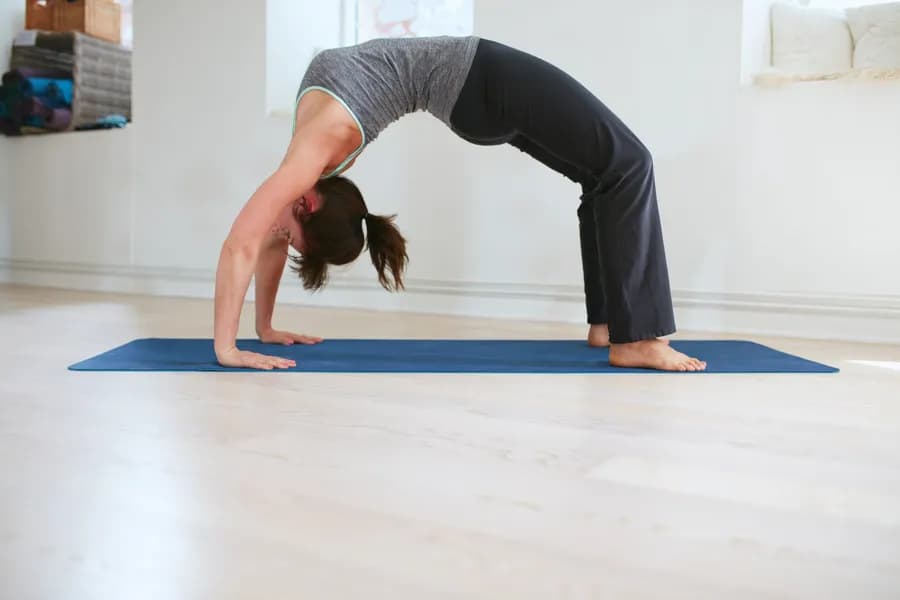
Urdhva Dhanurasana (Upward Bow Pose): Steps Benefits and Safety
Practice Urdhva Dhanurasana with Habuild. Follow the wheel pose steps to open your chest, strengthen your spine, and improve full-body flexibility. Start today!
Paschimottanasana: Yoga Steps, Benefits & Tips
Paschimottanasana, the Seated Forward Fold, deeply stretches the entire posterior chain, stimulates the abdominal organs, calms the nervous system, and builds hamstring and spinal flexibility.
