
Baddha Konasana: Yoga Poses for UTI
This gentle seated hip-opener improves pelvic blood circulation and releases chronic pelvic floor tension, complementing medical care. See the steps.
Key Takeaways
- Baddha Konasana is consistently recommended for pelvic health support during a UTI.
- Sitting with soles pressed together improves blood circulation to the bladder and pelvic floor.
- Pelvic tension is linked to urinary frequency and urgency; this pose teaches release.
- In yogic physiology, the pelvis is the seat of apana vayu, governing elimination.
- Requires no equipment and adapts to all levels, appearing across Hatha, Iyengar, and Yin.
- Complements medical care rather than replacing it for urinary tract health.
Baddha Konasana (Bound Angle Pose) is one of the most recommended yoga poses for UTI support — a gentle seated hip-opener that improves pelvic blood circulation, releases chronic pelvic floor tension, and calms the nervous system. Practised alongside medical care, it can meaningfully complement your recovery and long-term urinary health routine.
If you are looking for yoga poses for UTI support, Baddha Konasana is consistently recommended for pelvic health. This guide covers Sanskrit origins, step-by-step instructions, key benefits, variations, and precautions — everything you need to begin safely.
What is Baddha Konasana?
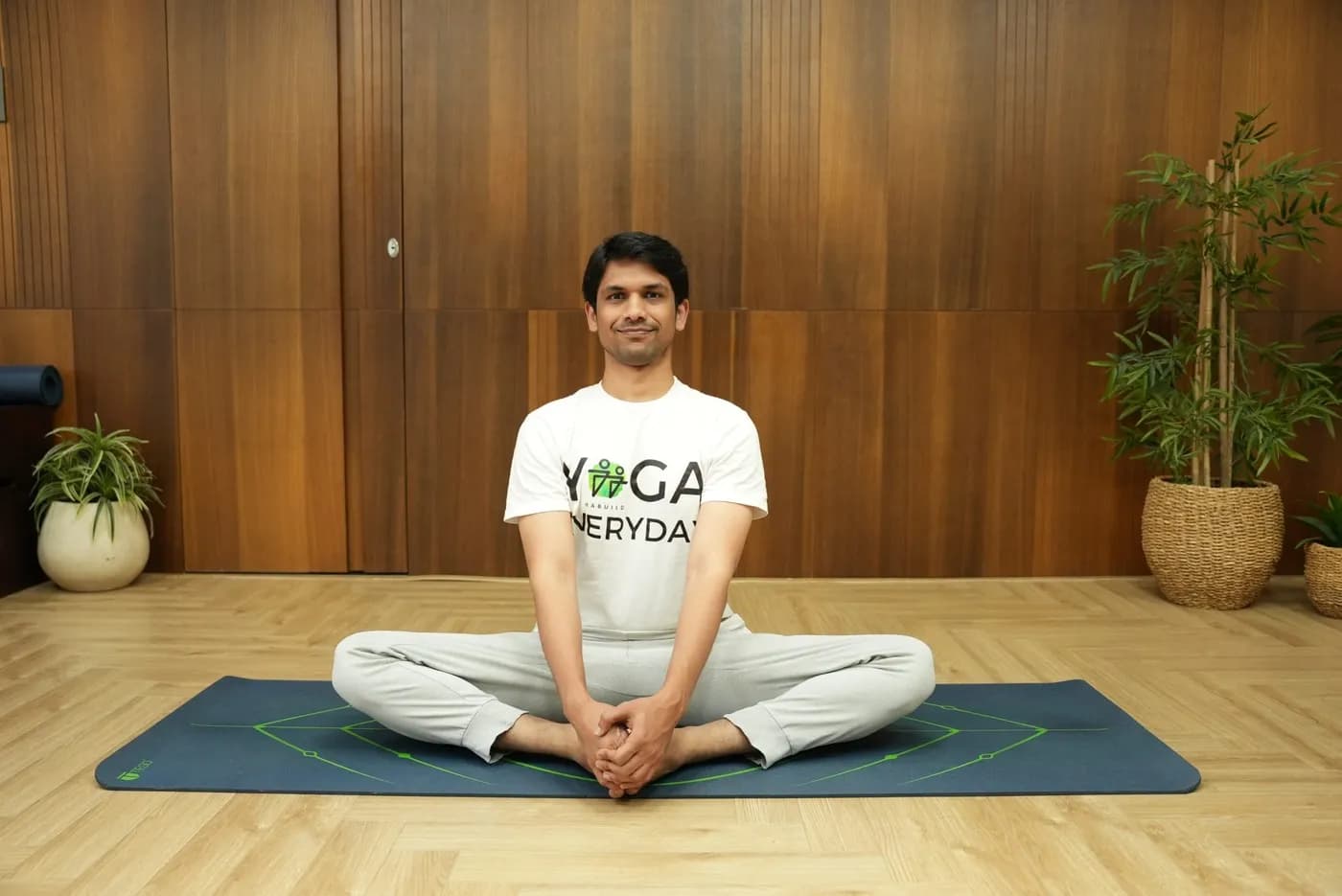
Baddha Konasana (pronounced BAH-dah cone-AHS-anna) comes from Sanskrit: baddha means bound, kona means angle, and asana means posture. In English it is commonly called Bound Angle Pose, Butterfly Pose, or Cobbler’s Pose — the last name reflecting the cross-legged sitting position traditionally used by cobblers in India. The pose involves sitting upright with the soles of the feet pressed together and the knees falling open to either side, creating a diamond shape with the legs.
Symbolically, Baddha Konasana is associated with grounded openness — the body simultaneously rooted through the pelvis and open through the hips. In traditional yogic physiology, the pelvic region is considered the seat of apana vayu, the downward-flowing energy responsible for elimination, reproductive function, and detoxification. Poses that stimulate and release this area are considered foundational to pelvic wellness, making Baddha Konasana a natural choice when exploring yoga asanas for urine infection support.
Within the broader yoga system, Baddha Konasana belongs to the category of seated hip-opening asanas. It appears in Hatha yoga sequences, Iyengar practice, Yin yoga, and restorative yoga traditions. Its accessibility — requiring no equipment and adaptable to all levels — makes it one of the most universally practised poses in the global yoga community.
Baddha Konasana Benefits
Physical Benefits
Benefit 1: Improves Blood Circulation to the Pelvic Region
Baddha Konasana gently increases blood flow to the lower abdomen, bladder, and pelvic floor — areas directly affected during a urinary tract infection. Better local circulation supports the immune system’s ability to respond at the site of discomfort. For those exploring yoga for UTI relief and management, this circulatory benefit is one of the primary reasons this pose is consistently recommended. Practised daily, it helps maintain a healthier, better-nourished pelvic environment over time.
Benefit 2: Strengthens and Releases the Pelvic Floor
The pose simultaneously engages and then encourages a conscious release of the pelvic floor muscles. Chronic tension in this region is linked to urinary frequency, urgency, and ongoing discomfort. Regular Baddha Konasana practice builds the awareness to distinguish between gripping and releasing — a balance that directly supports urinary function and is central to yoga for UTI relief.
Benefit 3: Stimulates the Urinary and Digestive Organs
The position of the pelvis in Baddha Konasana creates a gentle internal pressure that acts like a mild massage on the bladder, kidneys, and lower digestive tract. This stimulation encourages healthy organ function and supports regular elimination — both important factors in urinary tract health. Pairing this asana with yoga for digestion can further support the interconnected systems of the lower abdomen.
Mental and Emotional Benefits
Benefit 4: Calms the Nervous System and Reduces Stress
Chronic stress suppresses immune function, making the body more susceptible to infections including UTIs. Baddha Konasana — particularly in its reclined variation — activates the parasympathetic nervous system and brings the body out of a heightened stress state. This is why yoga for stress management is frequently recommended as part of a holistic approach to recurring urinary infections, because reducing the stress burden supports the body’s natural defences alongside direct treatment.
Benefit 5: Improves Body Awareness and Eases Holding Patterns
Many people experiencing UTI symptoms unconsciously tighten the lower body in response to discomfort — a protective bracing that can worsen pelvic pressure. Mindful Baddha Konasana practice, with attention to breath and conscious pelvic release, helps you gradually recognise and ease this holding pattern. Over weeks of consistent practice, this improved body awareness supports more comfortable daily movement and helps you respond to early signs of tension before they escalate.
How to Do Baddha Konasana — Step-by-Step Instructions
Move through this sequence gently, especially if you are currently experiencing active infection symptoms. The goal is release, not intensity.
Key Principles
Always practise on an empty or light stomach. Place a folded blanket under your sitting bones if your hips are tight — this small adjustment tilts the pelvis forward and protects the lower back. Never push through sharp pelvic pain. Keep the breath slow and even throughout; if it becomes laboured, ease out of the pose immediately.
Step 1: Starting Position
Sit on your mat with both legs extended straight in front of you — this is Dandasana, or Staff Pose. Place your palms flat beside your hips, press gently into the mat, and grow tall through your spine from the base of the pelvis to the crown of your head. Take three slow, full breaths here, feeling your sitting bones connect with the floor. This grounding moment primes the nervous system for the deeper pelvic work ahead.
Step 2: Drawing the Heels In
Bend both knees and draw the soles of your feet together, allowing the knees to fall open to either side like the wings of a butterfly. Draw your heels as close to your pelvis as is comfortable — never force this distance. Wrap your hands around your feet or ankles and sit tall. You should feel a gentle stretch across the inner thighs and groin, not pain or strain.
Step 3: Engaging the Spine
On an inhale, lengthen through the crown of your head as if a thread were pulling you upward. On each exhale, consciously soften the inner thighs and allow the knees to release a little further toward the floor — not by pressing with your hands, but by releasing the hip flexors. Keep the shoulders relaxed away from the ears and the lower back long rather than rounded. This alignment protects the lumbar spine while maximising the benefit to the pelvic region.
Step 4: The Optional Forward Fold
Only if you are not in acute discomfort — hinge forward from your hips, maintaining a long spine rather than rounding through the back. Lower your chest slowly toward your feet. This deepens the stimulation to the pelvic and abdominal organs and increases the inner-thigh stretch. Hold for three to five full breaths. If you feel any sharp pain in the lower abdomen, come back upright immediately.
Step 5: Final Position and Hold
Whether upright or in a gentle fold, hold the pose for five to ten complete breaths. With each exhale, consciously soften and release the pelvic floor — imagine any gripping or holding in the lower belly dissolving with the breath out. This deliberate release is the most therapeutically valuable moment of the entire pose and is central to the yoga for UTI relief approach.
Step 6: How to Come Out of Baddha Konasana
On an inhale, slowly bring your spine back to upright if you folded forward. Use both hands to gently guide your knees back toward centre, then extend both legs in front of you, returning to Dandasana. Sit here for two to three breaths before moving to the next pose or lying down in Savasana. The exit is part of the practice — never rush it.
Breathing in Baddha Konasana
Throughout the entire sequence, aim for a 4-count inhale and a 6-count exhale. The longer exhale activates the parasympathetic nervous system, which is central to the stress-reduction benefit of yoga for UTI relief. Avoid breath retention during active infection, as holding the breath can create unnecessary pressure in the abdominal cavity.
Preparatory Poses Before Baddha Konasana
These four poses warm up the hips, inner thighs, and lower back — the muscle groups most engaged during Baddha Konasana — and help you arrive at the pose with less tension and more receptivity.
- Supta Baddha Konasana (Reclined Bound Angle Pose): Lie on your back with soles together and knees falling open. A completely passive version of the main pose — it relaxes the pelvic floor before you ask it to engage.
- Marjaryasana-Bitilasana (Cat-Cow): Gently mobilises the lumbar spine and massages the abdominal organs, preparing the body for deeper pelvic work without any load on the hips.
- Viparita Karani (Legs Up the Wall): A mild inversion that encourages lymphatic drainage from the lower limbs and creates a calming effect before the main practice sequence.
- Seated Hip Circles: Sitting cross-legged, make slow smooth circles with your upper body to warm the hip joints and sacral area gently — no load, no strain, just movement.
Variations of Baddha Konasana
Variation 1: Supta Baddha Konasana (Reclined Version — Beginner Level)
Lie flat on your back and draw the soles of your feet together, allowing the knees to fall open toward the floor. Place a folded blanket under each knee if the inner thighs feel strained. This is the most accessible entry point — ideal when experiencing active discomfort or when you are completely new to the pose. It delivers all the pelvic-floor release benefits of the seated version with zero spinal load, making it a first-choice yoga asana for urine infection discomfort during recovery.
Variation 2: Parsva Baddha Konasana (Side Bend — Intermediate Level)
From the upright seated position, walk your right hand out to the right side and let your torso lean gently in that direction while extending your left arm overhead. This lateral variation stretches the obliques and the side of the lower abdomen, adding a gentle lymphatic dimension to the core pose. Hold for five breaths, then switch sides.
Variation 3: Baddha Konasana with Forward Fold and Block Support (Intermediate Level)
Place a yoga block or firm cushion beneath your forehead when folding forward. This supported variation allows the spine to relax completely into the fold without any muscular effort to hold the head up — deepening the parasympathetic response while maintaining gentle organ stimulation. It is particularly useful for practitioners who hold tension in the neck and shoulders during forward bends.
Variation 4: Dynamic Butterfly (Restorative — All Levels)
From the basic seated Baddha Konasana position, gently flap the knees up and down like butterfly wings in a slow, rhythmic motion — eight to ten repetitions. This dynamic version warms the inner thighs without static holding, making it suitable as both a warm-up before the static pose and a release movement after a longer hold.
Common Mistakes to Avoid in Baddha Konasana
Practising During Acute, Severe Infection
Baddha Konasana can support recovery but is not a substitute for medical care. If you have a fever, severe burning, blood in urine, or pain radiating toward the kidneys, rest and seek medical attention before practising. Begin gentle yoga only once acute symptoms have started to ease under appropriate treatment.
Forcing the Knees Toward the Floor
Pushing the knees down with your hands creates tension rather than release — the opposite of what this pose intends. Focus on consciously softening the inner thighs on each exhale. With consistent practice, the knees will naturally descend as the hip flexors lengthen over time.
Rounding the Lower Back
Collapsing the lumbar spine compresses the pelvic organs rather than stimulating them beneficially. Sit on a folded blanket to tilt the pelvis forward and maintain the natural lumbar curve throughout the pose. This single adjustment transforms the experience of the posture significantly.
Holding the Breath
Breath retention increases intra-abdominal pressure, which is contraindicated when managing UTI discomfort. Keep the breath flowing smoothly at all times — the slow exhale is your most powerful tool in this practice.
Skipping the Cool-Down
Ending a pelvic yoga session abruptly without Savasana or a restorative close means the nervous system does not complete its transition into a parasympathetic state. Always allow at least five minutes of stillness at the end of your practice.
Combining with Intense Core Work
High-intensity abdominal exercises create significant downward pressure on the lower abdomen. During UTI recovery, keep the entire yoga poses for uti practice gentle and release-focused. Save core strengthening work for when you are fully recovered.
Who Should Practise Baddha Konasana?
Those Managing Recurring Urinary Tract Infections
For people who experience frequent UTIs, a consistent Baddha Konasana practice may support the body’s immune response and help gradually ease the pelvic tension that contributes to recurrence. This is not a cure — but alongside medical guidance, regular practice can be a meaningful part of managing the condition over time. The pose works best when it becomes a daily habit rather than an occasional intervention.
Those with Stress-Linked Immune Vulnerability
Stress is a documented contributor to lowered immune resilience, and many people notice their UTIs tend to cluster during periods of high pressure or poor sleep. The calming, parasympathetic-activating quality of Baddha Konasana — best yoga pose for uti relief — makes it particularly valuable for this group. Combining this practice with broader work on pelvic and hormonal health — such as yoga for hormonal balance — can help address the underlying cycle rather than just the surface symptom.
Is Baddha Konasana Good for Beginners?
Absolutely. Baddha Konasana is one of the most beginner-accessible seated poses in the yoga repertoire. The reclined variation requires no prior flexibility, no equipment beyond a mat, and can be practised immediately. If you are just starting out, these 12 foundational yoga poses for beginners provide an excellent framework to build on before adding the more targeted UTI-support sequence.
Working Professionals and Those with Sedentary Lifestyles
Long hours of sitting compress the pelvic floor and restrict blood flow to the urinary organs — factors that increase susceptibility to urinary discomfort even without an active infection. A 15-minute morning Baddha Konasana sequence can meaningfully counteract the effects of desk-bound posture, making this pose equally relevant for prevention as for recovery.
Make Baddha Konasana a Part of Your Life
Baddha Konasana works by releasing pelvic tension, improving blood circulation to the urinary organs, and calming the nervous system — all factors that support the body’s natural resilience when dealing with urinary tract concerns. Whether practised upright, in a forward fold, or in the fully reclined variation, it remains one of the most accessible and consistently beneficial yoga poses for UTI support available.
Whether you are a complete beginner or someone with an existing practice, the modifications and variations in this guide mean you never have to push through discomfort. The reclined version is there for your hardest days; the full seated fold is there when you are feeling stronger. With real-time guidance, finding the right version for your body on any given day becomes far simpler than practising alone.
The best way to build this into a consistent daily habit is to practise alongside a live instructor who can offer real-time corrections and keep you accountable to showing up. Habuild’s morning sessions are designed precisely for this — guided, community-supported, and structured to create the kind of daily consistency that genuinely makes a difference over time.
Frequently Asked Questions
Related Articles
Apana Mudra: How to Practice and Its Benefits for Detox and Digestion
Practice Apana Mudra with Habuild. Follow the downward energy hand gesture steps to support digestion, detoxification, and reproductive health. Start today!

Baddha Konasana (Butterfly Pose): Steps and Hip Flexibility Benefits
Practice baddha konasana with Habuild. Try the baddha konasana pose to open your hips, improve flexibility, and calm your busy mind. Start your session today!

Vajrasana: How to Do It Benefits and Precautions
Practice vajrasana pose with Habuild. Try vajrasana to ease digestion, reduce back pain, and calm your mind. Ideal for all levels. Start your session today!