
Anthocyanins: The Colour in Purple Foods and What It Means
Anthocyanins colour many familiar foods. Learn where to find them and how to interpret their health claims realistically.
Key Takeaways
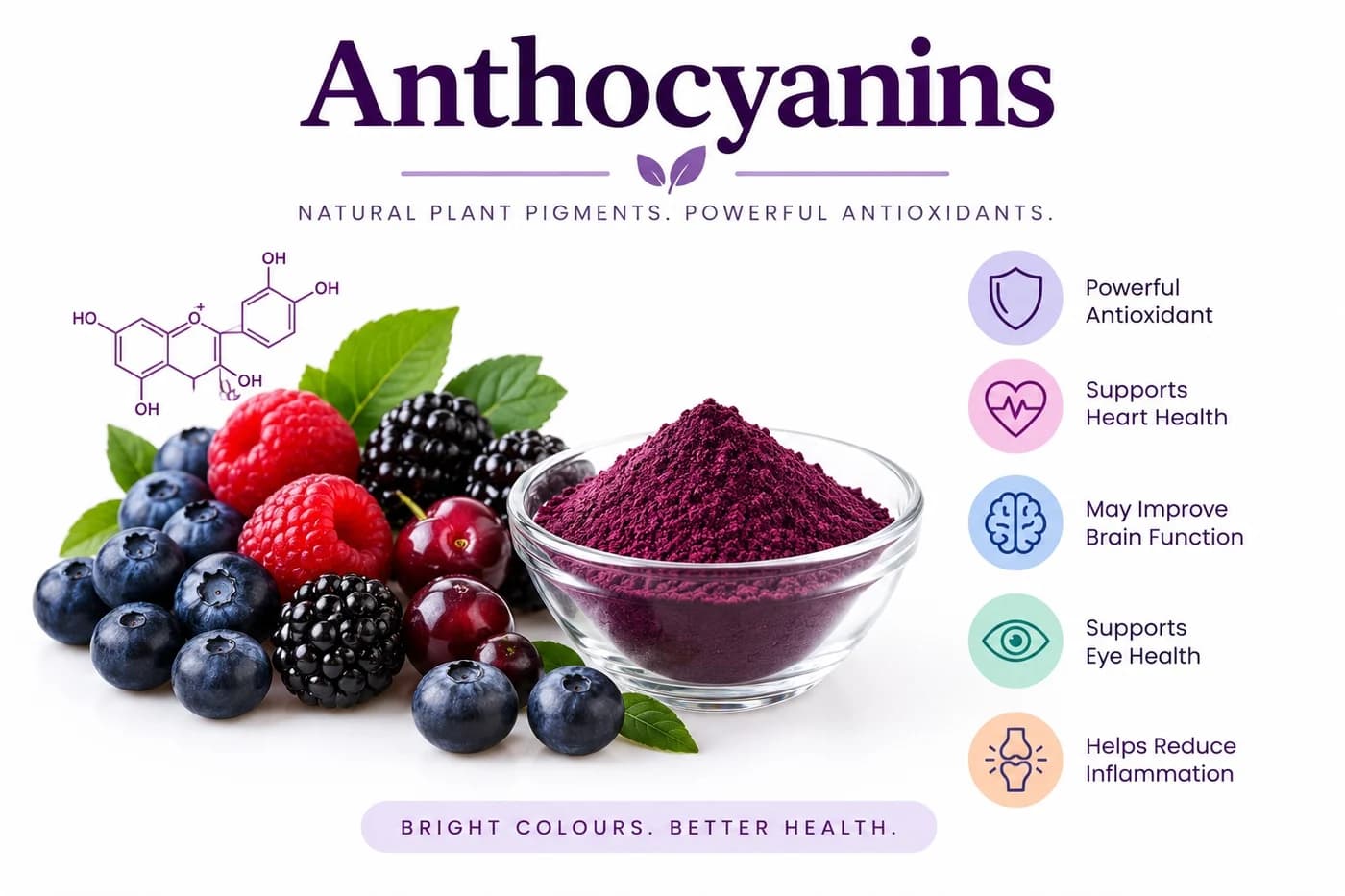
- Anthocyanins give jamun, berries and red cabbage their colour.
- Research on their health effects is still developing.
- You do not need to count or supplement them.
- A varied plate of colourful foods is a sensible approach.
The purple skin of jamun, the deep red of some berries and the colour of red cabbage share a family of plant pigments: anthocyanins. They help make food visually interesting, and researchers are studying their possible health effects. You do not need to extract, count or supplement them to enjoy those foods. A varied plate is a more practical goal than chasing the darkest ingredient in the shop.
What are anthocyanins?
Anthocyanins are water-soluble pigments belonging to the flavonoid group of plant compounds. Different pigments, amounts and surrounding conditions influence whether a food looks red, purple or blue. They are found in many fruits, vegetables and some grains.
The term anthocyanin is sometimes used for the whole group, but there are several individual compounds. A berry, a cabbage and a black rice variety do not contain an identical mixture. Colour is a useful clue, not a laboratory measurement of how much you will absorb.
They are not essential vitamins with a recognised deficiency disease. There is no standard daily anthocyanin requirement that everyone needs to calculate. That is different from nutrients such as vitamin B12 or calcium, for which specific intake guidance exists.
Foods you may already know
Jamun, dark grapes, blackberries, blueberries and some cherries contain anthocyanins. Red cabbage, purple sweet potato and pigmented rice varieties can contribute too. In brinjal, much of the purple pigment is in the skin, though variety affects the amount.
Not every red food owes its colour to anthocyanins. Tomato colour is largely associated with carotenoids such as lycopene, and beetroot contains betalain pigments. Those foods remain worthwhile. A nutrition plan does not need all its colours to come from one chemical family.
Use seasonal availability to guide your choices. Jamun in season may be easier to find than imported berries; red cabbage may fit a recipe while another vegetable suits your budget better. You do not need all the examples in one week. Variety can develop across ordinary meals.
What does the research suggest?
Studies have investigated anthocyanin-rich foods and extracts for blood vessel function, cholesterol, glucose regulation and other outcomes. Some controlled trials of blueberries have reported improvements in selected measures of vascular function. Other studies have found no clear change in particular outcomes, including blood pressure in some groups.
These results are interesting, but a change in one marker is not proof that a food prevents heart attacks or treats diabetes. The amount, preparation, participants and length of the trial affect what can be concluded. A finding from blueberry powder also does not establish that every purple supplement will have the same effect.
Observational studies can show that people eating certain foods tend to have different health outcomes. They cannot completely separate those foods from the rest of a person's habits. Someone who eats berries regularly may also eat more vegetables or exercise more. Controlled research helps, but the practical advice remains broader than one pigment.
Antioxidant activity needs context
Anthocyanins can show antioxidant effects in laboratory tests. The body, however, digests and transforms food compounds. The substances circulating after a meal may differ from the original pigment in the fruit. A strong result in a test tube cannot be read as a direct score for disease prevention in a person.
This is why rankings based on antioxidant capacity can mislead. They may make an extract look impressive without showing a meaningful benefit from normal use. You can appreciate the research without choosing foods according to a single number or expecting them to cleanse the body.
Whole foods also bring things besides pigments. Fruit supplies water, fibre and other nutrients; cabbage contributes its own mix. Those features are part of the reason to eat them. Reducing the food to one compound misses much of its value.
Put the foods into meals
Add a small portion of seasonal fruit to breakfast or have it as a snack. Fold shredded red cabbage into a cooked sabzi or a salad you can prepare safely. Use brinjal in a familiar curry rather than peeling every piece automatically if the skin is tender and enjoyable. A pigmented rice can add variety alongside dal and vegetables.
Frozen berries can work in curd or porridge when available and affordable. Dried fruit and juices are different servings: dried fruit is concentrated, while juice is easy to drink quickly and has less fibre than whole fruit. Purple colour does not make a sweetened juice an unlimited health drink.
Our diet and nutrition guide has more ideas for combining fruit and vegetables with enough protein and energy. Aim to make meals appealing, not to turn every one into a colour chart.
What happens during cooking?
Heat, storage and acidity can change anthocyanins and their colour. Red cabbage may look redder with lemon or vinegar and more bluish in a different environment. That visual change does not automatically mean the dish has become unhealthy.
Cooking can reduce some compounds while making food easier to eat. Avoid assuming raw is always better. A short sauté, steaming or cooking into a dish you enjoy can be more useful than leaving a raw vegetable untouched. Boiling in plenty of water and discarding it can lose water-soluble compounds, but there is no need to rescue every drop at the expense of a workable recipe.
Do supplements add something necessary?
No supplement is required simply because you eat few purple foods. Concentrated extracts differ from foods in dose and composition, and a mixed supplement may contain other active ingredients. Evidence for one preparation does not prove benefit for the category.
If your goal is cholesterol or glucose management, keep the established food, activity and treatment plan in place. A purple capsule cannot replace it. For everyday eating, choose a fruit or vegetable you enjoy and can use well. Anthocyanins are one interesting part of food variety, not a nutrient target that needs to take over your shopping.
Editorial sources
Frequently Asked Questions
Related Articles
Red Cabbage: Nutrition, Benefits and Easy Meal Ideas
Red cabbage is an affordable vegetable with fibre and vitamins, but it does not detox your body. Here is what it offers and how to use it.

Blueberries: nutrition, benefits and easy ways to eat them
Blueberries add fibre, vitamin C and colourful plant compounds to meals. Learn what studies show, how to choose them and simple ways to eat them.

Beetroot Benefits: Nutrition, Nitrates and Easy Meal Ideas
Beetroot provides folate, fibre, potassium and natural nitrate compounds the body can convert into nitric oxide. Learn easy meal ideas.
Antioxidant Rich Foods: A Simple Guide to Eating More of Them
Antioxidants protect your cells from everyday oxidative stress caused by pollution, sun exposure, and normal metabolism. See the easiest foods to build a.