
Black Rice Benefits: More Variety Without Replacing Every Grain
Black rice adds colour and wholegrain variety. Use it with satisfying accompaniments and realistic expectations about portions and health claims.
Key Takeaways
- Black rice gets its colour from anthocyanins.
- Wholegrain black rice offers more fibre than white rice.
- It does not treat diabetes or make portions irrelevant.
- Store cooked rice promptly.
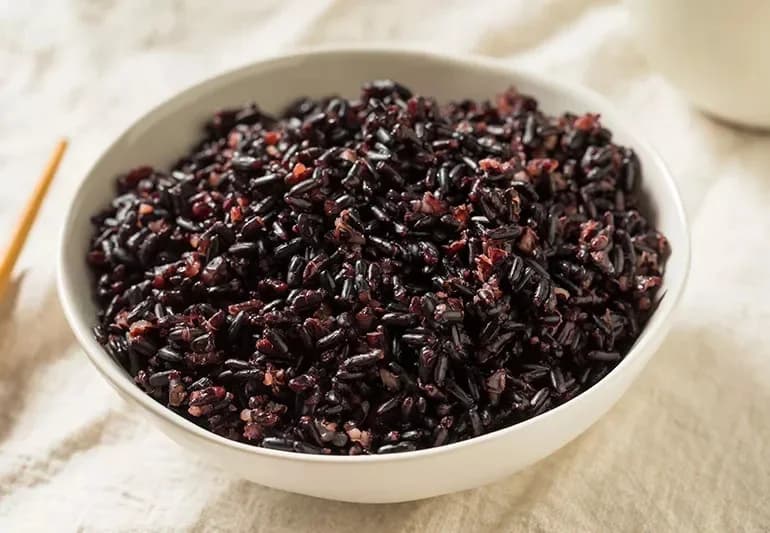
Black rice brings a nutty flavour, a chewy texture and a deep purple colour to the plate. It is often called forbidden rice, but there is nothing forbidden about enjoying it with dal and vegetables. Its bran contains pigments called anthocyanins, and wholegrain forms offer more fibre than many polished white rices. Those are useful features, not proof that it treats diabetes or makes portions irrelevant.
What makes the rice dark?
The colour comes largely from pigments in the outer layers of the grain. During cooking, the water and surrounding ingredients can turn purple too. That colour change is normal for pigmented rice.
Black rice varieties differ in grain size, stickiness, flavour and cooking time. Some are well suited to a savoury meal, while others are used in desserts or sticky preparations.
Choose a variety for the dish rather than expecting every packet to behave identically. A small trial batch is useful if it is new to your kitchen. Once you know how it cooks, it can become another grain option rather than a special diet project.
What does it contribute nutritionally?
Wholegrain black rice retains the bran and germ along with the starchy part of the grain. It supplies carbohydrate and some fibre, protein and minerals, with amounts varying by variety and processing.
It remains mainly a staple carbohydrate food. A serving does not replace the protein contribution of dal, beans, soy or another substantial food in the meal.
Dry and cooked weights also describe different amounts. Rice absorbs water, so 100 g dry rice is not nutritionally equivalent to 100 g cooked rice. When comparing portions or recipes, keep the form consistent rather than assuming a surprisingly low or high number applies to your bowl.
Anthocyanins are interesting, but claims need perspective

Black rice pigments show antioxidant activity in laboratory studies. Researchers also study how pigmented grains fit into dietary patterns.
That does not establish a reliable treatment for disease from one ordinary serving. Laboratory activity cannot tell you how much is absorbed or whether the same effect occurs in a person eating a varied meal.
Enjoy the colour as one reason for food variety. You do not need to compare every grain by an antioxidant score or eat black rice daily to protect your health. A familiar wholegrain you can afford and cook regularly can also be a useful choice.
A practical portion for an ordinary meal
Start with a serving similar to the amount of cooked rice that usually suits your appetite. For many people, roughly half to one cup can be a practical starting range within a meal, but needs vary.
Serve it with vegetables and a substantial protein food. Rajma, dal, chana or tofu can work, depending on the recipe and preference.
Do not add a second bowl simply because it is described as healthier. The advantage of a wholegrain choice is about what it contributes and replaces, not permission to ignore hunger and the rest of the plate. Larger appetites may need more food, but the reason should be the person's needs.
Can you eat it with diabetes?
Black rice contains carbohydrate and can raise blood glucose. Its colour does not make it a free food, and a low-glycaemic claim cannot predict every person's response to every variety.
Portion and the full meal remain useful. A moderate serving with pulses and vegetables is different from a very large bowl or a sweetened black-rice dessert.
If you monitor glucose, consider the actual meal rather than assuming every darker grain will suit automatically. Keep any treatment plan in place. You do not need to remove all white rice either; suitable portions and meal combinations can be managed with more than one kind of grain.
Cook for the texture you want
Rinse as appropriate for the product and follow the cooking directions for that variety. Wholegrain rice commonly takes longer than polished white rice and may need a different water amount.
Soaking can be useful for some varieties, but it is not a detox step. If you soak for an extended period in warm weather, use refrigeration rather than leaving wet grain out indefinitely.
Taste for doneness instead of relying only on colour. Let the cooked rice rest briefly before serving if the method calls for it. Mixing varieties is possible, but grains with very different cooking times may need separate cooking before they are combined.
Three ways to use the flavour
For a simple meal, serve black rice beside a familiar dal and a vegetable dish. The change is in the grain; the rest of dinner need not become elaborate.
For a packed meal, combine safely cooled rice with cooked beans, cucumber and herbs, then keep it properly chilled until eating. A dressing can be added according to taste.
In a dessert, judge the whole recipe. Coconut milk, sugar, jaggery and nuts can make a rich preparation even when the rice itself is wholegrain. It can still be enjoyable, but it has a different role from a plain rice serving.
Store cooked rice promptly
Cooked rice can become unsafe if left warm for too long. Cool leftovers quickly, ideally within an hour, and refrigerate rather than leaving the pot on the stove overnight.
Use shallow portions to help cooling. Reheat until steaming hot throughout when needed, and avoid repeated warming and cooling.
Reheating is not a dependable way to rescue rice that was poorly stored, because some bacterial toxins can persist. The colour of black rice does not protect it from the same handling issues as other cooked rice. Prompt storage matters more than whether it was freshly cooked in an expensive grain.
Buy it if it fits your kitchen
Black rice can cost more and take longer to cook. That may be worthwhile if you enjoy the flavour, but it is not an essential purchase.
Keep other grains in rotation and spend on vegetables and protein foods too. A plate with an affordable staple and good accompaniments is more useful than a premium rice served without enough other nourishment.
Let black rice add variety rather than replace every grain in the cupboard. Its best benefit may be helping you enjoy another wholegrain meal that you can repeat comfortably.
Editorial sources
Frequently Asked Questions
Related Articles
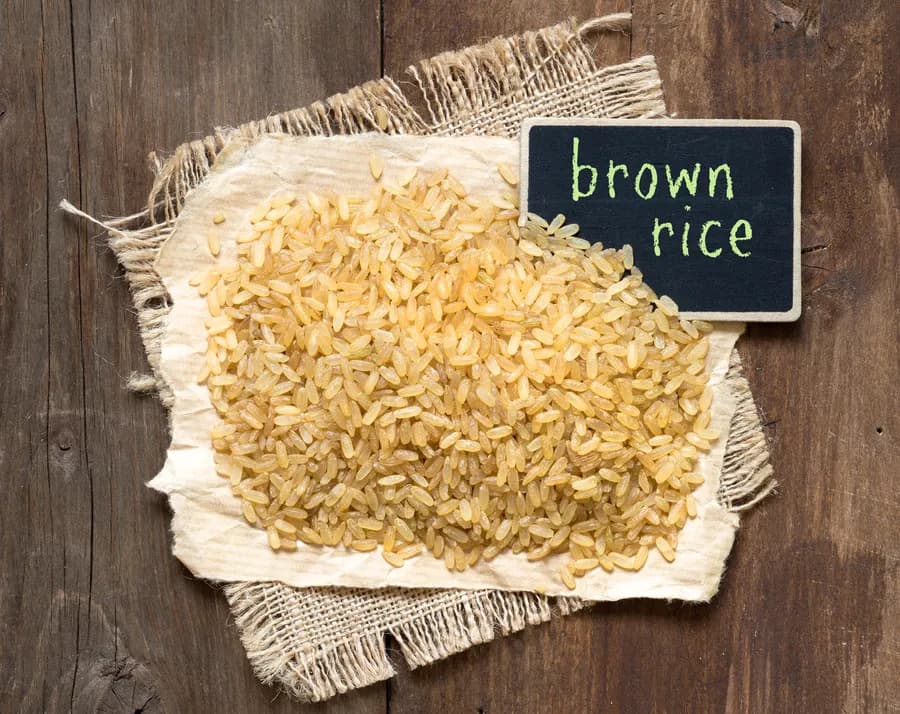
Brown Rice Benefits, Nutrition, Portions and Safety
Brown rice retains the bran and germ removed from white rice, so it generally provides more fibre, magnesium and a firmer texture.

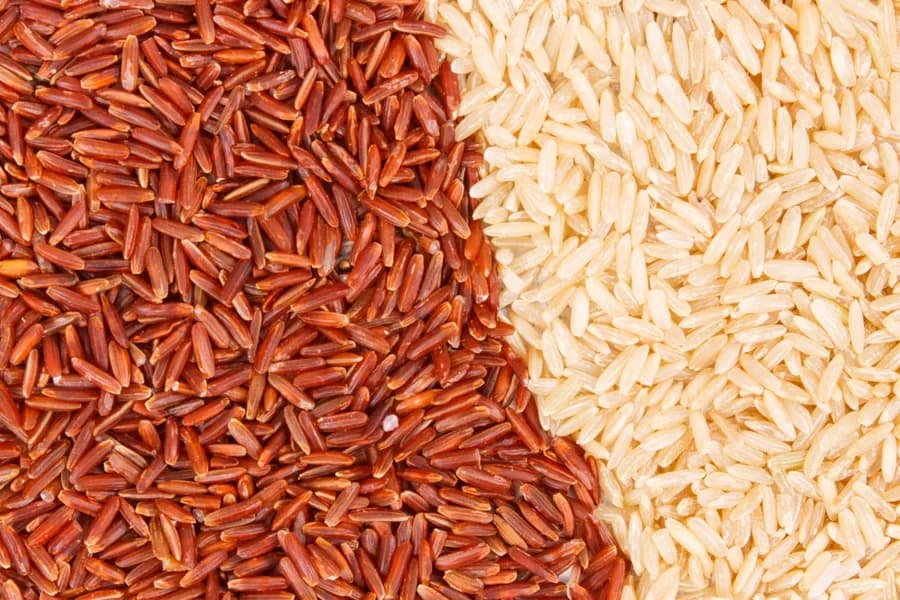
Brown Rice Versus White Rice: A Full Comparison
Brown rice and white rice come from the same grain — the milling process that strips away the bran and germ is what changes the nutrition, glycemic.

Does Rice Increase Weight? Look at the Meal Before Cutting It Out
Rice can fit different weight goals. Look at portions, protein, vegetables and the full day's eating before cutting it out.
Rice Bran Oil: Is It Really Heart-Friendly?
Rice bran oil is mostly unsaturated fat and works well for Indian cooking, but no oil is a medicine. Here is how to use it sensibly.