
Butter Benefits: Enjoy the Flavour, Keep the Amount Modest
Butter earns its place through flavour and texture. Keep portions modest and understand what changes when you choose another fat.
Key Takeaways
- Butter's main benefits are culinary.
- It is high in saturated fat, so keep portions small.
- Butter, ghee and margarine are not identical.
- Weight management does not require a ban.
Butter adds richness to toast, softens the taste of some dishes and plays a useful role in baking. Those are real benefits, but they are mainly culinary. It is a concentrated source of fat, much of it saturated, so eating more is not a route to better heart health. A small amount for a flavour you value can fit more comfortably than adding it automatically to every meal.
What butter actually contains
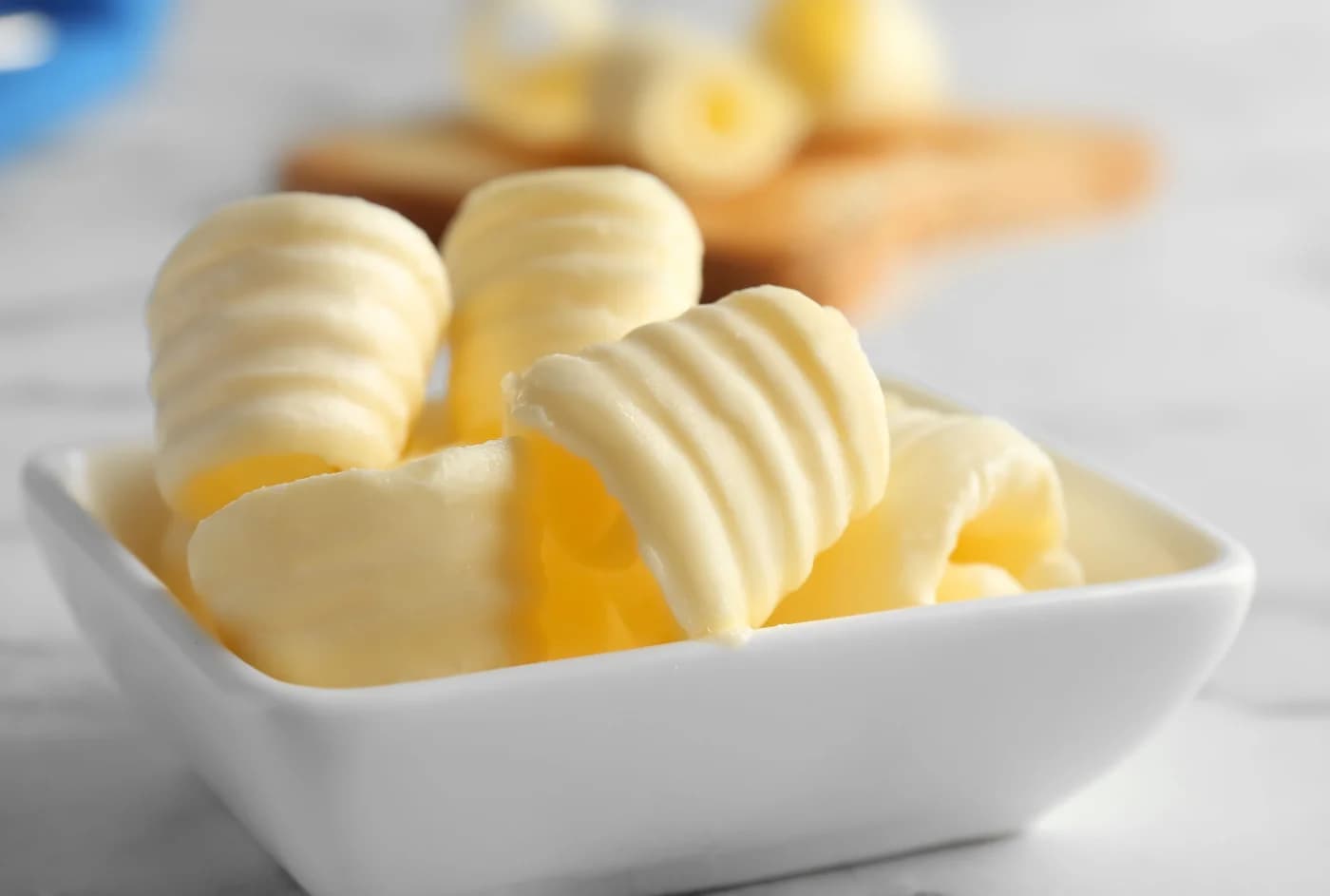
Butter is made by churning cream so that the fat comes together. It contains mostly milk fat, with some water and small amounts of milk solids. Salted butter also contains added salt.
It provides energy and some fat-soluble vitamins, but a normal small serving is not a strong reason to rely on it for vitamin intake. It contributes very little protein compared with milk, curd or paneer.
This matters when butter is described as a complete dairy food. A slice of butter on bread does not do the same nutritional job as a bowl of curd, even though both begin with milk. Use other foods to meet protein and calcium needs.
A little can do the culinary job
Butter carries flavour and can give a dish a familiar aroma. In baking, it also affects texture, aeration and how a dough or cake behaves. Replacing it is sometimes straightforward and sometimes requires a different recipe.
For everyday cooking, ask where the flavour matters most. A small finishing amount in a dish may be more noticeable than a large amount used alongside several other fats.
You do not need to add it because the dish is otherwise too healthy or incomplete. If a meal already tastes good, there is no nutritional requirement for an extra butter topping.
Know what your usual pat weighs
Butter commonly supplies around 700 to 750 kcal per 100 g. A practical example at 720 kcal per 100 g looks like this:
- About 36 kcal in 5 g
- About 72 kcal in 10 g
- About 144 kcal in 20 g
These are illustrative calculations, not the exact figures for every product. A heaped spoon or restaurant pat can be much larger than you assume. Measuring your usual amount once can help you recognise it later without weighing every meal.
For a slice of toast, spreading a smaller amount over the surface may provide enough flavour. If the butter is too hard to spread, follow safe product storage guidance rather than leaving the entire pack warm all day.
Saturated fat is the main nutritional limit
Too much saturated fat can raise LDL cholesterol, which contributes to cardiovascular risk. Butter is one source among others, including ghee, cream, rich cheese and some tropical oils.
The useful change is to replace some saturated fat with unsaturated fat, rather than simply remove one food and add another rich in the same type. Suitable plant oils, nuts and seeds can help with that change in the context of an overall diet.
If you use butter on toast, ghee on roti and cream in a curry, look at the combined routine. You may not need to eliminate all three, but reducing an everyday generous amount can be more meaningful than worrying about an occasional small serving.
Homemade and grass-fed still have limits
Homemade white butter may taste different from salted packaged butter and may contain no added salt. It remains a concentrated milk-fat food.
Grass-fed products can differ somewhat in fatty-acid and vitamin composition, but these differences do not establish that large servings protect the heart. The extra price is not a reason to ignore portion size.
Similarly, unsalted does not mean low in saturated fat. It changes the sodium contribution, which can be useful for some recipes or eating plans, while leaving the main fat consideration in place.
Butter, ghee and margarine are not identical
Ghee has most water and milk solids removed and is more concentrated in fat by weight. It has a different flavour and cooking behaviour, but it is also rich in saturated fat. Replacing butter with ghee is not automatically a cholesterol-lowering swap.
Margarines and spreads vary. Some soft spreads rich in unsaturated fats can reduce saturated-fat intake compared with butter; others have a different composition. The category name alone is not enough to judge the product.
For a recipe where butter's structure is important, use a tested alternative recipe rather than replacing quantities blindly. For a regular vegetable dish, a modest amount of suitable oil is often a simpler change.
Build breakfast around more than the spread
Toast with butter can be part of breakfast, but it may need something more substantial. Add a protein food such as curd, a suitable paneer preparation or another option you enjoy, and include fruit or vegetables across the meal.
For a sandwich, mashed beans, hummus or another suitable filling can provide flavour and body. You do not have to use a butter layer as well if the filling already works.
These are possible changes, not a requirement to redesign breakfast overnight. Start with the meal where butter is most automatic or where the portion has gradually become larger.
Weight management does not require a ban
Butter is energy-dense, which makes unnoticed extras relevant during fat loss. A small planned amount can still fit. What matters is the overall intake and whether meals remain satisfying.
There is no good reason to add butter to coffee to burn fat. Such drinks can add substantial energy while supplying little of the fibre and protein of a normal meal.
After a rich meal, return to ordinary eating rather than skipping food as punishment. A sustainable change might simply be using a smaller amount on weekdays and enjoying a favourite buttery dish occasionally.
Milk allergy and storage deserve attention
Butter contains milk-derived components and is not suitable for someone with a milk allergy. Small amounts of milk solids can still matter. Lactose intolerance is different; butter is generally low in lactose, but individual tolerance varies.
Store it according to the product's instructions, protect it from heat and use a clean knife. Homemade butter needs particular care because its preparation and storage life vary. Discard anything mouldy, rancid or stored questionably rather than trying to disguise the taste in cooking.
Butter can remain an enjoyable ingredient. Let the amount reflect its purpose in the dish, while the rest of your food provides the variety and nourishment that a spread alone cannot supply.
Editorial sources
Frequently Asked Questions
Related Articles
Ghee vs Refined Oil: Choose Healthy Fats Wisely
Understand ghee vs refined oil in simple words. Learn how to use fats in moderation, avoid reheated oils and choose better Indian cooking habits.
Is Ghee Good for Health? Healthy Fats Habit
Is ghee good for health? Learn how to use ghee in moderation, why portion size matters and how one small spoon can fit into Indian meals.
Buttermilk Calories: What’s Really in Your Glass?
Buttermilk calories depend on what is in your glass. Here is how plain chaas compares with shop-bought versions, and how to watch the sugar and salt.

Peanut Butter Benefits: Nutrition, Portions and Easy Meal Ideas
Peanut butter adds protein and mostly unsaturated fat to quick meals. How much to use, how to pick a jar and simple Indian-friendly pairings.
