
Is Ghee Good for Health? Healthy Fats Habit
Is ghee good for health? Learn how to use ghee in moderation, why portion size matters and how one small spoon can fit into Indian meals.
Key Takeaways
- Ghee is concentrated milk fat – even a small amount gives taste and aroma.
- Fat in a meal, including ghee, helps the body absorb vitamins A, D, E, and K.
- It's rich in saturated fat, so health guidance recommends using it in moderation.
- Reduce the ghee if the meal already has oil, fried food, or paneer cooked in fat.
- One small spoon on dal, roti, or khichdi is a reasonable everyday amount.
Ghee is a common part of Indian food. It goes on roti, dal, khichdi, paratha and even some sweets. But many people are confused. Is ghee good or bad?
The simple answer is this: ghee can fit into a healthy meal when used in a small amount. It becomes a problem when the portion becomes too much or when the rest of the meal is already high in fat.
The habit is not to fear ghee and not to overuse it. Use it with awareness. One small spoon in the right meal is very different from adding it freely to everything.
What Is Ghee?
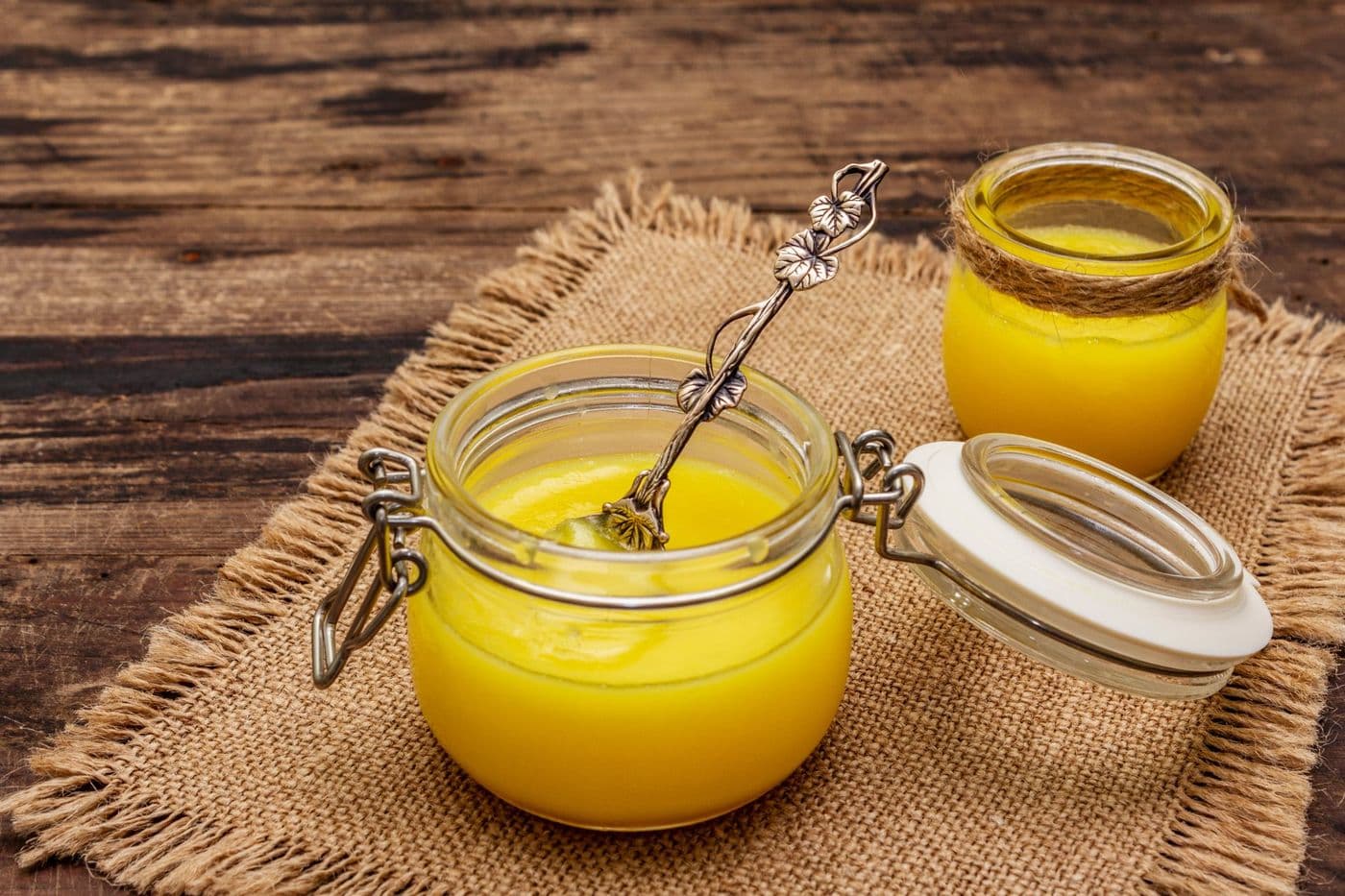
Ghee is a milk fat product made by heating butter or cream so that water and milk solids are mostly removed. Food standards describe ghee as a fat product derived from milk or milk products.
In normal kitchen language, ghee is concentrated fat. This is why even a small amount gives taste, aroma and richness.
Because it is concentrated, portion size matters. A little can be enough.
Why Ghee Is Not Automatically Bad
Ghee has been used in Indian kitchens for a long time. It adds flavour and makes simple food feel satisfying. For some people, a small amount of ghee on hot dal or roti makes the meal easier to enjoy.
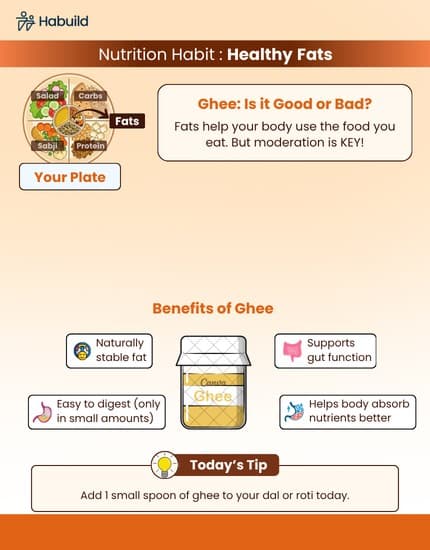
The image also mentions that ghee is naturally stable and can support the use of food in the body. This should be understood simply. Fat in a meal helps carry taste and supports the absorption of fat-soluble vitamins. These are vitamins like A, D, E and K, which need fat for better absorption. A basic grasp of ghee nutrition — mostly saturated fat plus trace fat-soluble vitamins — is enough to use it sensibly.
This does not mean you need a lot of ghee. It means a small amount of fat in a meal has a role.
Why Moderation Is Important
Ghee in moderation is the general rule here. Ghee is still a fat. It is also rich in saturated fat. Eating too much saturated fat over time is not good for heart health for many people. That is why health guidance says to use fats and oils in moderation and limit butter or ghee.
This is where many people make a mistake. They hear that ghee has benefits and start adding it to every meal in large amounts. That is not the habit we want.
A better habit is:
- Use a small spoon.
- Add it to simple food.
- Avoid adding it to already oily meals.
- Do not use ghee as a free pass to eat heavy food.
How Much Ghee Is Enough?
For most people, start with one small spoon in a meal. This can be added to dal, roti, khichdi or vegetables. If the meal already has oil, fried food, paneer cooked in oil or nuts, reduce the ghee.
Think of ghee as a finishing touch, not the base of the whole meal.
A useful daily check is: how many fats have already entered the meal? Oil in tadka, peanuts in poha, paneer in sabji, curd on the side and ghee on top all count. The body sees all of them as energy.
Easy Ways to Use Ghee Well
Add It to Dal
One small spoon of ghee in hot dal can improve taste. Ghee with dal is one of the simplest everyday combinations. It also makes simple dal feel more satisfying.
Add It to Roti
A light layer of ghee on roti is enough. The roti should not look soaked.
Add It to Khichdi
Khichdi with dal, rice, vegetables and one small spoon of ghee can be a comforting balanced meal.
Avoid Double Fat
Do not add ghee on top of food that is already fried or cooked in a lot of oil. For example, puri with extra ghee is not a daily habit.
Ghee and Digestion
Ghee for digestion is one of its most talked-about traditional uses. Some people feel that a small amount of ghee makes food feel smoother and easier to eat. But digestion is personal. What suits one person may not suit another.
If ghee causes heaviness, acidity or discomfort, use less or avoid it. If it suits you, keep it small. The goal is comfort, not force.
Also remember that gut health does not come from ghee alone. It comes from a daily pattern of balanced meals, vegetables, fiber, curd when suitable, enough water, good sleep and regular movement.
A Simple Ghee Habit
Try this today:
- Make your usual dal or roti.
- Add only one small spoon of ghee.
- Eat it with vegetables or salad.
- Notice how the meal feels.
- Do not add extra ghee again in the same meal.
This habit keeps ghee in your food without letting it take over the plate.
When Should You Be Careful?
Be careful with ghee if you have high cholesterol, heart disease, liver issues, gallbladder problems or a medical diet. In such cases, follow your doctor's or dietitian's advice.
Also be careful with packaged sweets, bakery foods and deep-fried snacks. They may contain hidden fats. Health guidance also asks people to reduce foods high in fat, sugar and salt because frequent intake can increase health risks.
Remember
Ghee is not a villain, and it is not magic. It is a traditional fat that can fit into your plate in a small amount.
Use one small spoon with dal or roti. Keep the rest of the meal simple. That is the healthy fats habit.
Related reads: Good fats vs bad fats: choose fats wisely · Dal chawal with ghee: a balanced Indian lunch
Ghee earns its place in Indian cooking when it's used in the right amount, and that amount matters more to a body that's moving regularly than to one that spends most of the day still. The fat in your dal or roti becomes fuel rather than excess when there's some activity to put it toward. Habuild's free yoga challenge is a simple way to bring that activity into your day alongside your ghee-in-moderation approach.
Frequently Asked Questions
Related Articles
Dals Cause Gas? Simple Digestion Tips
Dals cause gas for many people because of fibre and complex carbs. Learn simple ways to soak, cook and eat dal for better digestion.
How to Get Enough Protein on a Vegetarian Diet
Learn how protein rich vegetarian foods support energy, strength and fullness. Use the perfect plate habit with greens, grains and protein.

Iron rich foods need protein: 1/4th plate habit
Learn why iron-rich vegetarian foods work better when paired with protein and simple Indian meal habits.