
Dietary Fat: Choose the Type, Then Think About the Amount
Choose useful sources of fat and a suitable amount while keeping everyday meals enjoyable and balanced.
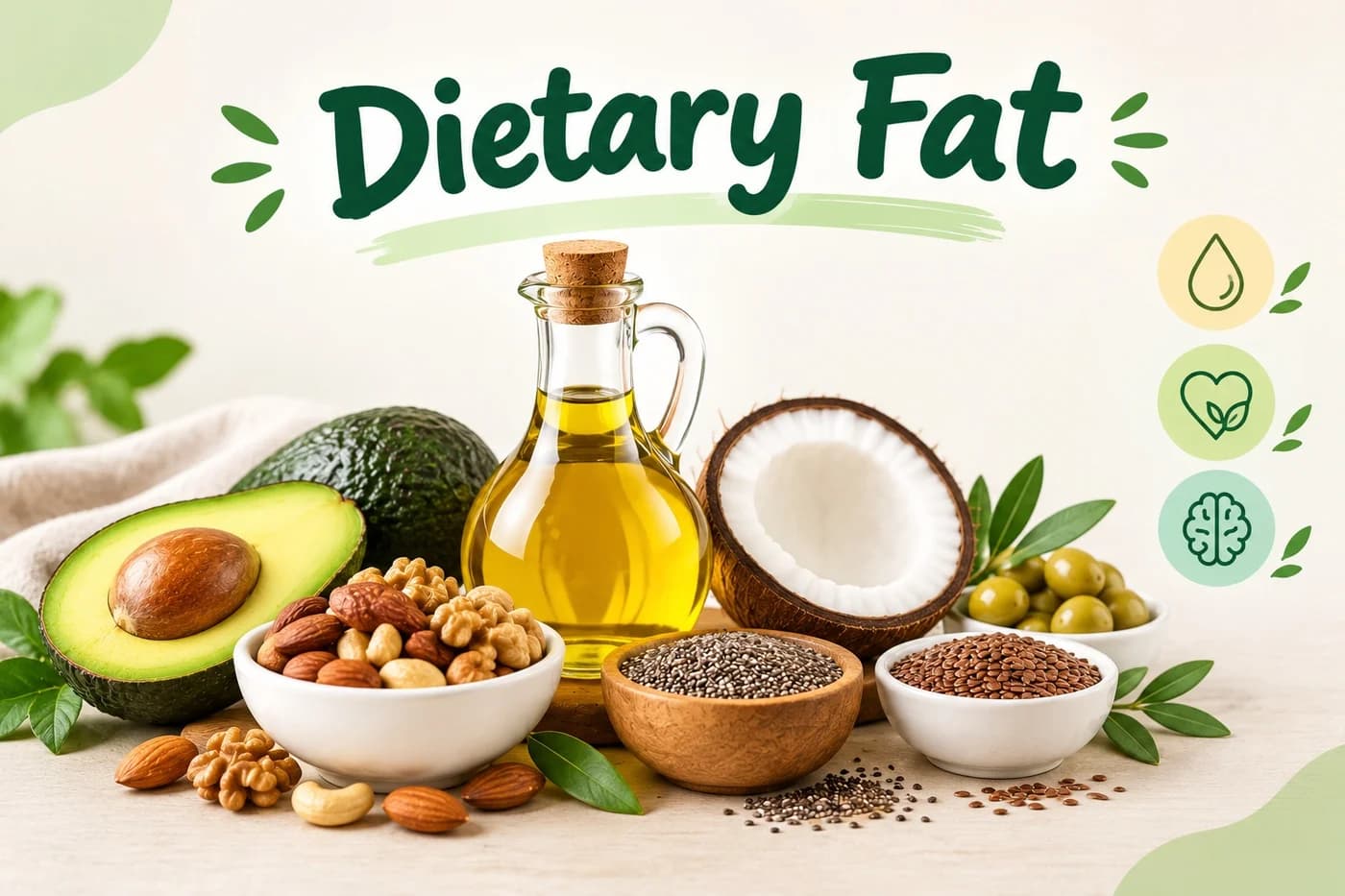
Key Takeaways
- The body needs some fat to function.
- Unsaturated fats are useful everyday choices.
- Keep saturated fat moderate and avoid trans fat.
- The amount of fat still matters.
Fat gives food flavour, helps with fullness and performs essential jobs in the body. It also provides more energy per gram than carbohydrate or protein. That combination is why advice to avoid all fat is unhelpful, and why calling an oil healthy does not make quantity irrelevant. A useful approach is to choose suitable sources and use an amount that fits the meal.
This guide is about fat in food. Body fat, blood cholesterol and dietary fat are related subjects, but they are not the same thing.
Why the body needs some fat
Dietary fat supplies essential fatty acids and helps the body absorb vitamins A, D, E and K. It is part of a nutritious eating pattern rather than an ingredient that should disappear completely.
It also changes texture and flavour. A little oil can help spices release their aroma and make vegetables more enjoyable. Nuts and seeds bring crunch as well as fat and other nutrients.
The question is therefore how fat is used. A modest amount that makes a meal appealing serves a different role from repeated generous additions that push other foods aside. Removing every trace is not necessary to improve either pattern.
Unsaturated fats are useful everyday choices
Monounsaturated and polyunsaturated fats are found in many vegetable oils, nuts and seeds. These foods differ in their exact composition, but can all contribute to the overall pattern.
For a vegetarian household, examples include groundnut oil, suitable cooking oils, peanuts, walnuts, sesame and flaxseed. You do not need an imported oil to include unsaturated fat.
Whole nuts and seeds also supply fibre and other nutrients, while oil is more concentrated fat. They are useful in different ways rather than identical substitutes. A spoonful of oil in cooking does not replace a substantial protein food or a serving of vegetables.
Saturated fat is worth keeping moderate
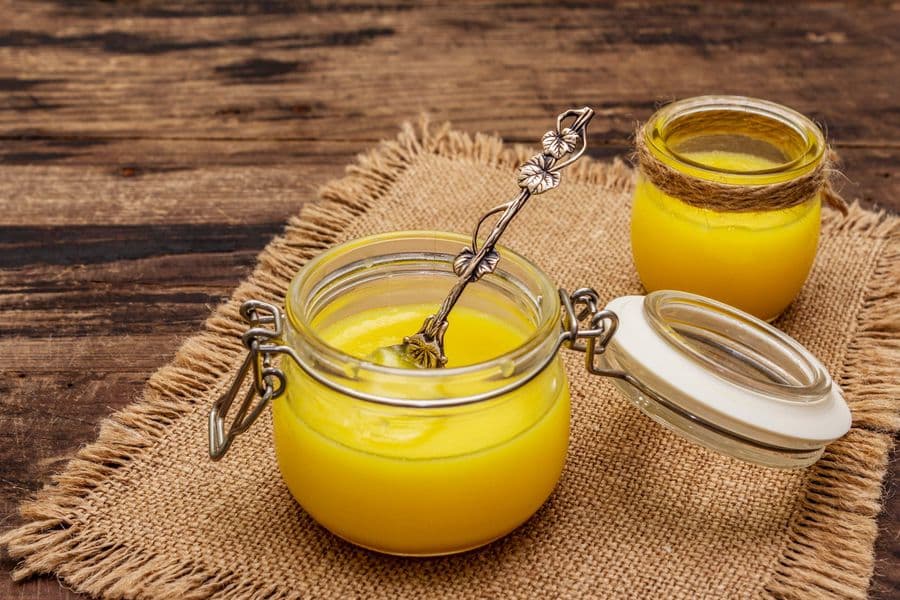
Ghee, butter, cream, rich dairy products, coconut oil and palm oil provide more saturated fat than many other plant oils. Saturated fat can raise LDL cholesterol, especially when it takes the place of unsaturated fat.
Replacing some of it is more helpful than simply adding another healthy food to the same rich routine. For example, use a suitable unsaturated oil for some cooking where you usually use generous butter or ghee.
You do not need to remove a tiny amount of ghee from every meal to make a useful change. Look first at the repeated large sources: rich gravies, frequent bakery foods, deep-fried snacks and several added fats in the same dish.
Trans fat deserves a different response
Industrially produced trans fat is associated with cardiovascular harm and is best avoided. It has historically been used in some partially hydrogenated fats and commercial foods.
A crisp or flaky texture does not by itself prove that a product contains trans fat. Equally, a homemade description does not tell you which fat was used.
For foods eaten often, use available ingredient information and choose alternatives when partially hydrogenated oil is present. You do not need to turn an occasional snack into a forensic task; make the regular source of fat a sensible one and keep heavily fried or bakery foods occasional.
The amount still matters
Fat supplies about 9 calories per gram, compared with about 4 from protein or carbohydrate. This makes oils, nuts and rich spreads energy-dense even when their fat profile is favourable.
A free pour into the pan can become much larger than expected. Measure the oil for a shared dish occasionally to understand your usual amount. You need not keep weighing every meal after that.
For nuts, use a small handful rather than repeatedly eating from a large bag. Portion awareness is especially useful when weight management is a goal, but it should not become a reason to under-eat or fear a nutritious food.
Low-fat does not automatically mean better
Removing fat can change the rest of a product. A low-fat biscuit may still contain considerable refined flour and sugar, while a full-fat nut is a very different food.
Compare foods that serve the same purpose. A lower-fat plain curd may be useful if you want less saturated fat, but a sweetened dessert yoghurt is not equivalent simply because its fat percentage is lower.
Taste and satisfaction matter too. If a small amount of a richer ingredient makes a meal enjoyable, it may fit comfortably. The goal is a better overall pattern, not the lowest possible number on every packet.
Use cooking methods to control repeated additions
Steaming, simmering, pressure-cooking and modest pan cooking give you alternatives to deep-frying. A dish can still have a small tadka or finishing ingredient for flavour.
Add oil deliberately rather than topping up whenever a pan looks dry. A little water and appropriate heat may help vegetables cook without repeated pours, depending on the recipe.
Do not leave oil smoking or reuse it indefinitely for frying. Overheating and repeated use degrade it. A high smoke-point claim does not make frequent deep-frying the best way to use an otherwise suitable oil.
What about omega-3 fats?
Flaxseed, chia seeds and walnuts provide the plant omega-3 fat ALA. The body converts only some ALA to the longer-chain forms EPA and DHA.
These foods can be useful additions, but they do not need to be piled onto every meal. Ground flaxseed in curd or a small portion of walnuts can fit according to your preferences.
Supplements are a separate decision. A capsule does not replace a varied diet, and a food containing omega-3 does not automatically treat high triglycerides or another medical condition. Keep the claim matched to the actual food and purpose.
Find a change you can keep
Look at where the largest repeated additions happen. It might be butter on toast, cream in a gravy or several fried snacks while cooking dinner.
Change one of those first. Keep enough food and flavour so the meal remains satisfying, and include vegetables, pulses or another protein source alongside the staple.
Dietary fat works best as part of the meal, rather than as a nutrient to eliminate or add without limit. Better sources and a comfortable amount can coexist with ordinary family cooking.
Editorial sources
Frequently Asked Questions
Related Articles
Ghee vs Refined Oil: Choose Healthy Fats Wisely
Understand ghee vs refined oil in simple words. Learn how to use fats in moderation, avoid reheated oils and choose better Indian cooking habits.
Mustard Oil: Cooking, Fat Profile and Safety
How to choose and use mustard oil: kachi ghani vs refined, fat profile, erucic acid, safe heating, portions and topical use.

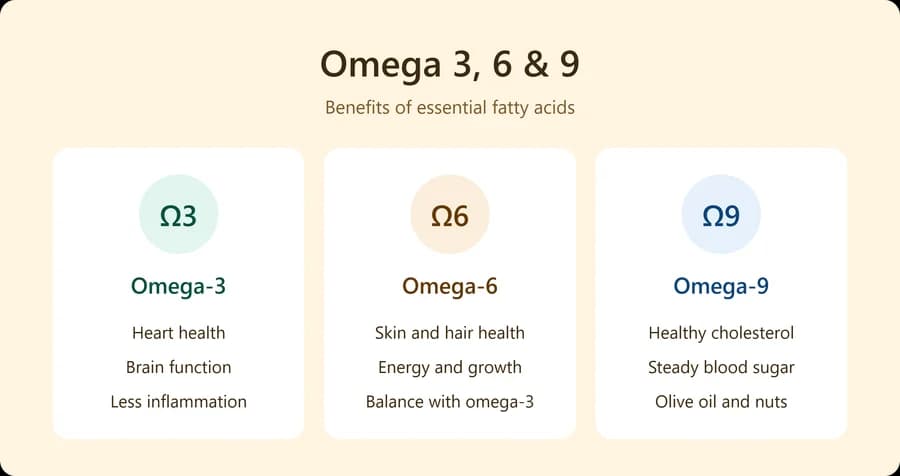
Omega 3 6 9 Benefits: How These Fats Differ and Where to Find Them
Omega-3, 6 and 9 are different fats with different jobs. Learn the vegetarian food sources and whether a 3-6-9 capsule is worth buying.
Is Ghee Good for Health? Healthy Fats Habit
Is ghee good for health? Learn how to use ghee in moderation, why portion size matters and how one small spoon can fit into Indian meals.