
Hydrogenated Vegetable Oil: What Partial and Full Mean
Partial and full hydrogenation create different fat profiles. Learn what the distinction means and make practical choices about cooking fats and frequent snacks.
Key Takeaways
- Partial hydrogenation is what creates trans fat.
- Fully hydrogenated oil is a different product.
- Limit vanaspati and repeatedly fried snacks.
- Simple cooking-fat swaps support heart health.
Hydrogenated vegetable oil can sound like a single ingredient with a single health effect. It is actually a description of how an oil has been changed. The distinction between partially and fully hydrogenated oil is important, especially when discussing trans fat.
For everyday eating, the useful aim is to minimise industrial trans fat and use mainly unsaturated fats in appropriate amounts. You do not need to understand a factory process in detail, but a few distinctions make food choices clearer and prevent misleading shortcuts.
Why manufacturers hydrogenate oil
Many vegetable oils are liquid at room temperature. Hydrogenation changes their fat structure and can make them firmer. This can help produce the texture, shelf life and handling needed in some bakery fats, spreads and processed foods.
The process does not turn oil into a protein or add a vitamin advantage. Its main purpose is functional: making the fat behave differently in a recipe or product.
A food can therefore contain hydrogenated oil because the manufacturer wants a particular texture, rather than because it improves nutrition. The health question depends on which process was used and what the final fat contains.
Partial hydrogenation is the trans-fat concern
Partial hydrogenation can create industrial trans fatty acids. These fats raise LDL cholesterol and can also lower HDL cholesterol, contributing to cardiovascular risk. They are not something the body needs from food.
Historically, partially hydrogenated oils were widely used in some shortenings, margarines and bakery products. Formulations and rules have changed in many places, so an old claim about every product in a category may no longer be accurate.
The key term is partially hydrogenated. A general reference to vegetable fat does not reveal the exact process or trans-fat amount. Equally, a product being vegetarian does not establish a favourable fat profile.
Fully hydrogenated oil is different
Full hydrogenation changes the oil more completely and produces a highly saturated fat with very little trans fat. It should not be described as the same thing as a partially hydrogenated oil.
That distinction does not make every product containing it a healthy everyday choice. It may be combined with other fats and used in a food that also contains substantial saturated fat, sugar or salt.
A no-trans-fat claim addresses one concern. It does not tell you the entire nutritional quality of a biscuit, cream filling or snack. Consider the overall food and how often you eat it.
Where vanaspati fits
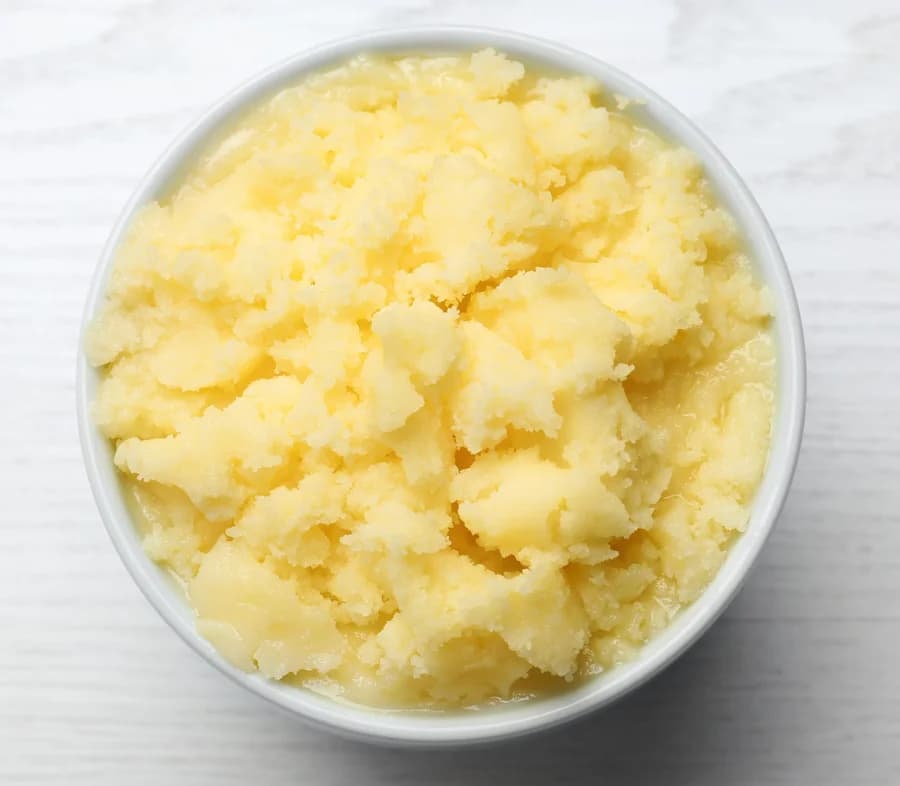
Vanaspati is a familiar solid vegetable fat in India, historically associated with partial hydrogenation and trans fat. Modern products may use different formulations to meet regulatory requirements, so the name alone should not be used to invent a precise trans-fat content.
FSSAI has introduced progressively tighter limits on industrial trans fat, including the 2% limit that took effect in 2022. This is an important public-health measure, but it does not make every food made with solid fat a recommended daily staple.
There is also a difference between vanaspati and dairy ghee. Replacing one with unlimited ghee does not solve every heart-health concern because ghee is high in saturated fat. The useful replacement often involves more unsaturated fat, not simply a different solid fat.
Choose the everyday cooking fat sensibly
For routine cooking, a suitable liquid vegetable oil can provide more unsaturated fat than many solid fats. Options used in Indian kitchens include groundnut, mustard, sunflower, rice bran and other oils, with different flavours and cooking characteristics.
You do not need an expensive imported oil to make a useful change. Choose one suited to the dish, measure rather than pour freely and keep the amount appropriate for the whole meal.
Replacing some saturated fat with unsaturated fat can help improve cholesterol. Adding more oil on top of the same rich diet does not produce the same result. Our guide to saturated and unsaturated fats explains this practical swap.
Shopping does not need to become an investigation
For a packaged food you buy often, the fat ingredients and nutrition information can help compare similar products. A partially hydrogenated oil is a useful reason to choose an alternative. Saturated fat and the amount you actually eat also matter.
Focus on repeated purchases rather than trying to audit every occasional bite. If biscuits are a daily snack, changing that routine can matter more than spending a long time choosing between two very similar packets.
For unpackaged bakery foods, you may not know the precise fat blend. You do not need laboratory certainty to make a useful decision: keep rich pastries and fried snacks occasional, and choose more substantial everyday foods when possible.
Replacements that make a difference
A good swap should be practical and enjoyable. Replacing a snack with something you will not eat is unlikely to change the routine for long.
Try a change that fits the occasion:
- Have roasted chana or a modest portion of nuts instead of a daily bakery snack.
- Choose curd and fruit when you want something quick between meals.
- Use a measured liquid oil for a home-cooked sabzi rather than adding a large amount of solid fat.
- Keep pastries or rich sweets for occasions when you specifically want them.
Nuts are energy-dense too, so portion still matters. The point is to improve the overall food choice, not declare a new food unlimited.
Repeated frying is a separate issue
An oil does not have to be hydrogenated to become unsuitable through poor handling. Repeated heating, long frying times and deterioration can create unwanted breakdown products.
Avoid repeatedly topping up a pot of old frying oil and using it indefinitely. For home cooking, shallow cooking, steaming or other methods can reduce the need for frequent deep-frying.
A high smoke point is not a guarantee that an oil can be reused without limit. Store fresh oils away from heat and light, and discard rancid or badly deteriorated oil rather than trying to disguise its smell with spices.
Keep the message proportionate
One biscuit containing an unfamiliar fat does not mean damage has occurred. The larger issue is repeated exposure and the overall eating pattern. Industrial trans fat deserves reduction, while saturated fat and total energy still need context.
Keep the distinction clear: partial hydrogenation is associated with trans fat; full hydrogenation mainly creates saturated fat. Then make the everyday choice simpler—use suitable oils modestly and let meals built from ordinary foods take up more space than frequent rich snacks.
Editorial sources
Frequently Asked Questions
Related Articles
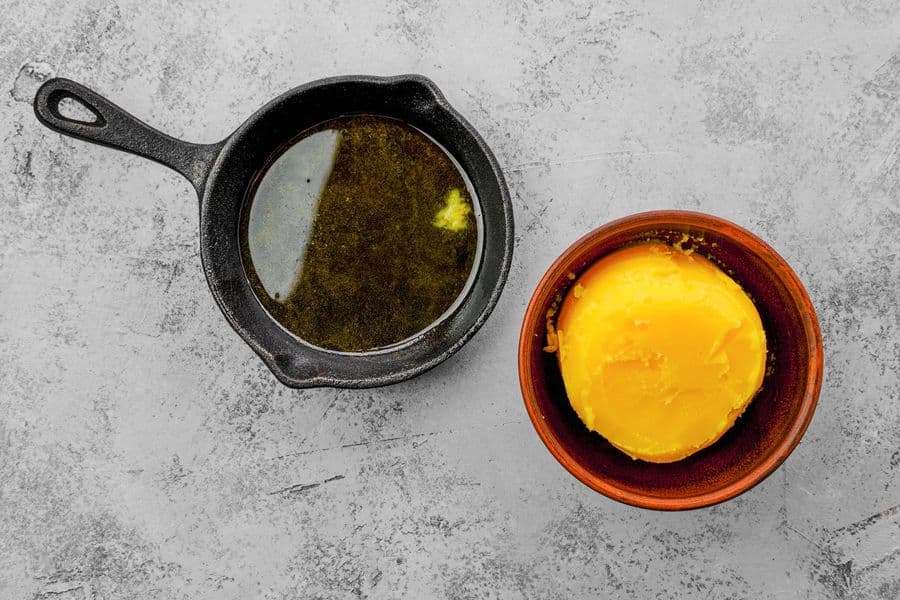
Ghee vs Refined Oil: Choose Healthy Fats Wisely
Understand ghee vs refined oil in simple words. Learn how to use fats in moderation, avoid reheated oils and choose better Indian cooking habits.
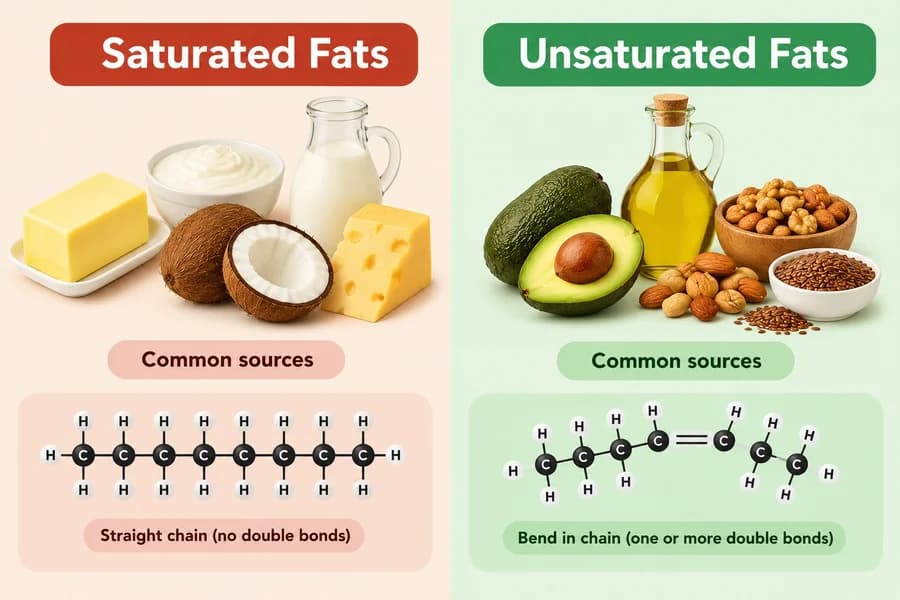
Saturated vs Unsaturated Fats: What Matters for Your Heart
Not all fats behave the same way in your body. Here is what saturated and unsaturated fats mean and the simple kitchen swaps that support heart health.

Saturated Fat: Indian Food Sources, Daily Limits and Simple Swaps
Saturated fat raises LDL cholesterol. See where it hides in Indian meals, what the WHO 10% limit means in grams and easy swaps.

High-Cholesterol Foods: What to Limit and What to Eat Instead
Look beyond a food's cholesterol number. Learn which everyday fats to reduce and what to put on the plate instead.