
Saccharin: What This Sugar Substitute Does
What saccharin does in tea and food, with a clear explanation of sugar-free claims.

Key Takeaways
- Saccharin is a sweetener, not a type of sugar.
- It can reduce sugar in tea but does not make desserts healthy.
- Follow safety guidance on acceptable intake.
- Reducing overall sweetness is a useful long-term aim.
If you have searched for “sacrine sugar”, you are probably looking for saccharin, a sweetener used in some tablets, powders and sugar-free products. It gives sweetness in a tiny amount without acting like ordinary sugar. That can be useful in a cup of tea, but it does not automatically make a biscuit, dessert or diet healthier.
Saccharin is a sweetener, not a kind of sugar
Saccharin is a high-intensity sweetener, meaning a small amount tastes much sweeter than the same weight of table sugar. It is used in quantities that contribute little or no energy from the sweetener itself.
Tabletop products may contain additional ingredients to make a tiny dose easier to measure. A tablet or spoonful of a blend therefore needs to be used as intended; it is not interchangeable with a spoonful of sugar by weight.
Some people notice a bitter or metallic aftertaste. That is one reason products may combine sweeteners. You do not have to train yourself to like it: having less sweet tea or choosing an unsweetened drink is another option.
Where it can be helpful
Replacing sugar in a frequently consumed drink reduces the sugar added to that drink. If someone takes several sweetened teas a day, that can be a practical change while they get used to a less sweet taste.
The benefit depends on what it replaces. Adding a saccharin tablet to a drink that was already unsweetened does not improve the diet. Nor does switching the sweetener help much if the drink is always accompanied by a large sugary snack.
Try to keep the decision specific. “I want less sugar in my chai” is a workable goal. “I want this tablet to control my weight” gives the sweetener a much bigger job than it can reliably do.
What does safety guidance mean?
Food-safety authorities assess saccharin for permitted uses and acceptable intake. FDA information describes it as an approved sweetener in the United States under specified conditions. This does not mean unlimited use is advisable or that every sweetener sold informally has been assessed.
The acceptable daily intake is a safety reference, not an amount to aim for. Most readers do not need to calculate a personal maximum or increase consumption to reach one.
Use packaged tabletop products in the intended amount. Avoid buying an unidentified loose powder or guessing a spoonful of concentrated sweetener. Such concentrated products are easy to measure incorrectly and offer no advantage for ordinary home use.
Why weight-loss guidance can sound different
WHO advises against relying on non-sugar sweeteners for long-term weight control or prevention of chronic disease. Its recommendation is about whether they are a useful long-term strategy, rather than a finding that all permitted sweeteners are poisonous.
The WHO recommendation does not apply to people with pre-existing diabetes, whose needs require separate consideration. It also does not replace safety assessments for individual sweeteners.
For a reader, the distinction is manageable: a sweetener may replace sugar in one food without becoming the foundation of a weight-loss plan. Regular meals, activity and an overall pattern you can sustain still matter.
If you have diabetes
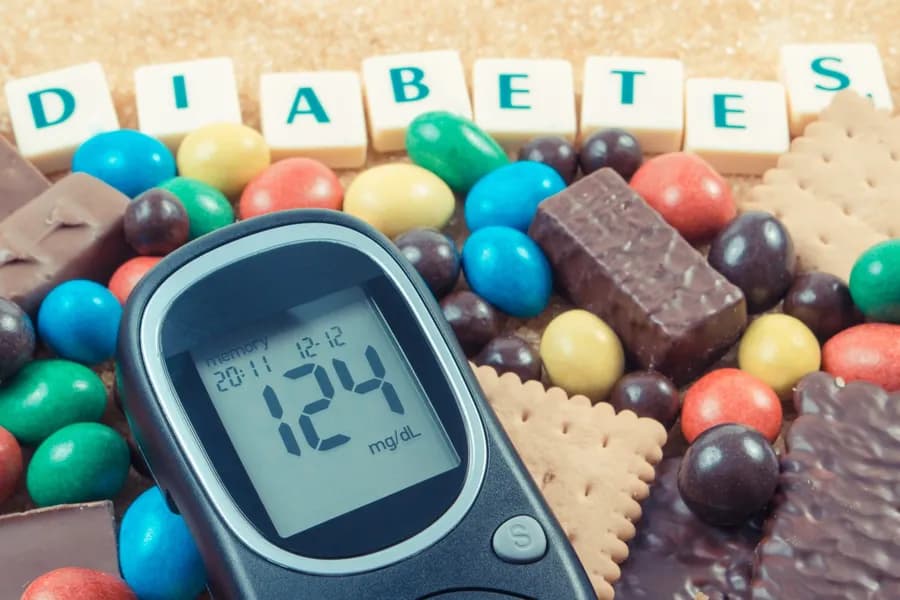
Saccharin itself does not provide the carbohydrate that sugar does. However, the food carrying it may contain flour, milk, starch or other carbohydrate sources. A “sugar-free” biscuit can still affect glucose and contribute energy.
Think about the complete food and the amount you eat. Two small biscuits are a different portion from finishing a packet because it says sugar-free. The claim does not turn the product into a food that can be eaten freely.
Sweeteners also do not treat diabetes or replace medicines. If you use glucose readings to guide food choices, judge the whole meal in your usual plan rather than assuming a sweetener label predicts its effect.
Cooking is different from sweetening tea
Sugar contributes more than sweetness in baking: it affects texture, browning and volume. Replacing it with a few saccharin tablets will not necessarily produce the same cake or biscuit.
For a drink or a small bowl of curd, adding a little sweetener is relatively straightforward. For baked recipes, use a recipe designed for the product instead of improvising a one-for-one substitution.
You may find less sweetening is needed than expected when fruit, cinnamon or cardamom already contributes flavour. For example, ripe banana can make plain oats taste sweeter, although the banana still contributes carbohydrate and is not a direct technical substitute in every recipe.
An easier way to reduce sweetness overall
If every drink needs to taste intensely sweet, try changing one at a time. Use a little less sugar or sweetener in the tea you make at home, or keep one drink unsweetened while leaving another as you enjoy it.
There is no need for a dramatic challenge. Gradual changes can be easier to live with, especially in a household where tea is shared.
Dessert can remain dessert. A small portion of a sweet you enjoy may be more satisfying than a larger portion of a substitute you dislike. The aim is a workable routine, not a competition to remove every trace of sweetness.
What about children?
Children do not need a daily sweetener habit. Water and age-appropriate plain milk can be usual drinks, with sweetness coming mainly from ordinary foods such as fruit.
Avoid using sugar-free products as a blanket sign that a food is suitable for unlimited snacking. Meals, variety and dental care remain relevant whatever sweetener a product contains.
For adults too, saccharin is best understood as a tool with a narrow purpose. It can sweeten a food using very little, but the quality of the full diet depends on much more than that single ingredient.
Editorial sources
Frequently Asked Questions
Related Articles
Is Diet Coke Healthy? Sugar, Sweeteners, Teeth and Caffeine
Diet Coke has almost no sugar, but it is still an acidic soft drink. What the swap does, what it does not, and how to keep it occasional.

Natural Sweeteners: What the Label Really Means
"Natural" on a sweetener label does not mean low sugar. See how honey, jaggery, coconut sugar, stevia and monk fruit really compare.

Monk Fruit Sweetener: Uses, Blends and Safety
Monk fruit extract is intensely sweet, but most packets are blends. Here is what the label tells you about taste, glucose and digestion.
Jaggery vs Sugar: Which Sweetener Is Actually Healthier?
Jaggery is often seen as the natural, guilt-free option, but nutritionally that’s only partly true — both are concentrated carbohydrates that affect.