
Seaweed: Nutrition, Iodine and Safe Use
Seaweed adds flavour and minerals, but its iodine content varies hugely by type. Learn how nori and kelp differ and who should be careful.

Key Takeaways
- Seaweed is one of the richest food sources of iodine, which the thyroid needs.
- Iodine varies hugely by type: kelp and kombu usually far exceed nori.
- Too much iodine can disturb thyroid function as surely as too little.
- Kelp supplements and kombu broth can deliver large, unpredictable iodine doses.
- People with thyroid disease or who are pregnant should ask before regular use.
Seaweed can add a savoury flavour, minerals and texture to vegetarian meals. It is also one of the most concentrated food sources of iodine, and that is exactly why more is not always better. Iodine content varies enormously between species, harvest areas and products, so regular large portions or kelp supplements can push intake well beyond what the thyroid needs.
What does seaweed offer?
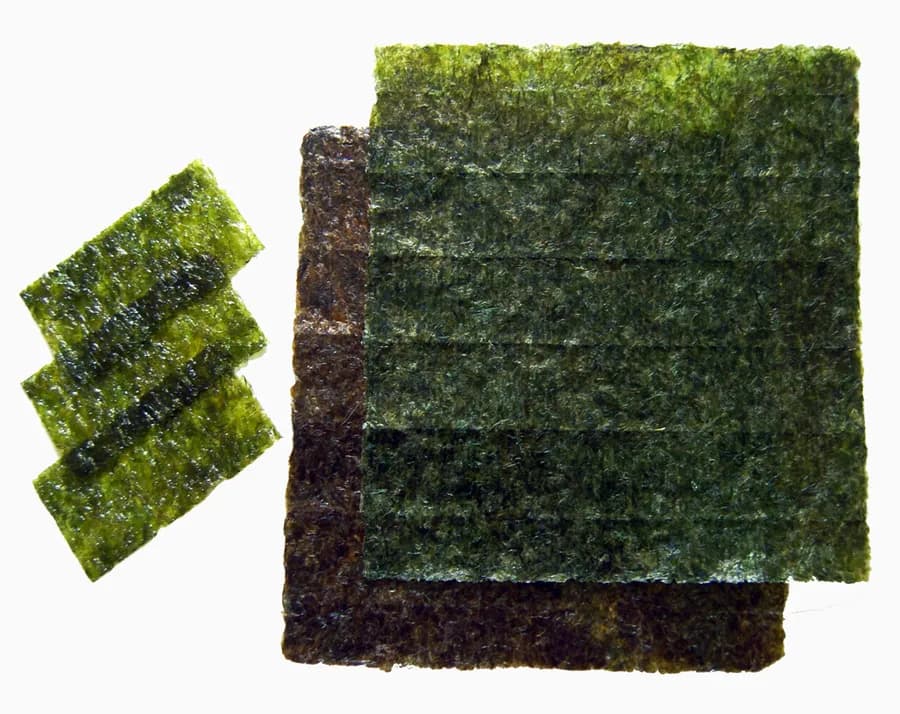
Edible seaweeds such as nori, kombu, wakame and kelp provide iodine, some fibre, minerals and plant compounds. Nutrition cannot be generalised across every type. A small sheet of nori used as a garnish is not a meaningful source of protein, and claims that seaweed melts fat or detoxifies heavy metals are not established.
Why iodine needs the right amount
The thyroid uses iodine to make hormones that control metabolism and support brain and bone development. Too little causes problems such as goitre, but too much can also disturb thyroid function. A food that is a very strong iodine source therefore needs attention to portion. For other ways to meet your needs, see our guide to iodine-rich foods.
Nori and kelp are not the same
A US analysis of 12 commercially available seaweeds found iodine ranging from about 16 micrograms per gram in nori to over 8,000 micrograms per gram in a processed kelp granule product. Kelp and kombu are usually at the high end. Because dried seaweed has lost most of its water, a small-looking piece can still hold a lot of iodine.
Labels rarely tell you
Food labels usually do not list iodine for naturally rich foods like seaweed. Without a stated amount, you cannot reliably calculate intake from the pack. Soaking or boiling moves some iodine into the cooking liquid, so drinking kombu broth still adds to your intake.
How to use seaweed sensibly
- Sprinkle nori flakes or a small sheet over rice, soup, salad or roasted vegetables for flavour.
- Treat kombu and kelp as occasional ingredients rather than daily ones.
- Build the rest of the meal around tofu, beans, grains and vegetables, which supply most of the energy and protein.
- Choose products that state the species, origin and manufacturer; vague "marine greens" labels are hard to judge.
- Check ready-made seaweed salads and snacks for added salt, sugar, oil, sesame and fish-based ingredients.
- Rotate seaweed with other savoury flavours such as mushrooms and familiar spices.
Store dried seaweed sealed and dry. Once soaked, refrigerate it like any moist food and discard anything mouldy.
Be careful with kelp supplements
Kelp tablets are often marketed for thyroid support, weight control or hair health. These claims are not a reason to add concentrated iodine without knowing you need it. Seaweed can also take up heavy metals such as arsenic, cadmium and lead from its environment, so sourcing and testing matter more with concentrated products than with an occasional food portion. For most households, iodised salt used in moderation remains a controlled, practical iodine source.
Who should be cautious?
- Thyroid conditions: People with thyroid disease, past thyroid treatment, or on iodine-containing medicines such as amiodarone should ask their doctor before eating seaweed often. Our hypothyroidism diet guide covers food and medicine timing.
- Pregnancy and breastfeeding: Iodine needs rise, but excess can also affect the baby's thyroid. Use an iodine source your doctor recommends rather than kelp supplements.
- Blood pressure: Some seaweed snacks are high in sodium, so compare labels.
- Allergy: Reactions are uncommon. Breathing trouble, swelling or faintness needs urgent care.
If a thyroid test changes after you start a kelp product, tell your doctor the product name and how often you used it.
Editorial sources
Frequently Asked Questions
Related Articles
Iodine Rich Foods: The Best Dietary Sources of Iodine
Since the body can’t make iodine on its own, food is the only way to meet your daily needs. See the best dietary sources, from iodised salt to dairy.


Iodine Deficiency: Causes, Symptoms and Who’s at Risk
Iodine deficiency happens when the body doesn’t get enough iodine to make thyroid hormones — one of the most common, preventable nutrient gaps worldwide..
Hypothyroidism Diet: Food, Medicine Timing and Practical Guidance
Food supports general health in hypothyroidism, but it cannot replace thyroid hormone when treatment is needed.


Vitamin B12 Foods Vegetarian Diets Are Often Missing — And Where to Find Them
B12 is made only by bacteria and doesn’t occur naturally in any plant food — a real gap in most vegetarian diets. See where vegetarians can reliably find.