
Tangerine vs Orange: Nutrition, Taste and Which to Choose
Tangerines are smaller, sweeter and easier to peel; oranges carry about twice the vitamin C per 100 g. Here is how they compare.
Key Takeaways
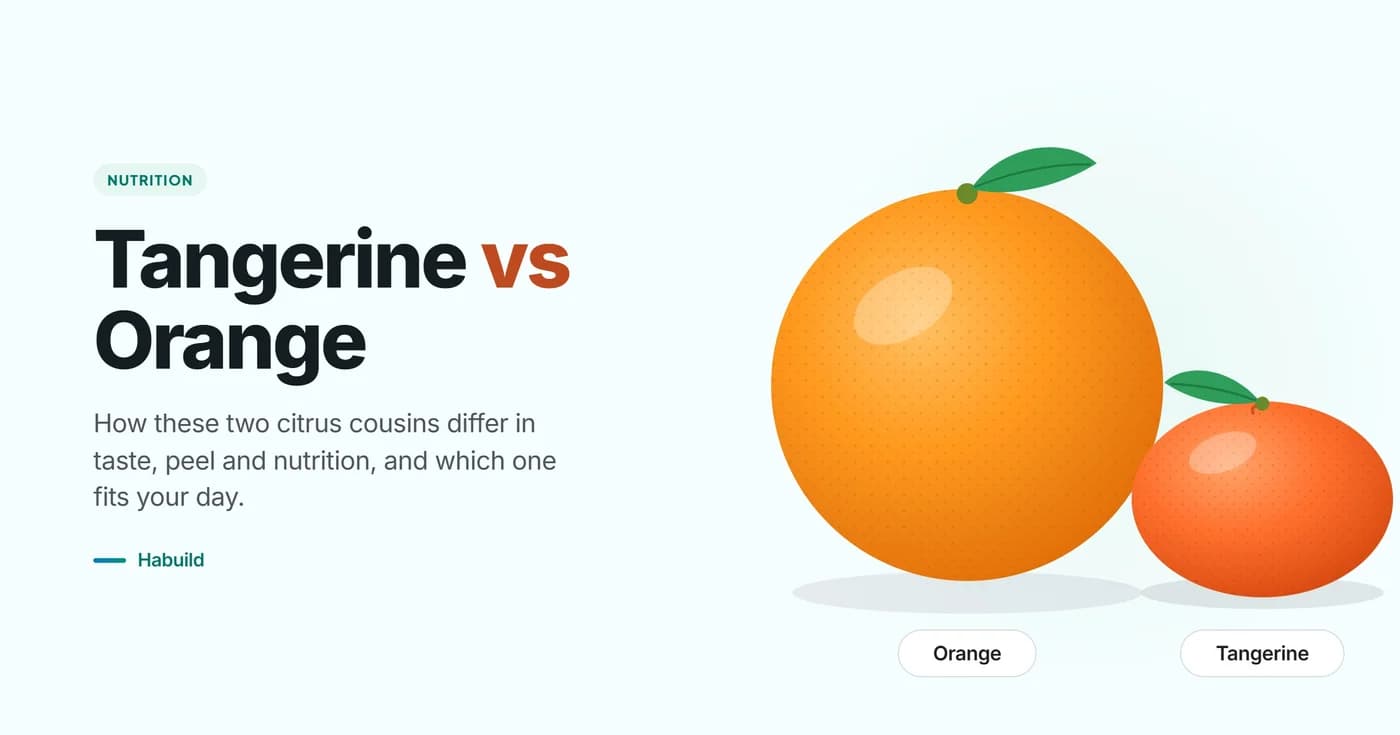
- A tangerine is a type of mandarin: smaller, sweeter and looser-skinned than an orange.
- Per 100 g, oranges have about 53 mg vitamin C versus about 27 mg in tangerines.
- Calories are similar: roughly 47 kcal per 100 g for orange, 53 kcal for tangerine.
- Whole fruit beats juice for fibre and fullness; keep juice small and with meals.
- Tangelos and Seville oranges may interact with medicines the way grapefruit does.
Tangerines and oranges belong to the same citrus family, and both provide vitamin C, water, natural carbohydrate and fibre when eaten whole. Tangerines are usually smaller, sweeter and easier to peel; oranges are larger and often slightly more tart. The better choice is usually the one you enjoy and will eat regularly. For a fuller look at oranges on their own, see Habuild's guide to orange benefits.
How tangerines and oranges differ
A tangerine is a type of mandarin. It has a thinner, looser peel and smaller segments, which makes it a convenient snack. "Orange" usually refers to sweet orange varieties with a thicker, tighter peel. Market names vary: kinnow, clementine, mandarin and tangerine are related but not identical, and they differ in seeds, peel thickness and acidity. Our guide to citrus fruits covers the wider family.
Nutrition per 100 g
For a fair comparison, look at equal weights of peeled fruit, because one small tangerine and one large orange are not equal servings. USDA FoodData Central reference values for raw fruit give:
- Calories: about 47 kcal for orange and 53 kcal for tangerine.
- Vitamin C: about 53 mg for orange and about 27 mg for tangerine.
So, weight for weight, an orange supplies roughly twice the vitamin C, while the calorie difference is small. These are reference averages; variety, ripeness and storage change the real numbers. Both fruits help you meet daily vitamin C needs, and pairing either with dal, chana or leafy greens can help the body absorb plant iron. For more ideas, see our list of vitamin C foods.
Taste, convenience and cost
- A tangerine is quick to peel and easy to pack for school or work.
- An orange suits times when you can cut it into wedges and share.
- Compare the cost of edible portions, not single fruits; two small tangerines may equal one large orange.
- Seasonal local citrus usually offers better flavour and value than an imported variety name.
For children and older adults, tangerine segments may be easier to handle. Remove seeds and tough membranes where choking or chewing is a concern.
Whole fruit or juice?
Eat the segments and some of the white pith to keep the fibre. Juice removes much of the chewing and makes it easy to drink several fruits in a few minutes. If you choose juice, have a small unsweetened glass with a meal rather than sipping it through the day.
Diabetes and portions
Both fruits can fit most diabetes meal plans. Portion size and the rest of the meal matter more than choosing tangerine over orange. One whole fruit is a better choice than a glass of juice, and personal glucose readings are the best guide.
Who may need care
Reflux and mouth ulcers
Citrus acidity may irritate mouth ulcers or trigger heartburn in some people. A smaller portion eaten with food may suit better. Repeated pain, trouble swallowing or weight loss needs medical review.
Medicine interactions
Most fruit-medicine warnings involve grapefruit. The FDA notes that Seville oranges and tangelos (a tangerine-grapefruit cross) can affect some medicines in a similar way, while ordinary sweet oranges and tangerines are not usually a concern. Read your medicine leaflet and ask a pharmacist about the exact fruit rather than avoiding all citrus.
Teeth
Acidic fruit can soften tooth enamel temporarily. Eating citrus with a meal and rinsing with plain water is gentler than sucking segments slowly for hours.
Buying and storing
Choose fruit that feels heavy for its size with no soft or mouldy spots. Wash the peel before cutting so the knife does not carry surface dirt into the flesh. Refrigerate cut fruit promptly and discard any with spreading mould or a fermented smell. If you use the peel as zest, wash it well and grate only the coloured outer layer.
Editorial sources
Frequently Asked Questions
Related Articles
Orange Benefits, Nutrition, Portions and Safety
Oranges provide vitamin C, folate, water, carbohydrate and fibre. Whole oranges generally provide more fibre and fullness than juice.

Citrus Fruits: Benefits, Types, Uses and Storage
Oranges, mandarins, lemons, limes, grapefruit and pomelo belong to the citrus family. They vary in sweetness, acidity, size and how they are used.

Healthy Fruits: How to Choose Variety, Portions and Seasonal Options
All whole fruits can contribute water, fibre, vitamins and plant compounds. The healthiest choice is usually a varied, affordable pattern.