
Benefits of the Bench Press
Discover the top benefits of the bench press — build chest strength, improve posture, and boost muscle. Start your journey with Habuild's guided strength program.
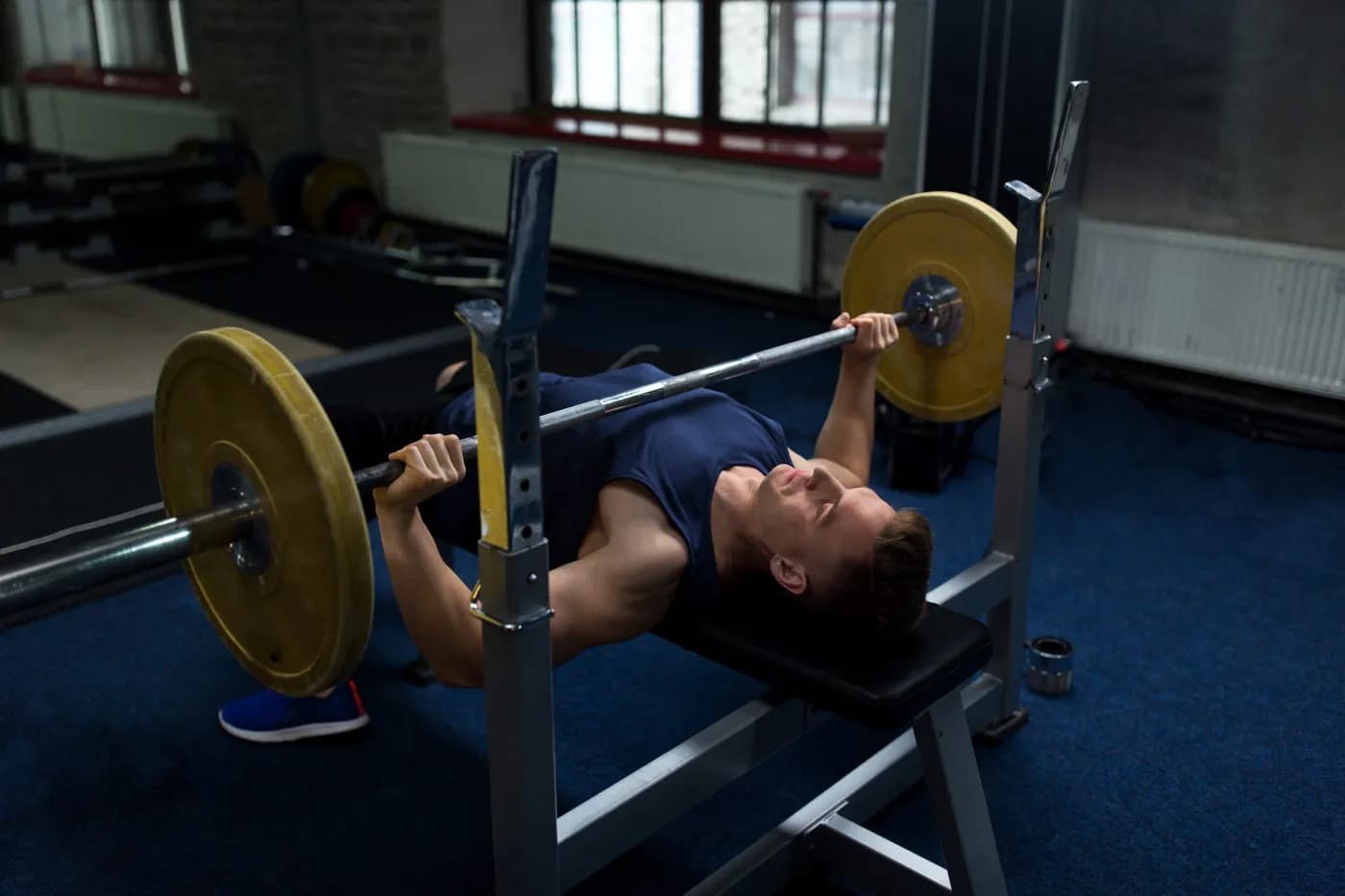
Key Takeaways
- Targets the pectoralis major, triceps, and anterior deltoids in one compound movement.
- The pressing pattern transfers directly to pushing open heavy doors or lifting suitcases overhead.
- Angling the bench 30-45 degrees upward shifts emphasis to the upper chest and front deltoids.
- The decline variation angles the body downward, placing less strain on the shoulders.
- Requires bracing the core and pressing feet into the floor, building full-body stability.
- Weight-bearing resistance on the skeleton gradually improves bone mineral density.
The bench press builds upper body strength by targeting the pectoralis major, triceps, and anterior deltoids in a single compound movement. Whether you train at home or in a gym, consistent bench pressing improves muscle mass, functional pushing strength, and bone density — making it one of the most efficient exercises you can add to a structured strength routine.
The benefits of the bench press go far beyond a bigger chest. It is one of the most effective compound movements for building upper body strength, improving muscle coordination, and developing a consistent training habit. Whether you are just starting out or looking to level up your home workouts, understanding what this exercise does for your body helps you train with purpose — not just routine.
10 Benefits of the Bench Press
- Builds Chest Muscle and Upper Body Mass The bench press directly targets the pectoralis major, the large muscle across your chest. With consistent practice, it stimulates muscle growth that improves both strength and physical appearance. Few exercises recruit chest muscle fibers as efficiently.
- Strengthens the Triceps Every rep of a bench press demands significant effort from your triceps to lock out the movement. Over time, this builds arm strength that carries over into pushing, lifting, and daily functional activity.
- Activates the Anterior Deltoids Your front shoulder muscles work hard during every bench press set. Regularly training this movement contributes to stronger, more stable shoulders — which also supports better posture and overhead mobility.
- Improves Bone Density Weight-bearing resistance exercises like the bench press place mechanical stress on the skeleton, which encourages bone remodeling and gradually improves bone mineral density. This is especially relevant as you age.
- Boosts Functional Pushing Strength The pressing pattern you develop on the bench transfers directly to everyday movements — pushing open a heavy door, lifting a suitcase into an overhead compartment, or catching yourself from a fall. Functional strength built here has real-life value.
- Supports Fat Loss Through Muscle Building Muscle tissue burns more calories at rest than fat tissue. By building more lean muscle through bench pressing, you gradually raise your resting metabolic rate — which supports your overall body composition goals over time.
- Enhances Core Stability A proper bench press requires you to brace your core, press your feet into the floor, and maintain a stable spine. This full-body tension builds core strength alongside the primary chest and arm muscles.
- Benefit of Incline Bench Press — Targets Upper Chest When you angle the bench upward (typically 30–45 degrees), the incline variation shifts emphasis to the upper chest and front deltoids. This builds a more complete chest profile and can help address common weak points in upper-body development.
- Benefit of Decline Bench Press — Reduces Shoulder Strain The decline bench press angles your body downward, placing less stress on the shoulder joint while effectively targeting the lower chest. For people with shoulder sensitivity, this variation allows productive chest training with reduced discomfort.
- Builds Mental Resilience and Training Confidence Progressing on the bench press — even adding a few extra kilograms over weeks — delivers a measurable sense of achievement. This builds training confidence and reinforces the habit of showing up consistently, which is where real results come from.
How to Get Started with the Bench Press
What You Need to Begin
At a gym, a flat bench and a barbell or dumbbells are sufficient to start. At home, a pair of adjustable dumbbells and a bench (or even the floor for a floor press variation) work well. You do not need a fully equipped gym to learn the movement and build a solid foundation. For a broader look at how to structure your training foundation, the Essentials of Strength Training and Conditioning guide covers key principles you should understand before loading up a bar.
Setting Realistic Goals
Start light. Your first priority is mastering the movement pattern — not lifting heavy. Aim to improve form, controlled breathing, and full range of motion before adding load. Beginners who progress too quickly often develop imbalances or minor injuries that set them back weeks.
Start with the Basics
Begin with 3 sets of 8–12 reps at a weight that feels challenging but manageable. Focus on a slow lowering phase (2–3 seconds), a brief pause at the chest, and a controlled push. Train the bench press 2 times per week with at least one rest day between sessions.
Best Exercises to Pair with the Bench Press

Push-Ups
Push-ups train the same pushing muscles as the bench press and are an excellent warm-up or accessory movement. They also teach body tension and core engagement. Aim for 3 sets of 10–20 reps, depending on your level.
Dumbbell Flyes
Flyes isolate the chest with a stretching motion that the bench press alone does not fully provide. Add 2–3 sets of 12 reps after your bench work to maximize chest muscle activation and flexibility.
Plank
A strong core directly improves bench press performance. Including planks in your routine builds the deep abdominal stability that helps you press more safely and powerfully. Even 3 sets of 30–45 seconds makes a meaningful difference — and the benefits of plank exercise extend well beyond just the bench press.
Dumbbell Rows
Pressing movements and pulling movements should always be trained in balance. Dumbbell rows strengthen the upper back, improve postural balance, and reduce the risk of shoulder injury caused by over-pressing. Do 3 sets of 10–12 reps per side.
Overhead Press
The overhead press trains the shoulder muscles through a different range of motion and complements the bench press effectively. Together, these two movements build well-rounded upper body strength and shoulder stability.
Tricep Dips
Since the bench press relies heavily on the triceps for lockout strength, direct tricep work like dips or close-grip push-ups accelerates your pressing progress. Add 2–3 sets of 10–15 reps to your session.
Calisthenics Variations
If you prefer training without equipment, bodyweight progressions can replicate many of the strength adaptations of the bench press. A calisthenics workout that emphasises pushing movements is a practical alternative or complement to bench training.
Common Mistakes to Avoid
- Poor Form Flaring your elbows too wide, bouncing the bar off your chest, or lifting your hips off the bench are all common errors that reduce effectiveness and raise injury risk. Learn the proper path of the bar — slightly diagonal, not straight up — before adding any significant weight.
- Skipping Warm-Up Cold muscles and joints do not respond well to heavy loads. Always begin with 5–10 minutes of light movement and at least one warm-up set at a fraction of your working weight. This prepares your shoulder joints and pec tendons for the demand ahead.
- Overtraining Training the bench press every day does not produce faster results — it produces fatigue and stagnation. Chest muscles need 48–72 hours to recover and grow. More sessions per week is not the same as better progress.
- Inconsistency The biggest barrier to seeing results from the bench press is not technique or programming — it is showing up. Sporadic training produces sporadic results. A structured plan followed consistently, even three days a week, will outperform an aggressive plan done irregularly every time.
Who Should Try the Bench Press?
- Beginners The bench press is beginner-friendly when started with light loads and proper coaching. The movement pattern is intuitive and the feedback is immediate — you know quickly whether your form is right. Starting with dumbbells rather than a barbell also gives beginners more control over each arm independently.
- Women A common misconception is that bench pressing will make women bulky. In reality, women have significantly lower testosterone levels than men, which means building large muscle mass requires an extraordinary amount of specific effort. For most women, bench pressing builds lean, functional upper body strength — not bulk. It also supports bone density, which is particularly important for women as they age.
- Older Adults Resistance training for older adults has well-documented support in research for maintaining muscle mass and bone strength. The bench press, performed with appropriate weight and supervision, can be a valuable part of an older adult's fitness routine. Always consult a healthcare professional before beginning a new resistance training program, particularly if you have existing joint or cardiovascular conditions.
- Working Professionals Desk work causes chest tightness, rounded shoulders, and weakened upper back muscles. The bench press, when balanced with rowing and pulling movements, helps counteract postural decline and builds the shoulder stability that long hours at a screen tend to erode. A 45-minute strength session three times a week fits most professional schedules without requiring a major lifestyle overhaul.
Build Strength with a Routine That Actually Works
Building upper body strength is not about doing random workouts or guessing your way through a gym session. It is about consistent effort, correct technique, and following a structured plan that adapts as you improve. With the right guidance, you can make meaningful progress from wherever you are starting.
Habuild's Strong Everyday Program gives you exactly that kind of structure. Every session is live, guided, and designed to build real strength progressively — whether you are working out at home or in a gym.
What You Get with Habuild's Strong Everyday Program:
- Daily live guided strength sessions with expert instructors
- Beginner-to-advanced progression so you're always challenged appropriately
- Home-friendly and no-equipment workout options
- Real-time form correction to help you train safely
- A community of consistent learners keeping you accountable
If you want to understand how structured movement complements your strength work, exploring health benefits of yoga alongside your training can round out your overall fitness approach.
Start Your Strength Training Journey
Related reads: How to Improve Bench Press Strength · How to Do Bench Press Correctly: the Complete Form Guide
The chest strength and postural improvements the bench press offers depend on progressive loading tracked over weeks, not on a handful of heavy sessions done without a plan. Habuild's Strong Everyday program provides that structured, guided training so your bench press — and the rest of your strength work — keeps progressing steadily.
Frequently Asked Questions
Related Articles
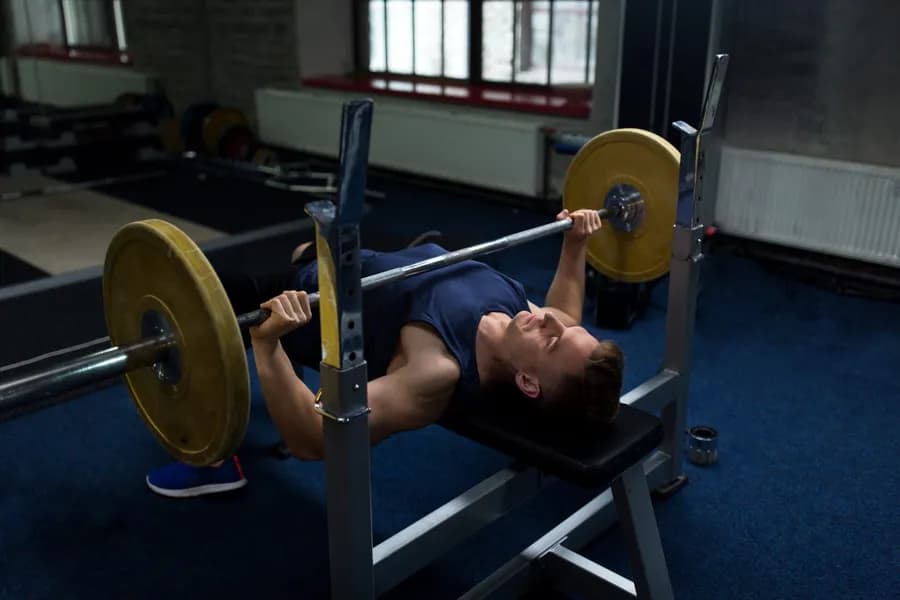
How to Do Bench Press Correctly: the Complete Form Guide
A stable base, controlled bar path, full range of motion, and the right shoulder position prevent impingement and build pressing strength safely. See the complete form guide.

Biceps Kaise Badhaye – घर पर Arms Strong करें
Biceps kaise badhaye जानें इस guide में। घर पर आसान exercises से arm size बढ़ाएं। 14-day free trial में Habuild का structured program आज़माएं।

How to Build Arm Muscles: Exercises, Tips & Plan
Learn how to build arm muscles at home with the best exercises, beginner tips, and a structured plan. Start your 14-day free trial trial with Habuild today.
Biceps Ka Size Kaise Badhaye – Poori Guide
Biceps ka size kaise badhaye? Jaanein sahi exercises, sets/reps aur common mistakes. Ghar par bhi shuru karein — Habuild ke saath pehle 7 din sirf 14-day free trial mein.

How to Do Push Ups: Step-by-Step Guide for All Levels
Done correctly, the push-up builds chest, shoulder, tricep, and core strength at once with no equipment — done incorrectly, it strains the wrists and neck. See every variation with precise form cues.