
How to Do Bench Press Correctly: the Complete Form Guide
A stable base, controlled bar path, full range of motion, and the right shoulder position prevent impingement and build pressing strength safely. See the complete form guide.
Key Takeaways
- Incline pressing at 30-45 degrees shifts load to the clavicular, upper, head of the pectoral.
- Floor press and Chaturanga progressions replicate bench stimulus with zero equipment at home.
- Is the most researched horizontal pressing exercise for documented pectoral and triceps hypertrophy.
- Correct shoulder positioning throughout the lift is what prevents impingement injury.
- Visible pectoral development typically appears after 8-12 weeks of consistent progressive training.
- A spotter is specifically recommended once barbell loads exceed moderate weight.
How to do bench press correctly is the foundation of all pressing strength — the horizontal press movement that develops the pectoralis major, anterior deltoids and triceps in the most loaded and most systematically progressive available format. Whether you are learning how to do bench press at home with dumbbells, how to do incline bench press for upper chest development or how to do close grip bench press for triceps-dominant pressing, the fundamental form principles are the same: stable base, controlled bar path, full range of motion and the shoulder position that prevents impingement throughout the movement.
Does Bench Press Build Chest Effectively? Here is How
Bench Press Produces the Highest Available Horizontal Pressing Load
The bench press — in its barbell, dumbbell or bodyweight-equivalent forms — is the most loaded available horizontal pressing exercise, producing the mechanical tension and progressive overload that are the primary stimuli for pectoral and triceps hypertrophy. How to do bench press correctly ensures this load is directed to the intended muscles rather than the shoulder joint structures that poor form consistently overloads.
The bench press is the most researched available horizontal pressing exercise, with documented pectoral and triceps hypertrophy at equivalent relative intensities to any other chest development exercise — making correct bench press form the most important single technique investment in upper body strength training.
Incline Bench Press Specifically Targets the Upper Chest
How to do incline bench press (30-45 degree angle) shifts primary loading from the sternal pectoral head to the clavicular (upper) head — producing the upper chest fullness that flat pressing alone cannot develop. Including incline alongside flat pressing produces the most complete available pectoral development through both heads of the muscle.
Home Bench Press Alternatives Are Fully Effective
How to do bench press at home without a bench: floor press (supine on the floor with dumbbells or improvised weights), decline push-up family and Chaturanga progressions produce equivalent pectoral stimulus when performed at appropriate intensities and progressions. The bench is a convenient tool, not a requirement for chest development.
How to Get Started with Bench Press
What You Need to Begin
How to do bench press at home: a flat surface (floor is adequate), dumbbells or water-filled bottles for resistance. Alternatively, the push-up family provides equivalent chest pressing stimulus without equipment. A spotter is recommended for barbell bench press above moderate weights.
Setting Realistic Goals
Correct form establishment within 1-2 weeks of focused practice. Measurable strength improvement at 4-6 weeks. Visible pectoral development at 8-12 weeks of consistent progressive training with appropriate protein intake.
Start with These Basics
Begin with: light dumbbell bench press 3 x 12-15 (form establishment), or floor push-ups 3 x 10-15 (equipment-free equivalent). Progress by 2.5-5% weekly load increase or by advancing to more demanding push-up variations if training equipment-free.
Best Bench Press Exercises and Variations

Standard Flat Bench Press Form — Step by Step
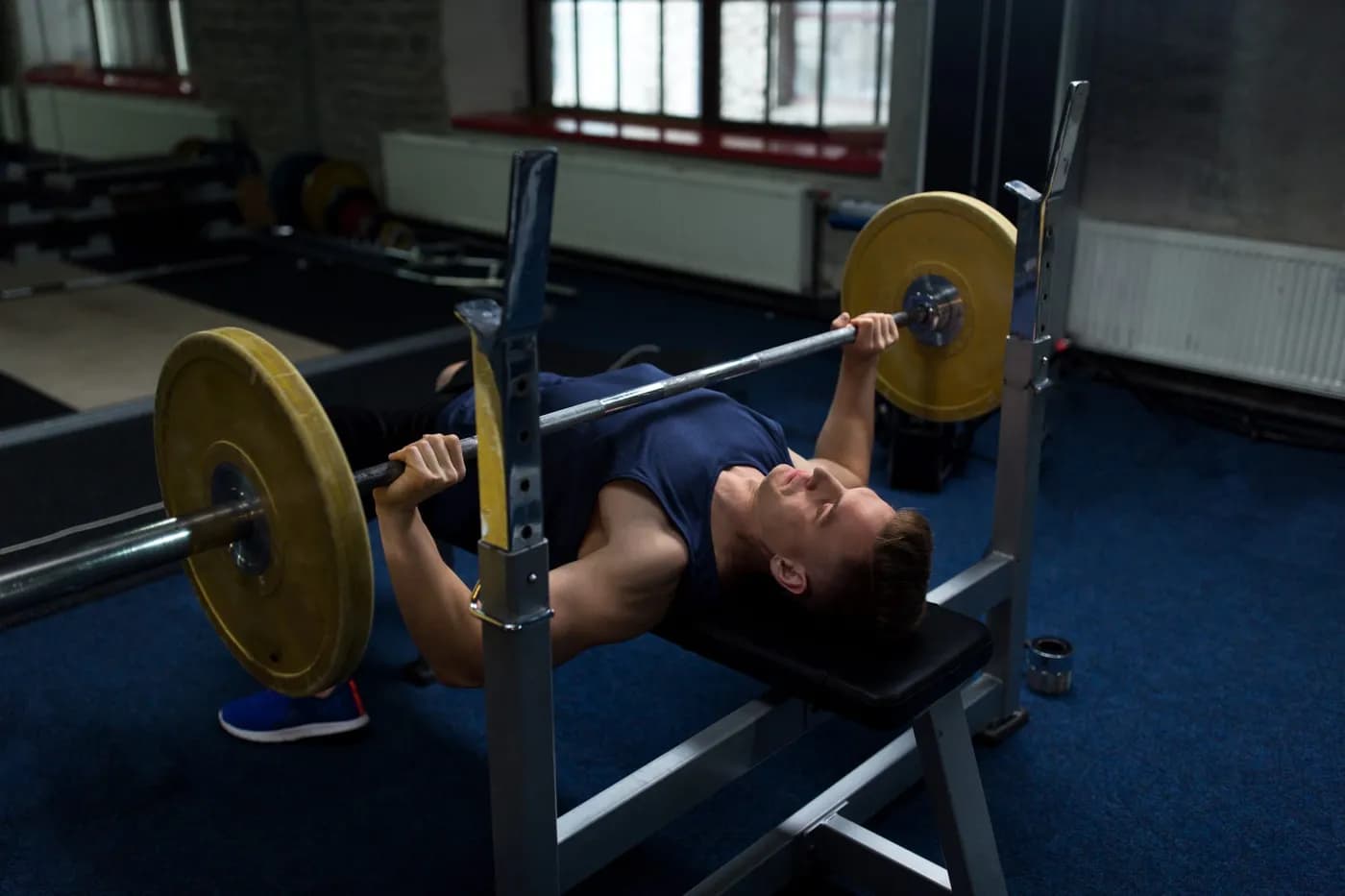
Lie on a flat bench with feet flat on the floor. Grip the bar slightly wider than shoulder-width. Retract the shoulder blades and maintain this throughout. Lower the bar to the lower sternum over 2-3 seconds (elbows at 45-75 degrees from the body). Press back up with a slight forward arc. Never bounce the bar off the chest. Sets: 3 x 8-12. See also: resistance-exercises
Dumbbell Bench Press — How to Do at Home
How to do dumbbell bench press: each hand holds a dumbbell, allowing independent arm movement that identifies and corrects strength asymmetries. The dumbbell version also provides the incline variation by simply elevating the surface angle. Sets: 3 x 10-15. See also: chest-workout-at-home-without-equipment
Incline Bench Press — Upper Chest Development
How to do incline bench press: bench set to 30-45 degrees. Grip slightly narrower than flat press. The bar path aims toward the upper sternum/clavicle. Feel the clavicular chest head working more than in flat pressing. Sets: 3 x 10-12. See also: how-to-do-diamond-push-ups
Close Grip Bench Press — Triceps Emphasis
How to do close grip bench press: grip the bar at shoulder-width (or slightly narrower). Elbows track close to the body throughout, loading the triceps as primary movers. The upper chest receives secondary stimulation. Sets: 3 x 10-12. See also: how-many-push-ups-per-day-to-build-muscle
Floor Press (No Bench Alternative)
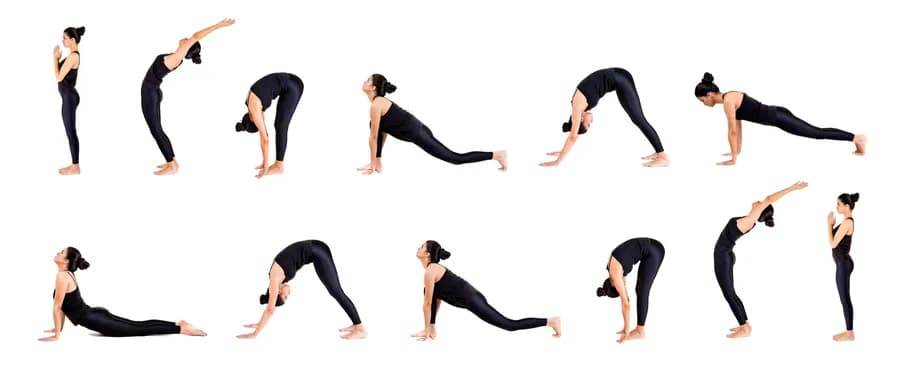
How to do bench press at home without equipment: lying supine on the floor with dumbbells — the elbows contact the floor at the bottom, naturally limiting the range of motion to the most productive portion of the pressing movement. Sets: 3 x 12. See also: surya-namaskara
Common Mistakes to Avoid
- Elbows Flaring at 90 Degrees — The most common bench press injury driver: elbows pointing straight out creates anterior shoulder impingement under heavy load. Maintain 45-75 degree elbow angle from the body throughout the pressing movement — this positions the shoulder in its most mechanically advantageous and safest orientation.
- Excessive Arch and Leg Drive — While some lower back arch is normal in bench press, excessive arching (bridge position) reduces the chest range of motion and transfers load away from the pectoral. How to do bench press correctly: maintain foot-flat-on-floor contact throughout and a moderate natural lumbar curve.
- Bouncing the Bar off the Chest — Bouncing uses the elastic energy of the chest compression to assist the press rather than the pectoral muscles — eliminating the bottom-range activation that produces the most effective hypertrophic stimulus. Always lower under complete control and pause briefly before pressing.
- Pressing Without Shoulder Blade Retraction — Flat, unretracted shoulder blades during bench press create the anterior shoulder instability that allows the humeral head to migrate forward under load. Always actively retract and depress the shoulder blades before and throughout every pressing set.
Who Should Learn the Bench Press?
- Intermediate Practitioners Seeking Progressive Chest Development — How to do bench press is appropriate for practitioners who have established the push-up foundation and seek the additional loading that resistance training provides for continuous progressive chest development.
- Is the Bench Press Good for Beginners? — The dumbbell floor press and push-up family provide equivalent chest development for beginners without the technique complexity of barbell bench press. Habuild's sessions develop the foundation through push-up progressions before weighted pressing is introduced.
- Those Seeking Complete Upper Body Development — The bench press family (flat, incline, close-grip) covers the complete pectoral, anterior deltoid and triceps development spectrum — making it the most efficient available single exercise family for comprehensive upper body pressing strength.
- Working Professionals Who Train at Home — How to do bench press at home through dumbbell floor press or push-up progressions provides the complete chest development benefit within a Habuild morning session — no gym required.
Build Strength with a Routine That Actually Works
Building upper body strength from beginner foundations requires consistent daily practice with proper guidance — not occasional random workouts. With a structured programme you can make real, measurable progress from home.
- Daily live guided strength and yoga sessions — 45 minutes, 6 days a week
- Beginner to advanced progression built in
- No equipment required
- Expert guidance for correct technique every session
- Community of 1.5 Crore+ members for daily accountability
Pressing strength is one of the slowest strength qualities to build, which makes a structured programme — not sporadic bench sessions — the real difference between plateauing and actually progressing. Once your form is dialed in, what matters most is a plan that keeps loading the movement intelligently over weeks and months. Habuild's Strong Everyday program is designed to provide exactly that kind of progressive structure for pressing strength and beyond.
Frequently Asked Questions
Related Articles
Full Body Workout at Home Without Equipment: 30-Minute Daily Plan
This 30-minute daily plan covers all major muscle groups using bodyweight only, producing a complete training stimulus in the time most people spend commuting to a gym. See the full plan.

How to Build Body at Home: the Complete No-Equipment Muscle Building Guide
The best available workout is the one performed daily, not the theoretically best programme that requires a commute and a fee. See the complete no-equipment muscle building guide.

Strength Training Calories Burned: How Much Does a Session Actually Burn?
Strength training burns fewer calories per session than cardio, but produces far greater long-term expenditure through the metabolic elevation it creates. See exactly how much a session burns.

What Are the Benefits of Strength Training? 7 Evidence-Based Benefits That Transform Health
Strength training reduces all-cause mortality risk, prevents age-related disability, and builds bone density across every age group and sex within 8-12 weeks. See all 7 evidence-based benefits.

Does Muscle Gain Increase Weight? What the Scale is Not Telling You
Muscle is roughly 18% denser than fat by volume, so a given weight of muscle takes up less space — the scale can rise, stay flat, or fall while the body visibly transforms. See what the scale isn't telling you.