
Best Exercises for Power: Build Strength, Speed, and Explosive Force
Jump squats, plyometric push-ups, broad jumps, burpees, and tuck jumps combine force and speed to build the kind of strength that improves everyday movement and athletic performance. See the full list, most needing zero equipment.

Key Takeaways
- Jump squats, plyometric push-ups, broad jumps, burpees, and tuck jumps build explosive force.
- Power training trains muscles to generate force rapidly, translating into quicker movement.
- Explosive movements recruit large muscle groups at once, raising calorie burn during and after.
- Impact-based power moves may support bone mineral density when practiced consistently.
- Builds neuromuscular coordination that improves speed, agility, and reaction time.
- A 6×6 foot floor space is all that’s needed – bodyweight alone builds meaningful power.
The best exercises for power combine force and speed to build functional strength that improves athletic performance and everyday movement. Jump squats, plyometric push-ups, broad jumps, burpees, and tuck jumps are among the most effective options — and most require zero equipment, making them practical for home training.
If you’re searching for the best exercises for power, you’re not just chasing heavier lifts — you’re building the kind of functional strength that makes everyday movement feel easier and athletic performance sharper. This guide walks you through everything you need to get started and stay consistent.
7 Benefits of Power Training
- Develops Explosive Strength Power exercises train your muscles to generate force rapidly. Over time, this translates into quicker, more forceful movement in sports, workouts, and daily life. Practicing consistently may gradually improve how fast and strong you feel in action.
- Boosts Metabolic Rate Explosive movements recruit large muscle groups simultaneously, demanding more energy. This elevated effort supports a higher calorie burn both during and after your session — making power workouts a solid complement to any fitness goal.
- Improves Bone Density Impact-based and resistance-based power exercises place healthy stress on bones, which may support bone mineral density over time — especially relevant as you age. Always consult a doctor if you have existing bone or joint concerns before starting.
- Enhances Functional Strength Functional strength exercises help your body move with better coordination and stability, reducing the risk of injury during everyday tasks. Squatting, jumping, and pushing patterns closely mirror real-world movement demands.
- Supports Fat Loss Through Intensity High-effort power sets challenge the cardiovascular system alongside the muscular system. When practiced regularly as part of a structured program, this dual demand may gradually support body composition improvements over weeks and months.
- Sharpens Athletic Performance Whether you run, play a sport, or simply want to feel more capable, power training builds the neuromuscular coordination that improves speed, agility, and reaction time. Consistency — not intensity alone — is what drives lasting results.
- Strengthens Mental Resilience Power workouts push you beyond comfortable effort levels. Showing up to that challenge regularly builds mental toughness and a sense of accomplishment that carries well beyond the training session.
How to Get Started with Power Training
What You Need to Begin
The barrier to entry is low. A clear floor space of about 6 × 6 feet is all you need for most power exercises. Optional tools like a resistance band or a pair of light dumbbells can add variety, but bodyweight alone is enough to build meaningful power at the beginner level.
Setting Realistic Goals
Beginners often expect dramatic results within two weeks and then quit when they don’t see them. A more effective approach is to target gradual, measurable improvements — an extra rep here, a slightly faster movement there. Aim for 3–4 sessions per week and treat rest days as part of the programme, not a failure. Avoid the trap of overtraining early on; your nervous system needs recovery time after explosive work.
Start with the Basics
Begin with foundational movement patterns: a bodyweight squat, a controlled push-up, and a standing hip hinge. These three movements form the mechanical backbone of almost every power exercise you’ll encounter. Spend the first two weeks mastering form before adding speed or load. Guided strength training can make this foundation phase significantly more effective than trial and error.
Best Exercises for Power — Your Core Workout List

These seven movements represent the most effective and accessible exercises for building explosive power at home or in the gym. Each can be scaled to your current fitness level.
Jump Squats
Lower into a squat, then drive explosively through your heels to leave the ground. Land softly with knees slightly bent. This is the single most effective exercise for lower-body power development.
Sets/Reps: 3 sets × 8–10 reps. Rest 60–90 seconds between sets.
Plyometric Push-Ups
Perform a standard push-up but push with enough force that your hands briefly leave the ground. This explosive pressing motion builds upper-body power in the chest, shoulders, and triceps.
Sets/Reps: 3 sets × 6–8 reps. Beginners can modify by keeping knees on the floor.
Broad Jumps
Standing with feet shoulder-width apart, swing your arms back and then forward as you jump as far forward as possible. This horizontal power movement trains your glutes, hamstrings, and calves together.
Sets/Reps: 3 sets × 5–6 jumps. Walk back to the starting point for active recovery.
Burpees
From standing, drop to a push-up position, perform one push-up, jump your feet forward, and explode into a jump at the top. Burpees are a staple of any power workout for their combination of strength, speed, and conditioning.
Sets/Reps: 3 sets × 8 reps. Scale by removing the push-up if needed.
Tuck Jumps
Jump vertically and bring both knees toward your chest at the peak. The goal is maximum height and knee drive. Tuck jumps develop the explosive power useful in any vertical-demand movement or sport.
Sets/Reps: 3 sets × 6–8 reps. Rest fully between sets — this is a demanding exercise.
Single-Leg Hops
Standing on one foot, hop forward for 5 consecutive jumps, absorbing each landing with a soft knee. This unilateral drill improves balance, ankle stability, and explosive leg power simultaneously — a key component of any effective workout for explosive power.
Sets/Reps: 2 sets × 5 hops each leg. Progress to longer distances as strength builds.
Medicine Ball Slams
Raise both arms overhead and explosively drive downward, slamming a ball — or a folded, knotted towel — into the floor. This full-body movement integrates the core, lats, and hip flexors in a single explosive arc.
Sets/Reps: 3 sets × 10 reps. Focus on the speed of the downward drive, not just the effort.
Common Mistakes to Avoid
- Poor Form Under Fatigue Power movements are only safe and effective when technique is intact. The moment form breaks — knees caving on jump squats, lower back rounding on slams — stop and rest. Training through poor form doesn’t build power; it builds injury patterns.
- Skipping the Warm-Up Explosive movements place sudden, high loads on cold joints and tendons. Spend at least 8–10 minutes on a dynamic warm-up: leg swings, hip circles, arm rotations, and light jogging in place. Skipping this step is one of the most common causes of early-session strains.
- Overtraining Without Recovery Power training taxes the central nervous system more heavily than steady-state cardio or moderate-weight lifting. Training explosively every single day without programmed rest leads to diminishing returns and heightened injury risk. Two to three focused sessions per week, with rest or active recovery days in between, is more effective than daily high-intensity effort.
- Inconsistency in Programming Sporadic effort — three intense sessions one week, none the next — is the single biggest obstacle to building power. Adaptation happens through repeated, progressive stimulus over weeks. Without a consistent programme, your body never accumulates enough stimulus to change meaningfully.
Who Should Try Power Training?
- Beginners Power training is accessible from day one when scaled correctly. Start with lower-impact versions: step-back lunges instead of jump lunges, incline push-ups instead of plyometric ones. The goal is to learn movement mechanics first and introduce explosiveness gradually over 4–6 weeks.
- Women A common concern is that power and strength training will create bulk. It won’t — women produce significantly less testosterone than men, which means explosive training develops lean, functional muscle rather than mass. Female-specific strength training programs are designed with this physiology in mind, making power training one of the most beneficial styles of exercise for women at any fitness level.
- Older Adults Power declines faster with age than pure strength does, which is why explosive training is particularly valuable for adults over 50. Movements like box step-ups, resistance-band squat presses, and standing broad jumps can be modified to appropriate intensity levels. Always check with your doctor before beginning any new high-impact exercise programme, especially if you have joint or cardiovascular concerns.
- Working Professionals Short on time? A 20-minute power circuit — three exercises, three sets each — delivers more per minute than an hour of casual gym activity. Power training also directly counteracts the postural damage of long sitting hours, engaging the glutes, core, and upper back that desk work routinely weakens.
Build Strength with a Routine That Actually Works
Building power isn’t about random high-intensity workouts — it’s about consistency, guided progression, and a structured plan that meets you where you are. With the right support, you can train effectively from home and see real progress over time.
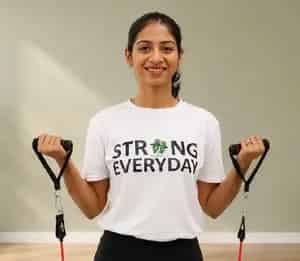
What You Get with Habuild’s Strong Everyday Program:
- Daily live guided strength and power sessions
- Beginner to advanced progression — no plateau
- No-equipment and home-friendly workout options
- Expert guidance to ensure correct form and safe loading
- Community support to keep you consistent across weeks and months
If you’ve been looking for a structured strength training program that fits a real schedule, this is it. You can also explore exercises for strength and power at home to complement what you’ve learned here.
Start Your Power Training Journey
Related reads: What Are Plyometric Exercises? Benefits & Best Moves · Glute Exercises for Men: Build Strength, Power, and Stability
Explosive power develops through progressive, well-sequenced training — jump squats and broad jumps done haphazardly can plateau or even strain the joints they’re meant to strengthen. A program that paces intensity and recovery properly lets your nervous system and muscles adapt safely over time. Habuild’s Strong Everyday program offers that kind of structured, guided training if you’d rather not plan the progression yourself.
Frequently Asked Questions
Related Articles

Best Workout Split for Muscle Gain
The right split — Push/Pull/Legs, Upper/Lower, or full-body — is whichever one you can execute consistently, week after week, with progressive overload built in. See what actually drives muscle growth.
Active Recovery Workout: Benefits, Best Exercises & How to Get Started
Discover the best active recovery workout routines for full body relief. Learn exercises, mistakes to avoid, and how to stay consistent. Start for ₹1 today.

20 Different Types of Exercises at Home
Discover 20 different types of exercises at home — from strength to yoga. Build consistency and real results. Start your 14-day free trial trial with Habuild today.
10 Benefits of Glute Bridges
Discover the top benefits of glute bridges — from stronger hips to better posture. Start your guided strength training journey with a 14-day free trial.
Best Exercises for Biceps: Build Strength, Size and Consistency
Standing dumbbell curls, hammer curls, concentration curls, chin-ups, and resistance band curls target both heads of the bicep — most can be done with minimal or no equipment. See the full list.