
How to Do Side Plank Exercise — the Complete Form Guide and Daily Routine for Stronger Obliques
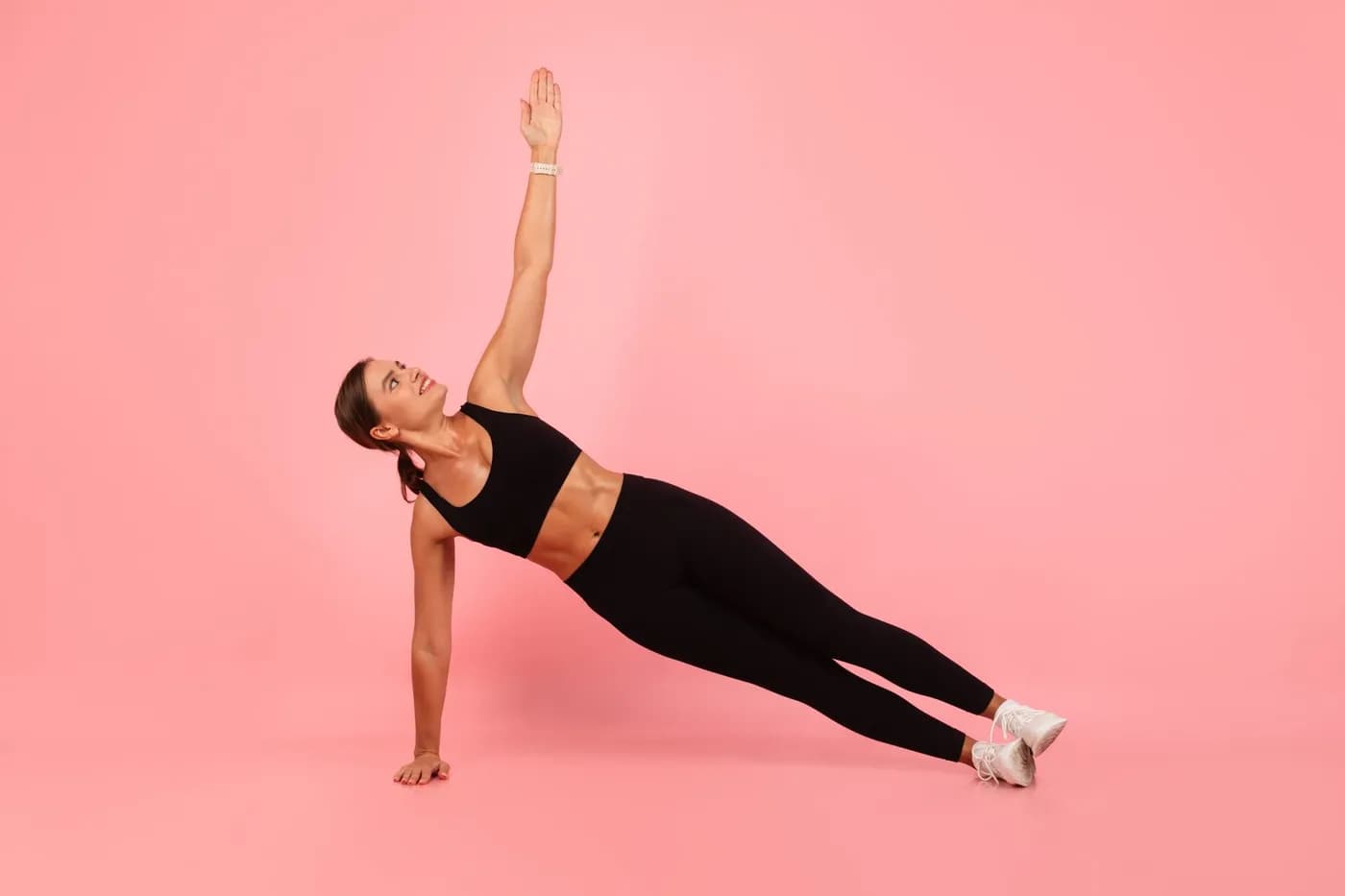
Stacking the body in a single plane and lifting the hips into a straight line from heels to head engages the entire lateral chain isometrically. See the complete form guide.
Key Takeaways
- A 2014 EMG study found side planks activate the obliques significantly more than standard planks.
- Specifically strengthens the quadratus lumborum, a key stabiliser behind chronic side-of-back pain.
- Engages the gluteus medius, directly improving gait and reducing knee valgus during running.
- Named the most validated exercise for anti-lateral-flexion strength, used in one-arm carries.
- Loads the supporting shoulder isometrically, building stability that guards the rotator cuff.
- Most beginners struggle specifically with maintaining the hip lift and shoulder stability together.
Most people searching how to do side plank exercise want to master the lateral chain plank that builds obliques, quadratus lumborum, and the side body strength standard planks miss — and the honest answer is that side planks are simple in principle but technically demanding in execution, with most beginners struggling to maintain the hip-lift and shoulder stability that produces genuine results. The correct side plank stacks the body in a single plane, lifts the hips so the body forms a straight line from heels to head, and engages the entire lateral chain isometrically. This guide covers exact form cues, common mistakes, beginner progressions, and the daily routine that produces lasting oblique and lateral strength. The same habit-building structure that powers our daily online yoga classes makes consistent practice possible.
7 Benefits of Daily Correct Side Plank Practice
Daily correct side planks produce measurable benefits within the first weeks. Below are the seven most important benefits.
- Stronger Obliques and Defined Waistline The most direct benefit. Side planks build the internal and external obliques that determine waist definition — particularly when combined with overall fat loss. Stat: A 2014 study in the Journal of Strength and Conditioning Research analysing core exercise EMG confirmed that side planks produce significantly greater oblique activation than standard planks or crunches — the engagement that genuinely shapes the side body.
- Reduced Lower Back Pain through Lateral Chain Strength The symptomatic benefit. The quadratus lumborum and lateral spine stabilisers play a critical role in lower back support — and side planks directly strengthen these muscles. Many cases of chronic side-of-back pain respond dramatically to daily side plank practice.
- Better Pelvic Stability and Hip Strength The functional benefit. Side planks engage the gluteus medius (the side glute) and hip stabilisers that determine pelvic position during walking and running — directly translating to better gait, reduced knee valgus, and improved athletic performance. Members focused on broader abdominal strength often pair their work with our strength training for abs programme.
- Improved Athletic Performance through Anti-Lateral Flexion The performance benefit. Most athletic movements require anti-lateral-flexion strength (preventing the spine from bending sideways during one-arm carries, throws, and rotational sports) — and side planks are the most validated exercise for this pattern. Carryover to performance is substantial.
- Better Shoulder Stability and Upper Body Strength The upper body benefit. Side planks load the supporting shoulder isometrically — building the shoulder stability that protects against rotator cuff injury and improves overhead pressing strength.
- Improved Posture and Body Awareness The structural benefit. Daily side plank practice builds the lateral muscle balance that supports symmetric posture — addressing the common patterns where adults are stronger on one side than the other. Members building broader core capacity often pair their work with our core strength plank programme.
- Foundation for Advanced Anti-Rotation and Lateral Strength The cumulative benefit. Mastering side planks is the foundation for advanced anti-rotation and lateral strength training — Pallof presses, side plank variations, weighted carries, and rotational athletic movements. Daily practice builds the base for years of continued progression. Members focused on broader abdominal definition often pair their work with our abdominal workouts programme.
How to Get Started with Side Plank Exercise
Getting started requires no equipment and no gym — just clear understanding of form principles and a small daily commitment.
What You Need to Begin
A flat clear floor space (yoga mat optional but helpful for forearm and elbow comfort), comfortable clothing, and 5–10 minutes daily. A mirror or video recording helps verify alignment during early practice. A clock or timer for measuring hold duration.
Setting Realistic Goals
Be honest about timelines. Beginners typically build from 10–15 second holds to 60-second holds over 4–6 weeks of consistent practice. Aim for quality of hold (correct form throughout) over duration. Both sides should hold equal durations — most adults discover one side is significantly weaker, which side plank practice directly addresses.
Start with the Basics
Begin with three foundational practices: knee side planks for absolute beginners (2 rounds × 20 seconds per side), standard side planks once knee variations feel easy (2 rounds × 30 seconds per side), and daily form check using a mirror or photo. Build duration over 2–4 weeks once form is consistent.
How to Do Side Plank Correctly — Step-By-Step Form Guide
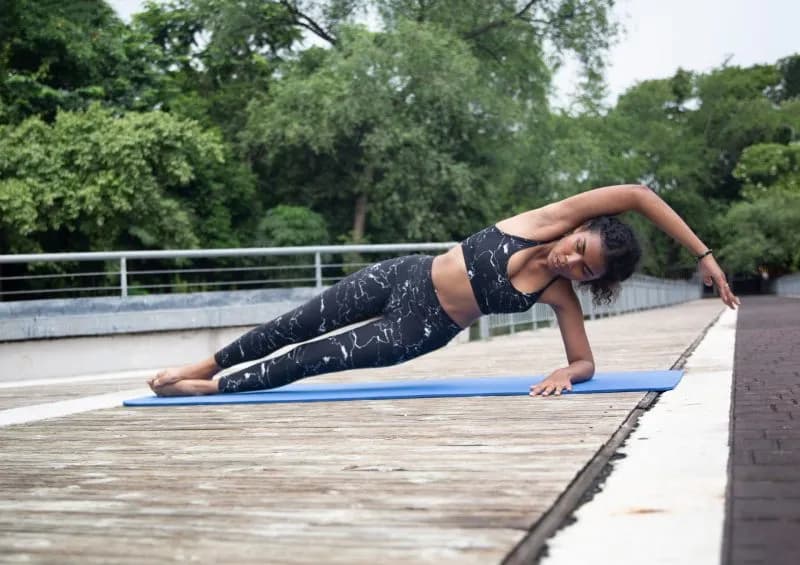
Standard Forearm Side Plank — Obliques, Quadratus Lumborum, Glutes — Hold 30–60 Seconds per Side × 2 Rounds
The foundational side plank. Setup: lie on one side with forearm on floor, elbow directly under shoulder, legs stacked with feet flexed. Lift hips so the body forms a straight line from heels to head. Engage the side body and glutes simultaneously while breathing normally. Hold: 30–60 seconds per side for 2 rounds with 60 seconds rest, performed 3–4 times per week.
Knee Side Plank — Obliques (Reduced Load) — Hold 30–60 Seconds per Side × 2 Rounds
The knee side plank reduces loading by approximately 50% while teaching correct alignment patterns. Setup: same as standard side plank but with bottom knee bent at 90 degrees and resting on the floor. Top leg can be extended straight or bent. Maintain straight line from knee to head. Build to standard side plank over 2–4 weeks of consistent practice.
High Side Plank — Full Lateral Engagement + Wrist Strength — Hold 30 Seconds per Side × 2 Rounds
The high side plank shifts loading to the wrist and shoulder while increasing the visible lateral engagement. Setup: same as standard side plank but with arm extended straight, hand directly under shoulder. Hold: 30 seconds per side for 2 rounds, performed 2 times per week.
Side Plank with Hip Dips — Dynamic Lateral Core — 3 Sets × 10 Dips per Side
From standard side plank, lower the hips slightly toward the floor and lift them back to plank position. The dynamic movement adds time-under-tension challenge to the lateral chain. Modification: small range of motion for beginners.
Side Plank with Leg Lift — Glute Medius + Lateral Chain — 3 Sets × 8 Lifts per Side
From standard side plank, lift the top leg toward the ceiling while maintaining stable hip position. Adds glute medius engagement and increases lateral chain demand significantly. Modification: smaller leg lift for beginners.
Side Plank with Rotation (Threading the Needle) — Anti-Rotation + Mobility — 3 Sets × 6 Reps per Side
From side plank with top arm extended toward ceiling, rotate the torso to "thread" the top arm under the body, then return to side plank. Adds rotational core challenge while maintaining the lateral chain hold.
Long-Lever Side Plank — Maximum Lateral Strength Challenge — Hold 15–30 Seconds per Side × 2 Rounds
Advanced variation — side plank with the supporting arm extended further from the body. Dramatically increases lateral chain demand. Master only after standard side plank holds reach 60+ seconds per side with perfect form.
Common Mistakes to Avoid
- Letting Hips Drop Toward the Floor The most common form error. When lateral chain fatigue sets in, the hips drop toward the floor — eliminating core engagement and placing strain on the supporting shoulder. Signs: shoulder ache, lost belly engagement, inability to hold for more than 15 seconds. What to do instead: end the hold the moment hips begin to drop. A 20-second perfect side plank produces dramatically more benefit than a 60-second sloppy one.
- Misaligned Stacked Position The foundational alignment error. The body should be in a single plane — feet, hips, shoulders, and head all stacked. Many beginners rotate the hips forward (toward the floor) or lean backward. What to do instead: imagine pressing your back against a wall behind you. Use a mirror to verify alignment during early practice.
- Holding Breath Throughout the Side Plank Breath-holding during side planks activates the sympathetic nervous system and limits hold duration unnecessarily. What to do instead: breathe normally throughout every hold. The breath should remain steady — if breathing becomes ragged, end the hold. Members focused on broader core capacity often pair their work with our strength training for back programme for the comprehensive side body protocol.
- Training Only One Side or Spending Unequal Time Most adults are significantly stronger on one side — and training only the strong side reinforces the imbalance that side planks should be correcting. What to do instead: always train both sides in every session, with equal hold duration on each. The weaker side often takes 4–6 weeks to catch up.
Who Should Try Daily Side Plank Practice?
- Beginners Building Lateral Core Strength Side planks address a chronic gap in most beginner core training — the lateral chain that standard planks under-train. Building from knee side planks, anyone can develop the side body strength that supports daily function.
- Women Building Comprehensive Core Strength Women benefit dramatically from oblique and lateral chain development — particularly during postpartum recovery (with medical guidance), perimenopause, and post-menopause. The lateral support directly affects how the waistline appears.
- Older Adults Maintaining Lateral Stability and Fall Prevention Lateral stability decline contributes significantly to falls in older adults — and daily side plank practice (modified for individual capacity) protects this critical aspect of functional fitness. (Disclaimer: those with shoulder, hip, or wrist conditions should consult a doctor before beginning side plank practice.)
- Athletes and Sport Participants Athletes benefit dramatically from lateral chain strength because most sports require anti-lateral-flexion (running, throwing, rotational sports). Side planks directly translate to better athletic performance.
How to Do Side Plank Exercise Routine for Side Body Strength
Doing side planks correctly isn't about chasing arbitrary time records or holding poor positions for longer — it's about consistency, perfect form, and following a structured plan that builds lateral chain strength systematically. With the right support, you can practise effectively from home and see measurable improvements within 4–8 weeks.
What You Get with Habuild's Strong Everyday Programme:
- Daily live guided strength and yoga sessions
- Beginner to advanced progression
- No-equipment and home-friendly workouts
- Expert guidance to ensure correct form
- Community support to stay consistent
Related reads: What Is the Best Exercise Routine? A Complete Guide · 10 Different Types of Plank Exercise for Every Level
Side planks are technically demanding, and technique like this improves fastest inside a routine that revisits it often enough to correct the hip-lift issues most beginners struggle with. A guided programme also makes sure oblique work like this doesn't get quietly skipped in favour of easier exercises. Habuild's Strong Everyday program is built to keep exercises like the side plank in consistent rotation.
Frequently Asked Questions
Related Articles
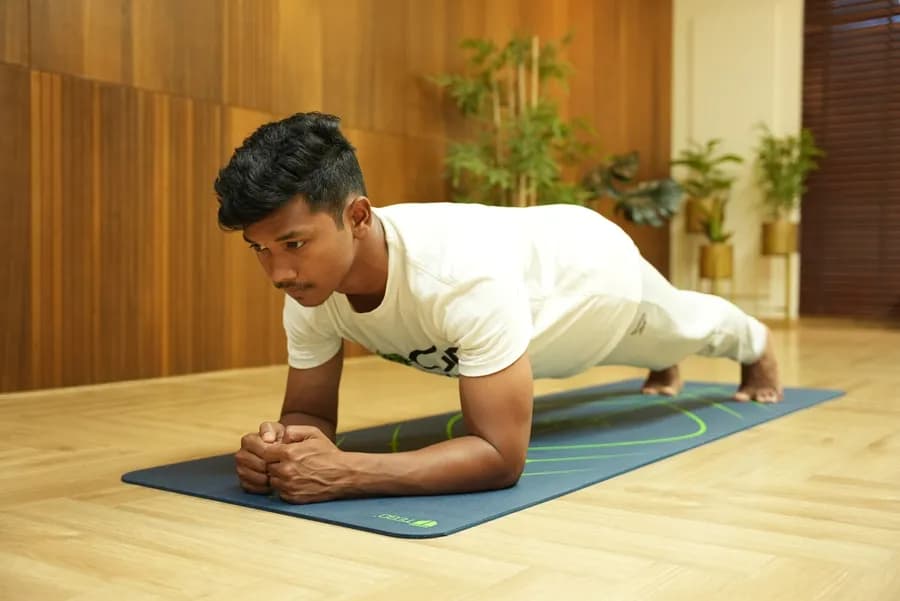
How to Do Planks Correctly — the Complete Form Guide and Common Mistakes That Sabotage Results
Sagging hips, lifted hips, locked elbows, and held breath are the common form errors that reduce or eliminate the core benefit while increasing injury risk. See the complete form guide.
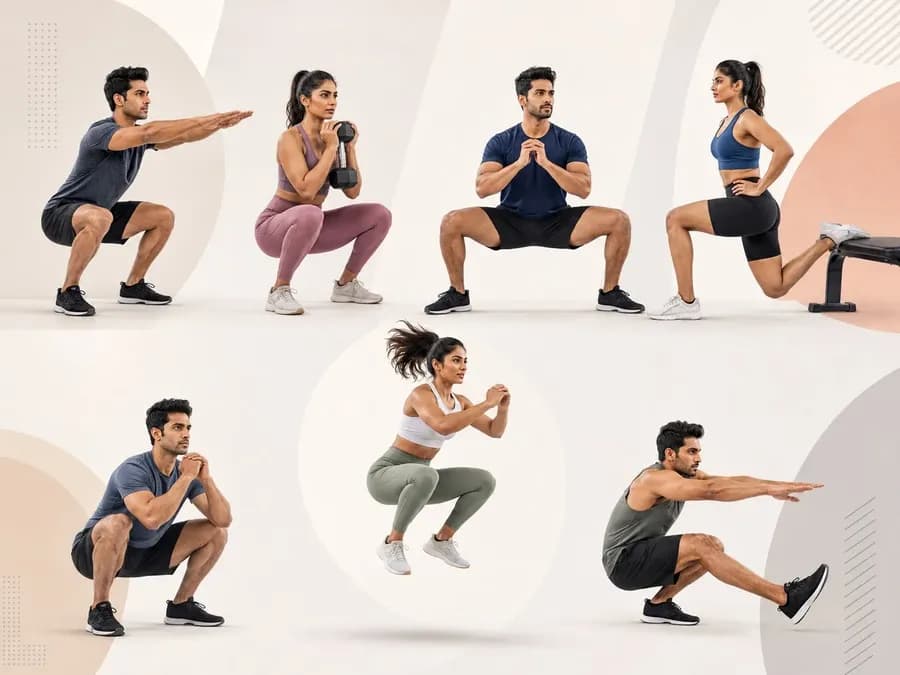
Different Types of Squats — 7 Variations to Build Stronger Legs, Glutes, and Functional Strength
The right squat variations target different muscles, mechanical positions, and movement patterns, building complete lower-body strength rather than partial development. See all 7 most effective variations.
Benefits of Squats for Women — 7 Real Results from Daily Practice and What to Expect Honestly
Consistent daily squat practice produces measurable results in glute shape, leg strength, and posture within 8-12 weeks — the 'bulky thigh' myth doesn't hold up given women's hormonal profile. See all 7 real results.
Types of Planks — 7 Variations to Build Stronger Core, Better Stability, and Lasting Results
Anti-extension, anti-rotation, and anti-lateral flexion variations each progressively build a different aspect of core strength beyond the standard forearm hold. See all 7 variations.