
How to Do Yoga Nidra: Step-by-Step Guide for the Yogic Sleep Practice
Lying down in Savasana and following a systematic body and awareness sequence produces deep relaxation in just 20-45 minutes. See the step-by-step guide.

Key Takeaways
- A 30-minute session is reported to produce relaxation equivalent to 2-3 hours of regular sleep.
- Performed lying in Savasana while following a systematic body and awareness rotation sequence.
- Deep parasympathetic activation specifically supports the body’s natural healing during illness.
- Guidance is essential for beginners learning the systematic awareness technique correctly.
- Most beginners can attempt self-led practice only after 4-6 weeks of guided sessions.
- Immediate relaxation is felt from the very first session, unlike most other meditation forms.
Yoga Nidra is a powerful guided meditation practice — the “yogic sleep” — that produces deep relaxation in just 20–45 minutes. Performed lying down in Savasana while following a systematic body and awareness sequence, Yoga Nidra is one of the most beginner-friendly meditation practices available. This guide walks through exactly how to do Yoga Nidra step by step, whether at home, for sleep support, or as a daily meditation practice.
How Yoga Nidra Helps: Benefits of the Practice
- Produces Deep Relaxation Comparable to Hours of Sleep A 30-minute Yoga Nidra session is reported to produce relaxation equivalent to 2–3 hours of regular sleep. The systematic awareness rotation and parasympathetic activation produce profound rest that few other practices can match. Members managing concurrent stress often pair their practice with ouryoga for stress management programme.
- Improves Sleep Quality and Insomnia Relief Regular Yoga Nidra practice produces dramatic improvements in sleep quality and helps practitioners managing insomnia. Many use Yoga Nidra specifically as a pre-sleep meditation to fall asleep more easily.
- Reduces Anxiety and Emotional Reactivity The deep meditative state accessed in Yoga Nidra reduces anxiety symptoms and emotional reactivity over weeks of consistent practice. Members focused on broader breath capacity often pair their work with ouryoga for breathing programme.
- Supports Healing and Recovery The deep parasympathetic activation supports the body’s natural healing processes — particularly valuable during stress, illness, or recovery periods. Members managing concurrent back stiffness often pair their practice with ouryoga for back pain programme.
- Cultivates Self-Awareness through Body Scanning The systematic body awareness technique central to Yoga Nidra builds the body awareness that supports broader mindfulness and emotional regulation. Members focused on broader flexibility often pair their work with ouryoga for flexibility programme.
How to Get Started with Yoga Nidra
What You Need to Begin
A yoga mat or comfortable surface, blanket for warmth, optional eye pillow or folded cloth for the eyes, and a quiet undisturbed space. Wear loose comfortable clothing. Yoga Nidra is performed lying down — make the position as comfortable as possible.
Setting Realistic Goals
Begin with 20–30 minute sessions 3–4 times per week. Most beginners notice immediate relaxation benefits from the first session; deeper effects (improved sleep, reduced anxiety) emerge over 4–8 weeks of consistent practice. Daily practice produces faster results.
Start with the Basics
Begin with guided audio recordings or live online classes — guidance is essential for beginners learning the systematic awareness technique. After 4–6 weeks of guided practice, some practitioners can attempt self-led Yoga Nidra.
How to Do Yoga Nidra Step by Step
Step 1 — Settle into Savasana
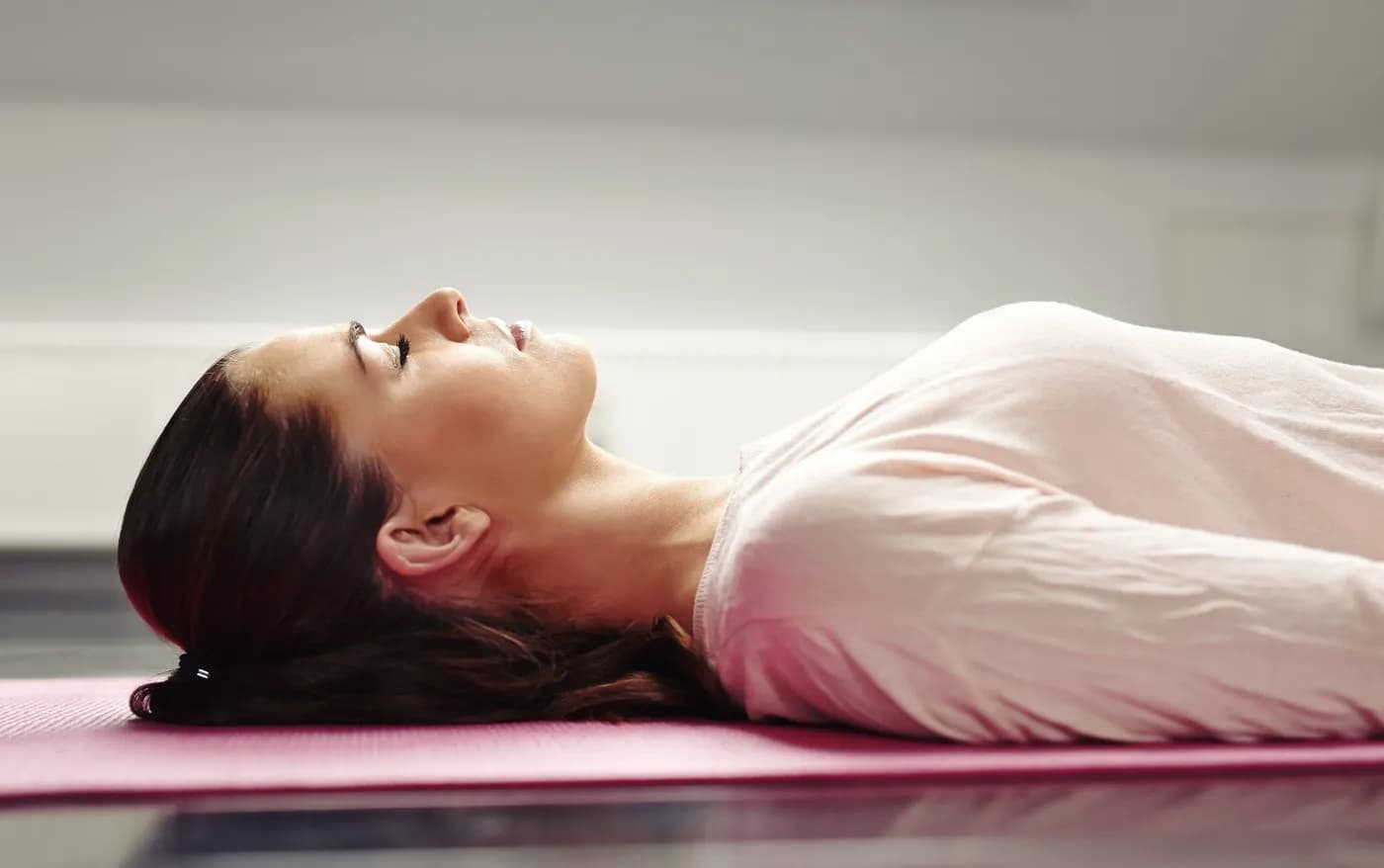
Lie flat on your back on a yoga mat with a folded blanket under your head if needed. Place arms slightly away from the body, palms facing up. Spread legs slightly apart with feet falling outward naturally. Close your eyes and take 3 deep breaths. Allow the body to settle completely.
Step 2 — Set an Intention (Sankalpa)
Mentally repeat a personal intention or affirmation three times. Examples: “I am peaceful,” “I will sleep deeply tonight,” “I am healing.” The Sankalpa plants the seed of intention that the deep relaxation amplifies. Choose a meaningful, present-tense statement.
Step 3 — Begin the Body Awareness Rotation
Bring awareness to the right hand thumb. Then move awareness to the right hand index finger, middle finger, ring finger, little finger, palm, back of hand, wrist, lower arm, upper arm, shoulder. Repeat for the entire body — each part receiving 1–2 seconds of awareness without engaging or moving. This systematic rotation is the core technique of Yoga Nidra.
Step 4 — Become Aware of the Breath
After completing the body rotation, bring awareness to the natural breath. Observe the inhalation and exhalation without controlling them. Notice the rise and fall of the abdomen with each breath cycle. Continue for 5–10 minutes.
Step 5 — Awareness of Sensations and Emotions
Bring awareness to opposing sensations — heaviness then lightness, warmth then cool, joy then sadness. Notice each pair without attachment. This builds the equanimity that Yoga Nidra cultivates.
Step 6 — Visualisation Phase
Visualise calming imagery — a quiet beach, a peaceful forest, a starry sky. The imagery accesses the deeper meditative dimensions of practice. If using guided audio, simply follow the guide’s visualisation.
Step 7 — Repeat Sankalpa and Return to Waking
Repeat your intention silently three more times. Then gradually bring awareness back to the body, the breath, the sounds in the room. Begin small movements — fingers, toes, gentle stretching. Slowly open the eyes. Sit up gently. The practice is complete.
Common Mistakes to Avoid in Yoga Nidra
- Falling Fully Asleep The goal is the state between sleep and wakefulness — not actually falling asleep. Falling asleep eliminates the practice’s benefits. Correction: practise sitting partially propped up if sleep is consistent issue, or practise at times when alert.
- Skipping the Sankalpa (Intention) Some practitioners skip the intention as it feels arbitrary — but the Sankalpa is one of the most powerful elements. Correction: choose a meaningful intention and repeat sincerely.
- Practising Without Quality Guidance Early On Pure beginners attempting unguided Yoga Nidra often miss the systematic awareness rotation. Correction: use guided audio or live online classes for the first 4–6 weeks.
- Inconsistent Practice Yoga Nidra benefits compound through consistency. Correction: aim for at least 3 sessions per week.
Who Should Try Yoga Nidra?
- Beginners and Stressed Adults Yoga Nidra is one of the most beginner-accessible meditation practices available — requiring no flexibility, strength, or prior experience. Most beginners experience immediate relaxation from the first session.
- Women Managing Hormonal and Sleep Challenges Women across life stages benefit dramatically from Yoga Nidra’s deep relaxation effects. Sleep improvements support hormonal balance directly.
- Older Adults with Sleep or Anxiety Concerns Yoga Nidra is particularly suited to older adults — its lying-down position makes the practice physically accessible regardless of mobility. (Disclaimer: those with diagnosed psychological conditions should engage Yoga Nidra as complement to professional mental health care.)
- Working Professionals Managing Burnout Working professionals managing chronic stress benefit enormously from Yoga Nidra — even one 30-minute session weekly produces measurable stress reduction.
Build a Yoga Nidra and Meditation Practice with a Routine That Actually Works
Building a sustainable Yoga Nidra practice isn’t about occasional sessions — it’s about consistency, expert guidance, and a structured routine. With the right support, you can practise Yoga Nidra effectively from home and see real progress in stress, sleep, and overall well-being. The same daily-practice habit foundation drives ourdaily online yoga classes that members rely on every morning.
What You Get with Habuild’s Yoga Everyday Program:
- Daily live guided yoga sessions
- Beginner to advanced progression
- No-equipment & home-friendly practice
- Expert guidance to ensure correct form
- Community support to stay consistent
Start Your Yoga Journey
The deep relaxation Yoga Nidra produces tends to come more readily to practitioners who return to it regularly, since the mind learns the pathway into that state through repeated exposure rather than through a single guided session. Twenty to forty-five minutes practised occasionally helps in the moment, but the deeper rest compounds with regularity. Habuild’s Yoga Everyday program includes this kind of restorative practice within a broader daily routine, so relaxation becomes as consistent as the rest of the practice.
Frequently Asked Questions
Related Articles
Yoga Nidra for Beginners: A Complete Guide
Yoga nidra, or yogic sleep, is one of the easiest ways into meditation — no sitting, no posture discipline, just lying down and following a guide's voice. Try a guided yoga nidra session with Habuild.
योग निद्रा कैसे करें — पूरी विधि
योग निद्रा यानी योगिक नींद की पूरी विधि जानें — लेटकर, आवाज़ का अनुसरण करते हुए शरीर और मन को गहरी शांति तक ले जाने का तरीका। Habuild के साथ गाइडेड सेशन आज़माएं।
How to Master Yoga Balance Poses
Systematic progression, daily practice, and the right technical cues are what separate a confident practitioner from a beginner in balance work. See the
