
Abhaya Mudra: Meaning How to Practice and Its Benefits for Peace
Practice Abhaya Mudra with Habuild. Follow the fearlessness hand gesture steps to reduce anxiety, build confidence, and cultivate inner courage. Start today!
Key Takeaways
- The right palm faces outward, fingers up, appearing across Hindu, Buddhist, and Jain traditions.
- The open-palm posture itself activates calm through simple non-defensive body language.
- Names it one of the most universally recognisable sacred gestures across world cultures.
- Practising the gesture is said to progressively strengthen actual psychological courage.
- The raised, open-palmed arm position measurably lifts the sternum and opens the chest.
- Taught as a specific seated meditation practice combining gesture, breath, and intention.
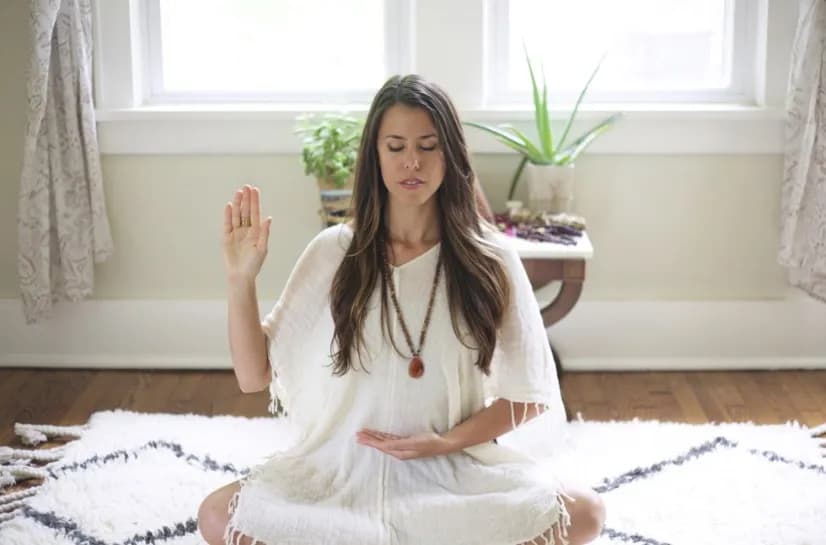
Abhaya Mudra is a yogic hand gesture where the right palm faces outward with fingers pointing upward — the universal gesture of protection, fearlessness, and peace found across Hindu, Buddhist, and Jain traditions. It cultivates inner courage, reduces anxiety, develops postural confidence, and symbolises the offering of safety and reassurance. One of the most ancient and recognisable sacred gestures in the world.
What is Abhaya Mudra?
Abhaya Mudra — the Fearlessness Gesture — derives from Sanskrit: Abhaya (fearlessness, protection, safety — from A meaning ‘without’ and Bhaya meaning ‘fear’) and Mudra (seal or gesture). The right palm faces outward with fingers pointing upward — the ancient gesture of bestowing protection, communicating peace, and embodying the quality of fearlessness.
Abhaya Mudra is one of the most universally recognisable sacred gestures in the world — appearing in Hindu, Buddhist, and Jain iconography across millennia and cultures. It is the gesture of deities offering protection, of teachers offering safety to students, and of practitioners cultivating courage from within. In yogic practice, the physical gesture activates the psychological state it symbolises — holding the fearlessness gesture cultivates the inner quality of fearlessness.
At Habuild, Abhaya Mudra is taught within the mudra and meditation curriculum — introduced as a specific seated meditation practice for cultivating courage and reducing anxiety, with the intentional quality of the practice (combining gesture, breath, and specific mental cultivation) taught explicitly.
Abhaya Mudra Benefits
Physical Benefits
- Activates the Parasympathetic Nervous System The open, facing-outward palm of Abhaya Mudra — combined with slow, steady breathing — activates the parasympathetic nervous system through the non-defensive, open-bodied posture the gesture creates. The physiological association between open palms and safety reduces cortisol and produces measurable nervous system calming — a direct physical effect alongside the gesture’s symbolic intention.
- Develops Postural Confidence and Chest Opening The slightly raised, open-palmed arm position has a measurable effect on posture — opening the chest, lifting the sternum, and creating the physically expansive posture that the psychological state of confidence naturally produces. Regular practice produces a lasting shift in default posture toward greater openness and expansion.
Mental and Emotional Benefits
- Cultivates Inner Fearlessness and Courageous Resolve The primary purpose of Abhaya Mudra in yogic practice is the cultivation of Abhaya (fearlessness) from within. The deliberate holding of the protection gesture — combined with the intention to embody fearlessness — produces a progressive strengthening of the psychological quality of courage. This is not symbolic pretending but the yogic understanding that gesture, intention, and psychological state are mutually reinforcing.
- Reduces Anxiety and Cultivates the Felt Sense of Inner Safety The protective quality of Abhaya Mudra — when directed inward toward the self rather than offered outward — produces a reliable reduction in anxiety and the felt sense of inner security. For practitioners managing chronic anxiety, combining Abhaya Mudra with Nadi Shodhana provides a comprehensive approach to nervous system regulation.
- Develops Magnanimity and Generosity of Spirit Abhaya Mudra carries the quality of offering protection to others — holding the gesture with the intention of extending peace and safety beyond oneself cultivates the magnanimity, generosity, and compassion that yogic practice develops as qualities of character.
How to Do Abhaya Mudra — Step-by-Step Instructions
Key Principles
Key Principles Two principles govern Abhaya Mudra: the palm fully faces outward — not angled or tilted, but directly facing forward with fingers together and pointing upward; and the elbow is slightly bent and relaxed — the arm is raised but not rigidly extended, creating a gesture of genuine offering rather than demand.
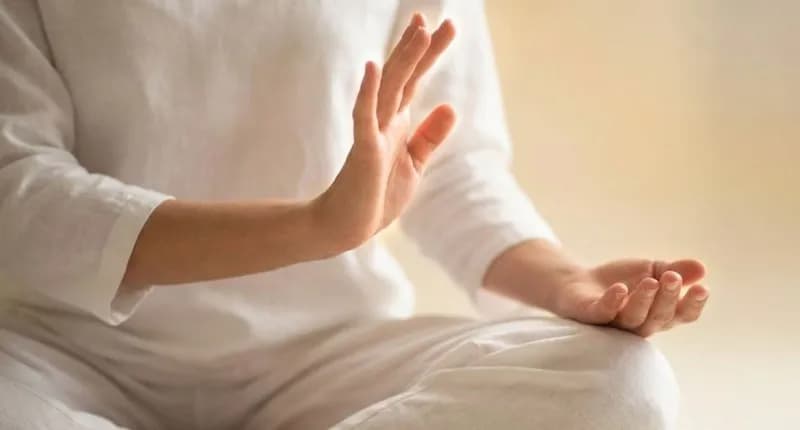
Abhaya Mudra — Step by Step Step 1: Comfortable Seated Starting Position Sit in Sukhasana, Padmasana, or Vajrasana — spine tall and erect, eyes softly closed. Allow five natural breath cycles to settle the awareness before raising the hand.
Step 2: Raise the Right Hand to Shoulder Height Raise the right hand to approximately shoulder height — the elbow remaining slightly bent and relaxed throughout. The arm is raised but not rigidly straightened.
Step 3: Turn the Palm Fully Outward Turn the right palm fully outward — away from the body — with fingers together and pointing directly upward. The palm faces forward squarely, not angled upward or sideways.
Step 4: Rest the Left Hand in Gyan or Chin Mudra Allow the left hand to rest on the left knee in Gyan Mudra (palm down, index to thumb tip) or Chin Mudra (palm up, index to thumb tip) — the complementary meditation gesture grounding the left side.
Step 5: Breathe and Cultivate the Intention Close the eyes softly. Breathe slowly and diaphragmatically — each inhale expanding the chest into the open-arm posture, each exhale deepening the quality of fearless calm. Cultivate the mental quality of fearlessness — either as a protection offered outward or as a courage developed within.
Step 6: Hold and Release Hold for five to fifteen minutes. To release: lower the right arm gently to the knee on an exhalation. Rest with both hands in Gyan Mudra for two breath cycles before opening the eyes.
Breathing in Abhaya Mudra
Slow, steady, diaphragmatic breathing throughout — each inhale expanding the chest into the open-arm posture, each exhale deepening the quality of fearless calm. Surya Bhedana (right nostril breathing) is a natural accompaniment — the solar channel activation of the right side harmonising with the right-hand gesture.
Preparatory Practices Before Abhaya Mudra
These practices settle the nervous system and open the chest before the fearlessness cultivation.
- Nadi Shodhana Pranayama (5 minutes) — Balances the channels and calms the anxious mental activity that Abhaya Mudra is designed to address.
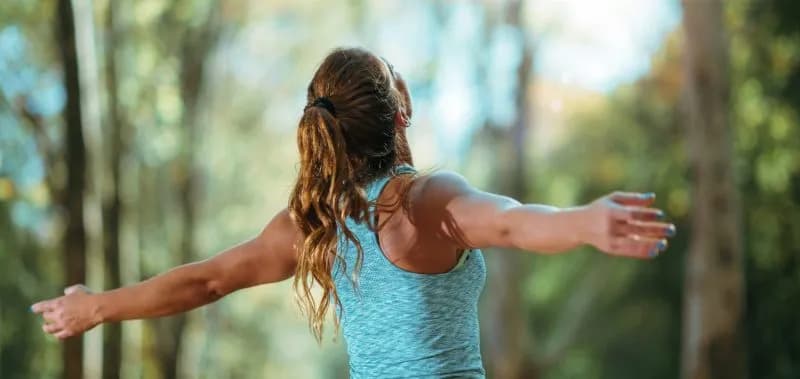
- Chest-opening stretch or gentle backbend — Opens the anterior chest before the raised-arm, open-chest posture of Abhaya Mudra.
- Five natural settling breaths in the seated posture — Allows the awareness to settle before introducing the gesture and its intentional quality.
Variations of Abhaya Mudra
- Variation 1: Abhaya Mudra with Varada Mudra — Traditional Dual Gesture The classical combined gesture: right hand in Abhaya Mudra (offering protection and fearlessness), left hand in Varada Mudra (palm outward and downward, fingers pointing down — offering boons and blessings). Together they represent the complete offering of safety, protection, and the fulfilment of spiritual aspiration — the most traditional iconographic form.
- Variation 2: Abhaya Mudra in Seated Meditation — Inward Cultivation Abhaya Mudra held throughout seated meditation with the specific intention of cultivating fearlessness as an inner quality — the gesture directed toward one’s own fear rather than offered outward. The most therapeutically relevant form for anxiety management.
- Variation 3: Abhaya Mudra in Standing Practice Abhaya Mudra incorporated into standing yoga postures — particularly Virabhadrasana (Warrior Poses) where the fearlessness gesture amplifies the warrior’s quality of courageous groundedness.
- Variation 4: Modified Lower-Arm Abhaya Mudra — Shoulder Accessibility For those with shoulder discomfort, the arm is held at a 45-degree angle rather than full shoulder height — or the hand rests in the lap with the palm facing upward and outward. This accessible form delivers the same parasympathetic and courage-cultivating effect without the shoulder elevation.
Common Mistakes to Avoid in Abhaya Mudra
- Palm Not Fully Outward — Angled Rather Than Square The most common technical error — the palm angling upward or sideways rather than facing directly forward. The fully outward-facing palm is the specific physiological and symbolic element that activates the non-defensive, open-bodied response. Ensure the palm faces squarely forward throughout.
- Rigidly Straightening the Elbow The elbow remains gently bent and relaxed throughout — a gesture of offer rather than demand. A rigidly straight arm creates the physical tension that counteracts the opening, fearless quality the mudra is designed to cultivate.
- Practising Mechanically Without the Intentional Quality The mental cultivation of fearlessness is as important as the physical gesture. Abhaya Mudra practised as a purely mechanical hand position — without the accompanying intention of cultivating courage — delivers only the physical nervous system calming, not the full psychological benefit the practice offers.
Who Should Practise Abhaya Mudra?
- Those Managing Anxiety, Fear, and Nervous System Over-Activity Abhaya Mudra is the most directly and symbolically appropriate yogic practice for managing chronic anxiety — its fearlessness cultivation providing a daily psychological and physiological intervention for the fear response that combines the measurable parasympathetic effect of the open-palm posture with the intentional cultivation of inner courage.
- Teachers and Leaders Cultivating Confident Presence The confident, open-palmed, outward-facing quality of Abhaya Mudra cultivates the leadership presence — the combination of strength and genuine safety that teachers, leaders, and public communicators benefit from developing through regular practice.
- Is Abhaya Mudra Good for Beginners? Yes — Abhaya Mudra has no physical prerequisites and is accessible from the first meditation session. The intentional quality deepens progressively with consistent practice, but the parasympathetic calming and chest-opening benefits are present from the very first hold.
Make Abhaya Mudra a Part of Your Daily Practice
Abhaya Mudra is the yoga tradition’s most directly courage-cultivating and anxiety-reducing hand gesture — its thousands of years of sacred gesture history reflecting the universal human recognition that the open, outward-facing palm is the body’s most direct communication of safety, fearlessness, and peace.
Whether using Abhaya Mudra for five minutes of acute anxiety relief, fifteen minutes of seated fearlessness cultivation before a challenging day, or as the intentional heart of a daily meditation practice, the gesture rewards consistent practice with progressive strengthening of the inner quality of courage that its Sanskrit name — Abhaya, without fear — describes.
The most effective way to learn Abhaya Mudra correctly — with palm orientation guidance, intentional quality instruction, and integration into the complete pranayama and meditation curriculum — is under live expert guidance with Habuild.
Start your 14 day free yoga journey with Habuild, today!
Related reads: Varada Mudra: Meaning How to Practice and Its Benefits for Peace · Nirvana Mudra: Meaning How to Practice and Its Benefits for Peace
Abhaya Mudra’s fearlessness gesture works less like a switch and more like a slow rewiring — anxiety eases and confidence builds with repeated practice, as your nervous system gets used to associating the gesture with steadiness. A single session can feel reassuring, but the deeper shift in courage comes from returning to it often. Habuild’s Yoga Everyday program incorporates mudras like this into a consistent daily practice built around exactly that kind of repetition.
Frequently Asked Questions
Related Articles
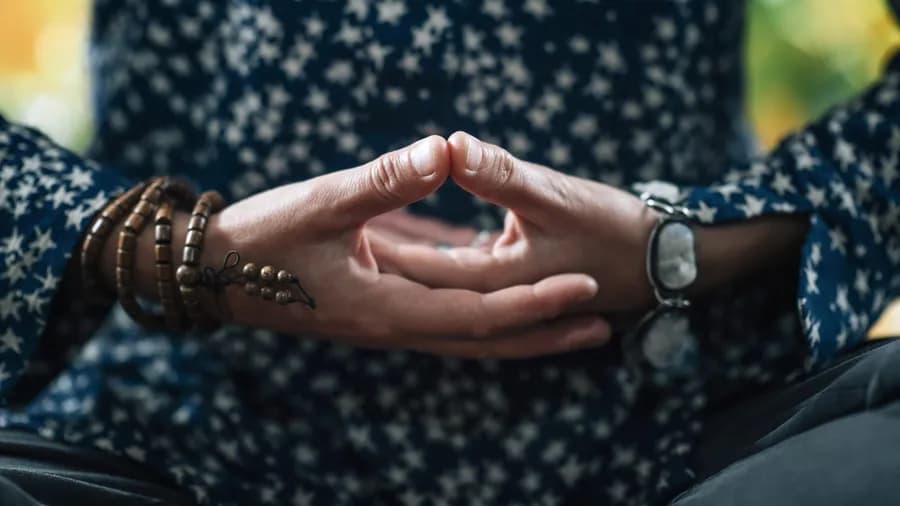
Dhyana Mudra: How to Practice and Its Benefits for Meditation
Practice Dhyana Mudra with Habuild. Follow the meditation hand gesture steps to calm the mind, deepen concentration, and support your daily practice. Start!
Prana Mudra: How to Practice and Its Life Energy Benefits
Practice Prana Mudra with Habuild. Follow the life force hand gesture steps to boost energy, strengthen immunity, and improve your eye health. Start today!
Chin Mudra: How to Practice and Its Benefits for Calm and Clarity
Practice Chin Mudra with Habuild. Follow the consciousness hand gesture steps to calm the mind, improve focus, and deepen your pranayama practice. Start today!