
Jnana Mudra vs Chin Mudra: Differences How to Practice and Benefits
Practice Jnana Mudra with Habuild. Follow the knowledge gesture steps to sharpen concentration, deepen meditation, and cultivate mental clarity. Start today!
Key Takeaways
- Formed by joining the index fingertip to the thumb tip, the most recognised yoga hand gesture.
- Symbolises the union of individual consciousness, Jivatman, with universal Brahman.
- Combines the air element of the index finger with the fire element of the thumb.
- Light fingertip contact provides just enough sensory feedback to anchor awareness.
- Reduces excess Vata, the air element linked to mental agitation, during meditation.
- Positions the hands so the chest opens and shoulders relax during pranayama practice.
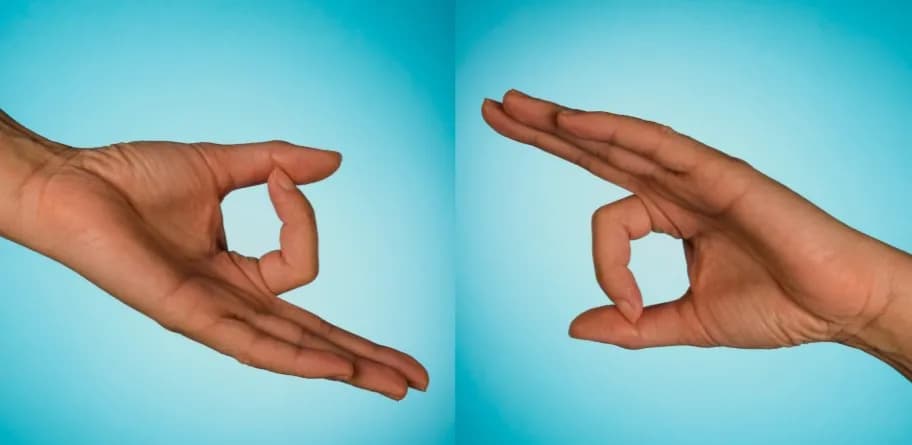
Jnana Mudra, the gesture of knowledge and wisdom, is formed by joining the tip of the index finger to the tip of the thumb while the remaining three fingers extend. The most widely used mudra in yoga and meditation practice, it cultivates concentration, mental clarity, and the receptive awareness that wisdom requires.
What is Jnana Mudra?
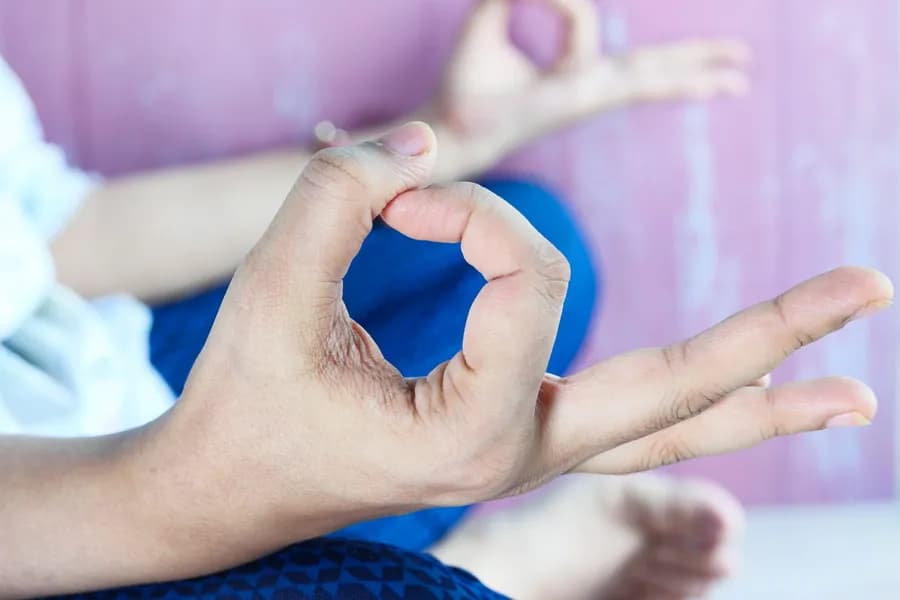
Jnana Mudra — the Wisdom or Knowledge Gesture — is the most universally recognised yoga hand gesture, formed by the simple and elegant meeting of the index finger tip and the thumb tip. In yogic philosophy, the index finger represents the individual self (Jivatman) and the thumb represents the universal consciousness (Brahman or Paramatman). Their meeting at the fingertips symbolises the union of individual and universal awareness — the essential realisation that classical yoga describes as the ultimate purpose of all practice: the recognition that individual consciousness and universal consciousness are not ultimately separate. Our yoga health benefits guide covers how meditation and mudra practice support comprehensive mental and spiritual wellbeing.
Beyond its philosophical symbolism, Jnana Mudra has practical elemental effects: the index finger (air element) joining the thumb (fire element) creates a balanced air-fire activation — producing the mental clarity, alertness, and focused attention that the air-fire combination in its balanced expression represents. This makes Jnana Mudra the ideal meditation and pranayama support mudra — promoting the clear, alert, focused awareness that effective meditation requires. Our fitness & yoga resources explain how Jnana Mudra integrates within the complete yoga and meditation curriculum.
Jnana Mudra Benefits
Mental Benefits
- Sharpens Concentration and Focus Jnana Mudra’s air-fire balance produces the sharp, directed mental focus that sustained meditation and pranayama practice require. The light, effortless contact of the finger tips provides just enough sensory feedback to anchor awareness without creating distraction. Our flexibility guide covers how mental focus practices complement physical flexibility development.
- Calms the Mind and Reduces Agitation The balanced air-fire activation of Jnana Mudra reduces the excess Vata (air element) of mental agitation — producing the calm alertness that distinguishes effective meditation from either sleepy dullness or scattered excitation.
- Cultivates Receptive Wisdom The philosophical dimension of Jnana Mudra — the meeting of individual and universal — cultivates the receptive quality of open awareness that wisdom specifically requires. Pair with pranayam kapalbhati for energetic preparation before Jnana Mudra’s awareness-cultivating meditation practice.
Physical Benefits
- Improves Respiratory Function in Pranayama Jnana Mudra with palms resting on the knees positions the hands in a way that gently opens the chest and relaxes the shoulders — improving the respiratory mechanics of pranayama practice. suryabhedan pranayam with Jnana Mudra is the classical solar pranayama-mudra combination.
How to Do Jnana Mudra
Key Principles
- Sit in Sukhasana, Padmasana, or Vajrasana — spine erect.
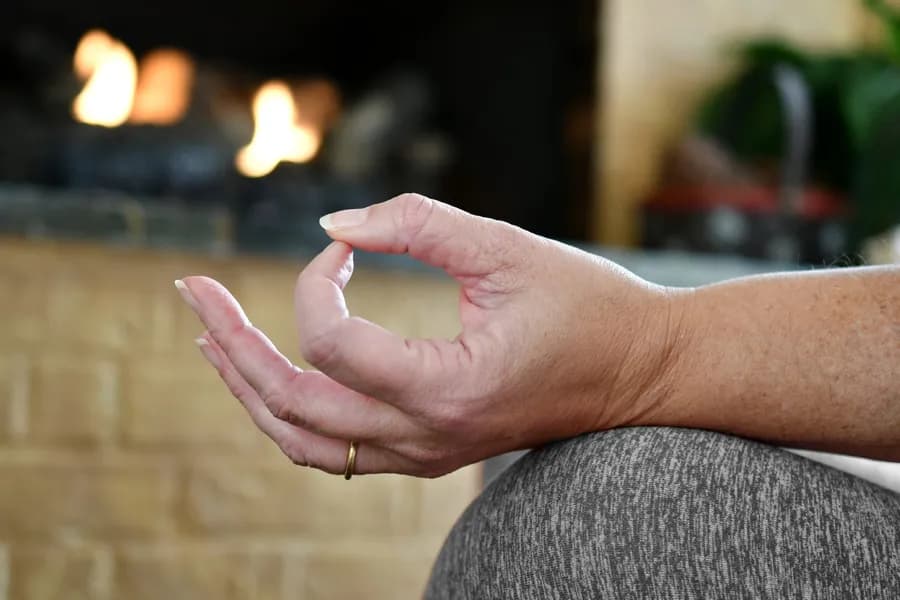
- Rest both hands on the knees — palms may face upward (receiving posture) or downward (grounding posture).
- Bring the tip of the index finger to touch the tip of the thumb — light, effortless contact.
- Allow the remaining three fingers to extend gently and naturally.
- Hold in both hands simultaneously. Close the eyes. Breathe naturally.
- Maintain throughout any meditation or pranayama session.
Palms Up vs Palms Down
Palms facing upward: receptive, open, inviting awareness — the traditional Gyan Mudra receiving posture. Palms facing downward: grounding, stable, containing — more appropriate for formal seated meditation. Both are valid; the choice depends on the quality of awareness being cultivated. chandrabhedan pranayam with Jnana Mudra (palms up) is the most receptive, open lunar practice combination.
Jnana Mudra vs Chin Mudra — What is the Difference?
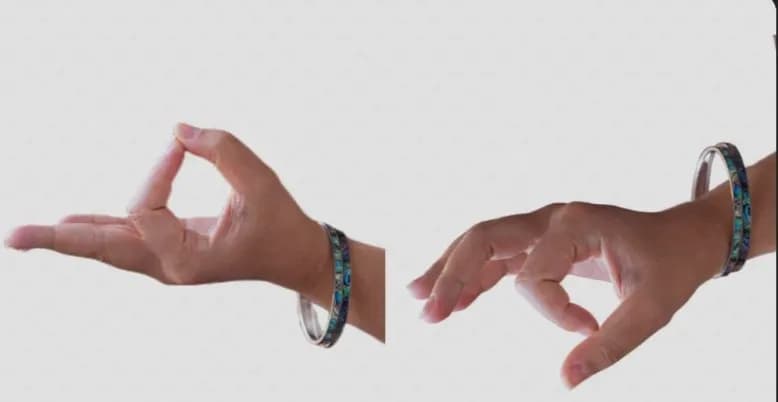
Jnana Mudra and Chin Mudra use the same finger formation (index tip to thumb tip). The distinction in some traditions: Jnana Mudra has the palms facing downward (grounding the knowledge); Chin Mudra has the palms facing upward (receiving and expanding consciousness). In most contemporary practice, both terms describe the upward-facing palm formation and are used interchangeably.
How Often Should You Practise Jnana Mudra?
- Jnana Mudra is the universal meditation mudra — appropriate for every practice session. There is no duration limitation or elemental concern that requires monitoring. Use it throughout every pranayama and meditation session as the standard foundational awareness gesture.
Start your 14 day free yoga journey with Habuild, today!
Related reads: Chin Maya Mudra: What It Is Differences from Chin Mudra and Benefits · Chin Mudra: How to Practice and Its Benefits for Calm and Clarity
The difference between these two mudras is subtle, and so is their effect — mental clarity and focus sharpen gradually across repeated sitting practice rather than appearing the first time you hold the gesture. Using either one as a steady anchor for daily meditation, rather than switching techniques constantly, is what lets that clarity accumulate. Both are part of the seated practice built into Habuild’s Yoga Everyday program.
Frequently Asked Questions
Related Articles
Chin Mudra: How to Practice and Its Benefits for Calm and Clarity
Practice Chin Mudra with Habuild. Follow the consciousness hand gesture steps to calm the mind, improve focus, and deepen your pranayama practice. Start today!

Gyan Mudra: How to Do It and Its Benefits for Focus and Memory
Practice Gyan Mudra with Habuild. Follow the wisdom hand gesture steps to improve focus, reduce anxiety, and enhance your meditation practice. Start today!
Dhyana Mudra: How to Practice and Its Benefits for Meditation
Practice Dhyana Mudra with Habuild. Follow the meditation hand gesture steps to calm the mind, deepen concentration, and support your daily practice. Start!