
Koundinyasana (Sage Koundinya’s Pose): Steps, Benefits and Precautions
This twisted arm balance is named after the sage Koundinya, one of the five disciples present at the first teaching of the Buddha. See the steps, benefits, and precautions.
Key Takeaways
- Named after sage Koundinya, one of the five disciples present at the Buddha’s first teaching.
- Exists in two distinct variations – Eka Pada Koundinyasana 1 with a torso twist, and 2 without.
- Requires the arm balance foundation of both Chaturanga and Bakasana before attempting safely.
- Koundinyasana 2 is generally considered the more accessible entry point of the two variations.
- Surpasses simpler arm balances like Crow Pose through its added asymmetric leg demand.
- Represents the intersection of arm strength, spinal rotation, and hip opening in one pose.
What is Koundinyasana?
Koundinyasana — pronounced kown-din-YAH-sah-nah — is named after the sage Koundinya (also written Kondanna), one of the five disciples present at the first teaching of the Buddha and a revered figure in both Hindu and Buddhist traditions. The pose honours this sage through the demanding twisted arm balance that embodies his qualities of discipline, focused practice and the fruits of long dedication. Koundinyasana belongs to the advanced arm balance family in yoga.
Koundinyasana — Eka Pada Koundinyasana, Sage Koundinya’s Pose — is one of yoga’s most technically demanding arm balances, combining full upper body strength, deep hip and IT band opening, and spinal rotation in a single suspended position. Named after the sage Koundinya who appears in both Buddhist and Hindu texts, the pose represents the integration of strength, flexibility and meditative precision that advanced arm balance practice embodies. This complete guide covers koundinyasana benefits, the systematic step-by-step progression, and every modification.
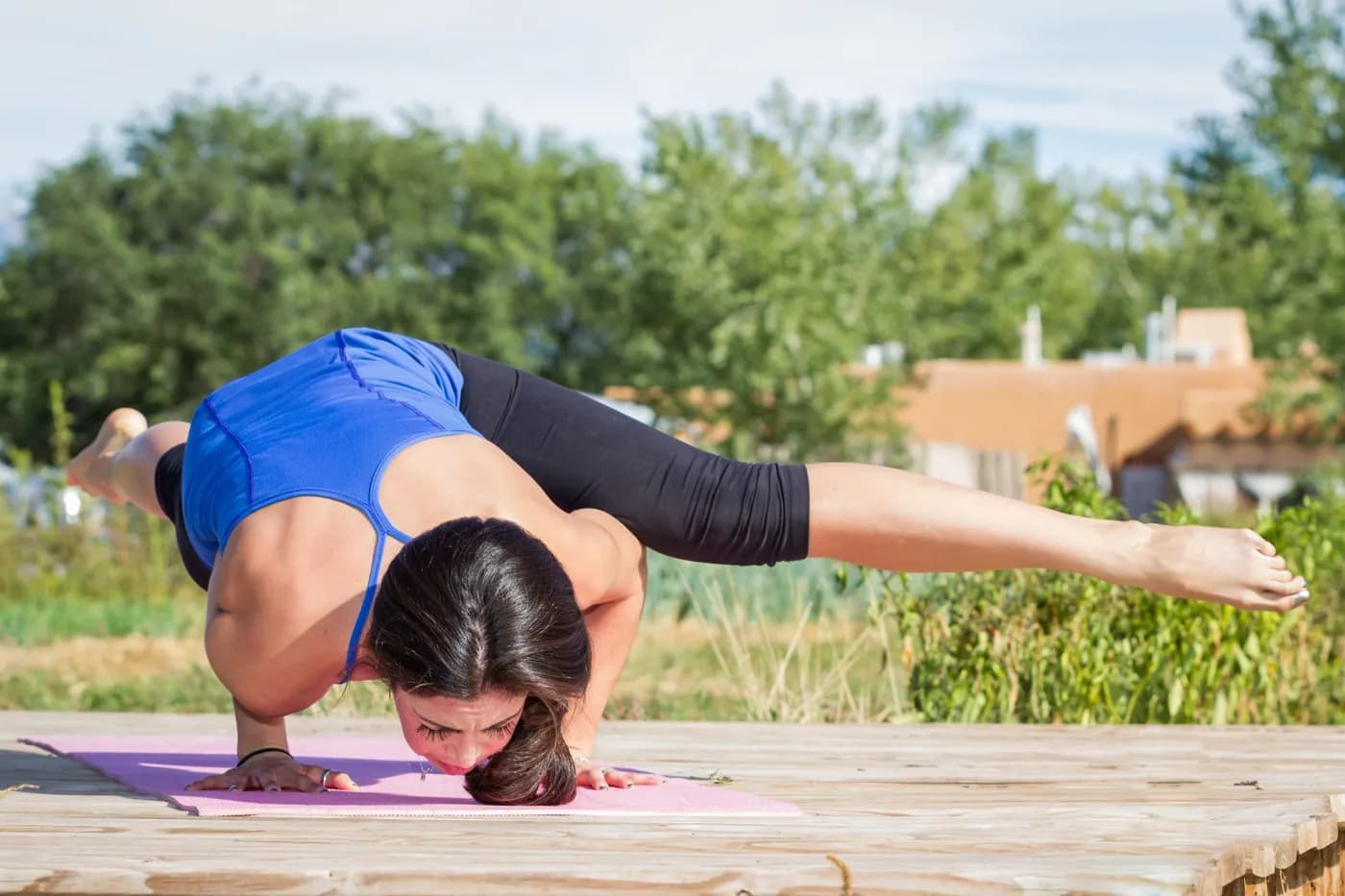
Koundinyasana exists in two primary variations that are distinct poses: Eka Pada Koundinyasana 1 (one leg extended forward, one back, with a lateral torso twist placing one thigh on the upper arm) and Eka Pada Koundinyasana 2 (one leg extended forward over the upper arm, one back, without the same degree of torso twist). Both require the arm balance foundation of Chaturanga and Bakasana, the hip flexibility of deep hip external rotation or lateral hip opening, and the core strength to maintain the suspended body position. Koundinyasana 2 is generally considered the more accessible entry point.
In the advanced yoga system, the eka pada koundinyasana family represents the intersection of arm balance technique, spinal rotation flexibility and hip opening depth — making these poses the culmination of a comprehensive yoga practice that has developed strength, flexibility and body awareness across all of these dimensions. The koundinyasana benefits are concentrated in this comprehensive integration of multiple physical capacities rather than the development of any single quality.
Koundinyasana Benefits
- Physical Benefit 1: Full Upper Body Strength — Arms, Shoulders and Core Koundinyasana loads the wrists, forearms, triceps, anterior deltoids, serratus anterior and core in the maximum available arm balance integration — surpassing the loading of simpler arm balances like Crow Pose (Bakasana) through the added asymmetric leg demand and the twisted or extended position. The koundinyasana benefits for upper body functional strength are among the most comprehensive available from any single yoga pose.
- Physical Benefit 2: Deep Hip and IT Band Opening The lateral hip-to-arm shelf position of Eka Pada Koundinyasana 1 requires and develops deep lateral hip and IT band flexibility — opening the outer hip complex in the specific pattern that running-related IT band syndrome and lateral hip pain most require. The eka pada koundinyasana benefits for lateral hip flexibility are distinctively targeted by this family of poses.
- Physical Benefit 3: Spinal Rotation and Thoracic Mobility Eka Pada Koundinyasana 1’s lateral spinal rotation component develops the thoracic rotation range that Koundinyasana 2’s forward extension variation does not specifically require — making the two poses complementary in their spinal mobility benefits alongside their shared arm balance demands.
- Mental and Emotional Benefit 4: Develops Courage and Tolerance for Uncertainty Arm balances require the practitioner to shift weight over the hands — a movement that activates the primal fear of falling forward. Consistent koundinyasana practice develops the courage to move into uncertainty, the most directly trainable psychological quality available through arm balance practice. This courage development is specifically attributed to arm balance practice in the yoga tradition.
- Mental and Emotional Benefit 5: Cultivates Dedication and Long-Term Practice Commitment Koundinyasana cannot be achieved without months of consistent preparatory practice — making the journey to the pose as valuable as the pose itself. The koundinyasana benefits include the specific quality of patient, committed dedication that the sage Koundinya himself exemplified in the traditional stories.
Koundinyasana requires the simultaneous activation of the triceps, anterior deltoid, serratus anterior, wrist extensors and core — producing one of the highest total upper body neuromuscular recruitment demands of any yoga pose.
The lateral hip opening component of Koundinyasana stretches the piriformis, IT band and hip external rotators in a loaded position that passive hip stretches cannot replicate — directly addressing the lateral hip restriction associated with IT band syndrome and hip pain.
The twisted entry to Koundinyasana requires maximum thoracic rotation — progressively building the 35–40 degree rotational range that desk posture reduces to 15–20 degrees in many adults.
Koundinyasana requires leaning past the perceived tipping point in a more complex configuration than Bakasana — building the courage and comfort with uncertainty that practitioners describe as one of the most transferable psychological benefits of advanced arm balance practice.
Koundinyasana typically takes months of systematic progression to achieve — building the long-term practice commitment and incremental improvement mindset that distinguishes sustained yoga practitioners from those who plateau.
How to Do Koundinyasana 2 — Step-by-Step Instructions
Key Principles
Eka Pada Koundinyasana 2 requires: (1) established Chaturanga with correct shoulder alignment, (2) the ability to rest one thigh on the back of the upper arm without slipping, and (3) the core strength to extend the legs simultaneously. Never attempt without the Chaturanga and Crow Pose foundation fully established.
Step 1: Begin in a Low Lunge with Twist
From Plank, step the right foot outside the right hand into a low lunge. Lower the left knee to the floor for stability. Bring the right elbow to rest on the right shin — the beginning of the arm-to-leg connection that Koundinyasana requires. Take 5 breaths here to establish the hip and shoulder positioning.
Step 2: Hook the Right Thigh High on the Right Arm
Work the right knee as high as possible up the right upper arm — toward the shoulder if possible. This is the “shelf” position: the thigh resting on the upper arm creates the platform from which the balance is launched. Press the thigh firmly against the arm to prevent it slipping during the lift. The higher the thigh placement on the arm, the more stable and accessible the balance becomes.
Step 3: Plant Both Hands and Establish Chaturanga Arms
With the right thigh hooked high on the right arm, plant both hands shoulder-width apart, fingers spread. Begin to bend the elbows into the Chaturanga arm position (90 degrees) — the elbows tracking back over the wrists, not flaring outward. This is the same arm position as Chaturanga Dandasana.
Step 4: Lean Forward and Lift the Back Leg
Begin to shift the body weight forward over the hands — more forward than most practitioners expect. As the weight transfers, the back leg naturally lightens and begins to float upward. The lean forward is the counter-weight that makes the lift possible: without sufficient forward weight shift, the back leg cannot lift. Allow the back leg to rise as the weight naturally shifts forward.
Step 5: Extend Both Legs — Full Eka Pada Koundinyasana 2
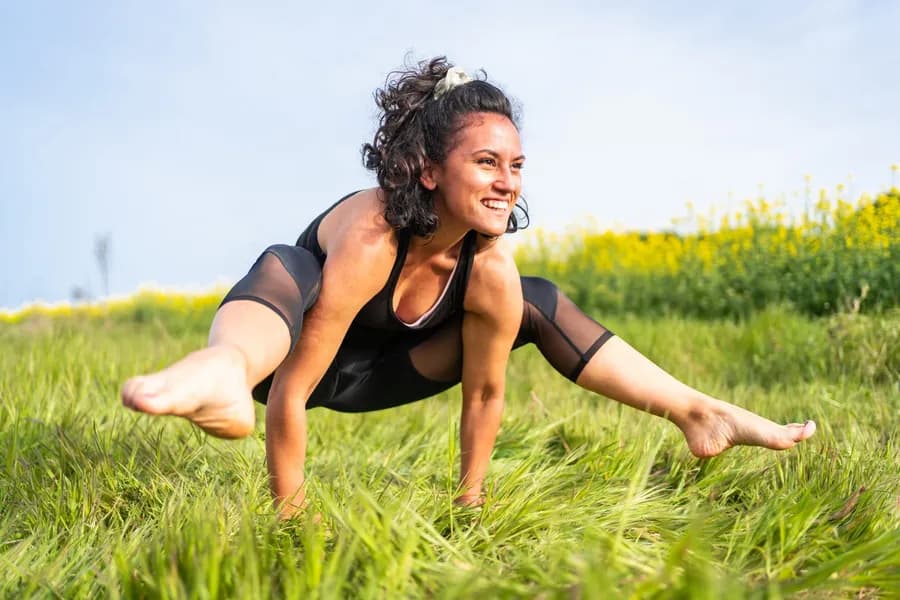
Once both legs are off the floor, work toward extending both legs — the front leg extending forward and the back leg extending backward, both roughly parallel to the floor. The arms remain in Chaturanga position, elbows at 90 degrees. This is the full expression of Eka Pada Koundinyasana 2. Hold for 3-5 breaths.
Step 6: How to Come Out of Koundinyasana
Either step the front foot back to Chaturanga and flow into Upward Dog, or gently lower both feet to the floor and rest in Child’s Pose. Always rest for 5-10 breaths after each side before attempting the other side or repeating. Koundinyasana is demanding enough that brief rest between attempts is essential for maintaining form quality.
Breathing in Koundinyasana
Steady, continuous breathing throughout Koundinyasana — the tendency to hold the breath at the moment of balance engagement must be consciously resisted. Slow, even nasal breathing is the marker of sustainable arm balance: if the breath is uncontrolled, the balance is not yet stable enough to hold for meaningful duration.
Preparatory Poses Before Koundinyasana
- Chaturanga Dandasana — the arm position of Koundinyasana is identical to Chaturanga; this must be fully established first.
- Bakasana (Crow Pose) — develops the weight-shifting courage and wrist loading tolerance that Koundinyasana requires.
- Parivrtta Parsvakonasana (Revolved Side Angle) — develops the spinal rotation and hip opening for Koundinyasana 1.
- Lizard Pose (Utthan Pristhasana) — develops the deep hip opening for the thigh-to-arm shelf position.
Variations of Koundinyasana
Variation 1: Eka Pada Koundinyasana 2 with Back Knee Bent (Beginner Approach)
Performing the balance with the back knee bent rather than fully extended — reduces the balance demand and moment arm while developing the thigh-shelf and weight-shift mechanics. Difficulty: Intermediate
Variation 2: Eka Pada Koundinyasana 1 (Twisted Version)
The rotated version — the front knee hooks over the opposite upper arm through a twist rather than the straight-arm shelf. Requires greater spinal rotation but less hip opening than Koundinyasana 2. Difficulty: Advanced
Variation 3: Dwi Pada Koundinyasana (Two Feet Version)
Both legs on the same side over both upper arms simultaneously — the most advanced variation requiring the greatest lateral hip opening and core strength of the Koundinyasana family. Difficulty: Expert
Common Mistakes to Avoid in Koundinyasana
- Mistake 1: Insufficient Forward Weight Shift The most common barrier to the arm balance lift: not leaning the body weight sufficiently far forward over the hands. The centre of gravity must shift past the hands — more forward than feels natural. Without this, the back leg cannot lift regardless of strength.
- Mistake 2: Thigh Too Low on the Arm The thigh shelf position must be as high up the upper arm as possible — ideally toward the armpit. A low thigh position (near the elbow) creates an unstable shelf that cannot support the balance. Work the thigh as high as possible before attempting the lift.
- Mistake 3: Elbows Flaring Outward Elbows flaring outward in the balance reduces the structural stability of the arm support. Maintain the Chaturanga elbow position — tracking back over the wrists, not out to the sides.
- Mistake 4: Attempting Without Crow Pose Foundation Koundinyasana requires the weight-shifting courage and wrist loading tolerance that Bakasana (Crow Pose) develops. Attempting Koundinyasana without an established Crow Pose produces the frustrated effort of an unsupported technical attempt. Build through Crow first.
Who Should Practise Koundinyasana?
- Advanced Practitioners Deepening Their Arm Balance Practice Koundinyasana is an advanced pose appropriate for practitioners with established Crow Pose, Chaturanga and foundational arm balance strength. Habuild’s progressive sessions build the complete foundation before introducing this advanced balance.
- Those Seeking the Lateral Hip Opening Benefits The eka pada koundinyasana benefits for lateral hip and IT band opening are specifically valuable for runners and lateral-sport athletes seeking the outer hip flexibility that this arm balance family uniquely develops.
- Is Koundinyasana Good for Beginners? Koundinyasana is not appropriate for beginners — it requires an established arm balance foundation of Crow Pose, strong Chaturanga and hip opening depth. The preparatory progression takes most practitioners 6-18 months of consistent practice. Habuild’s curriculum builds this foundation systematically through the appropriate preparatory sequence.
- Practitioners Developing Courage and Mental Fortitude The arm balance family specifically develops the courage to lean into uncertainty — the psychological quality that transfers from the mat into daily decision-making and risk tolerance. Koundinyasana is among the most direct available practices for this quality of courageous engagement.
650,000+ people building better habits every morning every morning. Live daily sessions. Real-time corrections. Cancel anytime.
Koundinyasana’s twisted arm balance takes real, patient conditioning of the wrists, shoulders and core — nowhere close to something a single attempt can deliver. Building toward it safely means practicing supporting poses consistently over weeks, letting strength and balance develop side by side. Habuild’s Yoga Everyday program offers a structured daily path to help build that kind of foundational strength.
Frequently Asked Questions
Related Articles
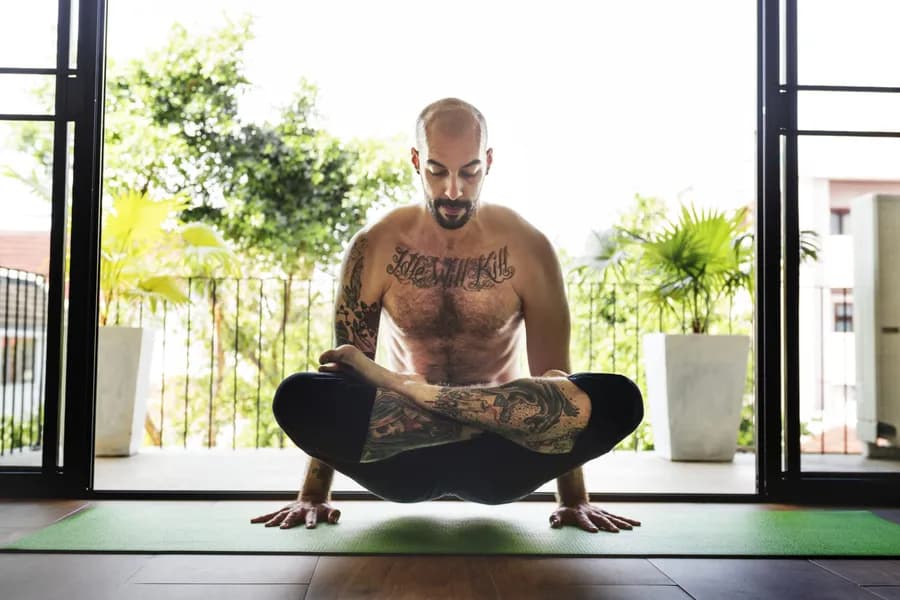
Kukkutasana (Cockerel Pose): Steps Arm Balance and Strength Benefits
Practice Kukkutasana with Habuild. Follow the rooster yoga pose steps to strengthen arms, build core power, and master this advanced arm balance. Start today!

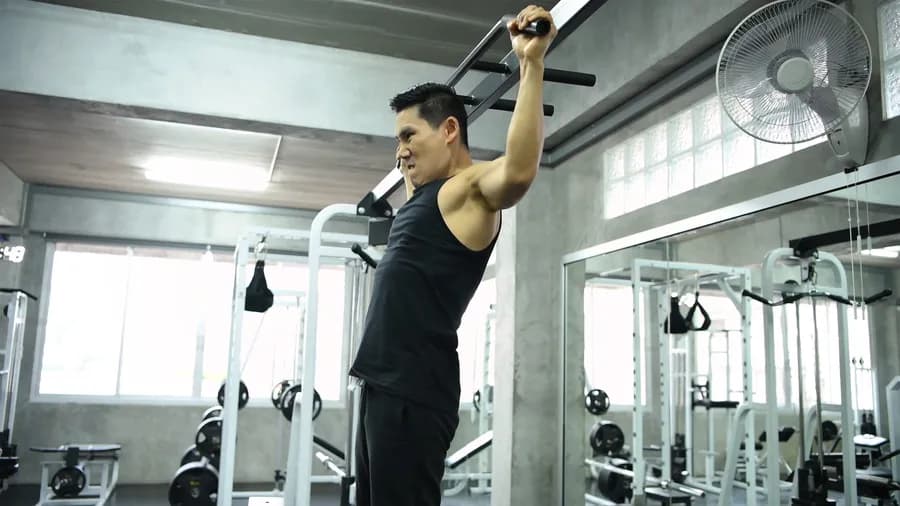
How to Strengthen Forearms: Exercises & Tips
Learn how to strengthen forearms with the best exercises, beginner tips, and a structured plan. Start your strength journey for just ₹1.
Tittibhasana (Firefly Pose): Steps Benefits and Arm Balance Tips
Explore Tittibhasana with Habuild. Discover tittibhasana benefits and learn to master the firefly pose yoga to build core strength and improve balance today!