
Tittibhasana (Firefly Pose): Steps Benefits and Arm Balance Tips
Explore Tittibhasana with Habuild. Discover tittibhasana benefits and learn to master the firefly pose yoga to build core strength and improve balance today!
Key Takeaways
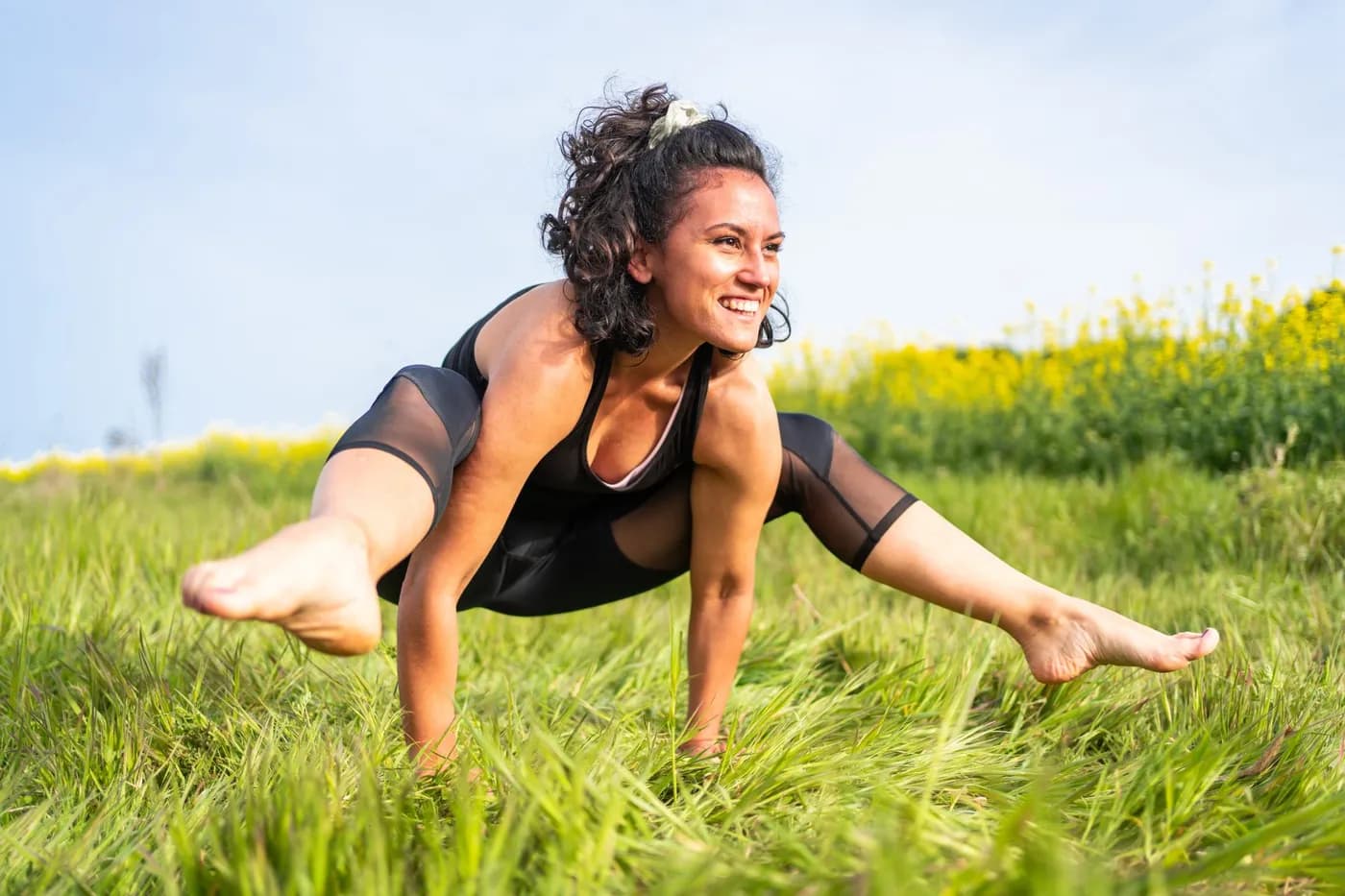
- Legs extend straight to the sides while the torso suspends horizontally between the arms.
- The Bakasana-to-Tittibhasana transition is a common advanced vinyasa sequence in itself.
- Requires shoulders positioned deeply past the knee creases before attempting the lift.
- Demands two separate prerequisites in parallel – deep hamstring length and arm strength.
- Its horizontal pressing strength is distinct from vertical arm balances like Handstand.
- Practitioners strong in arm balances but tight in hamstrings still find the entry elusive.
Tittibhasana, or Firefly Pose, is an advanced arm balance in which the legs extend straight to the sides with the torso suspended horizontally between them — the arms pressing into the backs of the thighs, supporting the full body weight parallel to the floor. It requires and develops exceptional arm strength, deep hamstring and hip flexibility, and the integrated core stability that horizontal body suspension demands.
What is Tittibhasana?
Tittibhasana — the Firefly Pose — derives from Sanskrit: Tittibha (a small insect, often interpreted as a firefly) and Asana (posture or seat). The pose captures the extended, hovering quality of an insect in sustained flight — the body suspended horizontally above the floor on the arms, the legs extending to either side like wings catching the air. Pronounced tit-tib-HA-sa-na, it belongs to the advanced arm balance family and requires a specific combination of prerequisites that distinguishes it from other arm balances in the complete asana system.
Tittibhasana is closely related to Eka Hasta Bhujasana (Elephant’s Trunk Pose) and the seated arm balance family. The Bakasana-to-Tittibhasana transition — from Crow Pose to Firefly — is a common advanced vinyasa sequence that develops the specific shoulder mechanics that both poses share. Unlike the compact, forward-leaning lift of Bakasana, Tittibhasana requires the arms to create a horizontal shelf for the thighs above the elbow — demanding that the shoulders be positioned deeply past the knee creases before the lift is attempted, and requiring the hamstring length to allow both legs to extend straight in the supported position.
The pose sits at the intersection of two demanding physical prerequisites: the deep forward fold hamstring flexibility needed to walk the shoulders past the knees, and the arm and shoulder strength needed to sustain the horizontal body suspension once the legs extend. Practitioners who have strong arm balances but limited hamstring flexibility find the prerequisites elusive; those with deep forward folds but limited upper body strength find the lift itself the challenge. Tittibhasana’s mastery typically requires the systematic development of both domains in parallel.
Tittibhasana Benefits
Physical Benefits
- Builds Exceptional Arm and Shoulder Strength Tittibhasana’s horizontal body suspension creates a unique shoulder girdle and arm strength demand — the serratus anterior, triceps, and wrist extensors working in sustained loaded extension to maintain the horizontal position. This horizontal pressing strength is distinct from the vertical arm balance demands of Handstand or the forward-leaning mechanics of Bakasana, making Tittibhasana a specifically valuable addition to the complete arm strength development programme.
- Develops Deep Hamstring and Hip Flexibility Tittibhasana’s prerequisite — a deep forward fold with the shoulders walking past the knee creases — requires and develops exceptional hamstring length and hip flexor mobility. The progressive preparation work for Tittibhasana, through deep Uttanasana and Prasarita Padottanasana practice, produces some of the most comprehensive posterior chain lengthening available in the yoga flexibility curriculum.
- Builds Core Integration and Spinal Stability The horizontal body position of Tittibhasana demands sustained deep core engagement throughout the hold — the transverse abdominis, pelvic floor, and spinal stabilisers working together to maintain the horizontal spine and prevent the hips from dropping. This total core integration is one of Tittibhasana’s most functionally valuable benefits, directly supporting the spinal stability that all physical performance and injury prevention require.
Mental and Emotional Benefits
- Develops Fearless Trust in the Arms and Body Tittibhasana requires complete surrender to the arm structure — the practitioner literally suspended in space on the arms with no other physical support. The progressive development of this trust through patient prerequisite work builds the courageous, trusting quality that advanced arm balance practice uniquely cultivates — and that transfers meaningfully to the courageous quality of mind that challenges beyond the yoga mat require.
- Cultivates Equanimity Through the Preparation Journey Most practitioners spend months or years in the prerequisite preparation for Tittibhasana before the full pose becomes accessible. This extended preparation journey — practised with patience, consistency, and equanimity toward both progress and setbacks — is itself a profound mental cultivation. The Firefly Pose teaches, above all, the quality of trusting the process.
How to Do Tittibhasana — Step-by-Step Instructions
Key Principles
Key Principles Three principles govern safe Tittibhasana entry: shoulder depth past the knees must be established completely before the lift is attempted — legs will slide off the arm shelf if the shoulders are not well past the knee crease; the lift comes from pushing the floor away with shoulder protraction, not from muscular core crunching; and the leg extension is progressive — straighten as much as current hamstring flexibility allows, never forcing straight legs before the flexibility is genuinely there.
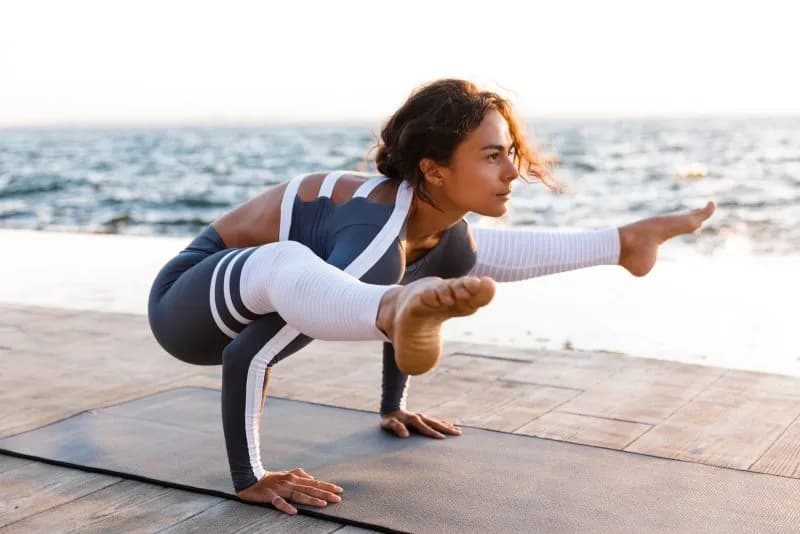
Tittibhasana — Step by Step Step 1: Starting Position — Deep Wide-Legged Forward Fold Stand with the feet hip-to-shoulder-width apart, toes pointing slightly outward. Fold deeply forward — bending the knees as much as necessary to bring the torso close to the thighs. The hands reach the floor between the feet. Breathe and allow the fold to deepen.
Step 2: Thread Both Arms Between the Thighs Walk both shoulders as deeply past the knee creases as possible — the backs of the thighs resting on the upper arms above the elbows. The shoulders should be positioned past the midpoint of the lower leg ideally. This shoulder depth is the most critical element of Tittibhasana entry.
Step 3: Place Palms Flat on the Floor Place both palms flat on the floor, fingers pointing forward, shoulder-width apart. The hands should be positioned approximately in line with the front of the feet or slightly ahead. Spread the fingers and create a broad, stable foundation.
Step 4: Lean Weight Forward and Lift the Feet Bend the knees and lower the hips — allowing the backs of the thighs to rest fully on the upper arms. Lean the body weight progressively forward onto the arms. As the shoulders bear the load, the feet will begin to lighten naturally. Do not attempt to lift the feet — allow them to float as the weight shifts forward.
Step 5: Engage the Serratus and Straighten the Arms Once the feet have lightened, engage the serratus anterior strongly — push the floor away and straighten both arms fully. The body is now supported entirely on the arms, with the legs bent and thighs resting on the upper arms.
Step 6: Extend the Legs and Hold Extend both legs simultaneously to the sides — straightening the knees as much as current hamstring flexibility allows. Hold for 3 to 5 breath cycles. Lower with control by bending the knees and gently lowering the sitting bones back to the floor.
Breathing in Tittibhasana
Ujjayi breathing is the most supportive pranayama for Tittibhasana — the throat constriction stabilising the thoracic pressure and maintaining the internal support that the horizontal suspension requires. The breath must remain steady and even throughout the hold. Any disruption in breath evenness is the earliest signal that the practitioner is approaching or exceeding their current capacity.
Preparatory Poses Before Tittibhasana
These poses build the hamstring flexibility and arm strength prerequisites in parallel.
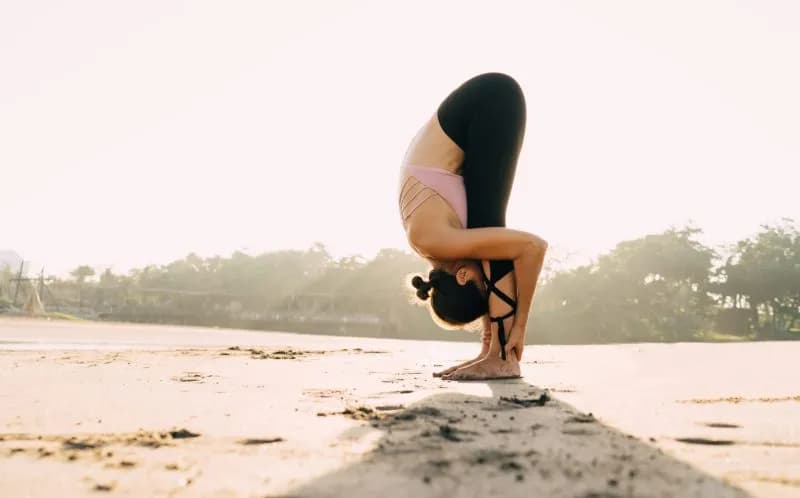
- Deep Uttanasana (hands flat, forehead toward shins) — Develops the hamstring length required to walk the shoulders past the knees.
- Prasarita Padottanasana — Builds wide-legged hamstring and inner thigh flexibility in the standing forward fold.
- Bakasana (Crow Pose, 5+ breath hold) — Establishes the arm balance mechanics, serratus engagement, and lifting confidence before Tittibhasana.
- Eka Hasta Bhujasana (Elephant’s Trunk Pose) — The direct arm-shelf predecessor to Tittibhasana, developing the single-leg thigh-on-arm position before the bilateral version.
Variations of Tittibhasana
- Variation 1: Tittibhasana with Bent Knees — Beginner Stage The full pose held with bent knees rather than extended legs — the thighs resting on the upper arms, the feet lifted from the floor, and the body weight fully supported on the arms without the hamstring flexibility demand of straight legs. This is the appropriate first stage: establishing the arm-shelf position and the lifting mechanism before adding the leg extension challenge.
- Variation 2: Tittibhasana to Bakasana Transition — Intermediate The dynamic transition from Tittibhasana (legs extended) to Bakasana (knees drawn to upper arms) and back — a vinyasa sequence that develops control, arm strength, and the core integration that moving between the two positions requires. This transition appears frequently in advanced Ashtanga and vinyasa sequences.
- Variation 3: Tittibhasana with Forward Movement — Advanced Walking forward on the hands while maintaining the Tittibhasana position — the legs remaining extended and the body moving forward through space. This dynamic variation demands exceptional arm endurance, core integration, and the proprioceptive control that sustained horizontal movement in the arm balance requires.
Common Mistakes to Avoid in Tittibhasana
- Insufficient Shoulder Depth Past the Knees The most common structural error in Tittibhasana entry. If the shoulders are not positioned well past the knee creases, the thighs have insufficient arm surface to rest on — the legs will slide off the arm shelf when the weight shifts forward, making the lift impossible and potentially straining the inner thighs. Prioritise shoulder depth above all other considerations before attempting the lift.
- Forcing the Legs Straight Before the Flexibility is Ready Forcing straight legs before adequate hamstring length has developed places extreme strain on the hamstring attachments at the sitting bones and can produce a significant hamstring injury. Always begin with bent-knee Tittibhasana and extend the legs only to the degree that current flexibility genuinely allows — not to the degree the pose is supposed to look.
- Collapsing the Serratus and Sinking the Hips The push-the-floor-away shoulder protraction of the serratus anterior is the lift mechanism that prevents the hips from sinking and the back from rounding. Practitioners who neglect the serratus engagement sink immediately into a hip-drooping, back-rounding position that loads the lumbar spine rather than distributing the body weight through the shoulder girdle. The serratus cue — push the floor away — must be maintained continuously.
- Attempting Without Adequate Wrist and Elbow Preparation Tittibhasana places significant load on the wrists and elbows — particularly in the horizontal position, which loads the elbow joint in extension under body weight. A thorough wrist and elbow warm-up is essential before every practice session. Those with existing wrist or elbow conditions should approach the pose with significant caution and under specific medical guidance.
Who Should Practise Tittibhasana?
- Advanced Practitioners with Deep Forward Fold Flexibility Tittibhasana is specifically appropriate for practitioners who have achieved the deep Uttanasana and Prasarita Padottanasana flexibility that allows the shoulders to walk comfortably past the knee creases. This prerequisite naturally defines the appropriate practitioner level — and no amount of arm strength substitutes for the hamstring flexibility that the arm-shelf position requires.
- Arm Balance Practitioners Developing Their Horizontal Practice For those building a complete arm balance practice, Tittibhasana provides a unique horizontal-suspension challenge that vertical arm balances like Handstand and Pincha Mayurasana do not address. The combination of deep hamstring flexibility and horizontal pressing strength that Tittibhasana develops makes it a meaningfully distinct and valuable addition to the complete arm balance repertoire.
- Those Developing Total Body Integration The specific integration of hamstring flexibility, shoulder strength, core stability, and mental composure that Tittibhasana demands makes it particularly valuable for those whose yoga goals include the development of total body functional integration rather than isolated physical qualities. Mastering Tittibhasana requires all four domains to be present simultaneously.
- Is Tittibhasana Good for Beginners? Tittibhasana is not appropriate for beginners — the hamstring flexibility and arm strength prerequisites require sustained and systematic development over months or years of consistent practice. However, the preparatory journey is enormously valuable for practitioners at all levels: deep Uttanasana practice, Bakasana development, and Eka Hasta Bhujasana work all produce meaningful benefits independently of whether Tittibhasana is ever achieved.
Make Tittibhasana a Part of Your Practice
Tittibhasana is one of the yoga tradition’s most technically demanding and physically rewarding arm balances — its specific combination of deep hamstring flexibility, horizontal shoulder strength, and integrated core stability producing a pose that tests and develops the complete physical capability of advanced yoga practice. The preparation journey is as valuable as the full pose: the hamstring opening, the arm balance development, and the core integration work all produce meaningful and transferable benefits throughout the practice.
Whether you are currently developing the deep Uttanasana prerequisite, establishing consistent Bakasana, or refining the shoulder-depth entry and leg extension of a nearly-complete Tittibhasana, the systematic progression ensures that every stage is purposeful and safe. The bent-knee variation makes meaningful practice accessible well before the full hamstring flexibility is achieved.
The most effective way to develop Tittibhasana — with complete prerequisite sequencing, shoulder-entry technique guidance, and the arm-shelf mechanics that make the full Firefly Pose genuinely achievable — is under live expert instruction with Habuild’s daily sessions.
Start your 14 day free yoga journey with Habuild, today!
Related reads: Kukkutasana (Cockerel Pose): Steps Arm Balance and Strength Benefits · Garudasana (Eagle Pose): Steps Balance Benefits and Beginner Tips
Firefly Pose is a classic arm balance, and Tittibhasana’s core strength and balance benefits build the way most arm balances do — through many attempts, many small adjustments, and a fair bit of falling out of the pose along the way. That kind of iteration works best inside a structured practice rather than sporadic attempts. Habuild’s Yoga Everyday program includes arm-balance preparation in its daily sessions to build that strength progressively.
Frequently Asked Questions
Related Articles
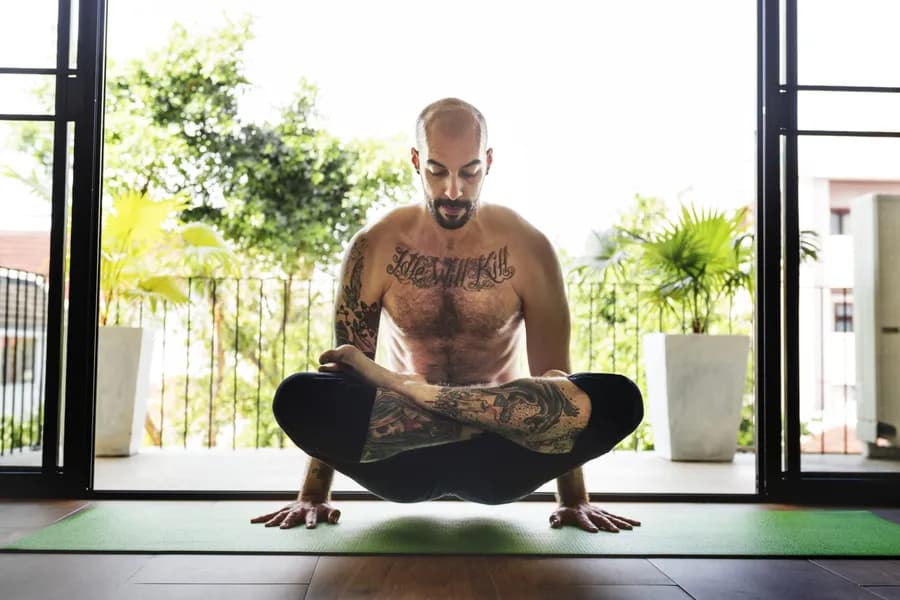
Kukkutasana (Cockerel Pose): Steps Arm Balance and Strength Benefits
Practice Kukkutasana with Habuild. Follow the rooster yoga pose steps to strengthen arms, build core power, and master this advanced arm balance. Start today!
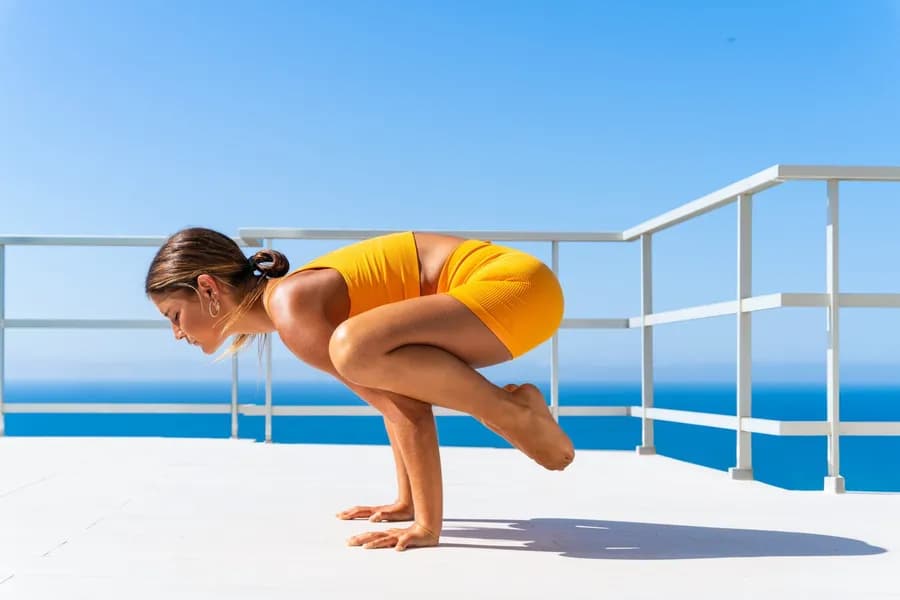
Bakasana (Crow Pose): Steps Strength Tips and How to Master It
Practice Bakasana with Habuild. Follow the crow pose steps to build core strength, improve wrist stability, and master your first arm balance. Start today!
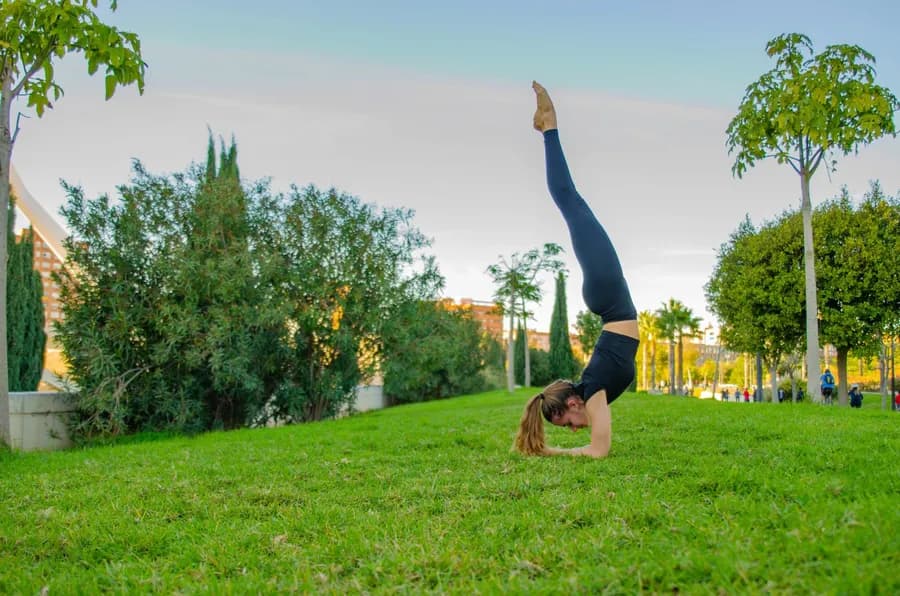
Pincha Mayurasana (Forearm Stand): Steps and Strength Benefits
Practice Pincha Mayurasana with Habuild. Follow forearm stand steps to build shoulder strength, improve balance, and advance your yoga practice. Start today!
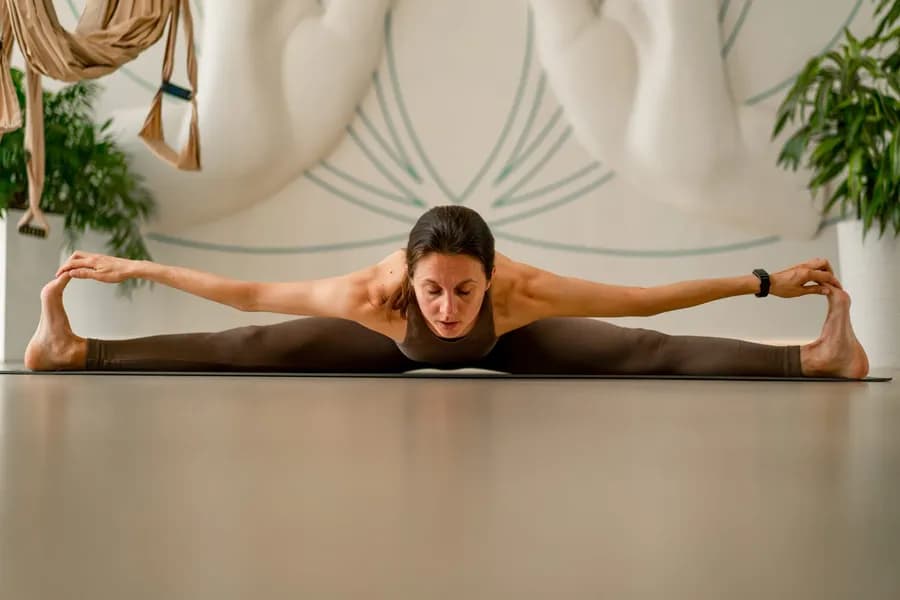
Upavista Konasana: Steps Benefits and Flexibility Guide
Practice Upavista Konasana with Habuild. Follow the seated wide-angle steps to open your hips, stretch your hamstrings, and build flexibility. Start today!