
Malasana (Garland Pose): Steps Hip and Digestive Health Benefits
Practice malasana with Habuild. Try the malasana pose to open your hips, strengthen your ankles, and improve digestion. Perfect for beginners. Start today!
Key Takeaways
- Restores the natural full-range squat that chairs have eliminated from daily human movement.
- Named the most direct intervention for the hip restriction chair-sitting produces.
- Develops ankle dorsiflexion, among the most common movement limitations in modern adults.
- Unlike isolated Kegels, engages the pelvic floor in the same functional squat position.
- Palms press together in Anjali Mudra while elbows push the inner thighs into rotation.
- Restricted ankle dorsiflexion is linked here to knee pain and lower back problems.
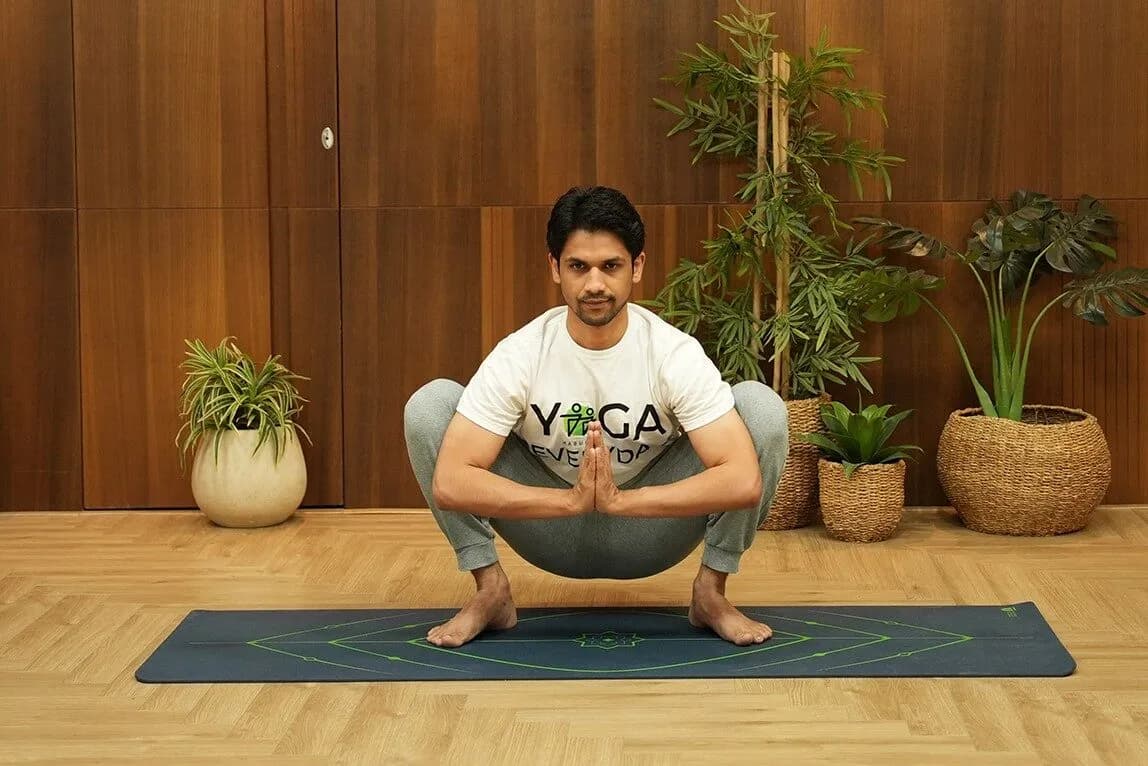
Malasana, or Garland Pose, is a deep squat that opens the hips comprehensively, develops ankle dorsiflexion, tones the pelvic floor, and stimulates digestion. It restores the natural full-range squat that modern sedentary lifestyles have systematically eliminated — and delivers therapeutic benefits that no other yoga posture replicates. Suitable for all levels with modifications.
What is Malasana?
Malasana — known in English as Garland Pose or Yoga Squat — is a deep squat posture that is simultaneously one of the most primal human movements and one of the most therapeutically significant yoga postures for hip health, digestive function, and pelvic floor development. The name derives from Sanskrit: Mala meaning garland or necklace, and asana meaning posture — referring to the rounded, garland-like shape of the torso and arms in the deep squat.
Malasana is a full deep squat with the feet as close together as comfortable, the heels grounded or supported, the torso slightly forward between the thighs, and the palms pressed together in Anjali Mudra at the heart — the elbows gently pressing the inner thighs toward external rotation. This is the natural resting position of the human body before chairs eliminated the need for deep squatting from daily life.
At Habuild, Malasana is a valued component of our hip and pelvic floor sequences — taught with the modifications and preparation postures that make the deep squat accessible even to practitioners with significant ankle or hip restriction.
Malasana Benefits
Physical Benefits
- Opens the Hips with Comprehensive Multi-Plane Stretch Malasana delivers one of the most comprehensive hip openings in yoga — simultaneously stretching the hip flexors, adductors, external rotators, and the posterior hip capsule in a deep, functionally relevant position. The depth of the squat creates a hip flexion range that other seated postures cannot replicate — making Malasana the most direct intervention for the hip restriction that prolonged chair-sitting produces.
- Develops Ankle Dorsiflexion — A Critical Modern Movement Gap The grounded heel position requires and progressively develops ankle dorsiflexion — the ability to flex the foot toward the shin while the knee tracks forward over the toes. Restricted ankle dorsiflexion is among the most common movement limitations in modern adults and contributes to knee pain, hip compensation, and lower back problems. Regular Malasana practice is one of the most effective interventions for developing the ankle flexibility that healthy movement requires.
- Tones and Functionally Strengthens the Pelvic Floor The deep squat position creates a natural, functional engagement of the pelvic floor musculature — the same position in which the pelvic floor must work in squatting daily activities. Unlike isolated Kegel exercises, Malasana develops pelvic floor strength in a functional, full-range position that translates directly into improved bladder control and pelvic stability.
- Stimulates Digestion and Relieves Constipation The deep squat position creates the anatomically optimal position for bowel function — straightening the anorectal angle and relaxing the puborectalis muscle in a way that significantly facilitates elimination. Practitioners with constipation or sluggish digestion consistently find Malasana one of the most directly and immediately effective yoga interventions.
Mental Benefits
- Grounds and Centres the Awareness The low-to-the-ground, earthbound quality of Malasana creates a distinctive sense of groundedness and physical connection. The Anjali Mudra hand position draws awareness inward and cultivates a composed, centred quality of attention — making Malasana an effective brief meditation posture in its own right.
How to Do Malasana — Step-by-Step Instructions
Key Principles
Key Principles Three principles: the heels must be grounded or supported — never allow the heels to lift without support, as this compresses the knee and eliminates the ankle dorsiflexion development; the spine lengthens upward throughout — resist the tendency to round deeply forward; and the elbows press the inner thighs into external rotation — this is the activating principle that deepens the hip opening.
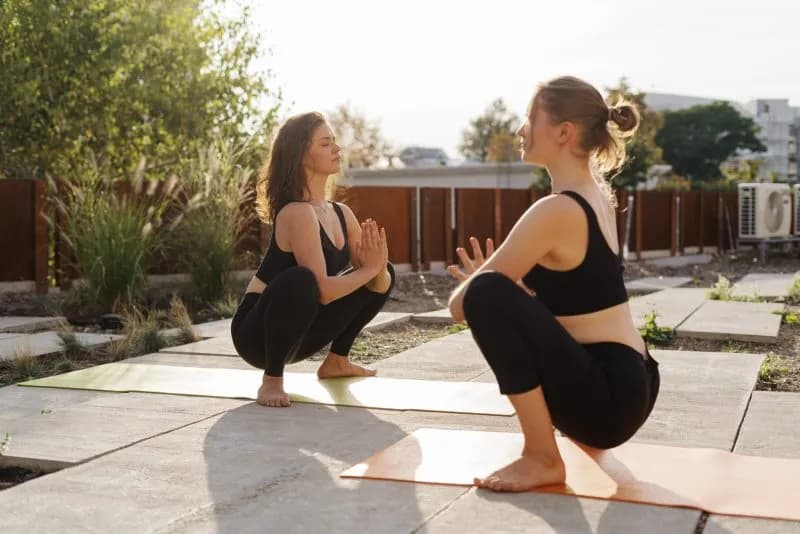
Malasana — Step by Step Step 1: Starting Standing Position Stand with feet slightly wider than hip-width, toes turned out to approximately forty-five degrees. Bring the palms together at the heart in Anjali Mudra.
Step 2: Begin the Squat Descent On an exhalation, bend the knees deeply and lower the hips toward the floor in a deep squat. If the heels begin to lift off the mat, place a folded blanket under the heels immediately — maintaining heel contact is essential.
Step 3: Press the Elbows Against the Inner Thighs Bring the elbows inside the knees and press them gently against the inner thighs — encouraging the knees to track wide over the toes and the hips to deepen into external rotation.
Step 4: Lengthen the Spine Lengthen the spine upward — the crown of the head lifting, the chest opening between the thighs. Resist the tendency to round excessively forward. The length of the spine is the primary quality to maintain.
Step 5: Final Position and Hold Hold for five to ten breaths, breathing deeply into the pelvic region and allowing the squat to deepen with each exhalation. Each exhale allows a few millimetres more depth as the hip flexors and ankle tissues release.
Step 6: How to Come Out of Malasana Press the feet firmly into the mat and slowly straighten the legs to standing on an inhalation. Alternatively, lower the sitting bones to the mat for a seated forward fold transition.
Breathing in Malasana
Deep pelvic breathing — directing the breath into the lower abdomen and pelvic bowl — amplifies the digestive and pelvic floor benefits of the posture. Each exhale naturally deepens the squat as the pelvic floor releases.
Preparatory Poses Before Malasana
These poses warm the ankles, hips, and pelvic floor before the deep squat.
- Ankle circles and dorsiflexion warm-up — Warms the ankle joint that Malasana requires most directly.
- Baddha Konasana (3 minutes) — Opens the hip external rotators before the deep squat position.
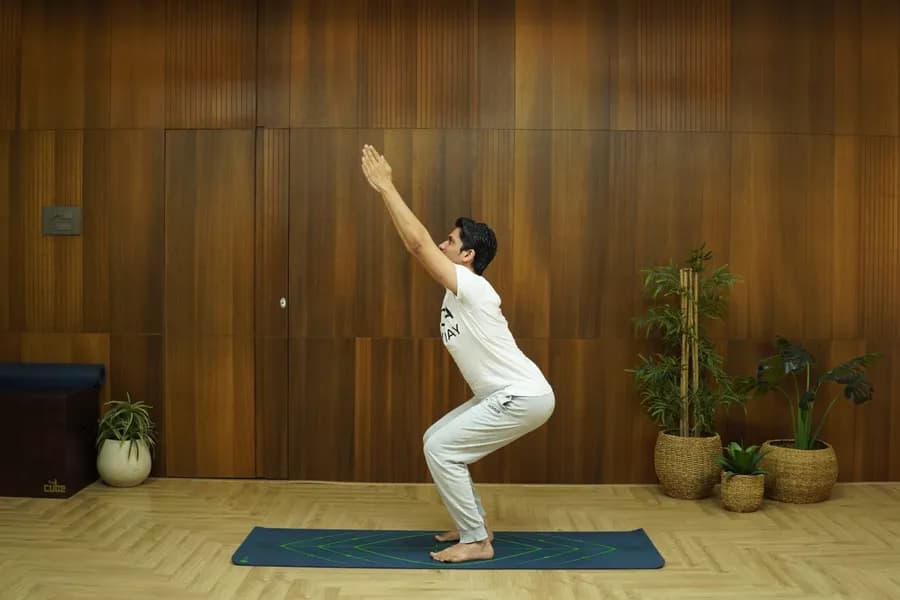
- Utkatasana (Chair Pose, 30-60 seconds) — Warms the quadriceps and establishes the knee-over-toe tracking before the deeper squat.
Variations of Malasana
- Variation 1: Supported Malasana with Block Under Sitting Bones — Beginner A block or folded blanket placed under the sitting bones for those who cannot hold the full squat independently — the support allows the full hip and ankle benefits without the strength demand of unsupported deep squatting.
- Variation 2: Malasana with Heels on Blanket — Ankle Restriction A folded blanket under the heels removes the ankle dorsiflexion prerequisite — making the deep squat immediately accessible while the ankle flexibility to eventually ground the heels develops over weeks.
- Variation 3: Twisted Malasana — Advanced From Malasana, one hand reaches to the opposite foot while the other arm extends overhead — adding a spinal rotation and lateral stretch to the deep hip opening. Requires comfortable full Malasana as a prerequisite.
Common Mistakes to Avoid in Malasana
- Allowing the Heels to Lift Without Support Heels lifting off the mat without a blanket support compresses the knee joint, eliminates the ankle dorsiflexion development, and concentrates the posture’s load in entirely the wrong structures. Always provide blanket support before allowing the heels to lift.
- Excessive Forward Rounding of the Spine While some forward inclination is natural in the deep squat, excessive rounding eliminates the vertical compression component that makes Malasana therapeutically beneficial for digestion and pelvic health. Maintain as much spinal length as the depth of the squat allows.
- Forcing the Squat Depth Too Quickly The ankle dorsiflexion and hip flexibility required for a comfortable full Malasana develop over weeks. Forcing the depth before the prerequisites are established produces knee and ankle strain. Work at a comfortable depth and allow the progressive deepening to occur naturally over sessions.
Who Should Practise Malasana?
- Those with Chronic Hip Tightness and Limited Hip Mobility Malasana is the most functionally relevant hip-opening posture in yoga — its deep squat position addressing the hip restriction that no seated posture can fully replicate, and developing the ankle flexibility that supports all lower-body movement quality.
- Those Seeking Digestive and Pelvic Floor Support The anatomically optimal squatting position for bowel function and the functional pelvic floor engagement make Malasana specifically valuable as a daily digestive health and pelvic floor development practice.
- Is Malasana Good for Beginners? Yes — with heel support from a blanket and sitting bone support from a block, Malasana is accessible from the first yoga session. The supports allow the full therapeutic hip, ankle, and digestive benefits to be received immediately.
Make Malasana a Part of Your Daily Practice
Malasana is the yoga tradition’s most fundamental functional movement restoration — its deep squat recovering the full hip, ankle, and pelvic floor range that chair-based modern life systematically eliminates. Daily practice of even two to three minutes produces rapid and meaningful improvement in hip mobility, ankle flexibility, and digestive function.
Whether you are beginning with full blanket support for the heels and sitting bones, or deepening an established squat into the full unsupported Malasana, each session restores a fraction more of the primal mobility that every human body was designed to maintain.
The most effective way to learn Malasana correctly — with ankle support guidance, elbow-to-inner-thigh activation, and spinal length instruction — is under live expert guidance with Habuild.
Start your 14 day free yoga journey with Habuild, today!
Related reads: Dhanurasana (Bow Pose): Steps Back Flexibility and Digestive Benefits · Konasana (Angle Pose): Steps Benefits and Spine Health
Malasana is deceptively simple, but the deep squat only starts loosening tight hips and steadying weak ankles once your body gets used to holding it regularly. The digestive boost people notice tends to follow the same pattern — a byproduct of consistent practice rather than one session. If squatting daily on your own feels hard to keep up, Habuild’s Yoga Everyday program builds poses like this into an easy-to-follow routine.
Frequently Asked Questions
Related Articles
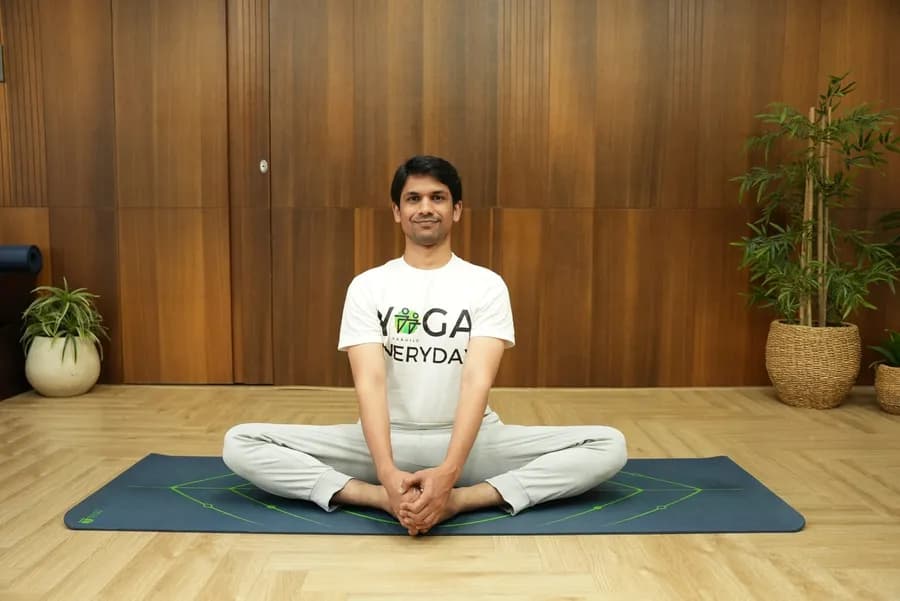
Baddha Konasana (Butterfly Pose): Steps and Hip Flexibility Benefits
Practice baddha konasana with Habuild. Try the baddha konasana pose to open your hips, improve flexibility, and calm your busy mind. Start your session today!
Upavista Konasana: Steps Benefits and Flexibility Guide
Practice Upavista Konasana with Habuild. Follow the seated wide-angle steps to open your hips, stretch your hamstrings, and build flexibility. Start today!
Utkatasana (Chair Pose): Steps Strength and Stamina Benefits
Practice utkatasana with Habuild. Try the utkatasana pose to strengthen your legs, build core power, and boost overall body endurance. Start your yoga session!
Pawanmuktasana (Wind Relieving Pose): Steps and Digestive Benefits
Try pawanmuktasana with Habuild. Discover pawanmuktasana benefits including gas relief, improved digestion, and reduced back tension. Start your session today!
Sukhasana (Easy Pose): Steps Benefits and Meditation Foundation
Try sukhasana with Habuild. Discover the sukhasana pose to improve posture, reduce stress, and cultivate a calm and focused mind. Start your session today!