Mukula Mudra: Benefits, Steps, Meaning & Precautions
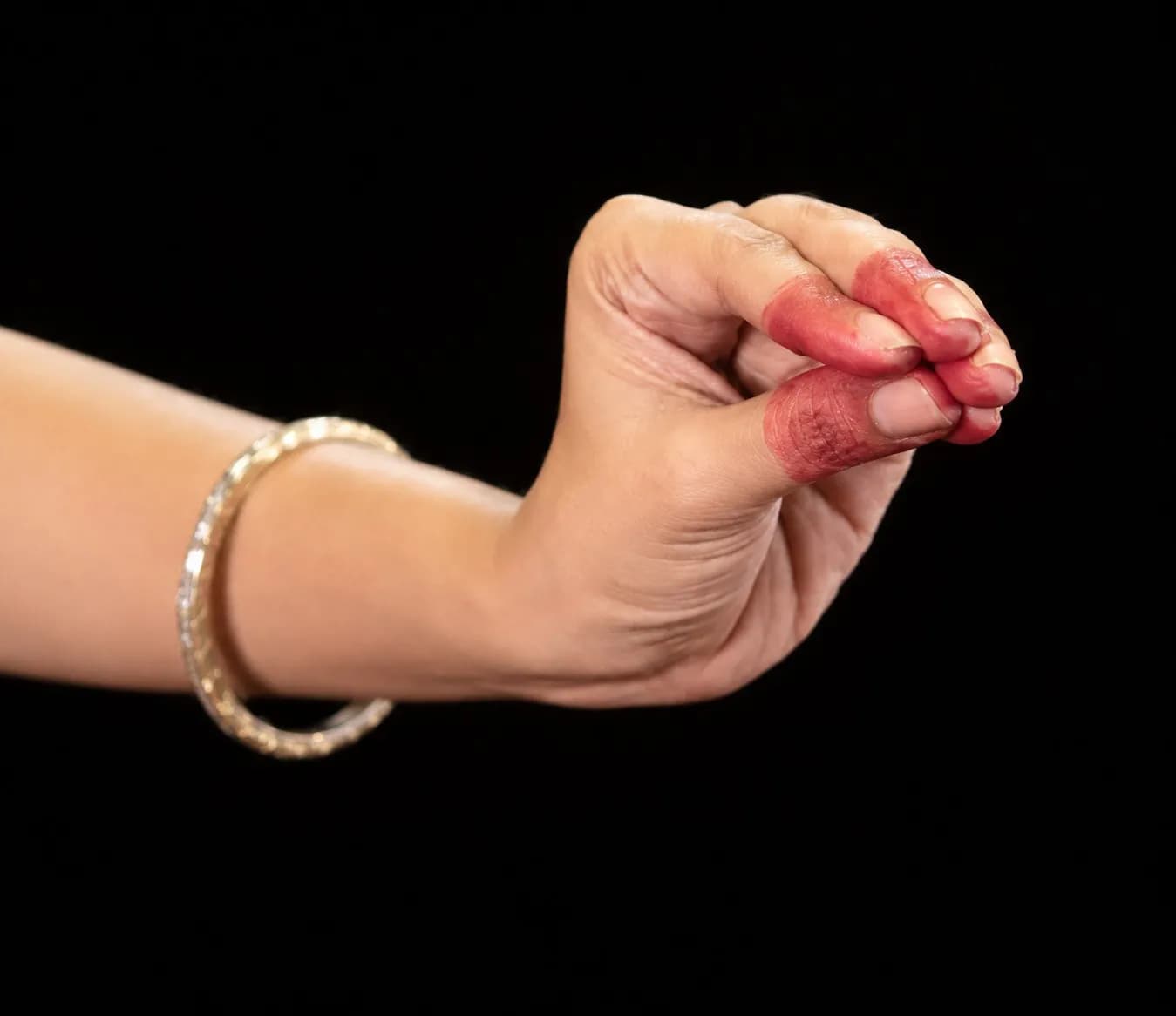
All five fingertips come together to form a closed bud shape, resembling an unopened lotus bud — used as a directional healing gesture. See the benefits,
Key Takeaways
- Its name means ‘bud,’ mirroring the closed, unopened bud of a flower before blooming.
- Formed by bringing all five fingertips together to form a closed point shape.
- One of 28 asamyukta hastas, single-hand gestures, catalogued in the Abhinaya Darpana.
- Unusual among hasta mudras for working locally rather than on whole-body energy.
- Pointed directly at a sore knee, tight shoulder, or aching jaw for 5-15 minutes.
- Practitioners describe a felt warmth or tingling at the targeted site within minutes.
What is Mukula Mudra?
The Sanskrit word mukula means bud — specifically the closed, unopened bud of a flower that holds within it the promise of blooming. The mudra mirrors that shape: all five fingertips of one hand brought together to form a closed point, with the palm slightly hollowed below.
Mukula mudra appears in two main traditions. In the Abhinaya Darpana of classical Indian dance, it is one of the 28 asamyukta hastas — single-hand gestures used to depict actions like eating, kissing, holding a flower bud, offering a small fruit, and gestures of devotion involving precise objects.
In the Mudra Vigyan (mudra healing) tradition, mukula mudra is used as a directional healing gesture. The closed-fingertip bud is held over or pointed at a specific area of the body — a sore knee, a tight shoulder, an aching jaw — for 5–15 minutes, with the intention of channelling prana to that spot. Practitioners describe a felt sensation of warmth or tingling at the target site within minutes. This makes mukula mudra unusual among hasta mudras: rather than influencing whole-body energy, it works locally. Many practitioners explore the broader topic through resources onmudras and benefits before adding mukula to their daily practice.
Mukula Mudra Benefits
Physical Benefits
Benefit 1: Supports Organ-Specific Energy Flow
When the beak-shaped hand is held over a particular organ — the abdomen, heart, or throat — it is believed to channel concentrated prana directly into that region. Regular practice may gradually ease feelings of heaviness or discomfort in targeted areas by improving local energy circulation. Over time, consistent practitioners often report feeling a gentle warmth at the point of focus.
Benefit 2: May Help Ease Muscular Tension and Pain
Holding Mukula Mudra over a tense or aching muscle group, combined with slow breath, may support gradual relief from localised tension. The focused intention and deliberate breathing activate the parasympathetic nervous system, encouraging the surrounding tissues to soften. This makes it a useful complement to Makarasana for those dealing with lower-back stiffness after long sitting hours.
Benefit 3: Stimulates Cellular Vitality and Skin Radiance
One of the more discussed mukula mudra benefits for skin is its role in promoting energy renewal at a cellular level. The unified finger position is said to generate a mild internal heat that, combined with mindful breathing, encourages better microcirculation. Practitioners who maintain a consistent daily routine often notice their skin looks more alive and less dull over several weeks — consistent practice being the deciding factor.
Benefit 4: Supports Digestive Organ Function
Placing the Mukula Mudra over the navel or solar plexus while practising diaphragmatic breathing is a traditional method for supporting the digestive fire (agni). It may gradually ease feelings of sluggishness or bloating by directing awareness and prana to the abdominal region. This benefit is amplified when practised on an empty stomach in the early morning.
Mental and Emotional Benefits
Benefit 5: Calms the Nervous System and Reduces Scattered Thinking
The act of consciously gathering all five fingertips into one point is itself a meditative act — it trains the mind to collect and focus diffuse mental energy. With regular practice, many people find that Mukula Mudra serves as an anchor, helping them transition from a busy, reactive state into a calmer one within minutes. It pairs especially well with the grounding stillness of Sukhasana for morning meditation.
Benefit 6: Builds Focused Intention and Emotional Clarity
Because Mukula Mudra is inherently directional, it trains the practitioner to set a clear internal intention — “I am directing healing attention here.” This kind of purposeful awareness has a quieting effect on emotional noise and may gradually support a sense of inner clarity. Over weeks of consistent practice, many practitioners report feeling more grounded in their emotional responses throughout the day.
How to Do Mukula Mudra — Step-by-Step Instructions
Key Principles
- All five fingertips touch evenly — no finger dominates.
- The palm is slightly hollow, not flat.
- For healing use, the gesture is pointed at the target area, with light intention.
Step 1: Find a Comfortable Seat or Position
For meditation or whole-body practice, sit in sukhasana or vajrasana. For directional healing use, sit or lie in whatever position lets you comfortably point the mudra at the target body part.
Step 2: Open the Hand
Hold one hand in front of you, palm facing up, fingers extended.
Step 3: Bring All Five Fingertips Together
Slowly draw all five fingertips toward each other until they meet in a single point. The thumb meets the four other fingers; the palm hollows slightly underneath. The hand now resembles a closed flower bud or a soft beak.
Step 4: Settle the Hand
For meditation: rest the hand on the knee with the bud pointing upward. For directional healing: hold the bud 1–2 inches above (or lightly touching) the area you want to focus on.
Step 5: Settle the Breath
Slow nasal breathing — inhale 4, exhale 6. With each exhalation, imagine prana flowing through the bud toward the target area (or, in meditation use, gathering inward at the heart).
Step 6: Hold and Observe
For meditation, hold for 10–15 minutes. For directional healing, hold for 5–15 minutes over a single area; do not exceed 20 minutes per spot per day.
Step 7: Release Mindfully
Open the fingers slowly. Place both palms over the area you have been working on for 30 seconds of quiet rest.
Breathing in Mukula Mudra
Pair with slow diaphragmatic breath for healing use, and bhramari pranayama for whole-body meditation use.
Preparatory Practices Before Mukula Mudra
- Wrist circles (5 each direction) — keeps the wrist relaxed for the held gesture.
- Finger spreads and squeezes (5 rounds) — wakes up the small finger muscles.
- Palm rubbing (15 seconds) — generates warmth in the hands before directional healing use.
- 3 rounds of slow anulom vilom — calms the nervous system before the practice.
Variations of Mukula Mudra
Variation 1: Single-Hand Directional Mukula
The classical healing use — one hand forms the gesture, pointed at the target area; the other hand rests palm-up on the thigh.
Variation 2: Both-Hand Mukula
Both hands form the gesture simultaneously, resting on the knees, fingers pointing upward. Used for whole-body meditation and energetic clearing.
Variation 3: Mukula at the Heart
Both hands form the bud and meet at the heart-centre, fingertips touching opposite hands. A beautiful self-compassion gesture.
Common Mistakes to Avoid in Mukula Mudra
- Pressing the fingertips together too hard — the contact is light and even, not crushing.
- One finger dominating — common with the thumb or middle finger; check that all five tips meet evenly.
- Flattening the palm — the hand should retain a soft hollow under the fingers; this is the “bud” shape.
- Holding the gesture too long over one body part — limit to 15–20 minutes per area per day. Excessive prana focus can feel destabilising.
- Replacing medical care for serious conditions — mukula mudra supports recovery from minor aches; do not use it in place of medical attention for fractures, infections, or persistent pain.
- Holding the breath while concentrating — breath should flow steadily.
Who Should Practise Mukula Mudra?
- People with Minor Aches, Tension or Slow-Healing Spots A daily 5–10 minute directional practice supports ordinary recovery from desk work, carrying loads or post-exercise soreness.
- People in Self-Care or Meditation Practice The gesture itself becomes a daily reminder to attend to the body and the inner state. Many practitioners pair it with structuredyoga for stress management for layered effect.
- People Exploring Mudra Healing Traditions A foundational practice in Mudra Vigyan; essential for anyone studying the directional use of hand gestures.
- People Working on Body Awareness for Weight Management Mudra Vigyan suggests directional healing gestures alongside lifestyle change. Many practitioners explore this in the context ofyoga for weight loss — body awareness is foundational to sustainable change.
- Is Mukula Mudra Good for Beginners? Yes. No prior yoga, meditation or healing experience needed. The gesture is intuitive within a single attempt.
Mukula mudra’s precise, closed-bud shape takes a little repetition before it stops feeling effortful, and the sharpened focus practitioners associate with it tends to follow the same curve — noticeable after consistent daily practice, easy to miss after just one try. Keep sessions short but regular rather than long and occasional. Habuild’s Yoga Everyday program is a straightforward way to keep mudra practice like this part of your daily routine.
Frequently Asked Questions
Related Articles
Vajrasana: How to Do It Benefits and Precautions
Practice vajrasana pose with Habuild. Try vajrasana to ease digestion, reduce back pain, and calm your mind. Ideal for all levels. Start your session today!

Chakravakasana (Ruddy Goose Pose): Steps, Benefits and Precautions
This four-point kneeling anti-rotation exercise builds lumbar stability and shoulder alignment, named after the ruddy shelduck of Hindu mythology. See the steps, benefits, and precautions.
Gyan Mudra: How to Do It and Its Benefits for Focus and Memory
Practice Gyan Mudra with Habuild. Follow the wisdom hand gesture steps to improve focus, reduce anxiety, and enhance your meditation practice. Start today!