
Savasana (Corpse Pose): Steps, Benefits & Precautions
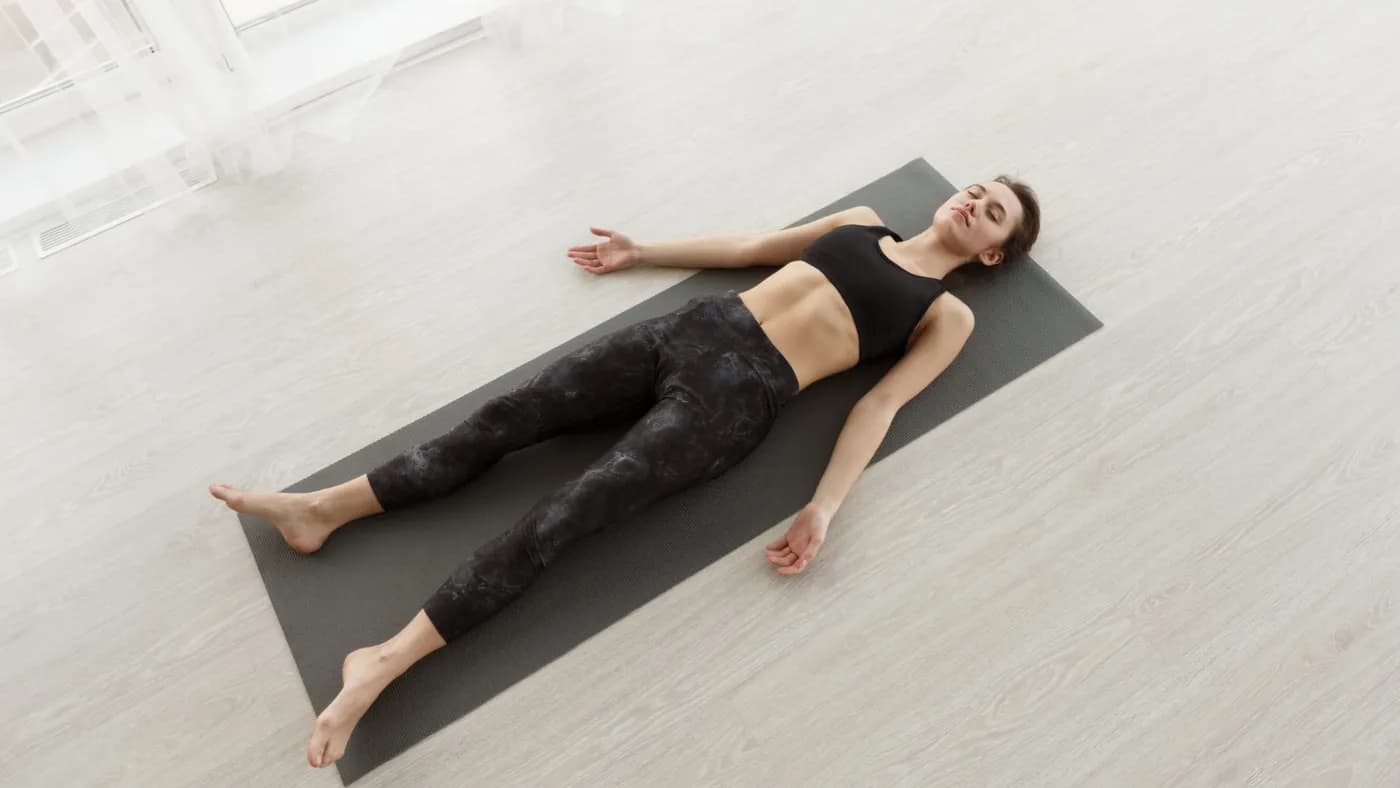
Lying flat on your back with arms resting away from the hips and palms facing upward is a complete, voluntary surrender of physical effort and mental.
Key Takeaways
- The name comes from shava, meaning corpse, capturing a complete voluntary surrender of effort.
- Closes every session as the integration phase where the preceding practice is absorbed.
- Genuine stillness of mind is often harder to achieve here than any physical pose.
- Every muscle group, down to those around the eyes, receives explicit permission to release.
- Initiates a deliberate shift into parasympathetic dominance, slowing heart rate and breath.
- Chronic low-level stress suppresses digestion; this relaxation phase supports its natural rhythm.
What is Savasana?
Savasana (pronounced sha-VAH-suh-nuh) is derived from two Sanskrit roots: shava, meaning corpse, and asana, meaning posture. In English it is universally called Corpse Pose. The name captures the defining quality of the practice — a complete, voluntary surrender of physical effort and mental grasping, as still and weightless as a body at rest.
Visually, Savasana looks like the simplest thing in yoga: you lie flat on your back, arms resting about 15–20 centimetres away from the hips with palms facing upward, legs extended and feet falling naturally apart, eyes closed. Nothing to grip, balance, or stretch. Yet experienced practitioners consistently describe it as one of the most demanding poses to truly inhabit, because genuine stillness of the mind is harder to achieve than any physical contortion.
Within the broader yoga system, Savasana holds a precise and non-negotiable role. It closes every session as the integration phase — the period in which the physical, energetic, and neurological work of the preceding practice is absorbed and consolidated. Traditionally it bridges active asana work with the deeper limbs of pratyahara (sense withdrawal) and dharana (concentration). It is not a rest break tacked onto the end of a class. It is the culminating practice in its own right.
Savasana Benefits
Physical Benefits
- Benefit 1: Allows Deep Muscular Release and Full-Body Recovery Even during gentle yoga poses, muscles sustain a degree of low-level contraction. Savasana is the first moment in a session where every muscle group — from the soles of the feet to the muscles around the eyes — receives explicit permission to let go completely. Over 5–10 minutes of conscious relaxation, the body sheds residual tension accumulated through both movement and habitual posture. Practiced consistently, this muscular release phase supports the kind of physical recovery that leaves you genuinely refreshed rather than simply finished.
- Benefit 2: Helps Regulate the Nervous System Active yoga practice, even of the gentle variety, stimulates the sympathetic nervous system. Savasana initiates the deliberate shift into parasympathetic dominance — the physiological state associated with rest, digestion, and cellular repair. Heart rate slows, blood pressure may ease, and the breath becomes naturally quieter and longer. Practiced regularly, this intentional downregulation builds a more resilient nervous system that handles everyday stress with greater ease. For anyone exploring yoga for stress management, Savasana is the single most direct tool available.
- Benefit 3: Supports Thyroid and Digestive Organ Function Through Relaxation Chronic low-level stress suppresses digestive secretions and disrupts hormonal signalling. By consistently activating the parasympathetic state, Savasana creates conditions that support healthy digestive rhythm and endocrine function over time. It works as a natural complement to active poses earlier in a session — particularly inversions and backbends that directly stimulate the thyroid and abdominal organs.
Mental and Emotional Benefits
- Benefit 4: Calms the Mind and Reduces the Accumulation of Stress The deliberate act of lying still and withdrawing attention from external stimuli sends a direct signal to the brain that there is nothing urgent to respond to. This is not passive — it is an active practice of non-doing. Over time, consistent Savasana trains the nervous system to spend less time in reactive overdrive, which may gradually ease feelings of accumulated stress and restlessness. Many practitioners find it the most effective part of their entire session for mental decompression.
- Benefit 5: Improves Focus and Mental Clarity A mind given genuine rest — not distracted by a screen but truly stilled — often emerges noticeably sharper. The integration that occurs during Savasana consolidates proprioceptive and sensory information gathered throughout the physical practice, in a process that resembles how sleep consolidates memory. Practitioners who commit to a full Savasana regularly report improved concentration and reduced mental fatigue across the rest of their day.
How to Do Savasana — Step-by-Step Instructions
Key Principles
The goal of Savasana is effortless, conscious stillness — not sleep, and not rigid alertness. Keep your awareness present but soft. Let sensations arise and pass without reacting to them. The quality of attention you bring is more important than any specific alignment detail.
Step 1: Starting Position
Sit at the centre of your mat with knees bent and feet flat on the floor. Take a moment to settle any residual fidgeting. Ensure the mat is long enough to accommodate your full height and that there are no objects within arm’s reach that might cause distraction once you are lying down.
Step 2: Lowering the Back Down
Place your hands lightly behind you for support and slowly roll your spine down onto the mat, vertebra by vertebra, from the tailbone upward. Avoid letting the lower back thud down — this is an opportunity to feel each segment of the spine make deliberate contact with the ground. Once lying down, straighten your legs naturally.
Step 3: Positioning the Arms and Hands
Allow your arms to rest about 15–20 centimetres away from your hips, palms turned to face the ceiling. Let the fingers curl naturally — do not force them open or clench them closed. This position opens the chest and signals physical receptivity to the relaxation response. Feel your shoulder blades settle flat and heavy on the mat.
Step 4: Releasing the Legs and Feet
Let your legs extend fully and allow the feet to fall outward at roughly hip-width — do not actively hold the legs in any direction. The natural external rotation of the feet is a sign that the hip flexors and glutes are beginning to release. If the lower back feels uncomfortable with legs fully extended, place a rolled blanket under the knees.
Step 5: Final Position and Hold
Close your eyes and let your gaze soften downward behind the lids. Release any holding in the jaw, the tongue, the forehead, and the space between the eyebrows. Stay in the pose for a minimum of 5 minutes — ideally 10–15 minutes at the end of a full session. Breathe naturally and resist the urge to move, scratch, or adjust your position.
Step 6: How to Come Out of Savasana
When your timer signals or your teacher guides you, begin by deepening your breath intentionally. Gently wiggle the fingers and toes to reintroduce sensation. Without using the abdominal muscles abruptly, roll to your right side and rest in a foetal position for one full breath. Then press yourself up to seated using both hands, taking a quiet moment before opening your eyes fully.
Breathing in Savasana
Do not control or manipulate the breath in Savasana — simply observe it. As the body relaxes, the breath will naturally slow and deepen on its own. If thoughts arise and pull your attention away, returning focus to the subtle rhythm of the breath is the gentlest way to re-anchor without creating additional effort.
Preparatory Poses Before Savasana
Savasana works best when the body has been adequately prepared and the nervous system has already begun to quieten. These four poses create ideal conditions:
- Balasana (Child’s Pose) — gently releases tension in the lower back and hips before lying flat, making the transition to Savasana smooth.
- Paschimottanasana — stretches the entire posterior chain so the back can settle evenly on the mat without residual tightness pulling the lumbar spine upward.
- Makarasana (Crocodile Pose) — initiates diaphragmatic breathing in a prone position, priming the breath awareness you bring into Savasana.
- Supta Baddha Konasana — opens the inner groins and quietens the hip flexors, making the flat supine position of Savasana more comfortable and sustainable.
Variations of Savasana
Variation 1: Supported Savasana (Beginner-Friendly)
Difficulty: Beginner. Place a folded blanket under the head and neck, a bolster or rolled blanket under the knees, and a light eye pillow over the eyes. This fully supported version is ideal for anyone with lower back discomfort, high anxiety, or sensitivity to lying fully exposed. The props create a sense of contained support that makes it considerably easier for the nervous system to release without feeling vulnerable or restless.
Variation 2: Constructive Rest Position — Knees Bent
Difficulty: Beginner to Intermediate. Instead of extending the legs, bend both knees and place the feet flat on the mat at hip-width. This significantly reduces compression in the lumbar spine and is particularly valuable for people with tight hip flexors or chronic lower back sensitivity. The rest quality is identical to the classical form — only the leg position changes, and the back releases more completely against the mat.
Variation 3: Yoga Nidra Body Scan in Savasana (Intermediate)
Difficulty: Intermediate. In the full classical position, the practitioner systematically rotates awareness through each body part in sequence — beginning at the right thumb and moving through the entire body — in the tradition of Yoga Nidra. This variation cultivates a much deeper state of pratyahara and is widely regarded as a gateway to meditative absorption. It requires sustained, disciplined attention and benefits enormously from a live teacher guiding the rotation.
Common Mistakes to Avoid in Savasana
- Skipping It Entirely The most widespread error — leaving class before Savasana because it appears to be doing nothing. The physiological integration that occurs during this pose is significant and time-dependent. Skipping it means the nervous system never completes its transition out of the active phase, and a substantial portion of the session’s benefit is simply not absorbed.
- Falling Asleep Savasana is conscious relaxation, not sleep. If you consistently drift off, try practising earlier in the day, reducing the hold duration initially, or keeping your eyes very slightly open with a soft downward gaze. Sleep is restorative in its own right — but it is a different neurological process than what Savasana develops.
- Holding Tension in the Face and Jaw Most people unconsciously clench the jaw, press the tongue to the roof of the mouth, or furrow the brow throughout the day without noticing. After settling into position, do a deliberate check of these areas and consciously soften them before beginning your hold. The face is often the last place tension releases.
- Arms Placed Too Close to the Body When the arms lie flush against the torso, the chest subtly closes and the shoulder muscles remain lightly engaged throughout the pose. Move each arm at least 15 centimetres away from the hips — enough that no part of the arm contacts the side of the body — and notice the immediate difference in shoulder and chest release.
- Rushing the Exit Sitting up suddenly from Savasana can cause a momentary blood pressure drop and immediately re-engages the stress response, undoing much of the parasympathetic work just completed. Always roll to one side first, pause there for a breath, and press up slowly with both hands. The exit is as much a part of the practice as the pose itself.
- Ignoring Body Temperature Body temperature drops noticeably within the first two minutes of stillness. A light blanket is not indulgent — it prevents the body from tensing against mild cold, which directly undermines the relaxation response. Aim for comfortable, mild warmth rather than a heated or draughty environment.
Who Should Practise Savasana?
- Those with Stress, Anxiety, or Sleep Difficulties Savasana is arguably the most directly useful yoga practice for anyone managing chronic stress, racing thoughts, or difficulty winding down at night. The deliberate activation of the parasympathetic nervous system during the pose mirrors the physiological conditions the body requires for quality sleep. Practiced regularly in the evening, it may gradually ease the transition into sleep and support better overall sleep quality over time. If you are building a broader approach, explore the full guide on yoga for sleep alongside your Savasana practice.
- Is Savasana Good for Beginners? Yes — it is one of the most accessible poses in the entire yoga system. There are no strength requirements, no flexibility demands, and no balance challenges whatsoever. A complete beginner can practise Savasana on their very first day and receive genuine benefit from it. The challenge is entirely mental rather than physical: learning to remain still and present without drifting into sleep or restlessness. Guided practice makes this significantly easier from the start.
- Working Professionals with Chronic Mental Fatigue People who spend long hours in sustained cognitive effort — at screens, in high-decision environments, or in meetings — accumulate a form of nervous system fatigue that ordinary sleep does not always fully resolve. A 10-minute post-work Savasana has been described by many practitioners as more restorative than an equivalent nap, because it combines physical stillness with the kind of conscious, gentle awareness that sleep bypasses entirely.
- Intermediate and Advanced Practitioners For those with an established physical practice, Savasana takes on additional depth with experience. It becomes the space in which pranayama effects, bandha activations, and the energetic residue of a longer sequence are integrated into the body’s felt sense. Many advanced practitioners choose to spend proportionally more time in Savasana as their practice matures — recognising it as the culmination of the session, not its afterthought.
Make Savasana a Part of Your Life
Savasana — Corpse Pose — is a supine resting posture that serves as the essential integration practice at the close of every yoga session. Its core savasana benefits span the physical, neurological, and psychological: deep muscular recovery, nervous system regulation, reduced stress accumulation, sharper mental focus, and gradually improved sleep quality. It is equally suited to absolute beginners and to experienced practitioners deepening their practice.
If you are new to the pose, dealing with lower back discomfort, or finding stillness genuinely difficult, there are well-established modifications — supported variations with props, knees-bent constructive rest, and teacher-guided body scans — that make the practice accessible regardless of where you are starting from. The right guidance makes the difference between lying down restlessly and arriving at genuine restoration.
Frequently Asked Questions
Related Articles
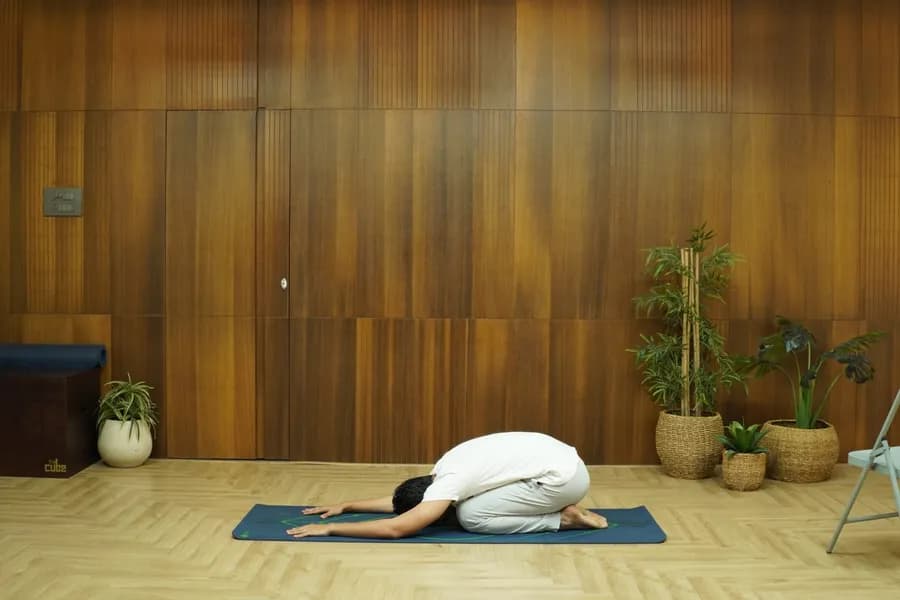
Balasana (Child’s Pose): Steps and Benefits for Mind and Body
Try balasana with Habuild. Practice the balasana pose to relieve stress, ease back tension, and deeply relax your body and mind. Start your yoga session now!
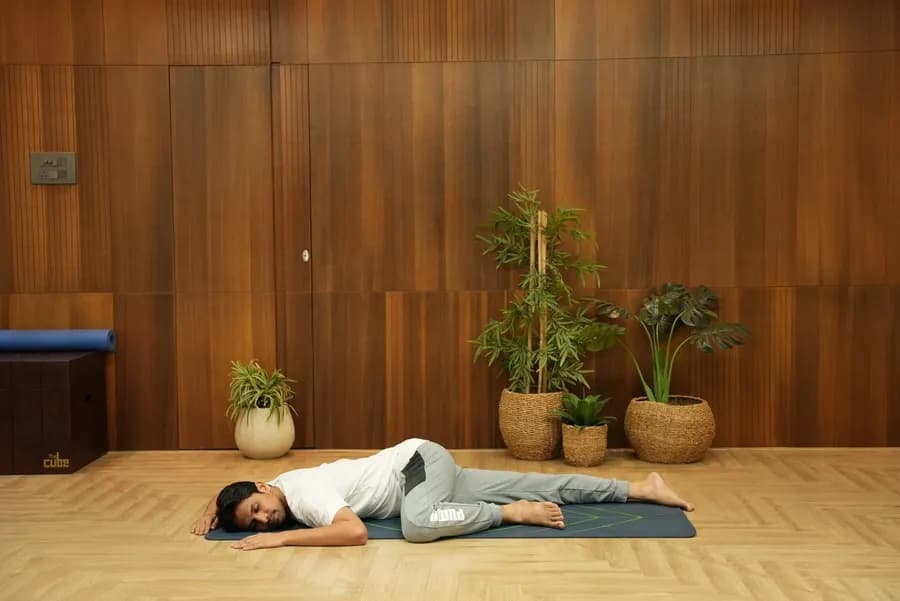
Makarasana (Crocodile Pose): Steps and Relaxation Benefits
Try makarasana with Habuild. Explore the makarasana pose to relieve back pain, reduce stress, and improve your spinal flexibility. Start your yoga today now!
Health Benefits of Yoga
Unlike single-modality exercise — running for cardio, weights for muscle, stretching for flexibility — yoga delivers measurable improvements across all these domains at once. See the full range of benefits.
Sukhasana (Easy Pose): Steps Benefits and Meditation Foundation
Try sukhasana with Habuild. Discover the sukhasana pose to improve posture, reduce stress, and cultivate a calm and focused mind. Start your session today!